
James DeForest Murch (1892–1973)
Author of Christians Only: A History of the Restoration Movement
About the Author
Works by James DeForest Murch
The Free Church: A Treatise on Church Polity with Special Relevance to Doctrine and Practice in Christian Churches and Churches of Christ (2014) 26 copies, 1 review
Adventuring for Christ in changing times;: An autobiography of James DeForest Murch (1973) 8 copies, 1 review
Successful Prayer Meetings 2 copies
Associated Works
Tagged
Common Knowledge
- Other names
- Murch, J. D.
- Birthdate
- 1892-10-23
- Date of death
- 1973-06-16
- Gender
- male
- Education
- Ohio University (BA, 1915)
- Occupations
- cleric
author
editor
hymnodist - Awards and honors
- Eugene Bible University (Honorary DD degree ∙ 1928)
Evangelical Press Association (Honorary Life Member of Board)
Milligan College (Honorary LttD degree)
Ohio University (Distinguished Service Award for "attainment in the field of religion")
Ohio University chapter of Sigma Delta Chi (Life Member)
International Institute of Arts and Letters (Fellow) (show all 7)
Pacific Christian College (Honorary LHD degree, 1969) - Relationships
- Cameron, Olive (spouse)
- Birthplace
- New Vienna, Ohio, USA
- Place of death
- Cincinnati, Ohio, USA
- Burial location
- Spring Grove Cemetery, Cincinnati, Ohio, USA
- Associated Place (for map)
- Ohio, USA
Members
Reviews
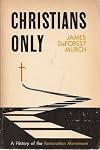
The book’s strength is the quick survey of the beginnings of the Restoration Movement: the revivals that preceded it, Thomas Campbell’s struggle and disassociation with sectarianism, and Alexander Campbell’s guidance to organizational infrastructure. However, the discussion on unity is peculiar in that it attributes unity of those in agreement by virtue of their separation of those with whom they disagree--and in nuances at that! Murch calls it fraternization (110). Murch reiterates show more (368ff) the Restoration plea for Christian unity in the stated hope that it would be adopted by the ecumenical movement of the time of writing (early 1960s). It didn’t work. It’s the same plea that resulted in the split of the three Churches of Christ: a) the centrality of Christ. b) A return to Biblical authority, c) the church is one body, d) it’s name is the Church of Christ, e) the polity and ordinances of the church are those identified in the NT as interpreted by the Churches of Christ denomination, f) there are no church hierarchies. In other words, ecumenicism is possible when everyone accepts and implements restoration principles (372). This position is naive and condescending and will never succeed in achieving Christian unity. show less
Adventuring for Christ in changing times; an autobiography of James DeForest Murch by James DeForest Murch
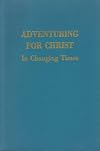
I read somewhere that this book, written by Mr. Murch, was disparagingly referred to as little more than an “I love me book.” Yes, the reader will find a lot of “I” and “me” in the book, but it is an autobiography after all. I encourage readers to look past the “I” and focus on the many-faceted ministry of one of the “greats” associated with the Stone-Campbell religious heritage. I think there are few, if any, who can match the impact that James DeForest Murch (1892-1973) show more had upon Christian Churches and Churches of Christ, in particular, and American evangelical Christian churches, in general, in his lifetime and beyond.
As may be seen by his birth date and death date, Murch lived during the turbulent years leading up to and during the second large schism of the Disciples of Christ, resulting in what one historian (A. T. DeGroot) sarcastically named “Church of Christ Number Two,” the title of a book he authored (and in my library). Murch was among the conservative Disciples, who today are generally known as the nondenominational Christian Churches and Churches of Christ. (The first large schism, usually dated with the US Religious Census of 1906, resulted in the religious stream known as the churches of Christ (non-instrumental).
Murch completed this book about one year prior to his death. It is sectioned into 28 “Episodes” because the events or situations reported on therein tend to overlap. Without attempting to list all, the reader will learn of Murch's involvement with Christian Endeavor, “Christian Standard,” “Lookout,” Clarke Fund, Christian Restoration Association, Cincinnati Bible Seminary, “Restoration Herald,” “Christian Unity Quarterly,” Disciples of Christ Historical Society, Christian's Hour radio broadcast, National Association of Evangelicals and its journal “United Evangelical Action,” National Sunday School Association, National Religious Broadcasters, Accrediting Association of Bible Institutes and Bible Colleges, “Christianity Today,” Pacific Christian College, and more.
Persons interested in learning more about the Stone-Campbell religious heritage, particularly the Christian Churches and Churches of Christ stream, should find this book to be an excellent resource. The book includes an excellent index, which is very helpful for persons doing research. The book is out of print but may be found in several libraries (check WorldCat) and is available on the used book market. I am glad to have recently added the book to my library and wish I would have read it years ago. show less
As may be seen by his birth date and death date, Murch lived during the turbulent years leading up to and during the second large schism of the Disciples of Christ, resulting in what one historian (A. T. DeGroot) sarcastically named “Church of Christ Number Two,” the title of a book he authored (and in my library). Murch was among the conservative Disciples, who today are generally known as the nondenominational Christian Churches and Churches of Christ. (The first large schism, usually dated with the US Religious Census of 1906, resulted in the religious stream known as the churches of Christ (non-instrumental).
Murch completed this book about one year prior to his death. It is sectioned into 28 “Episodes” because the events or situations reported on therein tend to overlap. Without attempting to list all, the reader will learn of Murch's involvement with Christian Endeavor, “Christian Standard,” “Lookout,” Clarke Fund, Christian Restoration Association, Cincinnati Bible Seminary, “Restoration Herald,” “Christian Unity Quarterly,” Disciples of Christ Historical Society, Christian's Hour radio broadcast, National Association of Evangelicals and its journal “United Evangelical Action,” National Sunday School Association, National Religious Broadcasters, Accrediting Association of Bible Institutes and Bible Colleges, “Christianity Today,” Pacific Christian College, and more.
Persons interested in learning more about the Stone-Campbell religious heritage, particularly the Christian Churches and Churches of Christ stream, should find this book to be an excellent resource. The book includes an excellent index, which is very helpful for persons doing research. The book is out of print but may be found in several libraries (check WorldCat) and is available on the used book market. I am glad to have recently added the book to my library and wish I would have read it years ago. show less

The book is a good source for details about the Stone-Campbell religious heritage that cannot be found in other histories of the Christian Church (Disciples of Christ), Christian Churches/Church of Christ (independent), and churches of Christ (non-instrumental in worship).
The author was from the Christian Church/Church of Christ and called that stream of the Restoration Movement "centrists," with the Disciples of Christ on the "left" and the churches of Christ on the "right." I believe he show more fairly presents the various sides of the many religious, social, and personal issues confronting or generated by persons involved.
In spite of its age, church historians and students of the Stone-Campbell religious heritage would be well-served to have the book in their library. The book has a fine index. show less
The author was from the Christian Church/Church of Christ and called that stream of the Restoration Movement "centrists," with the Disciples of Christ on the "left" and the churches of Christ on the "right." I believe he show more fairly presents the various sides of the many religious, social, and personal issues confronting or generated by persons involved.
In spite of its age, church historians and students of the Stone-Campbell religious heritage would be well-served to have the book in their library. The book has a fine index. show less
The Free Church: A Treatise on Church Polity with Special Relevance to Doctrine and Practice in Christian Churches and Churches of Christ by James DeForest Murch

This little book was written when “Restructure” discussions were well underway among leaders and laypersons of the Christian Church (Disciples of Christ). The discussions would eventuate in a new denomination that would have an ecumenical focus.
The author wrote his book from the perspective of one who was opposed to Restructure and favored a nondenominational “Free Church” concept that had been that expressed throughout the Stone-Campbell religious heritage from its earliest days.
The show more author reviews the history of the Disciples of Christ, its goals, its major internal issue relating to autonomy and freedom, and what might negatively happen when a “restructured church” were to happen. The restructured church did emerge within a few years following the publication of the book.
The twelve chapters are:
1. Freedom in Christ
2. The New Testament Church
3. The Rise of Catholicism
4. The Free Church Tradition
5. The Choice on the Frontier
6. Individual Freedom
7. Congregational Freedom
8. Ministerial Freedom
9. Freedom of Association
10. Corporative Co-operation
11, Restructure
12. The New Catholicism
Persons interested in learning more of the development of the Christian Church (Disciples of Christ) should be well-served by reading the book, if for nothing more to learn of a contrarian position. Readers may decide for themselves what they think of the subject and the information (including predictions) provided by the author.
Note: One minster mentioned among those referred to as “eminent leaders of thought and action” is Edgar DeWitt Jones (p. 83), who served as the senior minister of First Christian Church in Bloomington, Illinois.
The book includes a bibliography, is reasonably well documented, but does not include an index. show less
The author wrote his book from the perspective of one who was opposed to Restructure and favored a nondenominational “Free Church” concept that had been that expressed throughout the Stone-Campbell religious heritage from its earliest days.
The show more author reviews the history of the Disciples of Christ, its goals, its major internal issue relating to autonomy and freedom, and what might negatively happen when a “restructured church” were to happen. The restructured church did emerge within a few years following the publication of the book.
The twelve chapters are:
1. Freedom in Christ
2. The New Testament Church
3. The Rise of Catholicism
4. The Free Church Tradition
5. The Choice on the Frontier
6. Individual Freedom
7. Congregational Freedom
8. Ministerial Freedom
9. Freedom of Association
10. Corporative Co-operation
11, Restructure
12. The New Catholicism
Persons interested in learning more of the development of the Christian Church (Disciples of Christ) should be well-served by reading the book, if for nothing more to learn of a contrarian position. Readers may decide for themselves what they think of the subject and the information (including predictions) provided by the author.
Note: One minster mentioned among those referred to as “eminent leaders of thought and action” is Edgar DeWitt Jones (p. 83), who served as the senior minister of First Christian Church in Bloomington, Illinois.
The book includes a bibliography, is reasonably well documented, but does not include an index. show less
You May Also Like


Statistics
- Works
- 31
- Also by
- 1
- Members
- 380
- Popularity
- #63,550
- Rating
- 4.1
- Reviews
- 8
- ISBNs
- 8
