
Philip Hardie
Author of The Cambridge Companion to Ovid
About the Author
Philip Hardie is a senior research fellow at Trinity College Cambridge and Honorary Professor of Latin at the University of Cambridge.
Works by Philip Hardie
The Epic Successors of Virgil: A Study in the Dynamics of a Tradition (Roman Literature and its Contexts) (1992) 26 copies
The Oxford History of Classical Reception in English Literature: Volume 2: 1558-1660 (2015) — Editor — 11 copies
Classicism and Christianity in Late Antique Latin Poetry (Volume 74) (Sather Classical Lectures) (2019) 8 copies
Celestial Aspirations: Classical Impulses in British Poetry and Art (E. H. Gombrich Lecture Series, 6) (2022) 4 copies
Lucretius Poet and Philosopher: Background and Fortunes of De Rerum Natura (Trends in Classics - Supplementary Volumes, 90) (2020) — Editor — 3 copies
Selected Papers on Ancient Literature and its Reception: 148 (Trends in Classics - Supplementary Volumes, 148) (2023) 3 copies
Introduction to "The Aeneid" 1 copy
Associated Works
Epic Traditions in the Contemporary World: The Poetics of Community (Joan Palevsky Imprint in Classical Literature) (1999) — Contributor — 11 copies
Clio and the Poets: Augustan Poetry and the Traditions of Ancient Historiography (Mnemosyne, Bibliotheca Classica Batava Supplementum) (2001) — Contributor — 10 copies
Narratology and Interpretation: The Content of Narrative Form in Ancient Literature (Trends in Classics - Supplementary Volumes) (2009) — Contributor — 7 copies
Generic Interfaces in Latin Literature (Trends in Classics - Supplementary Volumes) (2013) — Contributor — 6 copies
Latin historiography and poetry in the early empire generic interactions (2010) — Contributor — 6 copies
The Art of Love: Bimillennial Essays on Ovid's Ars Amatoria and Remedia Amoris (2007) — Contributor — 6 copies
Brill's Companion to Greek and Latin Pastoral (Brill's Companions in Classical Studies) (2006) — Contributor — 4 copies
Classical Constructions: Papers in Memory of Don Fowler, Classicist and Epicurean (2007) — Contributor — 4 copies
Metamorphic Readings: Transformation, Language, and Gender in the Interpretation of Ovid's Metamorphoses (2020) — Contributor — 3 copies
Antike Erzähl- und Deutungsmuster : zwischen Exemplarität und Transformation : Festschrift für Christiane Reitz zum 65. Geburtstag (2018) — Contributor — 2 copies
Labor Imperfectus: Unfinished, Incomplete, Partial Texts in Classical Antiquity (Trends in Classics - Supplementary Volumes, 157) (2023) — Contributor — 2 copies
Complex Inferiorities: The Poetics of the Weaker Voice in Latin Literature (2019) — Contributor — 2 copies
Intratextuality and Latin Literature (Trends in Classics - Supplementary Volumes Book 69) (2018) — Contributor — 2 copies
The Rhetoric of Unity and Division in Ancient Literature (Trends in Classics - Supplementary Volumes, 108) (2021) — Contributor — 1 copy
Memory and Emotions in Antiquity: Ancient Emotions IV (Trends in Classics - Supplementary Volumes, 158) (2024) — Contributor — 1 copy
The Imperial muse : Ramus essays on Roman literature of the empire, to Juvenal through Ovid (1988) — Contributor — 1 copy
Papers of the Leeds International Latin Seminar, Ninth Volume, 1996. Roman poetry and prose, Greek poetry, Etymology, Historiography (ARCA, Classical and ... Papers and Monographs… (1996) — Contributor — 1 copy
Callida musa: papers on Latin literature in honour of R. Elaine Fantham (2009) — Contributor — 1 copy
Lucretian Receptions in Prose (Trends in Classics - Supplementary Volumes, 167) (2024) — Contributor — 1 copy
Tagged
Common Knowledge
- Birthdate
- 1952-07-13
- Gender
- male
Members
Reviews
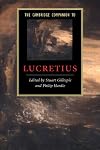
This is a collection of 19 essays by different authors on Lucretius' poem De Rerum Natura - On the Nature of Things. Lucretius wrote the poem to teach the Romans the philosophy of the Greek Epicurus, the most important feature of which was that the world was made up of atoms.
The essays are split into three categories: the place of Lucretius and his writings among the ancients, themes in Lucretius, and his reception in Mediaeval times, the Renaissance, and since then. There are two main show more things that stand out as being significant about the De Rerum Natura, it's literary/poetic value, and it's scientific/philosophic value. For this reason, Lucretius is of high interest to the student of the arts, and the student of the sciences, which is not something many writers can claim to be. show less
The essays are split into three categories: the place of Lucretius and his writings among the ancients, themes in Lucretius, and his reception in Mediaeval times, the Renaissance, and since then. There are two main show more things that stand out as being significant about the De Rerum Natura, it's literary/poetic value, and it's scientific/philosophic value. For this reason, Lucretius is of high interest to the student of the arts, and the student of the sciences, which is not something many writers can claim to be. show less
Lists
You May Also Like


Associated Authors
Statistics
- Works
- 23
- Also by
- 48
- Members
- 322
- Popularity
- #73,504
- Rating
- 3.9
- Reviews
- 2
- ISBNs
- 62
- Languages
- 1