
Patrick Delaforce (1923–2018)
Author of The Black Bull: From Normandy to the Baltic with the 11th Armoured Division
About the Author
Patrick Delaforce served with the Royal Horse Artillery of the 11th Armoured Division as a troop leader in Normandy and a Forward Observation Officer in Holland and Germany during the Second World War. He was awarded the Bronze Cross of Orange-Nassau and twice mentioned in dispatches during the show more campaign. He then joined the 7th Armoured Division at the end of 1945 and commanded Java Troop, 3rd Royal Horse Artillery. After leaving the army he worked as a port wine shipper and then in advertising before becoming a professional author. In addition to his two Second World War divisional histories of the 7th Armoured Division, he has written over twenty military history books as well as a number of travel books and biographies. Wellington The Beau, Smashing The Atlantic Wall, Churchill's Secret Weapons, Monty's Highlanders and Monty's Marauders axe all available under the Pen and Sword imprint. He died in 2018. show less
Series
Works by Patrick Delaforce
Tagged
Common Knowledge
- Legal name
- Delaforce, Patrick de Fleuriett
- Birthdate
- 1923-11-28
- Date of death
- 2018-01-22
- Gender
- male
- Education
- Winchester College, England, UK
Queen's University, Belfast, UK - Occupations
- soldier
winemaker
military historian - Nationality
- UK
- Birthplace
- Reigate, Surrey, England, UK
- Places of residence
- Brighton, Sussex, England, UK
- Associated Place (for map)
- England, UK
Members
Reviews
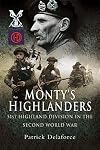
Before reading this book, be sure to read the introduction.
"Wait," you might say, "This book doesn't have an Introduction!"
Yes, well, that's the whole problem.
The volume is just what the title promises: A history of the 51st Highland Division during World War II, most of which it spent under the command of Bernard Law Montgomery, called "Monty" for short. But it's very much a ground-level view. You will learn, in extreme detail, the maneuvers this particular division went through in North show more Africa, Sicily, and the Normandy Invasion. Not infrequently, the descriptions are so detailed that you'll even learn the names of the officer casualties, and some of the enlisted men. If you can figure out the context, it's a very helpful description.
But, unless you know a lot about World War II, you won't know the context. There is no overview of the Desert War, to explain the back-and-forth fighting between Erwin Rommel's Germans and the British forces in which the 51st served. The complicated, and sometimes ridiculous, planning of the invasion of Sicily is not described. When we get to Normandy, the 51st is in the middle of a huge mass of men, with dozens of divisions scattered across France, and there is no way to know what they are doing. The 51st just occupied (e.g.) Lignières (p. 198)? Great. Where is Lignières, and is that important, and where is the rest of the Allied force? There is no way to know. It's like trying to figure out the plot of Hamlet if all you have is a text of the speeches of Claudius! The book really needs some sort of overview. Like an Introduction. Or, better yet, the occasional description of just what is going on.
To add to the problems, the book is very poorly typeset. Whoever typeset it didn't know how to use curly quotes, or even how to turn on "smart quotes," so all the quotation marks are straight quotes " " rather than proper quotation marks “ ” (if you can't see the difference, copy it into your word processor). It uses hyphens (-) for m-dashes (—). And so forth.
Plus it's full of military jargon, most of which is never explained. Some you'll surely figure out, e.g. "Coy" for "Company" and "Bde" for "brigade." But it took me half the book to reason out that "2i/c" is "second in command," and there are abbreviations I never did figure out.
Frankly, it feels like reading official reports rather than an actual history. If you like that sort of thing, this is probably the book for you. If not, well, the 51st has a Wikipedia page.... show less
"Wait," you might say, "This book doesn't have an Introduction!"
Yes, well, that's the whole problem.
The volume is just what the title promises: A history of the 51st Highland Division during World War II, most of which it spent under the command of Bernard Law Montgomery, called "Monty" for short. But it's very much a ground-level view. You will learn, in extreme detail, the maneuvers this particular division went through in North show more Africa, Sicily, and the Normandy Invasion. Not infrequently, the descriptions are so detailed that you'll even learn the names of the officer casualties, and some of the enlisted men. If you can figure out the context, it's a very helpful description.
But, unless you know a lot about World War II, you won't know the context. There is no overview of the Desert War, to explain the back-and-forth fighting between Erwin Rommel's Germans and the British forces in which the 51st served. The complicated, and sometimes ridiculous, planning of the invasion of Sicily is not described. When we get to Normandy, the 51st is in the middle of a huge mass of men, with dozens of divisions scattered across France, and there is no way to know what they are doing. The 51st just occupied (e.g.) Lignières (p. 198)? Great. Where is Lignières, and is that important, and where is the rest of the Allied force? There is no way to know. It's like trying to figure out the plot of Hamlet if all you have is a text of the speeches of Claudius! The book really needs some sort of overview. Like an Introduction. Or, better yet, the occasional description of just what is going on.
To add to the problems, the book is very poorly typeset. Whoever typeset it didn't know how to use curly quotes, or even how to turn on "smart quotes," so all the quotation marks are straight quotes " " rather than proper quotation marks “ ” (if you can't see the difference, copy it into your word processor). It uses hyphens (-) for m-dashes (—). And so forth.
Plus it's full of military jargon, most of which is never explained. Some you'll surely figure out, e.g. "Coy" for "Company" and "Bde" for "brigade." But it took me half the book to reason out that "2i/c" is "second in command," and there are abbreviations I never did figure out.
Frankly, it feels like reading official reports rather than an actual history. If you like that sort of thing, this is probably the book for you. If not, well, the 51st has a Wikipedia page.... show less
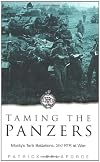
This is a history of 3rd Royal Tank Regiment (a battalion sized unit for those not au fait with UK Armoured regiments). It starts with a chapter of their origins in the First World War and then their subsequent peacetime evolution. 3RTR fought in the 1940 France campaign at Calais, then in Greece in 1941 followed by the western desert. They returned to the UK in late 1943 and took part in the NW Europe campaign eventually meeting up with the Russians in the Baltic.
The Author was an artillery show more officer (with 13 RHA) who supported 3RTR in the NW Europe campaign and this gives him a connection to those that he has written about, much of the text is based on letters and conversations with the surviving officers and men of 3 RTR.
Synopsis
During the desperate days of May 1940 that ended with the fall of France, the 3rd Battalion Royal Tank Regiment was sent to Calais where it played a vital role in the week-long battle. In helping to stem the inexorable German armoured advance, the battalion was praised by Churchill for giving the British Expeditionary Force vital extra time to effect the crucial evacuation from Dunkirk‘s beaches.
In the spring of 1941, 3 RTR fought the panzers once again in the ill-fated Greek campaign. They fought a costly withdrawal against the Germans, losing all their tanks, but inflicting heavy casualties. Hitler was furious: the six week Greek campaign delayed Operation ”Barbarossa” which allowed the Soviets time to re-group before the Germans reached Moscow.
Following their evacuation from Greece they re-formed in Egypt and fought in the Gazala battles, Operation Crusader and then in El Alamein and contributed to the subsequent defeat of the Axis forces in North Africa.
Taking part in the D-Day invasion in June 1944, 3 RTR was in the thick of all the desperate Normandy battles. They took part in the ”Great Swan” to capture Amiens and Antwerp, then provided right flank protection in Operation ‘Market Garden’ and helped halt the panzers in the Ardennes. Equipped with new Comet tanks 3 RTR swept across the Rhine and four other well-defended rivers to meet the Russians on the Baltic.
Review
This book is very well informed, the author was there personally for some of it and was able to speak to those that were directly involved in other parts as well as having access to war diaries etc. The style is very readable and it is an excellent unit history for a tank regiment that was involved in all of the main campaigns in NW Europe and the Med. show less
The Author was an artillery show more officer (with 13 RHA) who supported 3RTR in the NW Europe campaign and this gives him a connection to those that he has written about, much of the text is based on letters and conversations with the surviving officers and men of 3 RTR.
Synopsis
During the desperate days of May 1940 that ended with the fall of France, the 3rd Battalion Royal Tank Regiment was sent to Calais where it played a vital role in the week-long battle. In helping to stem the inexorable German armoured advance, the battalion was praised by Churchill for giving the British Expeditionary Force vital extra time to effect the crucial evacuation from Dunkirk‘s beaches.
In the spring of 1941, 3 RTR fought the panzers once again in the ill-fated Greek campaign. They fought a costly withdrawal against the Germans, losing all their tanks, but inflicting heavy casualties. Hitler was furious: the six week Greek campaign delayed Operation ”Barbarossa” which allowed the Soviets time to re-group before the Germans reached Moscow.
Following their evacuation from Greece they re-formed in Egypt and fought in the Gazala battles, Operation Crusader and then in El Alamein and contributed to the subsequent defeat of the Axis forces in North Africa.
Taking part in the D-Day invasion in June 1944, 3 RTR was in the thick of all the desperate Normandy battles. They took part in the ”Great Swan” to capture Amiens and Antwerp, then provided right flank protection in Operation ‘Market Garden’ and helped halt the panzers in the Ardennes. Equipped with new Comet tanks 3 RTR swept across the Rhine and four other well-defended rivers to meet the Russians on the Baltic.
Review
This book is very well informed, the author was there personally for some of it and was able to speak to those that were directly involved in other parts as well as having access to war diaries etc. The style is very readable and it is an excellent unit history for a tank regiment that was involved in all of the main campaigns in NW Europe and the Med. show less
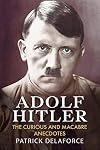
British author Patrick Delaforce's book offers up more than 300 anecdotal reminiscences of the most influential and most evil man of the 20th Century. Taken together, they furnish a fascinating, you-are-there glimpse into the life and times of a lowly Austrian misfit who transformed himself into the absolute ruler of the most evil empire on earth. Dozens of people who knew, loved, hated, worshipped and/or worked under Hitler are featured, the mixture of accounts and viewpoints creating a show more multi-dimensional portrait of Der Fuhrer.
Mike O. / Marathon County Public Libraryshow less
Find this book in our library catalog.
You May Also Like


Statistics
- Works
- 39
- Members
- 664
- Popularity
- #37,984
- Rating
- 3.4
- Reviews
- 5
- ISBNs
- 111
- Languages
- 5