
Christopher Hitchens (1949–2011)
Author of God Is Not Great
About the Author
Christopher Hitchens was born in Portsmouth, England on April 13, 1949. He was a contributing editor to Vanity Fair and wrote for numerous other publications throughout his lifetime. He was the author of numerous books including No One Left to Lie To, For the Sake of Argument, Prepared for the show more Worst, God Is Not Great, Hitch-22: A Memoir, and Arguably. He died due to complication from esophageal cancer on December 15, 2011 at the age of 62. (Bowker Author Biography) show less
Image credit: Christopher Hitchens, 22 avr. 2011
Works by Christopher Hitchens
The Quotable Hitchens: From Alcohol to Zionism – The Very Best of Christopher Hitchens (2011) 278 copies, 4 reviews
Blaming the Victims: Spurious Scholarship and the Palestinian Question (1988) — Editor — 240 copies, 2 reviews
American Presidents Eminent Lives Boxed Set: George Washington, Thomas Jefferson, Ulysses S. Grant (2005) — Contributor — 34 copies, 1 review
Hitch Attacks: "No One Left to Lie", "The Missionary Position", "The Trial of Henry Kissinger" (2012) 4 copies
Hitch's Books: What he read, what he loved, and what he sent "windmilling across the room in a spasm of boredom and annoyance" (2014) 3 copies
Christopher Hitchens 2 copies
Ο θεός δεν είναι μεγάλος 1 copy
Cartas a um jovem dissidente 1 copy
Greenspan Shrugged 1 copy
une portée de chiens 1 copy
Mortality PB 1 copy
Can Atheism Save Europe? 1 copy
God Is Not Great: How Religion Poisons Everything / Hitch-22: A Memoir / Arguably: Essays (2017) 1 copy
'French lessons' in AFR, 27 Oct 2006 [review of Horne's 'A Savage War of Peace: Algeria 1954-1962'] 1 copy
Associated Works
Brave New World & Brave New World Revisited (1932) — Foreword, some editions — 4,851 copies, 44 reviews
Black Lamb and Grey Falcon: A Journey through Yugoslavia (1941) — Introduction, some editions — 1,926 copies, 28 reviews
Safe Area Goražde: The War in Eastern Bosnia 1992-1995 (2000) — Introduction, some editions — 1,186 copies, 33 reviews
Everyday Drinking: The Distilled Kingsley Amis (1983) — Introduction, some editions — 486 copies, 8 reviews
Booknotes: America's Finest Authors on Reading, Writing, and the Power of Ideas (1997) — Contributor — 456 copies, 5 reviews
Life, Liberty, and the Pursuit of Happiness: Ten Years of the Claremont Review of Books (2012) — Contributor — 17 copies
The Atlantic Monthly July / August 2011 (Feature) the Annual Ideas Issue, the Trouble with Good Parents, the Case for Alternative Medicine, and More (2011) — Contributor — 1 copy
Harper's Magazine 1989 Oct. — Contributor — 1 copy
Tagged
Common Knowledge
- Canonical name
- Hitchens, Christopher
- Legal name
- Hitchens, Christopher Eric
- Birthdate
- 1949-04-13
- Date of death
- 2011-12-15
- Gender
- male
- Education
- The Leys School
Balliol College, University of Oxford (BA|1970 ∙ 3rd class degree, Philosophy-Politics-Economics) - Occupations
- journalist
social critic - Organizations
- National Secular Society
International Socialism (journal)
Times Higher Education
New Statesman
The Nation
Evening Standard (show all 15)
Daily Express
Harper's Magazine
The Spectator
The Times Literary Supplement
New York Newsday
Vanity Fair
The Atlantic Monthly
Slate
The New School - Awards and honors
- Lannan Literary Award (Nonfiction, 1991)
Richard Dawkins Award (2011)
LennonOno Grant for Peace (2012)
National Magazine Award for Columns (2007, 2011, 2012)
The Orwell Prize – Special Prize (2012) - Relationships
- Hitchens, Peter (brother)
Amis, Martin (friend) - Cause of death
- esophageal cancer
- Nationality
- USA (naturalized 2007)
UK (birth) - Birthplace
- Portsmouth, Hampshire, England, UK
- Places of residence
- Washington, D.C., USA
Malta
England, UK - Place of death
- Houston, Texas, USA
- Associated Place (for map)
- England, UK
Members
Discussions
He's in a better place now. in Pro and Con (December 2011)
Reviews
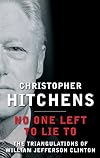
No One Left to Lie To is Christopher Hitchens' unapologetic and still-timely diagnosis of the Clinton infection. Written in the immediate aftermath of the Monica Lewinsky scandal – Hitchens even notes how some of the manuscript was written whilst he was testifying in one of Bill Clinton's many hearings – some parts of the exposé show their age by taking for granted knowledge of the ins and outs of Clinton-camp duplicitousness at the time. It would no doubt have been known at the time as show more it led on every network and newspaper and around every water cooler, but seventeen years on parts of the book can seem overly journalistic. However, whilst Hitchens wasn't looking for posterity here, the quality of his writing – particularly in the more focused later chapters – ensures that the book can still be devoured many years on.
This is not the only reason why this short polemic has aged well. Another is that Clinton has not been called to account for his alleged crimes and misdemeanours, so lucid documentation of them is still in the public interest. Later chapters like those on 'Clinton's War Crimes' and 'Is There a Rapist in the Oval Office?' consequently still possess the power to shock. Hitchens' attempt to explain the strategy of 'triangulation' and how it enabled Clinton to exercise power with such reckless lack of principle is less coherent – the earlier chapters could have done with some restructuring – but the assessment of Clintonism as, variously, "the manipulation of populism by elitism" (pg. 2), "the use of public office for private ends and gratification" (pg. 91) and, most concisely, "the transmutation of public office into private interest and vice versa" (pp163-4) are on the mark. Underlying all of Hitchens' righteous venom is a lament for the corruption of classical liberalism and republicanism. When he rails against the soulless cynicism of the Clintons, the partisan politicking of the public 'servants', the unquestioning complicity or witlessness of the media and the bovine ignorance of the citizenry, he is diagnosing sicknesses and symptoms which will be familiar to any observer of American politics now in 2017.
This leads me to the final reason why No One Left to Lie To retains its relevancy, for (as you might have heard) last year the mutant Clinton monster once again reared its head for another run at the presidency. Even after the loss (which was a joy to see unfold live), the Clinton epidemic is still in the air, in the refusal to accept defeat graciously amongst her fanbase. It is interesting to speculate what Hitchens might have thought of the 2016 presidential race and of everything that has happened since. Certainly, with Benghazi, the e-mail server, the health problems and fainting on that "beautiful day in New York", and the recent Seth Rich allegations, he wouldn't have been short of material. (With regards to the Seth Rich story and the Washington Post instead running with more Russia allegations, it is coincidentally interesting to note this passage on page xxxv of Hitchens' book: "I. F. Stone once observed that the Washington Post was a great newspaper, because you never knew on what page you would find the Page One story.")
No One Left to Lie To is a troubling book. It is dripping with evidence if not of criminality then at least with the darkest seediness. The pages themselves feel almost soiled. And if you feel that the flies hanging around Bill Clinton are now old-hat, the book also devotes some time to dear Hillary (Chapter 7: 'The Shadow of the Con Man'), who sadly has gone on to prove that if there is indeed no one left to lie to, you can at least continue to lie with impunity to your existing audience, again and again and again. One can't but help the feeling that for all the angst over Trump, America dodged a bullet last November.
I once read an opinion which suggested that, faced with a President Trump, Hitchens would have "held his nose and voted Hillary". This is impossible to know, of course, but I think such an assessment doesn't quite understand the depth of distaste Hitchens – that lover of Jefferson and Paine and the truly liberal values of the American Republic – had for soulless parasites like the Clintons and their corporate-like machine. He might well have preferred the blunt demagoguery and brash yet gifted amateurism of Trump – which holds the prospect of change even if not change you could believe in – over the self-serving cynicism and short-circuiting of real democracy epitomized by the Clinton brand. Of course, it is very difficult to imagine Hitchens voting for someone as artless as Trump, but then again there remain many floundering commentators who still lack the wit to conceive that anyone might vote Trump. It is a moot point, although the speculation does remind us what a powerful guiding voice and unflappable bullshit-detector we have lost in Hitchens. Above all, I would suggest that the champion of Enlightenment values and writer of Letters to a Young Contrarian might himself remind us to look to our own lights and not vote based on his own advocacy or otherwise. For myself, I would suggest that perhaps, in this unusual case, the right course is better the devil you don't know, particularly when the one you do know has shown such immunity to banishment. show less
This is not the only reason why this short polemic has aged well. Another is that Clinton has not been called to account for his alleged crimes and misdemeanours, so lucid documentation of them is still in the public interest. Later chapters like those on 'Clinton's War Crimes' and 'Is There a Rapist in the Oval Office?' consequently still possess the power to shock. Hitchens' attempt to explain the strategy of 'triangulation' and how it enabled Clinton to exercise power with such reckless lack of principle is less coherent – the earlier chapters could have done with some restructuring – but the assessment of Clintonism as, variously, "the manipulation of populism by elitism" (pg. 2), "the use of public office for private ends and gratification" (pg. 91) and, most concisely, "the transmutation of public office into private interest and vice versa" (pp163-4) are on the mark. Underlying all of Hitchens' righteous venom is a lament for the corruption of classical liberalism and republicanism. When he rails against the soulless cynicism of the Clintons, the partisan politicking of the public 'servants', the unquestioning complicity or witlessness of the media and the bovine ignorance of the citizenry, he is diagnosing sicknesses and symptoms which will be familiar to any observer of American politics now in 2017.
This leads me to the final reason why No One Left to Lie To retains its relevancy, for (as you might have heard) last year the mutant Clinton monster once again reared its head for another run at the presidency. Even after the loss (which was a joy to see unfold live), the Clinton epidemic is still in the air, in the refusal to accept defeat graciously amongst her fanbase. It is interesting to speculate what Hitchens might have thought of the 2016 presidential race and of everything that has happened since. Certainly, with Benghazi, the e-mail server, the health problems and fainting on that "beautiful day in New York", and the recent Seth Rich allegations, he wouldn't have been short of material. (With regards to the Seth Rich story and the Washington Post instead running with more Russia allegations, it is coincidentally interesting to note this passage on page xxxv of Hitchens' book: "I. F. Stone once observed that the Washington Post was a great newspaper, because you never knew on what page you would find the Page One story.")
No One Left to Lie To is a troubling book. It is dripping with evidence if not of criminality then at least with the darkest seediness. The pages themselves feel almost soiled. And if you feel that the flies hanging around Bill Clinton are now old-hat, the book also devotes some time to dear Hillary (Chapter 7: 'The Shadow of the Con Man'), who sadly has gone on to prove that if there is indeed no one left to lie to, you can at least continue to lie with impunity to your existing audience, again and again and again. One can't but help the feeling that for all the angst over Trump, America dodged a bullet last November.
I once read an opinion which suggested that, faced with a President Trump, Hitchens would have "held his nose and voted Hillary". This is impossible to know, of course, but I think such an assessment doesn't quite understand the depth of distaste Hitchens – that lover of Jefferson and Paine and the truly liberal values of the American Republic – had for soulless parasites like the Clintons and their corporate-like machine. He might well have preferred the blunt demagoguery and brash yet gifted amateurism of Trump – which holds the prospect of change even if not change you could believe in – over the self-serving cynicism and short-circuiting of real democracy epitomized by the Clinton brand. Of course, it is very difficult to imagine Hitchens voting for someone as artless as Trump, but then again there remain many floundering commentators who still lack the wit to conceive that anyone might vote Trump. It is a moot point, although the speculation does remind us what a powerful guiding voice and unflappable bullshit-detector we have lost in Hitchens. Above all, I would suggest that the champion of Enlightenment values and writer of Letters to a Young Contrarian might himself remind us to look to our own lights and not vote based on his own advocacy or otherwise. For myself, I would suggest that perhaps, in this unusual case, the right course is better the devil you don't know, particularly when the one you do know has shown such immunity to banishment. show less
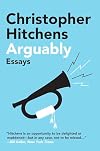
Even before I reached the essay on Gore Vidal, it occurred to me that I hadn’t read such insightful essays since I read “United States”, Vidal’s collection from 1993. One of the main points of reading essayists is not just to share their opinions, but be presented with cogent and well thought-out arguments that challenge your own (sometimes hazy) opinions on important subjects. (By the way, I agreed with Hitchens that Vidal went completely bonkers after 9/11.)
I first encountered show more Hitchens’ writing when I picked up “The Trial of Henry Kissinger”, his argument for putting the Machiavellian schemer at the disposal of the court in The Hague for multiple war crimes. Alas, that never happened, and as I write this review, Kissinger still lives (and gets invited onto TV shows to be fawned over) while Hitchens does not. Live, that is.
Hitchens came around to the idea that the United States is a banana republic only after the financial crisis of 2008, although Vidal (and most likely, Michael Moore) had come to that conclusion much sooner. Many of the essays here predate that alarming case of corporate welfare and socialism for the rich, and many of these pieces he wrote during the Bush-Cheney regime, a period in which military contractors made huge profits from the elective wars and the White House endorsed the irresponsible behavior of our lending institutions. Apparently, Hitchens’ obsession with Saddam had either blinded him to these transgressions at the time or he consciously diminished them in importance.
One gets the impression that Hitchens held onto an idea until events proved him wrong, followed by an unacknowledged reversal of opinion. Still, I often agreed with him about Updike, Twain, and other writers. show less
I first encountered show more Hitchens’ writing when I picked up “The Trial of Henry Kissinger”, his argument for putting the Machiavellian schemer at the disposal of the court in The Hague for multiple war crimes. Alas, that never happened, and as I write this review, Kissinger still lives (and gets invited onto TV shows to be fawned over) while Hitchens does not. Live, that is.
Hitchens came around to the idea that the United States is a banana republic only after the financial crisis of 2008, although Vidal (and most likely, Michael Moore) had come to that conclusion much sooner. Many of the essays here predate that alarming case of corporate welfare and socialism for the rich, and many of these pieces he wrote during the Bush-Cheney regime, a period in which military contractors made huge profits from the elective wars and the White House endorsed the irresponsible behavior of our lending institutions. Apparently, Hitchens’ obsession with Saddam had either blinded him to these transgressions at the time or he consciously diminished them in importance.
One gets the impression that Hitchens held onto an idea until events proved him wrong, followed by an unacknowledged reversal of opinion. Still, I often agreed with him about Updike, Twain, and other writers. show less
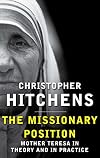
In attacking the legacy of Mother Teresa, Christopher Hitchens' aim in this polemic is true. It is not so much that she loved the poor but that she fetishized poverty, replacing humility with abjectness and spirituality with anti-materialism. Her missions refused – on dogmatic principles – to deliver proper medical care to the poor and needy who visited, and the places stayed that way for decades, even after the flood of donations that resulted from her fame. (And Hitchens asks: Where show more did all that money go?) It was a conscious decision to enhance the suffering of the poor, the better to experience 'the glory of God'. Needless to say, Hitchens is not a fan of this needless cruelty.
He also points out that it is hypocritical, for whenever 'Mother' herself became ill, she checked into the finest clinics that (other people's donated) money could buy. "There is no conceit equal to false modesty," Hitchens says on page 91, and in the nauseatingly pious Teresa, doing more harm than good, he has the archetype of the foolish religionite he so despised.
You can understand why Hitchens' takedown caused a bit of a stir back when it was published, but you may also wonder whether it is worth reading this book nowadays, given that Mother Teresa is long gone. Well, Hitchens also throws a few punches towards her champions. Politicians and vested-interest-types got a lot of mileage out of their donations to her missions, with the armour provided by their association with her proving very useful indeed (not least to the dictators she also graced with her patronage). Hitchens reserves his best powder for Teresa herself, but these champions in media, politics and elsewhere also get theirs. Their purchased indulgences, and eagerness to use the suffering of the poor as an opportunity to demonstrate their goodness, are what we would nowadays call 'virtue-signalling'.
However, the book is not comprehensive. It is disappointingly short; a sort of cursory overview of what Mother Teresa really was, as opposed to what the media made her out to be. Hitchens introduces each of the points but never goes into great depth about any of them, and before you know it the chapter has moved on and soon the book has ended. The Missionary Position has the right strategy – "judging Mother Teresa's reputation by her actions and words rather than her actions and words by her reputation" (pg. 103) – but does not go on the campaign. It is a fine war map, but with the individual battles left unfought. show less
He also points out that it is hypocritical, for whenever 'Mother' herself became ill, she checked into the finest clinics that (other people's donated) money could buy. "There is no conceit equal to false modesty," Hitchens says on page 91, and in the nauseatingly pious Teresa, doing more harm than good, he has the archetype of the foolish religionite he so despised.
You can understand why Hitchens' takedown caused a bit of a stir back when it was published, but you may also wonder whether it is worth reading this book nowadays, given that Mother Teresa is long gone. Well, Hitchens also throws a few punches towards her champions. Politicians and vested-interest-types got a lot of mileage out of their donations to her missions, with the armour provided by their association with her proving very useful indeed (not least to the dictators she also graced with her patronage). Hitchens reserves his best powder for Teresa herself, but these champions in media, politics and elsewhere also get theirs. Their purchased indulgences, and eagerness to use the suffering of the poor as an opportunity to demonstrate their goodness, are what we would nowadays call 'virtue-signalling'.
However, the book is not comprehensive. It is disappointingly short; a sort of cursory overview of what Mother Teresa really was, as opposed to what the media made her out to be. Hitchens introduces each of the points but never goes into great depth about any of them, and before you know it the chapter has moved on and soon the book has ended. The Missionary Position has the right strategy – "judging Mother Teresa's reputation by her actions and words rather than her actions and words by her reputation" (pg. 103) – but does not go on the campaign. It is a fine war map, but with the individual battles left unfought. show less
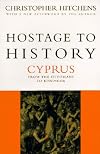
To say that, bar the occasional collaboration or piece of miscellany out there, Christopher Hitchens' first published book is my last is to utter the sort of superficial kismet that the man himself would no doubt dislike. Hostage to History, an essayistic commentary on the crisis occurring in Cyprus at the time it was published in 1984, possesses for me not only the sadness of learning about the sorry lot of the Cypriot people as Greece, Turkey, Britain and the United States treat their show more island as a "strategic pawn rather than as a country with a complex individuality" (pg. 163), but also the sadness of knowing that after more than a decade of enjoying his various books, my experience of reading Hitchens (at least for the first time) is at an end.
And Hostage to History is a good book to end it on. Hitchens is on fine form from the start, beginning in his very first line by pointing out how Cyprus, a European island and member of NATO, had been attacked by two other NATO countries (pg. 9). Hitchens has never been shy of casting light on hypocrisy and cant, and this is in evidence in this debut effort, with some fine turns of phrase, some principled and emphatic condemnation of political behaviour, and some well-chosen and judiciously-deployed hard evidence.
What is even more commendable is that Hitchens' astuteness, beyond his mere writing skill, is also on display. One of his stated goals in Hostage to History is in refuting the lazy claim that Cyprus has problems because of intercommunal tensions between Greek Cypriots and Turkish Cypriots. Hitchens instead shows how the crises, particularly the 1974 invasion, arose out of the policies and designs of Greece, Turkey, Britain and the USA, with any "weaknesses or errors of Cypriots… exploited and compounded by external intervention" (pg. 159). Hitchens' always-charming way of calling a spade a spade would be fine enough, but he also makes some pertinent conclusions; the most compelling of which is to call on Cypriots to remember "the blows [Cyprus] has been dealt" by "distant, uncaring enemies" and to use this common memory to work together to overcome whatever sectarian grievances do indeed remain (pg. 164). In Hitchens' first work we find the Hitchens we love already fully formed.
If I had read Hostage to History at any other point over my Hitchens journey of the last decade or so, it might have registered only as a curiosity. But that kismet I mentioned at the start of this review has also conspired to ensure Cyprus is in the news as I write, with the frankly strange spectacle of a British Prime Minister awkwardly negotiating the use of British military bases on this distant island for the American bull's latest foray into the geopolitical china shop that is its (and Israel's) assault on Iran. And, as President Johnson's foul-mouthed retort quoted on page 61 of Hitchens' book tells us, American crudity on such matters is nothing new. Empathy for the Cypriots is deepened by the uncomfortable realisation that perhaps we are all hostages of history. show less
And Hostage to History is a good book to end it on. Hitchens is on fine form from the start, beginning in his very first line by pointing out how Cyprus, a European island and member of NATO, had been attacked by two other NATO countries (pg. 9). Hitchens has never been shy of casting light on hypocrisy and cant, and this is in evidence in this debut effort, with some fine turns of phrase, some principled and emphatic condemnation of political behaviour, and some well-chosen and judiciously-deployed hard evidence.
What is even more commendable is that Hitchens' astuteness, beyond his mere writing skill, is also on display. One of his stated goals in Hostage to History is in refuting the lazy claim that Cyprus has problems because of intercommunal tensions between Greek Cypriots and Turkish Cypriots. Hitchens instead shows how the crises, particularly the 1974 invasion, arose out of the policies and designs of Greece, Turkey, Britain and the USA, with any "weaknesses or errors of Cypriots… exploited and compounded by external intervention" (pg. 159). Hitchens' always-charming way of calling a spade a spade would be fine enough, but he also makes some pertinent conclusions; the most compelling of which is to call on Cypriots to remember "the blows [Cyprus] has been dealt" by "distant, uncaring enemies" and to use this common memory to work together to overcome whatever sectarian grievances do indeed remain (pg. 164). In Hitchens' first work we find the Hitchens we love already fully formed.
If I had read Hostage to History at any other point over my Hitchens journey of the last decade or so, it might have registered only as a curiosity. But that kismet I mentioned at the start of this review has also conspired to ensure Cyprus is in the news as I write, with the frankly strange spectacle of a British Prime Minister awkwardly negotiating the use of British military bases on this distant island for the American bull's latest foray into the geopolitical china shop that is its (and Israel's) assault on Iran. And, as President Johnson's foul-mouthed retort quoted on page 61 of Hitchens' book tells us, American crudity on such matters is nothing new. Empathy for the Cypriots is deepened by the uncomfortable realisation that perhaps we are all hostages of history. show less
Lists
Awards


You May Also Like


Associated Authors
Statistics
- Works
- 87
- Also by
- 37
- Members
- 29,787
- Popularity
- #676
- Rating
- 4.0
- Reviews
- 653
- ISBNs
- 437
- Languages
- 16
- Favorited
- 153


