
Jacob Ritari
Author of Taroko Gorge
About the Author
Image credit: The Book Lady's Blog
Works by Jacob Ritari
Tagged
Common Knowledge
- Gender
- male
- Education
- Sophia University, Tokyo (Japanese|Japanese Literature)
- Places of residence
- Boston, Massachusetts, USA
Taiwan
Tokyo, Japan
Members
Reviews
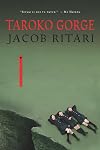
While much Taroko Gorge is about the disappearance of the girls, this is as much a novel about the individual narrators and their reliability, their motivations and their secrets. Told through the eyes of four narrators, the reader is left to fill in the blanks of their stories. It is as much a psychological story as it is a suspenseful mystery as the reader interprets the clues behind the disappearances, minuscule as they are.
The four narrators are each flawed but lend their own show more perspectives to the story. From the jaded American journalist to the high school leader, to the teen girl who just wants to find a boyfriend to the detective who has seen it all - each provides their own insight to the scene. Added to the mix are the cultural differences between the Japanese students, the Taiwanese detective, and the American journalists. The biases and stereotypes definitely add additional tension to an already intense situation, yet they also add a level of realism and humanity.
This is such a subtle novel. Definitely a character-driven novel, the story unfolds in spurts and starts. The beauty lies in the words, in the realizations and truths that each character comes to understand. A seemingly peaceful story, the lyricism of the words belies the underlying turmoil.
However, the words were not enough to overcome certain flaws. The biggest issue was the fact that the eventual resolution of the mystery is rather anti-climatic compared the build-up. It all seemed rather rushed and was definitely a let-down. Also, while the reader is given a glimpse into the minds of each of the four narrators, the information they choose to share is not enough to build an emotional connection to them. As a result, the reader feels more compassion and empathy towards the lost girls than he or she does the main characters.
Taroko Gorge is one I enjoyed but feel I could have enjoyed more than I did if certain things were different. It is a demanding read, and therefore not for everyone. Also, given the lack of significant action, potential readers are to be warned not to expect edge-of-the-seat suspense or a dramatic showdown. What one gets instead is an insightful, almost philosophical, cultural study of human nature in the guise of a mystery. show less
The four narrators are each flawed but lend their own show more perspectives to the story. From the jaded American journalist to the high school leader, to the teen girl who just wants to find a boyfriend to the detective who has seen it all - each provides their own insight to the scene. Added to the mix are the cultural differences between the Japanese students, the Taiwanese detective, and the American journalists. The biases and stereotypes definitely add additional tension to an already intense situation, yet they also add a level of realism and humanity.
This is such a subtle novel. Definitely a character-driven novel, the story unfolds in spurts and starts. The beauty lies in the words, in the realizations and truths that each character comes to understand. A seemingly peaceful story, the lyricism of the words belies the underlying turmoil.
However, the words were not enough to overcome certain flaws. The biggest issue was the fact that the eventual resolution of the mystery is rather anti-climatic compared the build-up. It all seemed rather rushed and was definitely a let-down. Also, while the reader is given a glimpse into the minds of each of the four narrators, the information they choose to share is not enough to build an emotional connection to them. As a result, the reader feels more compassion and empathy towards the lost girls than he or she does the main characters.
Taroko Gorge is one I enjoyed but feel I could have enjoyed more than I did if certain things were different. It is a demanding read, and therefore not for everyone. Also, given the lack of significant action, potential readers are to be warned not to expect edge-of-the-seat suspense or a dramatic showdown. What one gets instead is an insightful, almost philosophical, cultural study of human nature in the guise of a mystery. show less
Jacob Ritari delves deep into human nature and focuses on emotional interaction during a crisis for his debut novel Taroko Gorge. While Taroko Gorge does revolve around the disappearance of three Japanese schoolgirls, I am loath to call this a detective novel as it focuses more on the characters feelings and interaction than on the search. I also found the use of telling the story through multiple first person views, through the eyes of several of the main characters, very effective in show more heightening the tension felt throughout the story.
The author’s bio says he’s lived in both Taiwan and Japan and it shows through these multiple points of view. Each character brings a unique cultural perspective to the narrative, a perspective that at times accentuates the difference between peoples and at other times shows how we are all really the same. The best examples of this are the various interplays between the Japanese students. The teen girls are obsessed with the teen boys and the teen boys are obsessed with the teen girls, yet neither side really knows how to deal with the other. At the same time, the teen obsession has a different character to it than if these were American teens.
The main characters have a lot of depth to them, so much so that we are introduced to some of the demons lurking in their past. This is what makes the psychological drama so believable: we are given insights into the characters’ motivations. Through these revelations, the reader will develop a lot of empathy for the people they meet.
If you are tired of the same recycled plots in most detective stories these days, give Taroko Gorge a try. If you enjoy exotic locales, this novel may leave a little to be desired as it focuses on people, not location. Highly suggested for fans of psychodrama and character driven stories. show less
The author’s bio says he’s lived in both Taiwan and Japan and it shows through these multiple points of view. Each character brings a unique cultural perspective to the narrative, a perspective that at times accentuates the difference between peoples and at other times shows how we are all really the same. The best examples of this are the various interplays between the Japanese students. The teen girls are obsessed with the teen boys and the teen boys are obsessed with the teen girls, yet neither side really knows how to deal with the other. At the same time, the teen obsession has a different character to it than if these were American teens.
The main characters have a lot of depth to them, so much so that we are introduced to some of the demons lurking in their past. This is what makes the psychological drama so believable: we are given insights into the characters’ motivations. Through these revelations, the reader will develop a lot of empathy for the people they meet.
If you are tired of the same recycled plots in most detective stories these days, give Taroko Gorge a try. If you enjoy exotic locales, this novel may leave a little to be desired as it focuses on people, not location. Highly suggested for fans of psychodrama and character driven stories. show less
 This review was written for LibraryThing Early Reviewers.
I requested Taroko Gorge from the early reviewer's list for one reason, Taiwan. Precious little has been written in English in which Taiwan plays any part, and I suspect for most English language readers their opinions of the country are perfectly summed up by one character in Ritari's book when she asks, "Taiwan? Where is Taiwan?" So when I started reading I was less interested in the story than I was wondering how he would treat Taiwan.
Turns out that aside from a few atmospheric snippets show more Taiwan figures very little in Taroko Gorge. What's there is familiar, but place is not the focus of the book at all. This is a character novel, where the driving force of the plot is in the conflicting experiences of the four narrators on the same vein as "In the Grove". One might expect the primary question of a book centered around the disappearance of three school girls to be what happened to them, but what really keeps you reading is whether or not those looking for the girls will be able to survive each other. It's a cabin fever story, not a whodunit.
For me this book was a nice change of pace. It was easy but engrossing, and my knowledge of Taiwan and Japan helped me appreciate some of the nuance in the book. I'm not sure that the ample use of Japanese was really needed. It didn't really add anything and I wonder if those who couldn't read it merely skipped those lines.
A theme of mystery, faith, and questioning what any of it even means is also prevalent throughout the book, which gives it more depth than a simple character piece might. Taroko Gorge doesn't preach, but it does question on a deeper level than I expected. All in all this was a strong book that delivered the tension promised and succeeded in being a little something more than a beach read. But I'm still looking for a nice Taiwanese novel. show less
Turns out that aside from a few atmospheric snippets show more Taiwan figures very little in Taroko Gorge. What's there is familiar, but place is not the focus of the book at all. This is a character novel, where the driving force of the plot is in the conflicting experiences of the four narrators on the same vein as "In the Grove". One might expect the primary question of a book centered around the disappearance of three school girls to be what happened to them, but what really keeps you reading is whether or not those looking for the girls will be able to survive each other. It's a cabin fever story, not a whodunit.
For me this book was a nice change of pace. It was easy but engrossing, and my knowledge of Taiwan and Japan helped me appreciate some of the nuance in the book. I'm not sure that the ample use of Japanese was really needed. It didn't really add anything and I wonder if those who couldn't read it merely skipped those lines.
A theme of mystery, faith, and questioning what any of it even means is also prevalent throughout the book, which gives it more depth than a simple character piece might. Taroko Gorge doesn't preach, but it does question on a deeper level than I expected. All in all this was a strong book that delivered the tension promised and succeeded in being a little something more than a beach read. But I'm still looking for a nice Taiwanese novel. show less
This review was written for LibraryThing Early Reviewers.Taroko Gorge is a heavily atmospheric novel with realistic characters whose unique voices bring Ritari's world to life. The structure highlights the various ways to see the Gorge and the experience of traveling, and the suspense builds at a good pace until it's difficult to put the book down. As a unique and smart novel, my only criticisms are fairly minor; the beginning of the book is overloaded with names (and not easy ones), and I imagine trying to read the book in shorter spurts instead show more of one long read would find difficulty there. Also, after the ride the book allows for, the ending was somewhat disappointing--I wanted more regardling both length and content. The plot was perfect, but the character build-up was let down some in the end. Regardless, I'll be guaranteed to keep an eye out for Ritari's next book. As a debut novel, this was impressive, and I may well find myself going back to it when time permits, as the prose often had the beauty of poetry, and was certainly built to last. show less
This review was written for LibraryThing Early Reviewers.Statistics
- Works
- 2
- Members
- 81
- Popularity
- #222,753
- Rating
- 3.4
- Reviews
- 20
- ISBNs
- 2

