
Bret Hart
Author of Hitman: My Real Life in the Cartoon World of Wrestling
About the Author
Image credit: Wikimedia Commons http://commons.wikimedia.org/wiki/File:BretHartJuly242005.JPG
Works by Bret Hart
Associated Works
Royal Rumble 1997 — Wrestler — 1 copy
Tagged
Common Knowledge
- Canonical name
- Hart, Bret
- Legal name
- Hart, Bret Sergeant
- Other names
- Hart, Bret 'The Hitman'
- Birthdate
- 1957-07-02
- Gender
- male
- Occupations
- wrestler
- Organizations
- WWE
WCW
Stampede Wrestling - Nationality
- Canada
- Birthplace
- Calgary, Alberta, Canada
- Places of residence
- Calgary, Alberta, Canada
- Map Location
- Canada
Members
Reviews

Bret being Bret would sum this up quite well. By now we all know what a joke he is, holding grudges about things from 25 years ago and never let go, taking pro wrestling so serious it's almost a mental illness and just hating everybody who drew more than he do (which, ultimately, was everybody above the midcard)
The book reall is just Bret sucking his own dick for hundreds of pages and back then lying a lot, like his drug use. In the book he says that cheating on his wife nearly every day show more was better than doing drugs. He also laments that the WWF forbade the use of marijuana and how it turned everybody into pill abusers. Im the 350 days documentary on the other hand, that came out years later, he finally admitted to being a massive cocaine addicts, something, we all knew from reading his ex-wifes book or listening to the shoot interviews from Junkyard Dog, Bad News Brown and Dynamite Kid.
The rest of the book is Bret truly believing that he was the greatest (he wasn't) and how poular he was (he wasn't), anywhere but in the USA (again, wrong, he drew so badly in Calgary, that the WWF dropped that city, his hometown, from their tour schedule from 1994 to late 1996, the time they put the belt on him!) and crying about workers being stiff (stiff as in everything that makes contact, he really cries a lot) and how everybody was beneath him. You read the book and you believe Scott Hall when he said that he once visited Bret at home and his house was nothing but a shrine to himself, which freaked Hall out so much he never visited that home ever again!
Of course, nothing ever was his fault. His total failure in WCW was the fault of Bischoff, Hogan, Flair, Russo, Sting, Luger, Bill Goldberg (the fact he blames Goldberg for his career end, when he decided that pills and cocaine are a better solution to his headache than going to a doctor and subsequently participating in a hardcore match vs. Terry Funk including some very stiff chair shots to the head is still quite something)
While in reality Bret's legacy is:
- Main Eventing the worst selling WWF PPV of all Time (IYH5)
- Drawing the worst attendance numbers any WWE Champion ever did in the history at the Meadowland Arena, Madison Square Garden, Maple Leaf Gardens and Saddledome
- Being the Champion for the second worst drawing Wrestlemania ever (WM12)
- Being the headliner for the first WWF German Tour that wasn't a sellout (Hart Attack Tour 1994)
He wants to make you believe he was the biggest draw anywhere in the world, including an absurd claim that he drew 100,000 for a Show in India in 1994 (when in reality, the WWF never visited that country before 1996 and the overall attendance for those first 4 shows was 82,000! Jake Roberts rightfully called him out over that lie)
Bret is a very sore loser. Where Hogan's books are pure fantasy, this one is downright garbage but still is amusing in the amount of salty tears that pool out of every page.
The only redeeming parts are whenever he talks about Owen, how awesome he was and him dying in a idiotic stunt that never should've happened. show less
The book reall is just Bret sucking his own dick for hundreds of pages and back then lying a lot, like his drug use. In the book he says that cheating on his wife nearly every day show more was better than doing drugs. He also laments that the WWF forbade the use of marijuana and how it turned everybody into pill abusers. Im the 350 days documentary on the other hand, that came out years later, he finally admitted to being a massive cocaine addicts, something, we all knew from reading his ex-wifes book or listening to the shoot interviews from Junkyard Dog, Bad News Brown and Dynamite Kid.
The rest of the book is Bret truly believing that he was the greatest (he wasn't) and how poular he was (he wasn't), anywhere but in the USA (again, wrong, he drew so badly in Calgary, that the WWF dropped that city, his hometown, from their tour schedule from 1994 to late 1996, the time they put the belt on him!) and crying about workers being stiff (stiff as in everything that makes contact, he really cries a lot) and how everybody was beneath him. You read the book and you believe Scott Hall when he said that he once visited Bret at home and his house was nothing but a shrine to himself, which freaked Hall out so much he never visited that home ever again!
Of course, nothing ever was his fault. His total failure in WCW was the fault of Bischoff, Hogan, Flair, Russo, Sting, Luger, Bill Goldberg (the fact he blames Goldberg for his career end, when he decided that pills and cocaine are a better solution to his headache than going to a doctor and subsequently participating in a hardcore match vs. Terry Funk including some very stiff chair shots to the head is still quite something)
While in reality Bret's legacy is:
- Main Eventing the worst selling WWF PPV of all Time (IYH5)
- Drawing the worst attendance numbers any WWE Champion ever did in the history at the Meadowland Arena, Madison Square Garden, Maple Leaf Gardens and Saddledome
- Being the Champion for the second worst drawing Wrestlemania ever (WM12)
- Being the headliner for the first WWF German Tour that wasn't a sellout (Hart Attack Tour 1994)
He wants to make you believe he was the biggest draw anywhere in the world, including an absurd claim that he drew 100,000 for a Show in India in 1994 (when in reality, the WWF never visited that country before 1996 and the overall attendance for those first 4 shows was 82,000! Jake Roberts rightfully called him out over that lie)
Bret is a very sore loser. Where Hogan's books are pure fantasy, this one is downright garbage but still is amusing in the amount of salty tears that pool out of every page.
The only redeeming parts are whenever he talks about Owen, how awesome he was and him dying in a idiotic stunt that never should've happened. show less
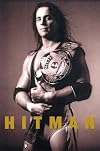
Bret Hart’s account of his career in professional wrestling is not only an outstanding autobiography of an icon in the sport, but also of the history of pro wrestling period.
Bret Hart grew up in a wrestling family. His father, Stu Hart, was a pioneer in the sport, promoting wrestling matches in Canada through the late 1940’s through most of the rest of his life. Up to the 1990’s wrestling was largely controlled by regional promoters who respected each other’s territories and shared show more wrestling talent for main events. As Bret tells of his growing up and early years in the sport wrestling for his father, you learn it really was a complete carnival like atmosphere. From regular size true tough men and wrestling pioneers like Lou Thesz, to behemoths like Andre the Giant, to midgets and women wrestling, it was all quite a circus.
He tells of those early days in Canada and his friendships with Davey Boy Smith, Tom Billington known as the Dynamite Kid, and Jim the Anvil Neidhart, while traveling around in cars or vans full of wrestlers from one small town to another performing matches. As will be detailed throughout the book, drugs and steroids destroyed the lives of Billington and Davey Boy Smith, and nearly did the same for Neidhart.
The regional system, by many accounts, worked out well for both wrestlers and promoters in an industry where many could make money. But then came Vince McMahon, Jr. and his drive to monopolize the sport and destroy the regional system built up over the years by the sport’s icons. McMahon was basically successful in his effort.
Hart went on to star in McMahon’s World Wresting Federation (WWF), now called World Wresting Entertainment (WWE) and held its championship belt on multiple occasions.
What is utterly fascinating about the entire industry is the rampant personalities and politics that go on behind the scenes to determine how matches will be promoted and how they will end, which is critical to build up a clash and audience, and to build up a career. And it is that desire to stay strong and be a viable superstar that leads to be biggest challenge in determining how matches are going end. No star wants to be beaten and pinned unless it’s to build up for a big clash. And that desire not to be placed on the losing end of matches causes the most conflict in the sport.
Hart is brutally honest about the rampant use of steroids and illicit drugs in the sport. Most attribute the early deaths of many wrestlers like the tragic Von Erich brothers, Chris Benoit, and Davey Boy Smith, to name only a few, to abuse of steroids and drugs. Further, while the matches might be decided ahead of time, the physical toll constantly wresting takes on the body is also evident in the debilitating injuries or deterioration many wrestler’s suffer late in their career or after they retire. It is clear from Hart’s account of the wresting business that promoter’s like McMahon see their wrestler as disposable commodities and treat them as such. There’s always another young buck to come along and replace today’s stars. The life of a wrestler is both glamorous but physically and mentally debilitating.
Vince McMahon comes off looking like a total cretin in Hart’s account of all the lies and false promises and dirty machinations behind the scenes. Late in Hart’s career when he decided to leave the WWF for a rival promotion he was set to fight Shawn Michaels for Hart’s championship belt. He and McMahon agreed that in a match with Shawn Michaels in Montreal that the fight would end in interference from outside the ring and huge brawl with no real outcome to the match and then Hart would lose later to Michaels for the championship belt before he left. Instead, a secret plot concocted by McMahon lead to chaos and the infamous Montreal Screwjob. Hart let Michaels put him in a submission hold during the match, which he was supposed to reverse, but McMahon came out and had the bell rung to end the match and declared Michaels the winner, even though Hart did not submit. Hart did not want to lose in front of his fans in Montreal and McMahon betrayed him. Leading up to all this was what can only be described as hatred and even jealously between Shawn Michaels and Hart. Their animosity toward each other stirred the cauldron even more.
Bret Hart went on to Ted Turner’s promotion the World Championship Wresting but was not very successful there. Other accounts, including Hart’s, talks about what a disjointed soap opera the promotion was with internal politics among legends of the sport like Ric Flair and Hulk Hogan calling most of the shots.
Along the way in Hart’s journey through life we meet many personalities of the wresting world and what it was like to be star wrestler traveling the world. Part of this memoir also includes memories of Bret Hart’s younger brother, Owen Hart, who died in a tragic ring accident in May 1999.
In 2002, Hart suffered a stroke that kept him out of action and rehabilitating for quite some time. Sadly, Hart, at nearly 53, is even wrestling again. As he said in his book, it’s hard to give up the sport.
Overall this is a surprisingly well-written and organized autobiography and history of the sport and highly recommended.
show less
Bret Hart grew up in a wrestling family. His father, Stu Hart, was a pioneer in the sport, promoting wrestling matches in Canada through the late 1940’s through most of the rest of his life. Up to the 1990’s wrestling was largely controlled by regional promoters who respected each other’s territories and shared show more wrestling talent for main events. As Bret tells of his growing up and early years in the sport wrestling for his father, you learn it really was a complete carnival like atmosphere. From regular size true tough men and wrestling pioneers like Lou Thesz, to behemoths like Andre the Giant, to midgets and women wrestling, it was all quite a circus.
He tells of those early days in Canada and his friendships with Davey Boy Smith, Tom Billington known as the Dynamite Kid, and Jim the Anvil Neidhart, while traveling around in cars or vans full of wrestlers from one small town to another performing matches. As will be detailed throughout the book, drugs and steroids destroyed the lives of Billington and Davey Boy Smith, and nearly did the same for Neidhart.
The regional system, by many accounts, worked out well for both wrestlers and promoters in an industry where many could make money. But then came Vince McMahon, Jr. and his drive to monopolize the sport and destroy the regional system built up over the years by the sport’s icons. McMahon was basically successful in his effort.
Hart went on to star in McMahon’s World Wresting Federation (WWF), now called World Wresting Entertainment (WWE) and held its championship belt on multiple occasions.
What is utterly fascinating about the entire industry is the rampant personalities and politics that go on behind the scenes to determine how matches will be promoted and how they will end, which is critical to build up a clash and audience, and to build up a career. And it is that desire to stay strong and be a viable superstar that leads to be biggest challenge in determining how matches are going end. No star wants to be beaten and pinned unless it’s to build up for a big clash. And that desire not to be placed on the losing end of matches causes the most conflict in the sport.
Hart is brutally honest about the rampant use of steroids and illicit drugs in the sport. Most attribute the early deaths of many wrestlers like the tragic Von Erich brothers, Chris Benoit, and Davey Boy Smith, to name only a few, to abuse of steroids and drugs. Further, while the matches might be decided ahead of time, the physical toll constantly wresting takes on the body is also evident in the debilitating injuries or deterioration many wrestler’s suffer late in their career or after they retire. It is clear from Hart’s account of the wresting business that promoter’s like McMahon see their wrestler as disposable commodities and treat them as such. There’s always another young buck to come along and replace today’s stars. The life of a wrestler is both glamorous but physically and mentally debilitating.
Vince McMahon comes off looking like a total cretin in Hart’s account of all the lies and false promises and dirty machinations behind the scenes. Late in Hart’s career when he decided to leave the WWF for a rival promotion he was set to fight Shawn Michaels for Hart’s championship belt. He and McMahon agreed that in a match with Shawn Michaels in Montreal that the fight would end in interference from outside the ring and huge brawl with no real outcome to the match and then Hart would lose later to Michaels for the championship belt before he left. Instead, a secret plot concocted by McMahon lead to chaos and the infamous Montreal Screwjob. Hart let Michaels put him in a submission hold during the match, which he was supposed to reverse, but McMahon came out and had the bell rung to end the match and declared Michaels the winner, even though Hart did not submit. Hart did not want to lose in front of his fans in Montreal and McMahon betrayed him. Leading up to all this was what can only be described as hatred and even jealously between Shawn Michaels and Hart. Their animosity toward each other stirred the cauldron even more.
Bret Hart went on to Ted Turner’s promotion the World Championship Wresting but was not very successful there. Other accounts, including Hart’s, talks about what a disjointed soap opera the promotion was with internal politics among legends of the sport like Ric Flair and Hulk Hogan calling most of the shots.
Along the way in Hart’s journey through life we meet many personalities of the wresting world and what it was like to be star wrestler traveling the world. Part of this memoir also includes memories of Bret Hart’s younger brother, Owen Hart, who died in a tragic ring accident in May 1999.
In 2002, Hart suffered a stroke that kept him out of action and rehabilitating for quite some time. Sadly, Hart, at nearly 53, is even wrestling again. As he said in his book, it’s hard to give up the sport.
Overall this is a surprisingly well-written and organized autobiography and history of the sport and highly recommended.
show less
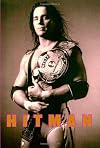
I read this because I watch wrestling... I guess it's one of my not-so-secret shames. When I started watching, Bret Hart had already left the WWF and gone to WCW, and I had no idea what the Montreal Screwjob was about. Going back and watching older matches, I can't say that I was a big Bret Hart fan... and yet, after reading this book, I've taken the time to watch some of his favorite matches again and really enjoyed them.
I feel like there are a lot of pros and cons to deciding if you want show more to read this book... and if you aren't a fast reader, it's a pretty big time-investment at close to 600 pages. The book has a slow pace, as you're basically reading Bret Hart's audio diary over the many years of his career as a professional wrestler. I'm kind of curious now about how many wrestlers do keep a diary of some sort, since Mick Foley wrote his book based on his notebook diaries.
It's also a book written for wrestling fans... there's very little explained about move sets and names are given at a rapid-fire pace and if you don't know who they are, you're out of luck. It definitely helps to read this with a background knowledge of territories, organizations, and wrestlers from all generations.
Another con that I had on a personal basis is that Bret sleeps around a lot. That's part of the business as much as drugs and alcohol are, but it's still tough to read about how he cheats, who he cheats with, and how he justifies it to himself when he can. The best that I can say about this aspect is that, out of the many evils he could have chosen to do, this seems like a lesser one.
So that's a lot of cons, but there are some major pros about this book. I don't know that you'll ever find a wrestling biography that covers such a vast scope. Bret's been at the bottom and the top of the industry, wrestled in more promotions and countries than you can shake a stick at, and been part of the biggest shakeup in the industry. If you love wrestling and want to learn more, this is a must-read. There's always a question of honesty when reading a biography, and this is especially true when it comes to wrestlers' biographies. However, I think this is a really sincere telling of how the business works. Sometimes it feels like he's over-promoting himself, but who am I to say that's not how it happened?
Bret's really at his best when he's telling about traveling outside of North America or his brother Owen. I really enjoyed his story about visiting Jerusalem during a tour and the awkward experience of being in such a holy place, while also being challenged to fights and followed by admiring fans. The stories about Owen, his talent, his career, and his death are sweet and sad. You get the feeling that he was one of the few good guys in the business, was ridiculously talented, and really cared about his family.
Basically, I would highly recommend this book to people who are wrestling history or Bret Hart fans - there's a plethora of information, stories and tidbits there to enjoy. If you aren't one of those people, you may want to skip it. Or skip the first 200 pages... things really get going once Bret is in the WWF and his career is taking off. show less
I feel like there are a lot of pros and cons to deciding if you want show more to read this book... and if you aren't a fast reader, it's a pretty big time-investment at close to 600 pages. The book has a slow pace, as you're basically reading Bret Hart's audio diary over the many years of his career as a professional wrestler. I'm kind of curious now about how many wrestlers do keep a diary of some sort, since Mick Foley wrote his book based on his notebook diaries.
It's also a book written for wrestling fans... there's very little explained about move sets and names are given at a rapid-fire pace and if you don't know who they are, you're out of luck. It definitely helps to read this with a background knowledge of territories, organizations, and wrestlers from all generations.
Another con that I had on a personal basis is that Bret sleeps around a lot. That's part of the business as much as drugs and alcohol are, but it's still tough to read about how he cheats, who he cheats with, and how he justifies it to himself when he can. The best that I can say about this aspect is that, out of the many evils he could have chosen to do, this seems like a lesser one.
So that's a lot of cons, but there are some major pros about this book. I don't know that you'll ever find a wrestling biography that covers such a vast scope. Bret's been at the bottom and the top of the industry, wrestled in more promotions and countries than you can shake a stick at, and been part of the biggest shakeup in the industry. If you love wrestling and want to learn more, this is a must-read. There's always a question of honesty when reading a biography, and this is especially true when it comes to wrestlers' biographies. However, I think this is a really sincere telling of how the business works. Sometimes it feels like he's over-promoting himself, but who am I to say that's not how it happened?
Bret's really at his best when he's telling about traveling outside of North America or his brother Owen. I really enjoyed his story about visiting Jerusalem during a tour and the awkward experience of being in such a holy place, while also being challenged to fights and followed by admiring fans. The stories about Owen, his talent, his career, and his death are sweet and sad. You get the feeling that he was one of the few good guys in the business, was ridiculously talented, and really cared about his family.
Basically, I would highly recommend this book to people who are wrestling history or Bret Hart fans - there's a plethora of information, stories and tidbits there to enjoy. If you aren't one of those people, you may want to skip it. Or skip the first 200 pages... things really get going once Bret is in the WWF and his career is taking off. show less
Anyone who was aware of the WWF in the eighties and nineties knows the name of Bret Hart. This is his autobiography, published in 2006. Coming from a dysfunctional family of twelve kids with parents who ran their own wrestling territory in western Canada, Hart grew up with the sport and became a professional as soon as he was big enough to get in the ring. This book follows his rise to fame over two decades, including his dealings with infamously underhanded WWF owner Vince McMahon. He is show more honest about what goes on in the ring, the set-ups, his feelings about other wrestling stars, and the permanent physical damage. He's surprisingly open about cheating on his wife, and his feelings about a number of his siblings, who he feels took advantage of his parents. And he talks about the in-ring death of his younger brother Owen during a wrestling event.
I think it's clear that though Hart kept recorded diaries of his years on the road with a mind to someday writing a book, this must have been ghost-written. It's riveting reading, but every other person Hart meets is moved to tears by being near him, and it's hard to accept someone referring to themselves as a hero quite so often. Other than that, this book was way more fascinating than I expected, especially the whole villainous sibling situation. 4.2 stars show less
I think it's clear that though Hart kept recorded diaries of his years on the road with a mind to someday writing a book, this must have been ghost-written. It's riveting reading, but every other person Hart meets is moved to tears by being near him, and it's hard to accept someone referring to themselves as a hero quite so often. Other than that, this book was way more fascinating than I expected, especially the whole villainous sibling situation. 4.2 stars show less
Lists
You May Also Like


Associated Authors
Statistics
- Works
- 6
- Also by
- 21
- Members
- 332
- Popularity
- #71,552
- Rating
- 4.1
- Reviews
- 14
- ISBNs
- 14