Not even worth the paper it was printed on.
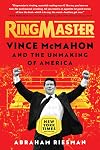
My goodness, i've read a ton of wrestling books, but this is the absolute bottom of the barrel. You could probably fill 10 books with the life, lies and crimes of Vince McMahon (and i hope some day we get a complete and honest work), there are plenty of stories, numerous rumours and even more allegations. You won't find them here. The book, despite being recently published ends in 1999, with some strange ramblings afterwards and the claim Vince owned wrestling after he bought WCW, which of course is nonsense.
After the author rambles about Trump and Covid (why? what has that got to do with wrestling or the wwf or vince? Just because Vince and Trump are friends? Jeez), we enter the life of Vince, but then the author gets sidetracked and lost in ramblings about his great-grandparents being slavers when slavery was legal and how the daughter of Vince's stepfather once appeared in a school play with her face painted black in the 1950's which has nothing to do with Vince, but it becomes even more obvious, what the agenda of the writer is.
There are only a few tidbits about Vince's upbringing from friends that contradict what he said in his infamous Playboy interview and that is pretty much the only interesting part. Soon after that the book basically just becomes a rehash of the old, but still good "Sex, Lies and Headlocks" from Shaun Assael and Mike Mooneyham (which i recommend over this obviously), which tells us the same stories show more about Vince up to around 1999, just better written, better edited and clearly not written by a obviously mentally ill person.
After that, it's back to incoherent ramblings about Trump and Covid, with only a slight mention of Vince's current legal problems at the end.
Out of the ~295 pages, roughly only 150 are about Vince. The rest is the mentioned ramblings and page upon page of large printed sources, obviously to pad out this worthless slop so it isn't too thin.
Avoid this at all costs show less
My goodness, i've read a ton of wrestling books, but this is the absolute bottom of the barrel. You could probably fill 10 books with the life, lies and crimes of Vince McMahon (and i hope some day we get a complete and honest work), there are plenty of stories, numerous rumours and even more allegations. You won't find them here. The book, despite being recently published ends in 1999, with some strange ramblings afterwards and the claim Vince owned wrestling after he bought WCW, which of course is nonsense.
After the author rambles about Trump and Covid (why? what has that got to do with wrestling or the wwf or vince? Just because Vince and Trump are friends? Jeez), we enter the life of Vince, but then the author gets sidetracked and lost in ramblings about his great-grandparents being slavers when slavery was legal and how the daughter of Vince's stepfather once appeared in a school play with her face painted black in the 1950's which has nothing to do with Vince, but it becomes even more obvious, what the agenda of the writer is.
There are only a few tidbits about Vince's upbringing from friends that contradict what he said in his infamous Playboy interview and that is pretty much the only interesting part. Soon after that the book basically just becomes a rehash of the old, but still good "Sex, Lies and Headlocks" from Shaun Assael and Mike Mooneyham (which i recommend over this obviously), which tells us the same stories show more about Vince up to around 1999, just better written, better edited and clearly not written by a obviously mentally ill person.
After that, it's back to incoherent ramblings about Trump and Covid, with only a slight mention of Vince's current legal problems at the end.
Out of the ~295 pages, roughly only 150 are about Vince. The rest is the mentioned ramblings and page upon page of large printed sources, obviously to pad out this worthless slop so it isn't too thin.
Avoid this at all costs show less
Great read, i think the german translation is pretty good from what i can tell (i glanced through the english version as ebook and found no massive errors)
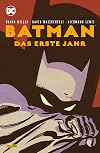
This is pretty much THE definitive story of Batman's origin and the beginning of the Chaos in Gotham City and you can tell how influental this book was on pretty much all the Batman movies that followed, especially the ones from Tim Burton. Even if you know the story of Batman, it's a great read. It's dark, moody, Batman screws up more than just once as he learns how to be a "super hero" and it's just highly entertaining.
It's also pretty much Miller at his peak alongside Sin City before he completely dove into too much drugs and alcohol. His writing is fluid, compelling, with enough depth and a good sense of pacing.
If you even have only a slight interest in the caped crusader, this is the book to start your journey. Follow it up by The Man who Laughs, then dive into Long Halloween, Dark Victory and Robin Year One.
This is pretty much THE definitive story of Batman's origin and the beginning of the Chaos in Gotham City and you can tell how influental this book was on pretty much all the Batman movies that followed, especially the ones from Tim Burton. Even if you know the story of Batman, it's a great read. It's dark, moody, Batman screws up more than just once as he learns how to be a "super hero" and it's just highly entertaining.
It's also pretty much Miller at his peak alongside Sin City before he completely dove into too much drugs and alcohol. His writing is fluid, compelling, with enough depth and a good sense of pacing.
If you even have only a slight interest in the caped crusader, this is the book to start your journey. Follow it up by The Man who Laughs, then dive into Long Halloween, Dark Victory and Robin Year One.
Tim und Struppi: Tim im Kongo: Kindercomic ab 8 Jahren | Ideal für Leseanfänger*innen | Comic-Klassiker by Hergé
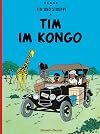
People cry racism but where is that? Black People havve wide noses, big lips and their IQ is lower than Chimpanzees. The USA lowered their IQ levels barrier from where you were deemed retarded from 85 to 70 specifically fo black people and that's a fact. The bigger gripe is how ruthlessly Tim just kills animals and wears their skin to trick animals, it's ridiculous and stupid of course but i can see why it worked back then as amusing story element. Again, you have to realize that this is a story from before World War 2 even!
The story is fun and from the 30's in terms of technology (with a smartphone the story wouldn't last 5 pages) and Tim and Struppi do fight clever against their adversaries. The characters aren't fully fleshed out of course as this was only the second story Herge wrote after the soviet one that was 'lost' for so long.
The story is fun and from the 30's in terms of technology (with a smartphone the story wouldn't last 5 pages) and Tim and Struppi do fight clever against their adversaries. The characters aren't fully fleshed out of course as this was only the second story Herge wrote after the soviet one that was 'lost' for so long.
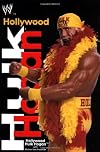
Hulk Hogan's or shall we say, Terry Bolea's death came out of nowhere and hit the same week as Ozzy Osbourne. He was a legend worldwide, some morons call him a racist despite being friends with Rodman, Jordan, Booker T., Shaq, Mr. T and the reason why Virgil got a job in WCW. Others call him a liar and that's a better description, though the real term is: Carny.
Hogan, like nobody else knew how to work the wrestling business, hew knew how to play promoters, wrestlers, bookers, for the maximum amount of exposure and obviously, money.
His lies are legendary, though are they lies or are they just exaggerations for the persona of Hulk Hogan? Where does Hulk Hogan end and Terry Bolea start? This book of course is full of nonsense and for most hardcore fans the most obvious thing is: Hogan stole a lot from Randy Savage. Savage was a star baseball player until he injured his shoulder, he was scouted. In this book, Hogan claimed exactly the same story, even though there is no proof of it, by most accounts, Bolea was not all that athletic and he was a musician mostly (but not good enough for Metallica, that's for sure, his crappy album proves it)
The rest is basically a "Hogan is god, Hogan is great"-worship comparable to the bible or the quran. It's total fantasy, total nonsnse, a lot of it makes no sense, like all the stories about Andre. It's good for a laugh, but not much else.
Hogan, like nobody else knew how to work the wrestling business, hew knew how to play promoters, wrestlers, bookers, for the maximum amount of exposure and obviously, money.
His lies are legendary, though are they lies or are they just exaggerations for the persona of Hulk Hogan? Where does Hulk Hogan end and Terry Bolea start? This book of course is full of nonsense and for most hardcore fans the most obvious thing is: Hogan stole a lot from Randy Savage. Savage was a star baseball player until he injured his shoulder, he was scouted. In this book, Hogan claimed exactly the same story, even though there is no proof of it, by most accounts, Bolea was not all that athletic and he was a musician mostly (but not good enough for Metallica, that's for sure, his crappy album proves it)
The rest is basically a "Hogan is god, Hogan is great"-worship comparable to the bible or the quran. It's total fantasy, total nonsnse, a lot of it makes no sense, like all the stories about Andre. It's good for a laugh, but not much else.

Far left, far left and as expected, completely clueless.
Yeah, we had that book to read at school here in Germany and it's just ludicrious violent fantasy of a person who has no idea about warfare. Ever since the bombs dropped on Hiroshima and Nagasaki, there's a good reason why Russia never attempted to conquer Europe, why the UK revoked their "Operation Unthinkable" and why not even the inbred morons in India and Pakistan nuked each other.
The books is basically just scaremongering through vile descriptions of what could be, should be (though not as shocking as the infamous british movie "Threads") but without any logic or reason. War just happens out of the blue, for no reason (unrealistic) and hits people unprepared (again, unrealistic), who then suffer the worst fate (again, unrealistic. it's not as if Japan ceased to exist and turned completely savage and unhinged after two nukes, i mean, not anymore savage and unhinged than they were before to China and Korea)
The book is also not very well written, you can tell that Pausewang wasn't a proper writer, her prose leaves much to be desired (i wonder if the english translation is actually better?!) and once the bombs drops it falls into TKKG Adventure fields of german writing mixed with typical left-leaning ideologies.
Yeah, we had that book to read at school here in Germany and it's just ludicrious violent fantasy of a person who has no idea about warfare. Ever since the bombs dropped on Hiroshima and Nagasaki, there's a good reason why Russia never attempted to conquer Europe, why the UK revoked their "Operation Unthinkable" and why not even the inbred morons in India and Pakistan nuked each other.
The books is basically just scaremongering through vile descriptions of what could be, should be (though not as shocking as the infamous british movie "Threads") but without any logic or reason. War just happens out of the blue, for no reason (unrealistic) and hits people unprepared (again, unrealistic), who then suffer the worst fate (again, unrealistic. it's not as if Japan ceased to exist and turned completely savage and unhinged after two nukes, i mean, not anymore savage and unhinged than they were before to China and Korea)
The book is also not very well written, you can tell that Pausewang wasn't a proper writer, her prose leaves much to be desired (i wonder if the english translation is actually better?!) and once the bombs drops it falls into TKKG Adventure fields of german writing mixed with typical left-leaning ideologies.
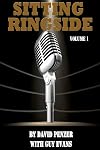
This book was awesome. It gives you a short biography of David Penzer and how he got into wrestling before he just tells great stories and he doesn't hold back it seems the passages about Randy "Pee Wee" Anderson make that obvious and they even surprised me. Throughout it all, it really also makes you dislike Bischoff even more for being so stupid to waste a ton of money on Michael Buffer, who never cared about wrestling ("The King of Hulk-Mania" and "Bret "Hitman" Clark" have become memes rightfully) while firing Gary Michael Capetta and keeping Penzer on a small budget, even though both were miles ahead of Buffer since they actually knew everything about Pro Wrestling. It also thankfully kills the long standing rumor, started by Dave Meltzer, that Nitro episodes were written while the show was live on air, Penzer clears up that sudden changes due to unforeseen circumstance happened but that was all.
Also included are over 200 pages of Documents, ranging from E-Mails to the run-downs of wrestling shows from WCW, notes for commentators and production sheets, it gives a very interesting insight in how wrestling shows are produced and what commentators or ring announcer get to know beforehand of a show and what happens during matches and is definitely a big highlight that has never been seen before in any book, as well as a ton of private pictures. Easily worth the money for every true wrestling fan!
Also included are over 200 pages of Documents, ranging from E-Mails to the run-downs of wrestling shows from WCW, notes for commentators and production sheets, it gives a very interesting insight in how wrestling shows are produced and what commentators or ring announcer get to know beforehand of a show and what happens during matches and is definitely a big highlight that has never been seen before in any book, as well as a ton of private pictures. Easily worth the money for every true wrestling fan!
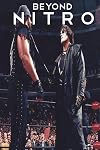
I have to say that this book disappointed me as well. Where Nitro is the definitive look at WCW during the Monday Night War, this book is...barely WCW even.
With the Beyond Nitro name, i was hoping for some interesting stuff about WCW before Nitro but instead it talks mostly about the WCW video games (interesting but everything, including the strange choice of Raven (over somebody like Sting or DDP or Randy Savage or anybody with drawing power) on the cover of WCW/nWo Revenge was already widely known) and otherwise, a lot of references to TNA, the WWE later on, even indie wrestling and crappy AEW.
There are still some good stories in the book and some interesting new things to learn but overall, it's not on the level of Nitro. (and really, i expected some more insight stuff, for example why the guys at WCW Power Plant thought that Batista was too old and thus refused him, watching him instead going to WWF and training at WXW to become a main event star) while the book rather wastes two pages on listing who created all the nWo theme songs...Also a few passages from the Dave Penzer Book are reused here (Sitting Ringside with David Penzer is amazing though!)
With the Beyond Nitro name, i was hoping for some interesting stuff about WCW before Nitro but instead it talks mostly about the WCW video games (interesting but everything, including the strange choice of Raven (over somebody like Sting or DDP or Randy Savage or anybody with drawing power) on the cover of WCW/nWo Revenge was already widely known) and otherwise, a lot of references to TNA, the WWE later on, even indie wrestling and crappy AEW.
There are still some good stories in the book and some interesting new things to learn but overall, it's not on the level of Nitro. (and really, i expected some more insight stuff, for example why the guys at WCW Power Plant thought that Batista was too old and thus refused him, watching him instead going to WWF and training at WXW to become a main event star) while the book rather wastes two pages on listing who created all the nWo theme songs...Also a few passages from the Dave Penzer Book are reused here (Sitting Ringside with David Penzer is amazing though!)

Bret being Bret would sum this up quite well. By now we all know what a joke he is, holding grudges about things from 25 years ago and never let go, taking pro wrestling so serious it's almost a mental illness and just hating everybody who drew more than he do (which, ultimately, was everybody above the midcard)
The book reall is just Bret sucking his own dick for hundreds of pages and back then lying a lot, like his drug use. In the book he says that cheating on his wife nearly every day was better than doing drugs. He also laments that the WWF forbade the use of marijuana and how it turned everybody into pill abusers. Im the 350 days documentary on the other hand, that came out years later, he finally admitted to being a massive cocaine addicts, something, we all knew from reading his ex-wifes book or listening to the shoot interviews from Junkyard Dog, Bad News Brown and Dynamite Kid.
The rest of the book is Bret truly believing that he was the greatest (he wasn't) and how poular he was (he wasn't), anywhere but in the USA (again, wrong, he drew so badly in Calgary, that the WWF dropped that city, his hometown, from their tour schedule from 1994 to late 1996, the time they put the belt on him!) and crying about workers being stiff (stiff as in everything that makes contact, he really cries a lot) and how everybody was beneath him. You read the book and you believe Scott Hall when he said that he once visited Bret at home and his house was nothing but a shrine to show more himself, which freaked Hall out so much he never visited that home ever again!
Of course, nothing ever was his fault. His total failure in WCW was the fault of Bischoff, Hogan, Flair, Russo, Sting, Luger, Bill Goldberg (the fact he blames Goldberg for his career end, when he decided that pills and cocaine are a better solution to his headache than going to a doctor and subsequently participating in a hardcore match vs. Terry Funk including some very stiff chair shots to the head is still quite something)
While in reality Bret's legacy is:
- Main Eventing the worst selling WWF PPV of all Time (IYH5)
- Drawing the worst attendance numbers any WWE Champion ever did in the history at the Meadowland Arena, Madison Square Garden, Maple Leaf Gardens and Saddledome
- Being the Champion for the second worst drawing Wrestlemania ever (WM12)
- Being the headliner for the first WWF German Tour that wasn't a sellout (Hart Attack Tour 1994)
He wants to make you believe he was the biggest draw anywhere in the world, including an absurd claim that he drew 100,000 for a Show in India in 1994 (when in reality, the WWF never visited that country before 1996 and the overall attendance for those first 4 shows was 82,000! Jake Roberts rightfully called him out over that lie)
Bret is a very sore loser. Where Hogan's books are pure fantasy, this one is downright garbage but still is amusing in the amount of salty tears that pool out of every page.
The only redeeming parts are whenever he talks about Owen, how awesome he was and him dying in a idiotic stunt that never should've happened. show less
The book reall is just Bret sucking his own dick for hundreds of pages and back then lying a lot, like his drug use. In the book he says that cheating on his wife nearly every day was better than doing drugs. He also laments that the WWF forbade the use of marijuana and how it turned everybody into pill abusers. Im the 350 days documentary on the other hand, that came out years later, he finally admitted to being a massive cocaine addicts, something, we all knew from reading his ex-wifes book or listening to the shoot interviews from Junkyard Dog, Bad News Brown and Dynamite Kid.
The rest of the book is Bret truly believing that he was the greatest (he wasn't) and how poular he was (he wasn't), anywhere but in the USA (again, wrong, he drew so badly in Calgary, that the WWF dropped that city, his hometown, from their tour schedule from 1994 to late 1996, the time they put the belt on him!) and crying about workers being stiff (stiff as in everything that makes contact, he really cries a lot) and how everybody was beneath him. You read the book and you believe Scott Hall when he said that he once visited Bret at home and his house was nothing but a shrine to show more himself, which freaked Hall out so much he never visited that home ever again!
Of course, nothing ever was his fault. His total failure in WCW was the fault of Bischoff, Hogan, Flair, Russo, Sting, Luger, Bill Goldberg (the fact he blames Goldberg for his career end, when he decided that pills and cocaine are a better solution to his headache than going to a doctor and subsequently participating in a hardcore match vs. Terry Funk including some very stiff chair shots to the head is still quite something)
While in reality Bret's legacy is:
- Main Eventing the worst selling WWF PPV of all Time (IYH5)
- Drawing the worst attendance numbers any WWE Champion ever did in the history at the Meadowland Arena, Madison Square Garden, Maple Leaf Gardens and Saddledome
- Being the Champion for the second worst drawing Wrestlemania ever (WM12)
- Being the headliner for the first WWF German Tour that wasn't a sellout (Hart Attack Tour 1994)
He wants to make you believe he was the biggest draw anywhere in the world, including an absurd claim that he drew 100,000 for a Show in India in 1994 (when in reality, the WWF never visited that country before 1996 and the overall attendance for those first 4 shows was 82,000! Jake Roberts rightfully called him out over that lie)
Bret is a very sore loser. Where Hogan's books are pure fantasy, this one is downright garbage but still is amusing in the amount of salty tears that pool out of every page.
The only redeeming parts are whenever he talks about Owen, how awesome he was and him dying in a idiotic stunt that never should've happened. show less
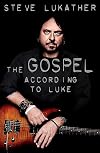
I have to preface this by saying that Lukather is one of my guitar heroes. Alongside Ritchie Blackmore, Rory Gallagher and the guys from Iron Maiden, he was the big reason why i started to play guitar - and one of the axes i use is a Music Man Luke.
Maybe that's also the reason, why i was disappointed with this book. When it comes to musicians books, i guess there are two ways: Either you it like Mötley Crüe and just dish out "The Dirt" on everybody or you talk about the music and what went on in the studio.
This book is neither really. Lukather calls everybody a "great cat", with mentioning only one bad experience - but not going into any details. He talks about his own drug usage, with the funniest story being about him doing shrooms and being so fucked, that George Clooney had to drive him to his home (while he was busy in the back seat with a girl) but outside of that, there are no really dirty story. On the contrary, large portions of the book are spend on defending Jeff Porcaro's death from a cocaine overdose, something the Band Toto still doesn't accept as reality. It's kinda funny though that Luke says Jeff was "a little Ozzy Osbourne" on the road, only to go "he never really did drugs" (then again, singer Joseph Williams for example openly talked about the fact that it was Jeff and David Paich who got him hooked on drugs...)
I can understand that you want to defend your friends and Luke and Jeff were really close, but it gets quite ridiculous.
He sadly also show more never really gets into interesting details about the music. Here we have a guy who play on who knows how many albums (2,500 to 3,000 or something like that), who played with some of the biggest names in music, who play on and co-wrote hits - but he rarely talks about it. It's a bit about Toto (and a lot of complaining about CBS and music critics) and a bit about Michael Jackson. Personally, i would've loved to hear some stories from his experiences with the likes of Alice Cooper (On the Inside, Luke even co-wrote one song there), Eric Clapton or Don Henley.
So, even as a very big fan of his work, i have to say i'm quite disappointed about this book. show less
Maybe that's also the reason, why i was disappointed with this book. When it comes to musicians books, i guess there are two ways: Either you it like Mötley Crüe and just dish out "The Dirt" on everybody or you talk about the music and what went on in the studio.
This book is neither really. Lukather calls everybody a "great cat", with mentioning only one bad experience - but not going into any details. He talks about his own drug usage, with the funniest story being about him doing shrooms and being so fucked, that George Clooney had to drive him to his home (while he was busy in the back seat with a girl) but outside of that, there are no really dirty story. On the contrary, large portions of the book are spend on defending Jeff Porcaro's death from a cocaine overdose, something the Band Toto still doesn't accept as reality. It's kinda funny though that Luke says Jeff was "a little Ozzy Osbourne" on the road, only to go "he never really did drugs" (then again, singer Joseph Williams for example openly talked about the fact that it was Jeff and David Paich who got him hooked on drugs...)
I can understand that you want to defend your friends and Luke and Jeff were really close, but it gets quite ridiculous.
He sadly also show more never really gets into interesting details about the music. Here we have a guy who play on who knows how many albums (2,500 to 3,000 or something like that), who played with some of the biggest names in music, who play on and co-wrote hits - but he rarely talks about it. It's a bit about Toto (and a lot of complaining about CBS and music critics) and a bit about Michael Jackson. Personally, i would've loved to hear some stories from his experiences with the likes of Alice Cooper (On the Inside, Luke even co-wrote one song there), Eric Clapton or Don Henley.
So, even as a very big fan of his work, i have to say i'm quite disappointed about this book. show less
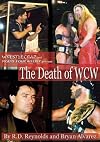
The proper title should be "Mostly made up lies about WCW"
It's been about 20 years now, since Vince McMahon was able to buy his only real competition, thanks to the horrible Time Warner/AOL merger and people working hard to get rid of "rassling".
This book came out just a couple years after WCW folded and the WWE subsequently botched what should've been one of the biggest storylines in wrestling: WWE vs. WCW.
The authors are Bryan Alvarez, who ran a wrestling newsletter and R. D. Reynolds, who runs Wrestlecrap.com. Both people, in theory, should be knowledgable about wrestling and the history of WCW, but i guess they had a different agenda.
The book is usually hailed by marks, who simply don't know any better and take it as gospel. To actual wrestling fans, who listen to interviews, podcasts, shoot interviews and read other "behind the scenes" bookes though, this can be summed up in one word: Crap.
Why?
Well, there are a lot of true stories in here, how the nWo started, how it was turned from a great story to a never-ending horror, how Vince Russo came in and showed he wasn't a great booker/writer or how bad Hulk Hogan was.
But in between there are a lot of lies and made up stories. The book for example still calls out Jamie Kellner as the guy who "killed" WCW by removing Nitro from TNT. This has been debunked just a few weeks after the WWE bought WCW by one of their higher employees, Bob Ryder, in an interview with 1wrestling.com.
Another made up story is presented as a show more showcase of how idiotic WCW was booked, with a story involving Rick Steiner getting attacked by a masked man. In the book, it ends with "The masked man got unveiled and it was Rick Steiner". When you read that, it sounds incredibly stupid of course. But this isn't how the story played out in reality. In reality, the attacker turned out to be his brother Scott Steiner and they subsequently started a feud.
What is really baffling about this lie is, that R.D. Reynolds has this storyline in its correct form on his wrestlecrap website. So why did he feel the need to lie here in this book?
Another lie for example is their claim that WCW had an Ad in USA Today for a Nitro episode on Tuesday, when Nitro was usually shown on Monday. They word it as if they made the ad one day too late. Pretty dumb, huh? In reality though Nitro was moved to Thursday because of the NBA (not uncommon during the playoffs, which were shown on TNT) and that was, what they advertised on Tuesday.
As i said: I don't know what the agenda of the authors was, but it's just sad. Even sadder is the fact, that so many people still call this a great book and reccommend it.
If you want to read a great book with hard facts about the downfall of WCW, get Nitro by Guy Evans. show less
It's been about 20 years now, since Vince McMahon was able to buy his only real competition, thanks to the horrible Time Warner/AOL merger and people working hard to get rid of "rassling".
This book came out just a couple years after WCW folded and the WWE subsequently botched what should've been one of the biggest storylines in wrestling: WWE vs. WCW.
The authors are Bryan Alvarez, who ran a wrestling newsletter and R. D. Reynolds, who runs Wrestlecrap.com. Both people, in theory, should be knowledgable about wrestling and the history of WCW, but i guess they had a different agenda.
The book is usually hailed by marks, who simply don't know any better and take it as gospel. To actual wrestling fans, who listen to interviews, podcasts, shoot interviews and read other "behind the scenes" bookes though, this can be summed up in one word: Crap.
Why?
Well, there are a lot of true stories in here, how the nWo started, how it was turned from a great story to a never-ending horror, how Vince Russo came in and showed he wasn't a great booker/writer or how bad Hulk Hogan was.
But in between there are a lot of lies and made up stories. The book for example still calls out Jamie Kellner as the guy who "killed" WCW by removing Nitro from TNT. This has been debunked just a few weeks after the WWE bought WCW by one of their higher employees, Bob Ryder, in an interview with 1wrestling.com.
Another made up story is presented as a show more showcase of how idiotic WCW was booked, with a story involving Rick Steiner getting attacked by a masked man. In the book, it ends with "The masked man got unveiled and it was Rick Steiner". When you read that, it sounds incredibly stupid of course. But this isn't how the story played out in reality. In reality, the attacker turned out to be his brother Scott Steiner and they subsequently started a feud.
What is really baffling about this lie is, that R.D. Reynolds has this storyline in its correct form on his wrestlecrap website. So why did he feel the need to lie here in this book?
Another lie for example is their claim that WCW had an Ad in USA Today for a Nitro episode on Tuesday, when Nitro was usually shown on Monday. They word it as if they made the ad one day too late. Pretty dumb, huh? In reality though Nitro was moved to Thursday because of the NBA (not uncommon during the playoffs, which were shown on TNT) and that was, what they advertised on Tuesday.
As i said: I don't know what the agenda of the authors was, but it's just sad. Even sadder is the fact, that so many people still call this a great book and reccommend it.
If you want to read a great book with hard facts about the downfall of WCW, get Nitro by Guy Evans. show less