
Abraham Riesman
Author of True Believer: The Rise and Fall of Stan Lee
About the Author
Works by Abraham Riesman
Associated Works
Tagged
Common Knowledge
- Other names
- Riesman, Josie
Riseman, Abraham Josephine - Birthdate
- 20th century
- Gender
- female
- Nationality
- USA
- Birthplace
- Oak Park, Illinois, USA
- Places of residence
- Providence, Rhode Island, USA
- Associated Place (for map)
- USA
Members
Reviews

This biography of Stan Lee is exhaustive, gripping, and thorough. Stan Lee made Marvel Comics, but more than that, he made himself... and then, in the long run, unmade himself. The portrait that emerges from this book is of a smart man and a hard worker who was unafraid to exploit others for his own gain, and always felt that he was due more than he had gotten, and willing to do almost anything to get it. I knew a lot of this in broad strokes, especially Lee's days as a Marvel editor show more co-creating a lot of iconic characters—ones that really owe more to his co-creators than him—but Riesman provides a lot of detail and supporting evidence, and crafts an engaging tale. I knew less about Lee's post-Marvel career, and Riesman offers a pretty damning portrait of financial malfeasance and empty promises at Stan Lee Media. Later in Lee's life, he was surrounded by vicious people willing to exploit them, and it's a tragedy... but a tragedy of Lee's own making in some ways, as he would invite into his circle anyone willing to tell him how he could make it big. It's moving, in the sense that you really feel like you're watching something genuinely horrible happen. show less
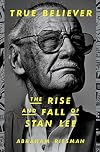
It’s hard not to see Stan Lee’s life as a kind of tragedy, in the original sense of a character who is visited by disasters stemming from own their personal flaws.
Lee was able to capitalize on his collaborations with Jack Kirby (and at times it seems less like a collaboration than Lee signing his name to Kirby’s work) to become famous—famous enough where he thought he could finally leave low-brow comic books behind and be a legitimate artist/celebrity. Post-Kirby he would spend the show more next 40 years desperately trying to make a creative splash only to be met by failure after failure. Even his famous MCU cameos were bittersweet since he’d been unsuccessfully trying to get Marvel properties turned into movies for decades but had no input in (and got no royalties from) the blockbuster franchise.
He spent the last decade surrounded by parasitic hangers on in the care of a daughter who despised him. Who says this isn’t the Marvel Age of happy endings? show less
Lee was able to capitalize on his collaborations with Jack Kirby (and at times it seems less like a collaboration than Lee signing his name to Kirby’s work) to become famous—famous enough where he thought he could finally leave low-brow comic books behind and be a legitimate artist/celebrity. Post-Kirby he would spend the show more next 40 years desperately trying to make a creative splash only to be met by failure after failure. Even his famous MCU cameos were bittersweet since he’d been unsuccessfully trying to get Marvel properties turned into movies for decades but had no input in (and got no royalties from) the blockbuster franchise.
He spent the last decade surrounded by parasitic hangers on in the care of a daughter who despised him. Who says this isn’t the Marvel Age of happy endings? show less

In True Believer: The Rise and Fall of Stan Lee, Abraham Riesman argues, “The often-false story Stan Lee told about himself and his work was that of the American dream: success earned through hard work, optimism, and staying true to oneself. But the true story of his life is that of the American reality: success won in no small part through nepotism, corner-cutting, dissembling, and stealing… Taken as a whole and with sober eyes, the man’s journey adds up to one of the more fascinating show more stories of the past century of American arts and letters, and it is a journey that has heretofore gone unexamined in public” (pg. 14). Riesman positions Stan Lee as a Mark Twain/Horatio Alger -type figure who invented his own identity in order to advance beyond the circumstances he experienced as a youth amid the Great Depression. In many respects, this makes Lee the quintessential American narrative, but Riesman’s “warts and all” portrait includes the steps Lee took along the way that embittered his colleagues. Riesman delineates Lee’s career into three phases. He writes, “The first had been his unrecognized toiling until 1961, and the second had been his bumpy, meteoric rise since. In the third, he would no longer write the characters that made his reputation, but he would finally perfect the details of the character that would allow him to stay famous until the end of his life” (pg. 181).
Riesman further argues that Lee chose to promote the wrong talent. According to Riesman, “[Lee] never sold himself as comics’ greatest editor but rather as its greatest ideas man. One can argue that that was a core tragedy of Stan’s existence and legacy: He was never able to put his most inarguable achievement front and center and instead opted for the ones that were most debatable” (pg. 67). While Lee’s persona and Marvel’s work appealed to the cultural left on college campuses, Riesman describes Lee as a confirmed centrist who gestured at leftist issues without fully committing as he tried to support both sides of the political spectrum (pg. 174). On the one hand, Riesman describes this as part of Lee’s centrism, but it also meant that he avoided permanently alienating audiences based on politics. According to Riesman, “losing Kirby had been like losing a limb, and [Stan’s writing] hadn’t since garnered the kind of praise he’d had when the two were working together. Indeed, he never would again. Stan’s good days as a respected creator of new material were, unbeknownst to him at the time, permanently over” (pg. 180).
Riesman describes how Lee perfected his persona while narrating Spider-Man and His Amazing Friends, with his tone “evolving from the solemn tone he’d historically exhibited in public to the street-hawker cadences he would soon become famous for. His narration sequences would typically conclude with a cry of ‘Excelsior!’, further cementing the word as his verbal signature” (pg. 211). According to Riesman, “it’s a direct line from there to his world-famous cameos” (pg. 211). The final third of Riesman’s account details the duality of Lee’s final years, with his public persona reaching ever-wider audiences even as Lee’s final ventures – Stan Lee Media and POW – struggled to make an impact while stories of his personal life were dominated by conflict and people vying to control his legacy. Riesman concludes, “After a life that spanned nearly a century – a tapestry of triumph and tragedy, of enormous dreams and disappointing realities; a stretch of time in which a man could watch the world become unrecognizable and know he had some not-inconsiderable part in making it thus; an existence that went through a denouement of agony and discord – after all that, Stan may have found a way to rest and deem that life good enough” (pg. 331). show less
Riesman further argues that Lee chose to promote the wrong talent. According to Riesman, “[Lee] never sold himself as comics’ greatest editor but rather as its greatest ideas man. One can argue that that was a core tragedy of Stan’s existence and legacy: He was never able to put his most inarguable achievement front and center and instead opted for the ones that were most debatable” (pg. 67). While Lee’s persona and Marvel’s work appealed to the cultural left on college campuses, Riesman describes Lee as a confirmed centrist who gestured at leftist issues without fully committing as he tried to support both sides of the political spectrum (pg. 174). On the one hand, Riesman describes this as part of Lee’s centrism, but it also meant that he avoided permanently alienating audiences based on politics. According to Riesman, “losing Kirby had been like losing a limb, and [Stan’s writing] hadn’t since garnered the kind of praise he’d had when the two were working together. Indeed, he never would again. Stan’s good days as a respected creator of new material were, unbeknownst to him at the time, permanently over” (pg. 180).
Riesman describes how Lee perfected his persona while narrating Spider-Man and His Amazing Friends, with his tone “evolving from the solemn tone he’d historically exhibited in public to the street-hawker cadences he would soon become famous for. His narration sequences would typically conclude with a cry of ‘Excelsior!’, further cementing the word as his verbal signature” (pg. 211). According to Riesman, “it’s a direct line from there to his world-famous cameos” (pg. 211). The final third of Riesman’s account details the duality of Lee’s final years, with his public persona reaching ever-wider audiences even as Lee’s final ventures – Stan Lee Media and POW – struggled to make an impact while stories of his personal life were dominated by conflict and people vying to control his legacy. Riesman concludes, “After a life that spanned nearly a century – a tapestry of triumph and tragedy, of enormous dreams and disappointing realities; a stretch of time in which a man could watch the world become unrecognizable and know he had some not-inconsiderable part in making it thus; an existence that went through a denouement of agony and discord – after all that, Stan may have found a way to rest and deem that life good enough” (pg. 331). show less
Yeesh, is this a depressing book. It's incredibly well written and thoroughly researched, and many of the arguments it makes about the problems with Stan Lee as a person are well known to anyone who's even remotely familiar with the comics industry. That being said, the last few chapters, particularly the one that relates the last year of Lee's life, are so depressing and distressing. That's clearly not the author's fault, but it doesn't make for a book that one wants to reread. Still, for show more anyone who wants a solid picture of who Stan Lee was, this book is important. show less
Lists
Awards


You May Also Like
Associated Authors
Statistics
- Works
- 2
- Also by
- 1
- Members
- 243
- Popularity
- #93,556
- Rating
- 3.8
- Reviews
- 12
- ISBNs
- 15
- Languages
- 4