
Victor Montejo
Author of Popol Vuh: A Sacred Book of the Maya
About the Author
Victor Montejo is Associate Professor in the Department of Native American Studies at the University of California, Davis. He is the author of El Q'anil: The Man of Lightning, Testimony: The Death of a Guatemalan Village, The Bird Who Cleans the World and Other Mayan Fables, and Sculpted Stones: show more Poems. show less
Image credit: Victor Montejo
Works by Victor Montejo
The Good Rainbow Road = Rawa ’Kashtyaatsi Hiyaani: A Native American Tale in Keres and English, Followed by a Translation into Spanish (2004) 61 copies, 3 reviews
Oxlanh b'aqtun : recordando al sacerdote jaguar (chilam balam) en el portón del nuevo milenio 2 copies
El pájaro que limpia el mundo y otras fábulas Mayas = no' ch'ik xtx' ahtx'en sat yib' anh q'inal 1 copy
Mayalogue: An Interactionist Theory of Indigenous Cultures (Trans-Indigenous Decolonial Cr) (2022) 1 copy
Brevisima Relacion Testimonial De La Continua Destruccion Del Mayab (Guatemala) (1992) — Author — 1 copy
Artes de México 1 copy
Associated Works
Currents from the Dancing River: Contemporary Latino Fiction, Nonfiction, and Poetry (1994) — Contributor — 54 copies
Speaking for the Generations: Native Writers on Writing (Sun Tracks) (1997) — Contributor — 47 copies
Indigenous Traditions and Ecology: The Interbeing of Cosmology and Community (2001) — Contributor — 35 copies
Tagged
Common Knowledge
- Legal name
- Montejo Estaban, Victor Dionicio
- Birthdate
- 1951-10-09
- Gender
- male
- Education
- University of Connecticut (PhD|1993)
- Organizations
- University of California, Davis
- Nationality
- Guatemala
- Birthplace
- Jacaltenango, Huehuetenango, Guatemala
- Places of residence
- Guatemala
California, USA - Associated Place (for map)
- Guatemala
Members
Reviews
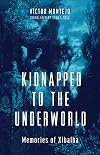
Victor Montejo's Kidnapped to the Underworld: Memories of Xibalba (I read Sean S. Sell's translation) is an utterly remarkable book. Montejo relates the story of a fever-dream his grandfather experienced in which he was transported to the underworld, traveled widely there, then was allowed to return to the living.
Montejo describes his grandfather's journey in the language his grandfather might have used. That retelling by Montejo puts this story into the realm of fiction, but to the extent show more that it is an accurate portrayal of his grandfather's experience it is nonfiction. Whether one views that nonfiction as the story of a dream or the story of an actual journey to the underworld is up to the reader. Is it fair for me to say that I both firmly believe that Montejo's grandfather experienced these events as a real-world journey, but that I can't help reading them as a dream introducing me to a consciousness significantly different from my own? Faith being what it is—which is, to say, faith—I think the "reality" of faith-based experiences depends upon an individual's understanding of their faith. The fact that I can't read Montejo's grandfather's story as literally true, doesn't mean his grandfather couldn't have experienced the voyage literally.
Reading this text strikes me as both fascinating and as a privilege. Fascinating because it offers a view of a rich cosmos. A privilege because Montejo has given me a glimpse into that cosmos that I could never have experienced on my own. If you are interested in questions of faith, particularly the way faith both reflects and influences the culture within which it's embraced, this is a book you'll want to spend time with.
I received a free electronic review copy of this title from the publisher via Edelweiss; the opinions are my own. show less
Montejo describes his grandfather's journey in the language his grandfather might have used. That retelling by Montejo puts this story into the realm of fiction, but to the extent show more that it is an accurate portrayal of his grandfather's experience it is nonfiction. Whether one views that nonfiction as the story of a dream or the story of an actual journey to the underworld is up to the reader. Is it fair for me to say that I both firmly believe that Montejo's grandfather experienced these events as a real-world journey, but that I can't help reading them as a dream introducing me to a consciousness significantly different from my own? Faith being what it is—which is, to say, faith—I think the "reality" of faith-based experiences depends upon an individual's understanding of their faith. The fact that I can't read Montejo's grandfather's story as literally true, doesn't mean his grandfather couldn't have experienced the voyage literally.
Reading this text strikes me as both fascinating and as a privilege. Fascinating because it offers a view of a rich cosmos. A privilege because Montejo has given me a glimpse into that cosmos that I could never have experienced on my own. If you are interested in questions of faith, particularly the way faith both reflects and influences the culture within which it's embraced, this is a book you'll want to spend time with.
I received a free electronic review copy of this title from the publisher via Edelweiss; the opinions are my own. show less

In this original story from Acoma Pueblo poet and scholar Simon J. Ortiz, a southwestern village called Haapaahnitse (the "Oak Place") is suffering from a terrible drought. Hungry, feeling hopeless and unhappy, the people take to blaming one another. Then an old woman steps forward to remind them that they haven't yet sought help - help from the Shiwana, the rain and snow spirits who live in the west - and suggests that two young men be sent on a quest. And so it is that two brothers, show more Tsaiyah-dzehshi ("First One") and Hamahshu-dzehshi ("Next One") are dispatched on the long journey to the Shiwana, crossing blistering deserts and cold mountains. When they confront the fiery chasm of a volcano, the younger brother, Hamahshu-dzehshi, is afraid to continue, until a blind old woman happens along to show him the way...
A trilingual picture-book - the main text, in English and Keres (the language of Ortiz's Acoma Pueblo), is accompanied by Hopi/Tewa/Apache artist Michael Lacapa's illustrations, while a Spanish translation by Mayan author Victor Montejo is included at the rear - The Good Rainbow Road is not a traditional folktale, something Ortiz makes very clear in his afterword, but an original work of fantasy that is grounded in the folk tradition. As such, I think it is what we would call a "fairy-tale," and I have shelved it as such. The story itself is engrossing - readers will be rooting for Tsaiyah-dzehshi and Hamahshu-dzehshi - and the artwork, which looks to be done in colored marker or pencil, and which incorporates many folk motif borders, is colorful and attention-grabbing. I liked the fact that, while the two main questers here are male, women play such a decisive role in moving the action forward, both in suggesting the quest, and (in the form of Spider Woman) aiding the young men. I also liked the fact that the story ends, not with the granting of the young men's request, but with their reaching of their object. It's an interesting conclusion, and will leave readers wanting more. Always a good thing, when it comes to storytelling!
All in all, a wonderful book, one I would recommend to young readers who enjoy adventure stories - although a picture-book, the text is long and extensive, and is probably best suited for upper elementary school students and above - and to anyone looking for texts (although I understand that there is some controversy connected to writing them down) in any of the Keresan languages. show less
A trilingual picture-book - the main text, in English and Keres (the language of Ortiz's Acoma Pueblo), is accompanied by Hopi/Tewa/Apache artist Michael Lacapa's illustrations, while a Spanish translation by Mayan author Victor Montejo is included at the rear - The Good Rainbow Road is not a traditional folktale, something Ortiz makes very clear in his afterword, but an original work of fantasy that is grounded in the folk tradition. As such, I think it is what we would call a "fairy-tale," and I have shelved it as such. The story itself is engrossing - readers will be rooting for Tsaiyah-dzehshi and Hamahshu-dzehshi - and the artwork, which looks to be done in colored marker or pencil, and which incorporates many folk motif borders, is colorful and attention-grabbing. I liked the fact that, while the two main questers here are male, women play such a decisive role in moving the action forward, both in suggesting the quest, and (in the form of Spider Woman) aiding the young men. I also liked the fact that the story ends, not with the granting of the young men's request, but with their reaching of their object. It's an interesting conclusion, and will leave readers wanting more. Always a good thing, when it comes to storytelling!
All in all, a wonderful book, one I would recommend to young readers who enjoy adventure stories - although a picture-book, the text is long and extensive, and is probably best suited for upper elementary school students and above - and to anyone looking for texts (although I understand that there is some controversy connected to writing them down) in any of the Keresan languages. show less

The Bird Who Cleans the World and other Mayan Fables– What a gift for all of us in our modern world. Author Victor Montejo has collected 32 Jakaltek Mayan folktales here, tales he first heard from his mother and the elders of his Guatemalan village, tales addressing such themes as creation and the natural world, mutual respect and virtuous action, all illustrated with Mayan images and Mayan artwork. These Mayan folktales give a profound and moving voice to an ancient culture and its rich show more history and tradition.
In Victor Montejo’s Preface to these Mayan tales we read: “It is my desire to leave a testimony to the values of respect, unity and understanding that existed between the people and their natural environment. For example, in ancient times, birds were considered the “living colors of the world” and people admired them profoundly. Among these birds, the buzzard, also called the “bird who cleans the world,” was appreciated because of its service in cleaning the surroundings of the village that lacked toilet or sewage facilities. But, sadly, when the army arrived in my town in 1982, the soldiers used buzzards for target practice.” I myself think soldiers using buzzards for target practice is not only sad but absolutely appalling. However, such mindless insensitively and coarse barbarities are, tragically, much the order of the day in modern society.
The author continues: “Respect for nature has diminished to the point that modern people destroy their environment systematically out of thoughtlessness or selfishness. People can destroy themselves by not recognizing the value of all living creatures on earth with whom they should coexist.”
Victor Montejo’s words have a special sting for me personally since I just did witness the leveling of a 20 acre woods near our apartment building. Yes, that’s right, hundreds of full grown trees with much animal and plant life – gone.
Rather than adding any comment or synopsizing, as a way of conveying the flavor of this wonderful book, I would like to share the three shortest tales from the collection:
WHO CUTS THE TREES CUTS HIS OWN LIFE
When I was a small boy my father used to tell me, “Son, don’t cut the little green trees whenever you please. When you do that you are cutting short your own life and you will die slowly.”
This warning always worried me, especially since at times I have carelessly cut some little tree by the side of the road with my machete.
My father’s warning was nothing new, but something the old ones have said since distant times. And my father who knew their teachings, repeated it to me and my brothers. Now when I hear about pollution, erosion, and deforestation, I realize the value of the old philosophy. These things are signs of the slow death that our elders have always foreseen when they said, “Who cuts the trees as he pleases, cuts short his own life.”
THE TALE OF THE DOG
Of the origins of the world only the dog could speak. He went around everywhere, revealing the secret of the creation of things and the origin of god.
When the great god realized the talkative dog could not hold his tongue and keep the secrets, the Creator decided: “Let this talker’s marvelous tongue be taken from his head and put it behind him, and let what is now behind him, be attached to his head.
So it is now that when the dog wants to speak and tell things, no expression appears on its face but there it is behind him, the tail that came from his head.
And so the dog has stayed with us, he who once betrayed his secrets. And even now, he only moves his tail when he wants to tell us something or when he is happy with his master.
THE WORK OF THE MOSQUITO
The mosquito goes about his work always at grave risk, never knowing if he will come home alive. Most often he dies as he is piercing his victim. Poor fellow, when luck runs out. He’s surprised in the act and a slap of the victim’s palm leaves him flattened where he worked. If he is agile and fortunate enough, then he satisfies his appetite and goes buzzing away.
So it was that a mosquito buzzed off happily after stabbing an old man who was sleeping. On the road he met another mosquito who was still looking for a meal, and he asked him:
“Where are you going, brother mosquito?”
“I’m going to drink some blood in the dell.”
“And when will you come back again?”
“Only the stroke of the hand will tell.”
Victor Montejo is a Guatemalan Jakaltek Maya who earned his Ph.D. in Anthropology in 1993 from the University of Connecticut, USA. Much of his interest and focus is on Latin American human rights and the literature of indigenous peoples. show less
The Bird Who Cleans the World and other Mayan Fables – What a gift for all of us in our modern world. Author Victor Montejo has collected 32 Jakaltek Mayan folktales here, tales he first heard from his mother and the elders of his Guatemalan village, tales addressing such themes as creation and the natural world, mutual respect and virtuous action, all illustrated with Mayan images and Mayan artwork. These Mayan folktales give a profound and moving voice to an ancient culture and its rich show more history and tradition.
In Victor Montejo’s Preface to these Mayan tales we read: “It is my desire to leave a testimony to the values of respect, unity and understanding that existed between the people and their natural environment. For example, in ancient times, birds were considered the “living colors of the world” and people admired them profoundly. Among these birds, the buzzard, also called the “bird who cleans the world,” was appreciated because of its service in cleaning the surroundings of the village that lacked toilet or sewage facilities. But, sadly, when the army arrived in my town in 1982, the soldiers used buzzards for target practice.” I myself think soldiers using buzzards for target practice is not only sad but absolutely appalling. However, such mindless insensitively and coarse barbarities are, tragically, much the order of the day in modern society.
The author continues: “Respect for nature has diminished to the point that modern people destroy their environment systematically out of thoughtlessness or selfishness. People can destroy themselves by not recognizing the value of all living creatures on earth with whom they should coexist.” Victor Montejo’s words have a special sting for me personally since I just did witness the leveling of a 20 acre woods near our apartment building. Yes, that’s right, hundreds of full grown trees with much animal and plant life – gone. Rather than adding any comment or synopsizing, as a way of conveying the flavor of this wonderful book, I would like to share the three shortest tales from the collection:
WHO CUTS THE TREES CUTS HIS OWN LIFE
When I was a small boy my father used to tell me, “Son, don’t cut the little green trees whenever you please. When you do that you are cutting short your own life and you will die slowly.”
This warning always worried me, especially since at times I have carelessly cut some little tree by the side of the road with my machete.
My father’s warning was nothing new, but something the old ones have said since distant times. And my father who knew their teachings, repeated it to me and my brothers. Now when I hear about pollution, erosion, and deforestation, I realize the value of the old philosophy. These things are signs of the slow death that our elders have always foreseen when they said, “Who cuts the trees as he pleases, cuts short his own life.”
THE TALE OF THE DOG
Of the origins of the world only the dog could speak. He went around everywhere, revealing the secret of the creation of things and the origin of god.
When the great god realized the talkative dog could not hold his tongue and keep the secrets, the Creator decided: “Let this talker’s marvelous tongue be taken from his head and put it behind him, and let what is now behind him, be attached to his head.
So it is now that when the dog wants to speak and tell things, no expression appears on its face but there it is behind him, the tail that came from his head.
And so the dog has stayed with us, he who once betrayed his secrets. And even now, he only moves his tail when he wants to tell us something or when he is happy with his master.
THE WORK OF THE MOSQUITO
The mosquito goes about his work always at grave risk, never knowing if he will come home alive. Most often he dies as he is piercing his victim. Poor fellow, when luck runs out. He’s surprised in the act and a slap of the victim’s palm leaves him flattened where he worked. If he is agile and fortunate enough, then he satisfies his appetite and goes buzzing away.
So it was that a mosquito buzzed off happily after stabbing an old man who was sleeping. On the road he met another mosquito who was still looking for a meal, and he asked him:
“Where are you going, brother mosquito?”
“I’m going to drink some blood in the dell.”
“And when will you come back again?”
“Only the stroke of the hand will tell.”
Victor Montejo is a Guatemalan Jakaltek Maya who earned his Ph.D. in Anthropology in 1993 from the University of Connecticut, USA. Much of his interest and focus is on Latin American human rights and the literature of indigenous peoples. show less
Lists
Awards


You May Also Like


Associated Authors
Statistics
- Works
- 17
- Also by
- 3
- Members
- 431
- Popularity
- #56,716
- Rating
- 4.1
- Reviews
- 8
- ISBNs
- 33
- Languages
- 1