
Eduardo Galeano (1) (1940–2015)
Author of Open Veins of Latin America: Five Centuries of the Pillage of a Continent
For other authors named Eduardo Galeano, see the disambiguation page.
About the Author
Eduardo Galeano was born on September 3, 1940 in Montevideo, Uruguay. At the age of 13, he began publishing cartoons for the Uruguayan socialist newspaper El Sol. He worked as a journalist, historian, and political activist. While in his early 30s, he was imprisoned during a right-wing military show more coup and later forced to flee from Uruguay to Argentina. Later, another coup and several death threats forced him to leave Argentina for Spain where he lived in exile until he was permitted to return to Uruguay in 1984. During his lifetime, he wrote numerous fiction and non-fiction works including Days and Nights of Love and War, Football in Sun and Shadow, Open Veins of Latin America: Five Centuries of the Pillage of a Continent, Guatemala: Occupied Country, The Book of Embraces, and Children of the Days. In 1989, he won the American Book Award for Memory of Fire. He died of cancer on April 13, 2015 at the age of 74. (Bowker Author Biography) show less
Series
Works by Eduardo Galeano
Open Veins of Latin America: Five Centuries of the Pillage of a Continent (1971) 3,217 copies, 43 reviews
Mitos / Myths: De memoria del fuego / Of the Memory of Fire (Sopa De Libros / Books Soup) (Spanish Edition) (2002) 3 copies
El tigre azul y otros articulos/ The Blue Tiger and other Articles (Spanish Edition) (1996) 2 copies
Ventanas 2 copies
Colombiando (textos ďitos e inďitos) 2 copies
Net als zij zijn — Author — 2 copies
Galeanas 2 copies
Reportajes 1 copy
Los nacimientos 1982-1986 1 copy
Μνήμη της φωτιάς ΙΙ, Τα πρόσωπα και οι μάσκες (Memoria del fuego II, Las caras y las mascaras) (2011) 1 copy
EN LOS LIBROS DE LOS ABRAZOS 1 copy
Los Dias Siguientes 1 copy
“Diplomacy in Latin America” 1 copy
“The State in Latin America” 1 copy
EL RETRATO DE DORIAN GRAY 1 copy
A pesar de los pesares 1 copy
Interventions (Open Media) 1 copy
Associated Works
The Art of the Story: An International Anthology of Contemporary Short Stories (1999) — Contributor — 394 copies, 5 reviews
Sudden Fiction Latino: Short-Short Stories from the United States and Latin America (2010) — Contributor — 76 copies, 15 reviews
Democracy in Print: The best of the Progressive Magazine, 1909-2009 (2009) — Contributor — 14 copies
Tagged
Common Knowledge
- Canonical name
- Galeano, Eduardo
- Legal name
- Galeano, Eduardo Germán María Hughes
- Other names
- Hughes, Eduardo Germán Maria (birth name)
- Birthdate
- 1940-09-03
- Date of death
- 2015-04-13
- Gender
- male
- Occupations
- writer
journalist
historian
cultural critic
cartoonist
editor - Organizations
- Brecha
Crisis
La Epoca
Marcha
El Sol - Awards and honors
- Lannan Cultural Freedom Prize (1999)
- Agent
- Susan Bergholz Literary Services
- Cause of death
- lung cancer
- Nationality
- Uruguay
- Birthplace
- Montevideo, Uruguay
- Places of residence
- Montevideo, Uruguay
Argentina
Spain - Place of death
- Montevideo, Uruguay
- Map Location
- Uruguay
Members
Reviews

When I was a young reader, somewhere between 12 and 15 years old, I read Snorri Sturluson’s Heimskringla: History of the Kings of Norway. I was enamored with mythology and epics and Vikings and the sources of Tolkien’s Middle Earth. The Heimskringla certainly satisfied my cravings for those things but it also had a very unexpected result. It finally severed my remaining faith in, or relationship with, Catholicism and Christianity. Beautifying a man who slaughtered people and converted show more them with the choice of Christianity or the sword was not my idea of a Saint. What would Jesus Do? Pass. No Sainthood for you. Please take the elevator on the right. It only goes down. This was another example where the institutions, dogma, and priests corrupted the legacy of the man upon which the religion was founded.
Eduardo Galeano’s Genesis is full of the same crimes of genocide and greed approved and sanctioned by the pontiff and the Church. But this time, the narrative was closer to home, on the borrowed shores of my own country and continent. The Incas, the Aztecs, the Mayans, Mapuche, the Araucarias, and so many other cultures put to the sword or enslaved to work the mines, plantations, and houses of the colonizers. Their knowledge, heritage, medicines, and books were mostly destroyed by the ignorance and cruelty of the colonizers and the Inquisition. It’s bloody and shameful history, but it’s history that we need to know and acknowledge. It’s history we can use to break free of the cycle of colonial exploitation that is still alive and well.
Galeano shares this history in little vignettes of beautiful prose and poetry. It’s a great way to touch on the history of the America’s without the dullness and drabness of your standard history book. He tells the stories sometimes with humor, sometimes with irony, sometimes with grim detail. But always with that beautiful language that is the trademark of the best of the Latin and South American writers.
Genesis is the first book of the trilogy and covers creation to 1700. I’m stuck in time because I don’t have the second book yet. The vagaries of my used book love means I’ve only happened across the first and third book. I’m particular about my books so I have to find a decent hardback edition somewhere in order to move my history lesson along. But I loved this book so I might have to scrape the dollars together to seek a copy out on the Internet instead of waiting to stumble across it during my bookstore peregrinations. Usually I would have waited to start the trilogy until I had all of the books in my possession but an article on the author prompted me to start despite my unpreparedness.
Reading Galeano brought me back to those feelings of my adolescence and has me pondering spirituality and faith and the path I’ve been on for fifty-odd years. It’s made me ponder racial prejudice and entitlement and the role imperialism has in perpetuating those vices. That’s what the best writers and books do for me. And unlike the purity-obsessed Spaniards of the 16th century, I’d be proud to have the blood of the indigenous Americans flowing in my veins. My heart goes out to them and I am sorry for any part my ancestors played in this sad history. But I will finish this trilogy and can see myself revisiting it again just as I do the more familiar histories and stories of the native North American cultures. show less
Eduardo Galeano’s Genesis is full of the same crimes of genocide and greed approved and sanctioned by the pontiff and the Church. But this time, the narrative was closer to home, on the borrowed shores of my own country and continent. The Incas, the Aztecs, the Mayans, Mapuche, the Araucarias, and so many other cultures put to the sword or enslaved to work the mines, plantations, and houses of the colonizers. Their knowledge, heritage, medicines, and books were mostly destroyed by the ignorance and cruelty of the colonizers and the Inquisition. It’s bloody and shameful history, but it’s history that we need to know and acknowledge. It’s history we can use to break free of the cycle of colonial exploitation that is still alive and well.
Galeano shares this history in little vignettes of beautiful prose and poetry. It’s a great way to touch on the history of the America’s without the dullness and drabness of your standard history book. He tells the stories sometimes with humor, sometimes with irony, sometimes with grim detail. But always with that beautiful language that is the trademark of the best of the Latin and South American writers.
Genesis is the first book of the trilogy and covers creation to 1700. I’m stuck in time because I don’t have the second book yet. The vagaries of my used book love means I’ve only happened across the first and third book. I’m particular about my books so I have to find a decent hardback edition somewhere in order to move my history lesson along. But I loved this book so I might have to scrape the dollars together to seek a copy out on the Internet instead of waiting to stumble across it during my bookstore peregrinations. Usually I would have waited to start the trilogy until I had all of the books in my possession but an article on the author prompted me to start despite my unpreparedness.
Reading Galeano brought me back to those feelings of my adolescence and has me pondering spirituality and faith and the path I’ve been on for fifty-odd years. It’s made me ponder racial prejudice and entitlement and the role imperialism has in perpetuating those vices. That’s what the best writers and books do for me. And unlike the purity-obsessed Spaniards of the 16th century, I’d be proud to have the blood of the indigenous Americans flowing in my veins. My heart goes out to them and I am sorry for any part my ancestors played in this sad history. But I will finish this trilogy and can see myself revisiting it again just as I do the more familiar histories and stories of the native North American cultures. show less
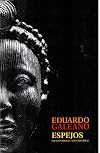
Si hubiera 10 estrellas, pediría 11 para este libro.
Una obra imprescindible para conocer, reconocer y avergonzarse de las incongruencias e insensateces del ser humano en su devenir histórico. Un libro que emociona, indigna y entristece al contarnos una historia no oficial que nos abre los ojos permitiéndonos ver al otro desde esa visión de los vencidos donde el recuento es amargo.
Un gran libro contado de forma exquisita muy propia de Galeano: un poco de poesía, un poco de reflexión, show more otro poco de metáfora, un mucho de sarcasmo para contar lo que somos y cómo hemos llegado hasta aquí. show less
Una obra imprescindible para conocer, reconocer y avergonzarse de las incongruencias e insensateces del ser humano en su devenir histórico. Un libro que emociona, indigna y entristece al contarnos una historia no oficial que nos abre los ojos permitiéndonos ver al otro desde esa visión de los vencidos donde el recuento es amargo.
Un gran libro contado de forma exquisita muy propia de Galeano: un poco de poesía, un poco de reflexión, show more otro poco de metáfora, un mucho de sarcasmo para contar lo que somos y cómo hemos llegado hasta aquí. show less
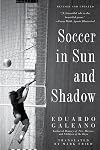
All the stars.
This is deservedly a classic, and it's a book everyone who cares about soccer should read. It focuses on South American history, but it also incorporates discussions of Europe (a lot), Central America (some), and Africa, Asia, and North America (a little). The book is a series of mini-chapters, some just a couple of paragraphs, some a few pages, and it is structured by the World Cup years. Every World Cup chapter opens with a paragraph about what else is happening in the show more world, which serves as a reminder that soccer is embedded in and inseparable from the rest of life.
There are marvelous portraits of players, and players dominate the pages (as they should). Galeano never lets the reader forget how many great players came from poor, minority, and disadvantaged backgrounds, and how often they were used and then discarded by the soccer elites. He traces the roots of the sport's corruption back decades, and he excoriates the commodification of athletes and the greed of owners, association heads, and politicians (who are sometimes all the same person).
But this is also a warm, embracing love letter to the sport. You can recognize and acknowledge the flaws and still love soccer deeply, and Galeano shows you how. show less
This is deservedly a classic, and it's a book everyone who cares about soccer should read. It focuses on South American history, but it also incorporates discussions of Europe (a lot), Central America (some), and Africa, Asia, and North America (a little). The book is a series of mini-chapters, some just a couple of paragraphs, some a few pages, and it is structured by the World Cup years. Every World Cup chapter opens with a paragraph about what else is happening in the show more world, which serves as a reminder that soccer is embedded in and inseparable from the rest of life.
There are marvelous portraits of players, and players dominate the pages (as they should). Galeano never lets the reader forget how many great players came from poor, minority, and disadvantaged backgrounds, and how often they were used and then discarded by the soccer elites. He traces the roots of the sport's corruption back decades, and he excoriates the commodification of athletes and the greed of owners, association heads, and politicians (who are sometimes all the same person).
But this is also a warm, embracing love letter to the sport. You can recognize and acknowledge the flaws and still love soccer deeply, and Galeano shows you how. show less
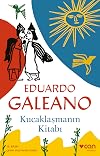
“Dünya bir insanlar yığını, bir minik alevler denizidir,” derdi. Herkes kendi ışığıyla ışıldar. Hiçbir alev öbürüne benzemez. Büyük alevler vardır, küçük alevler, her renkten alev. Kimi insanların alevi öyle durağandır ki rüzgârda bile dalgalanmaz, kimi insanlarınsa havayı kıvılcıma boğan çılgın alevleri vardır. Kimi saçma alevler ne tutuşur ne de ışık serperler; kimileri de öyle bir canlılıkla yalazlanırlar ki onlara bakınca gözlerimiz show more kamaşır, yaklaşırsak üstümüze ateş vurmuş gibi parlarız.
Kucaklaşmanın Kitabı vedalaşanların değil, kavuşanların kucaklaşmasının hikâyeleri. Okuru günlük gerçekliğin içine örülü büyülü ve merak dolu bir dünyayla kavuşturan; anıların düşlerle, gerçeğin olanak dışı fabllarla, savaşın barışla kucaklaşmasını anlatan bu kitapta Eduardo Galeano, kısa, yalın ve Latin Amerika’nın kesik damarlarına dokunan parçalarla bir toplumun kitlesel hafızasını, vicdanını ve düşlerini ele alıyor.
“Galeano tehlikeli, radikal bir öykücüdür, tıpkı Gabriel García Márquez gibi, Isabel Allende gibi ve onların da piri Pablo Neruda gibi... Kucaklaşmanın Kitabı, bir mozaik ya da sözcüklerden oluşma bir Diego Rivera duvar resmi.”
John Leonard, New York Newsday show less
Kucaklaşmanın Kitabı vedalaşanların değil, kavuşanların kucaklaşmasının hikâyeleri. Okuru günlük gerçekliğin içine örülü büyülü ve merak dolu bir dünyayla kavuşturan; anıların düşlerle, gerçeğin olanak dışı fabllarla, savaşın barışla kucaklaşmasını anlatan bu kitapta Eduardo Galeano, kısa, yalın ve Latin Amerika’nın kesik damarlarına dokunan parçalarla bir toplumun kitlesel hafızasını, vicdanını ve düşlerini ele alıyor.
“Galeano tehlikeli, radikal bir öykücüdür, tıpkı Gabriel García Márquez gibi, Isabel Allende gibi ve onların da piri Pablo Neruda gibi... Kucaklaşmanın Kitabı, bir mozaik ya da sözcüklerden oluşma bir Diego Rivera duvar resmi.”
John Leonard, New York Newsday show less
Lists
Awards


You May Also Like


Associated Authors
Statistics
- Works
- 101
- Also by
- 11
- Members
- 10,753
- Popularity
- #2,208
- Rating
- 4.2
- Reviews
- 176
- ISBNs
- 642
- Languages
- 23
- Favorited
- 5

