
Lucy Hawking
Author of George's Secret Key to the Universe
About the Author
Lucy Hawking was born in England in 1970. After reading French and Russian at Oxford University, Lucy Hawking became a journalist. She has worked for New York Magazine and has written for the Daily Mail, The Telegraph, The Times, and the London Evening Standard. She has also worked as a radio show more journalist. She has written two novels: Jaded (2004) and Run for Your Life (2005), which was also published as The Accidental Marathon. She and her father, Stephen Hawking, are the authors of the George series. The children's book series includes, George's Secret Key to the Universe, George's Cosmic Treasure Hunt, George and the Big Bang, George and the Unbreakable Code, George and the Blue Moon, and George and the Ship of Time. She is an administrative staff member of the Autism Research Centre (ARC) at the University of Cambridge. She is the daughter of theoretical physicist, Stephen Hawking. She lives in London. (Bowker Author Biography) show less
Image credit: Author and educator Lucy Hawking in 2008 By NASA/Paul Alers - Stephen Hawking speaks at NASA 50thhttps://www.nasa.gov/50th/NASA_lecture_series/hawking.html, Public Domain, https://commons.wikimedia.org/w/index.php?curid=67350908
Series
Works by Lucy Hawking
Associated Works
Tagged
Common Knowledge
- Legal name
- Hawking, Catherine Lucy
- Birthdate
- 1970-11-02
- Gender
- female
- Education
- University of Oxford
City University, London - Occupations
- journalist
novelist - Awards and honors
- Royal Society of Arts (Fellow)
- Relationships
- Hawking, Frank (paternal grandfather)
Hawking, Jane (mother)
Hawking, Stephen (father) - Nationality
- England
- Places of residence
- Cambridge, Cambridgeshire, England, UK
Pasadena, California, USA
Moscow, Russia
Members
Reviews
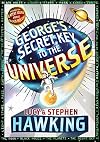
George's Secret Key to the Universe by Lucy Hawking, aided and abetted by her father Stephen, is a slightly odd hybrid of textbook and kids' adventure story. George has eco-warrior type parents who regularly take part in protest marches, believe science is dangerous, and - to his frustration - don't allow things like TVs or computers in the house. When mysterious new neighbours move in next door, George discovers a key to an entirely new world of scientific wonder, and ends up being show more catapulted into adventure.
This is a decent enough kids' story, but its tone is slightly oddly placed - it veers between trying for advenure/thriller, but regularly segues into slightly preachy, worthy and patronising asides on how Science is Pure Dead Brilliant So It Is, as well as the occasional fact/textbook like page thrown in for good measure. While I have no problem at all with the message, it was all presented a bit too worthily for my liking - however, I think there's every chance the 6-7 year old me would probably have eaten it up. Be interesting to see how it is received and whether having the Hawking name attached to it makes a significant difference to its reception. This is intended as the first in a trilogy, with presumably the later two books covering other aspects of science (this one is predominantly astronomy/cosmology)
(There's a great bit where the whole plot hinges on the revelation that black holes emit Hawking Radiation, and the self-referential smugness of the authors almost makes the book implode in on itself) show less
This is a decent enough kids' story, but its tone is slightly oddly placed - it veers between trying for advenure/thriller, but regularly segues into slightly preachy, worthy and patronising asides on how Science is Pure Dead Brilliant So It Is, as well as the occasional fact/textbook like page thrown in for good measure. While I have no problem at all with the message, it was all presented a bit too worthily for my liking - however, I think there's every chance the 6-7 year old me would probably have eaten it up. Be interesting to see how it is received and whether having the Hawking name attached to it makes a significant difference to its reception. This is intended as the first in a trilogy, with presumably the later two books covering other aspects of science (this one is predominantly astronomy/cosmology)
(There's a great bit where the whole plot hinges on the revelation that black holes emit Hawking Radiation, and the self-referential smugness of the authors almost makes the book implode in on itself) show less
My first take is that this is an excellent exposure to science--and especially astrophysical science--and that it should be read by all children as early as possible. But I intend to give it to a special young friend of mine and see how she likes it. The plot is that a boy, whose parents are pretty close to being Luddites, stumbles into a family of scientists. Meanwhile he's harrowed by a teacher, and some bullies, at school and finds himself drawn into a conflict he can't quite show more understand....all the while he's learning about stars and planets and comets and black holes...and how dangerous outer space can be to the unprepared. And, by paying attention, he learns enough physics to save the good scientist from the machinations of the bad scientist. Combining action and information in the same story is a challenge; I enjoyed it, but will a child? I'll save my rating until I learn the answer to that question. show less
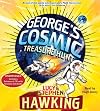
This book was really fun to listen to and my rating is reflected as an adult reader (five stars for a child or teen). The story line is cute (nothing deep) but the lack of depth is made up for by scientic facts! Even though this was meant for someone younger, I found myself learning many things (all facinating facts). Want to brush up on your planetary knowledge? This book is a perfect, quick, fun read that I would recommend to ANY parent. Buy the audio book and play this in the car to the show more kids and I bet they'll want more! Apparently this is the second book to this series and although I found that out halfway through listening to it, this didn't bother me at all. I would have enjoyed starting off with the first book though, and would recommend others to do the same. show less
I really thought this one was terrible. The science was interesting, but too much like science fiction, so that it seemed like fantasy. The writing was good enough, but some of the themes were disturbing. I think the ending was supposed to be a coming-together of all the different factions, but it message of the book seemed to be that environmentalists are against all technology and innovation, and that it’s okay if we destroy this planet because science can find us a new one.
I would love show more someone to explain to me the visual references to [b: The Little Prince|157993|The Little Prince|Antoine de Saint-Exupéry|http://images.gr-assets.com/books/1367545443s/157993.jpg|2180358]. They were far too obvious to be accidental, and yet nothing was really made of them. I just can’t see George as a modern-day Little Prince.
The book design was atrocious. My reading was often disrupted mid-sentence by sidebars and pages of photographs. I enjoyed the sidebars- they were better than the story, but the placement of them was problematic. Likewise, the photos were cool, but they weren’t placed near the relevant content in the book, and often came in the middle of the chapter. When I reached the end of the photos, I had to go back and reread the last page of text to get back into the story. We’ve made such strides in design recently, that there’s really no excuse for this.
It always makes me sad when books like this get so much press because of their authors when so many wonderful books are ignored. show less
I would love show more someone to explain to me the visual references to [b: The Little Prince|157993|The Little Prince|Antoine de Saint-Exupéry|http://images.gr-assets.com/books/1367545443s/157993.jpg|2180358]. They were far too obvious to be accidental, and yet nothing was really made of them. I just can’t see George as a modern-day Little Prince.
The book design was atrocious. My reading was often disrupted mid-sentence by sidebars and pages of photographs. I enjoyed the sidebars- they were better than the story, but the placement of them was problematic. Likewise, the photos were cool, but they weren’t placed near the relevant content in the book, and often came in the middle of the chapter. When I reached the end of the photos, I had to go back and reread the last page of text to get back into the story. We’ve made such strides in design recently, that there’s really no excuse for this.
It always makes me sad when books like this get so much press because of their authors when so many wonderful books are ignored. show less
Lists
Awards


You May Also Like


Associated Authors
Statistics
- Works
- 22
- Also by
- 3
- Members
- 2,793
- Popularity
- #9,206
- Rating
- 3.9
- Reviews
- 61
- ISBNs
- 253
- Languages
- 23