
Russell Stannard
Author of Relativity: A Very Short Introduction
About the Author
Russell Stannard looks at the biggest questions of science-physics at or beyond the Big Bang; quantum mechanics; consciousness-to weigh up whether they might one day be solved. A celebration of science-but one tempered with humility.
Series
Works by Russell Stannard
The New World of Mr Tompkins: George Gamow's Classic Mr Tompkins in Paperback (1999) — Author — 227 copies, 3 reviews
The End of Discovery: Are We Approaching the Boundaries of the Knowable? (2010) 50 copies, 3 reviews
Associated Works
Tagged
Common Knowledge
- Canonical name
- Stannard, Russell
- Birthdate
- 1931-12-24
- Gender
- male
- Education
- University College London (PhD|Physics|1956)
University College London (BSc|Physics|1953) - Occupations
- physicist
university professor emeritus
broadcaster - Organizations
- Open University
Institute of Physics
John Templeton Foundation - Awards and honors
- OBE, 1998
Bragg Medal and Prize, 1999
Fellow, University College London, 2000 - Nationality
- UK
- Birthplace
- London, England, UK
- Places of residence
- London, England, UK
Berkeley, California, USA - Associated Place (for map)
- UK
Members
Reviews
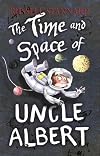
(Read as research for writing project - following review includes spoilers)
This is the first installment of the Uncle Albert series by Russell Stannard, a retired physics professor. It occupies a tiny niche of books, which double both as novels for children and educational works, to explain science.
In it, a girl of around 11 or so, of the name of Gedanken (German for "thought") repeatedly visits her eccentric, excitable Uncle Albert (loosely modelled on Albert Einstein), who happens to be a show more physicist, and they learn together about the universe - in this book that means about the theory of relativity. The main device is Uncle Albert's "thought bubbles" - if he thinks hard enough, he can create a real bubble of thought above him, and he can even transport his neice into the bubble, where she can experience anything he can imagine - though he only permits himself to imagine what is possible.
These thought experiments include
1) Her trying to chase a light beam in a big space-ship, but despite going at nearly the speed of light, she never catches up. This demonstrates how light speed is the fastest possible, and that mass is linked with speed.
2) In the next thought experiment, she goes at nearly the speed of light around Jupiter and back, and finds that her watch went slower than her uncle's - so travelling at near the speed of light actually slows down time.
3) Next, on another trip close to light speed,her uncle shows her, via a video recording of the trip, that she and her ship became increasingly flattened as they approached the speed of light.
4) There follows a discussion about how energy is equivalent to mass, although mass has enormous quantities of energy.
5) In the next experiment, light is fired back and forwards from a point in the middle of the space ship while it goes nearly at the speed of light. For Gedanken, it seems to be a dead heat, but from Uncle Albert's perspective outside, it seems that the beam hitting the back gets there first. This shows how important frame of reference is.
6) Frame of reference is reinforced in the last experiment, when Gedanken films earth while zooming away from it nearly at the speed of light. Although it looks as if time is slowing down at the earth from her perspective, Uncle Albert also sees time slowing down at the space-ship from his perspective, because from each perspective they are stationary and the other object is zooming away nearly at the speed of light.
These tricky relativity ideas are explained with remarkable clarity, and not just told, but SHOWN by these thought experiments, with Gedanken constantly being critical, and asking questions to find holes in the ideas, with Uncle Albert at times being honest about problems, either before resolving them, or saying that there are issues. I loved how it was experiments that drove the understanding, and felt in some ways that I had a deeper, more probing grasp of relativity than in many adult science books I've read on the subject. I also liked the fact that Stannard is open about the glaring issue in the story - that if everything is symmetrical, how come the clocks don't match? Apparently, this is where general relativity (which isn't covered in the book - only special) comes in. I would have loved Stannard's explanatory powers to make this issue clear too, but alas I was left frustrated not really to be clear on this one point.
One problem I had, though, as that I'd have loved it if the device to achieve this wasn't so blatantly unscientific and fanciful - people being transported into thought-bubbles and so on was a rather awkward way of showing things, really.
The other issue is that the plot is almost non-existent, and the characters aren't particularly interesting. The science is so weird and exciting, though, that you hardly notice this, and there still is a certain charm to the amateurish fiction part of the book. But it would have been nice BOTH to have a decent plot and characters, as well as the staggeringly strange world of relativity. show less
This is the first installment of the Uncle Albert series by Russell Stannard, a retired physics professor. It occupies a tiny niche of books, which double both as novels for children and educational works, to explain science.
In it, a girl of around 11 or so, of the name of Gedanken (German for "thought") repeatedly visits her eccentric, excitable Uncle Albert (loosely modelled on Albert Einstein), who happens to be a show more physicist, and they learn together about the universe - in this book that means about the theory of relativity. The main device is Uncle Albert's "thought bubbles" - if he thinks hard enough, he can create a real bubble of thought above him, and he can even transport his neice into the bubble, where she can experience anything he can imagine - though he only permits himself to imagine what is possible.
These thought experiments include
1) Her trying to chase a light beam in a big space-ship, but despite going at nearly the speed of light, she never catches up. This demonstrates how light speed is the fastest possible, and that mass is linked with speed.
2) In the next thought experiment, she goes at nearly the speed of light around Jupiter and back, and finds that her watch went slower than her uncle's - so travelling at near the speed of light actually slows down time.
3) Next, on another trip close to light speed,her uncle shows her, via a video recording of the trip, that she and her ship became increasingly flattened as they approached the speed of light.
4) There follows a discussion about how energy is equivalent to mass, although mass has enormous quantities of energy.
5) In the next experiment, light is fired back and forwards from a point in the middle of the space ship while it goes nearly at the speed of light. For Gedanken, it seems to be a dead heat, but from Uncle Albert's perspective outside, it seems that the beam hitting the back gets there first. This shows how important frame of reference is.
6) Frame of reference is reinforced in the last experiment, when Gedanken films earth while zooming away from it nearly at the speed of light. Although it looks as if time is slowing down at the earth from her perspective, Uncle Albert also sees time slowing down at the space-ship from his perspective, because from each perspective they are stationary and the other object is zooming away nearly at the speed of light.
These tricky relativity ideas are explained with remarkable clarity, and not just told, but SHOWN by these thought experiments, with Gedanken constantly being critical, and asking questions to find holes in the ideas, with Uncle Albert at times being honest about problems, either before resolving them, or saying that there are issues. I loved how it was experiments that drove the understanding, and felt in some ways that I had a deeper, more probing grasp of relativity than in many adult science books I've read on the subject. I also liked the fact that Stannard is open about the glaring issue in the story - that if everything is symmetrical, how come the clocks don't match? Apparently, this is where general relativity (which isn't covered in the book - only special) comes in. I would have loved Stannard's explanatory powers to make this issue clear too, but alas I was left frustrated not really to be clear on this one point.
One problem I had, though, as that I'd have loved it if the device to achieve this wasn't so blatantly unscientific and fanciful - people being transported into thought-bubbles and so on was a rather awkward way of showing things, really.
The other issue is that the plot is almost non-existent, and the characters aren't particularly interesting. The science is so weird and exciting, though, that you hardly notice this, and there still is a certain charm to the amateurish fiction part of the book. But it would have been nice BOTH to have a decent plot and characters, as well as the staggeringly strange world of relativity. show less
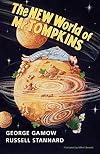
(read as research for book I'm writing)
This science book, written for adults (despite what the blurbs might say) is a whimsical, highly accessible journey through the main modern results in physics. Unusually, and in a very entertaining, useful and informative way, the essays, framed as lectures, are interspersed with imaginative snippets of fiction, as the token layman, Mr Tompkins, continues to nod off in the lectures, and has dreams about the physics he's just learnt. In some ways, this show more is the adult equivalent of the Uncle Albert books, and therefore it makes perfect sense that Russell Stannard has rewritten and updated this collection of essays and physics fictional vignettes.
Topics covered include special relativity (light speed being maximum speed, time and space dilation, etc.) and general relativity (curvature of space), expansion and geometry of the universe, cosmology and black holes, quantum mechanics and the uncertainty of particle's position/momentum, heat and entropy, the constituents of atoms, the nature of electrons, elements, molecules, anti-matter, particle accelerators and the zoo of particles, and finally quarks, gluons, fundamental forces and the Standard Model.
Much of the book is explained very well, and the works of fiction help our understanding considerably in places. I loved its imagination, and how illuminating the stories at times were. The plot, if you could call it that, was as usual with these things almost non-existent, but still carried some charm nevertheless.
Some of the early sections include mathematical equations, most of which I welcomed, as they were easy to understand on the whole and made the physics more clear. But some of the time the equations were put in with little or no explanation, and that was rather frustrating. There were also some rather opaque sections, which could have easily been left out.
I'm sure that Stannard's rewriting has significantly improved what is already a very accessible, inspiring exploration of physics. My guess is that Stannard's additions were not necessarily as imaginative as the original Gamow content, but clearer.
Any adult who is interested in physics, but doesn't have a degree in it will love this book, although you may need to skip over the odd section. show less
This science book, written for adults (despite what the blurbs might say) is a whimsical, highly accessible journey through the main modern results in physics. Unusually, and in a very entertaining, useful and informative way, the essays, framed as lectures, are interspersed with imaginative snippets of fiction, as the token layman, Mr Tompkins, continues to nod off in the lectures, and has dreams about the physics he's just learnt. In some ways, this show more is the adult equivalent of the Uncle Albert books, and therefore it makes perfect sense that Russell Stannard has rewritten and updated this collection of essays and physics fictional vignettes.
Topics covered include special relativity (light speed being maximum speed, time and space dilation, etc.) and general relativity (curvature of space), expansion and geometry of the universe, cosmology and black holes, quantum mechanics and the uncertainty of particle's position/momentum, heat and entropy, the constituents of atoms, the nature of electrons, elements, molecules, anti-matter, particle accelerators and the zoo of particles, and finally quarks, gluons, fundamental forces and the Standard Model.
Much of the book is explained very well, and the works of fiction help our understanding considerably in places. I loved its imagination, and how illuminating the stories at times were. The plot, if you could call it that, was as usual with these things almost non-existent, but still carried some charm nevertheless.
Some of the early sections include mathematical equations, most of which I welcomed, as they were easy to understand on the whole and made the physics more clear. But some of the time the equations were put in with little or no explanation, and that was rather frustrating. There were also some rather opaque sections, which could have easily been left out.
I'm sure that Stannard's rewriting has significantly improved what is already a very accessible, inspiring exploration of physics. My guess is that Stannard's additions were not necessarily as imaginative as the original Gamow content, but clearer.
Any adult who is interested in physics, but doesn't have a degree in it will love this book, although you may need to skip over the odd section. show less
George Gamow's Mr Tompkins was a fascinating attempt to explain modern Physics to a wide audience without getting bogged down in technical detail. Gamow's use of analogy and simplification works well, and really does explain where Physics was at at the time it was written.
However, some of the attitudes and even the theories now look somewhat dated. Times have changed, and Physics and society have changed too.
So some bright spark thought "Let's update Gamow's work for the present." An show more admirable idea, but unfortunately one doomed in the execution.
In an attempt to make the female character less of a bystander, she's become a strong, independent woman who is often thrust into situations where she is not required just to prove how strong and independent she is. It reads as if it was updated by skimming over some feminist articles from the 70s and injecting the ideas at random. The impact this has on the remainder of the prose is irredeemable.
Get the original. Even with it's dated ideas on society and women, it's much better than this. show less
However, some of the attitudes and even the theories now look somewhat dated. Times have changed, and Physics and society have changed too.
So some bright spark thought "Let's update Gamow's work for the present." An show more admirable idea, but unfortunately one doomed in the execution.
In an attempt to make the female character less of a bystander, she's become a strong, independent woman who is often thrust into situations where she is not required just to prove how strong and independent she is. It reads as if it was updated by skimming over some feminist articles from the 70s and injecting the ideas at random. The impact this has on the remainder of the prose is irredeemable.
Get the original. Even with it's dated ideas on society and women, it's much better than this. show less
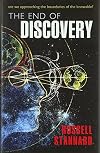
"Scientism" is not a thousandth as big a problem in this world as religionism, yet (physicist) Stannard says his book aims to oppose it; he also bears the taint of being a past awardee of the Templeton Foundation. That said, he has produced a very easily read compendium of scientific boundary questions that may be never be answered because of human brain limitations or experimental impracticality. The areas discussed include consciousness, space and time, cosmology, particle physics, quantum show more mechanics, and string theory. show less
Lists
Awards


You May Also Like


Associated Authors
Statistics
- Works
- 42
- Also by
- 1
- Members
- 1,508
- Popularity
- #17,051
- Rating
- 3.8
- Reviews
- 19
- ISBNs
- 137
- Languages
- 16