
Glanville Price
Author of A Comprehensive French Grammar
About the Author
Glanville Price is Emeritus Professor of French at the University of Wales Aberystwyth.
Works by Glanville Price
Associated Works
The bulletin of the board of celtic studies, volume XXVII, part IV, May 1978 (1978) — Contributor — 1 copy
Tagged
Common Knowledge
- Birthdate
- 1928
- Gender
- male
- Education
- University College of North Wales, Bangor (1952)
University of Paris (Sorbonne|1956) - Occupations
- Lecturer in French at the University of St Andrews, 1958-64, and at the University of Leeds, 1965-66
Professor of French, University of Stirling, 1967-72
Professor of French, University College of Wales, Aberystwyth, 1972- - Nationality
- Wales
- Associated Place (for map)
- Wales
Members
Reviews

This is a straightforward modern English prose translation of four Old French epics about the semi-historical William of Orange, who became a legendary figure supposedly at the court of Louis the Pious, the weak (and in this version foolish) son of Charlemagne. "The Crowning of Louis" tells how William defeated an attempt to depose Louis and saw him safely crowned. The second story "The Waggon Train" tells how he captured the city of Nimes from the Saracens(who did in fact invade southern show more France, though not as successfully as the poem implies) and won the love of the Saracen queen Orable (later Guibourg). The title refers to the well-know tactic (in both legend and history) of using soldiers hidden in wagons to get into the city. The third poem, "The Capture of Orange" tells how William took the city of Orange and married Guibourg after she was baptised. THe last poem, "The Song of William" tells how a new Saracen invasion killed William's gallant nephew, but William --aided by the giant servant Rainourt (a comic character) finally defeated them. All the stries have lots of vigorous (thuogh som,etimes repetitive) fighting, and this cycle has more love interest and humor than many of the chasons de geste. show less

For some reason I delighted in this book when taking a grad course at UC Berkeley in 1982, taught by Glanville Price himself. My copy is signed with him with the annotation: "With all good wishes, Glanville Price, Berkeley, June 15, 1982." I find this book quite illuminating on many aspects of French grammar, like double-compound tenses. By explaining the Latin origins of the language, many mysteries are clarified. But this is not easy reading: for example, the chapter on vowels and their show more voyage from Latin to French makes little sense until the chapter on consonants has been read, and vice versa. show less
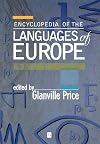
This authoritative reference book focuses on the extant languages of Europe, but I especially appreciate the fact that it also includes now extinct languages (languages known to have been spoken in Europe in the past). The articles provide basic information on the origins and historical development of each language (while for the living languages, the contemporary position/condition of the same are also considered); an added bonus is that each of the articles also lists bibliographical show more information for further study. A must-have reference for anyone interested in linguistics. show less
Just what it says -- a survey of the languages of Europe, alphabetically arranged, with additional articles on multilingual countries, scripts, language groups, and so on For each language, there is an article focussing on the history and dialects of the language: for phonology, morphology and grammer, look elsewhere.
You May Also Like


Associated Authors
Statistics
- Works
- 29
- Also by
- 3
- Members
- 250
- Popularity
- #91,400
- Rating
- 3.7
- Reviews
- 4
- ISBNs
- 39
- Languages
- 2