
About the Author
Image credit: U.S. Army photo by Tom Zimmerman, cropped by uploader (army.mil)
Works by Lewis Sorley
A Better War: The Unexamined Victories and Final Tragedy of America's Last Years in Vietnam (1999) 267 copies, 4 reviews
Thunderbolt: General Creighton Abrams and the Army of His Time (1992) — Author — 93 copies, 1 review
Vietnam Chronicles: The Abrams Tapes, 1968-1972 (Modern Southeast Asia Series) (2004) 25 copies, 1 review
The Vietnam War: An Assessment by South Vietnam's Generals (Modern Southeast Asia Series) (2010) — Editor — 11 copies
LSC Honor Bright: History and Origins of the West Point Honor Code and System (CPS2 - USMA) (2008) 11 copies
Remembering Vietnam. 1 copy
Tagged
Common Knowledge
- Legal name
- Sorley, Lewis Stone
- Birthdate
- 1934-08-03
- Gender
- male
- Education
- Texas Military Institute - The Episcopal School of Texas, San Antonio, Texas, USA
United States Military Academy (B.S.|1956)
University of Pennsylvania (M.A.|1963)
Pennsylvania State University (M.P.A.|1975)
Harvard University
United States Naval War College (show all 7)
Johns Hopkins University (Ph.D.|1979) - Occupations
- professor (English)
military officer (United States Army|lieutenant colonel)
historian
military analyst
intelligence analyst - Organizations
- Center for Strategic and International Studies
United States Central Intelligence Agency
National Defense Intelligence College
International Institute for Strategic Studies - Nationality
- USA
- Birthplace
- West Point, New York, USA
- Places of residence
- West Point, New York, USA
San Antonio, Texas, USA - Associated Place (for map)
- USA
Members
Reviews

I come away from this hard-headed critique of the career of William Westmoreland with almost as many questions as I arrived to it with. Part of the problem is that while Lewis Sorley's main finding is that the virtues that propelled Westmoreland to high command came to be dysfunctional when exercising theater command, I do have the sense (having read Samuel Zaffiri's biography of the man) that one is not given a strong enough sense of the man's virtues at lower command levels. It's as though show more Westmoreland's faults in high command are being anachronistically projected back to his early career.
Two, I'd like to know the contingencies that brought Westy to command at what became MACV. While his arrival predates the arrival of the "Big Unit" War and attrition as a strategy, my sense is not that he was a harbinger of that war. Could it be that the man was simply in Saigon to get some seasoning before being given command at the Army level in either NATO or Korea and, again, it was simply a fluke that an apostle of conventional warfare was in command at a time when the government in Saigon really began to lose it.
This then leads to the point that I'm not sure Sorley plays up enough, that Westy was squarely in the "American Way of War" that saw the road to victory as being closing with the enemy main force to inflict comprehensive defeat. It is likely that most American generals that could have held that position in 1965 would have come up with a similar operational prescription.
Three, while Westmoreland can't avoid blame for presiding over the failures of execution exposed by the Great Tet Offensive, it is also true that he provided the Johnson Administration what it wanted. While Sorley includes H.R. McMaster's "Dereliction of Duty" as a source (and which is an essential study to read), I'm not quite clear that he embraced it in terms of providing the Washington context to this period of the war.
Four, I think Sorley could have given a better sense of the command politics of the United States Army in this period, as the time that Westy was rising to high command was also the period when the dashing paratroop generals of World War II (Maxwell Taylor, Jim Gavin, Matt Ridgway, etc.) dominated the service. Westy certainly saw these men as the main chance, and did successfully court them as patrons. I suppose that this is a roundabout way of asking the question of just how did Westy manage to avoid War College in the first place, which would have either opened his eyes to a wider world or would have aborted his rise to theater command and then to being kicked upstairs to being service chief; the chapter on Westy's even more dysfunctional time as Army Chief of Staff is most damning.
Another question I come away with from this book is the whole question of Westmoreland's anti-intellectualism. Was this simply a question of the culture he grew up in (South Carolina in the shadow of the American Civil War) and the man's level of native intelligence, or was something more at work. I begin to suspect that Westmoreland labored under the burden of dyslexia or some other reading disability, and that the drive for apparent perfection was the reaction to this condition. It doesn't seem to be an issue that occurred to Sorley.
This then is an important book, and one that any student of the American involvement in Vietnam should read, but I suspect that it isn't the last word on William Westmoreland, at least in terms of examining the whole context of his career. I also actively dislike the subtitle, as whatever Westmoreland's failures it only serves to paint the man (and whatever the faults fairly depicted) as a convenient scapegoat. Many hands made light work of creating a failure. show less
Two, I'd like to know the contingencies that brought Westy to command at what became MACV. While his arrival predates the arrival of the "Big Unit" War and attrition as a strategy, my sense is not that he was a harbinger of that war. Could it be that the man was simply in Saigon to get some seasoning before being given command at the Army level in either NATO or Korea and, again, it was simply a fluke that an apostle of conventional warfare was in command at a time when the government in Saigon really began to lose it.
This then leads to the point that I'm not sure Sorley plays up enough, that Westy was squarely in the "American Way of War" that saw the road to victory as being closing with the enemy main force to inflict comprehensive defeat. It is likely that most American generals that could have held that position in 1965 would have come up with a similar operational prescription.
Three, while Westmoreland can't avoid blame for presiding over the failures of execution exposed by the Great Tet Offensive, it is also true that he provided the Johnson Administration what it wanted. While Sorley includes H.R. McMaster's "Dereliction of Duty" as a source (and which is an essential study to read), I'm not quite clear that he embraced it in terms of providing the Washington context to this period of the war.
Four, I think Sorley could have given a better sense of the command politics of the United States Army in this period, as the time that Westy was rising to high command was also the period when the dashing paratroop generals of World War II (Maxwell Taylor, Jim Gavin, Matt Ridgway, etc.) dominated the service. Westy certainly saw these men as the main chance, and did successfully court them as patrons. I suppose that this is a roundabout way of asking the question of just how did Westy manage to avoid War College in the first place, which would have either opened his eyes to a wider world or would have aborted his rise to theater command and then to being kicked upstairs to being service chief; the chapter on Westy's even more dysfunctional time as Army Chief of Staff is most damning.
Another question I come away with from this book is the whole question of Westmoreland's anti-intellectualism. Was this simply a question of the culture he grew up in (South Carolina in the shadow of the American Civil War) and the man's level of native intelligence, or was something more at work. I begin to suspect that Westmoreland labored under the burden of dyslexia or some other reading disability, and that the drive for apparent perfection was the reaction to this condition. It doesn't seem to be an issue that occurred to Sorley.
This then is an important book, and one that any student of the American involvement in Vietnam should read, but I suspect that it isn't the last word on William Westmoreland, at least in terms of examining the whole context of his career. I also actively dislike the subtitle, as whatever Westmoreland's failures it only serves to paint the man (and whatever the faults fairly depicted) as a convenient scapegoat. Many hands made light work of creating a failure. show less
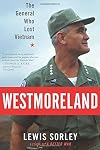
Westmoreland is a scholarly murder. Sorley does a masterful job showing the meteoric rise and fall of General Westmoreland, a man propelled by his ambitions beyond his capabilities. I don't think there was single person with a negative opinion of Westmoreland who did not get a chance to stick a knife in by the end.
From youth, Westmoreland was marked for success. The child of a South Carolina mill manager, he was an eagle scout and chief of cadets at West Point in 1936. A field grade officer show more during World War 2, his active and aggressive style as commander of an artillery battery saw him promoted to colonel, mentored by airborne commander General Maxwell Taylor (later chair of the Joint Chiefs of Staff and ambassador to South Vietnam). As he cycled through command of elite airborne units and a stint as commander at West Point, Westmoreland knew how to play on his looks, bearing, and political connections, and was tapped to take command of the war in Vietnam in 1964.
There, Westmoreland met the test of his life, and failed. Sorley describes Westmoreland's defeat in detail as a commander over the next four years: Neglecting ARVN in favor of fruitless search and destroy missions; requiring optimistic assessments from his subordinates, regardless of the truth; the whole fiasco of removing entire classes of Viet Cong guerrillas from the order of battle; focusing on selling the war in '67 instead of fighting it. The Tet Offensive shattered what remained of Westmoreland's credibility, and he was failed upwards to Army Chief of Staff.
There, Sorley is even harsher, recounting a tenure that ignored major problems in the army to focus on protecting Westmoreland's reputation in the official history. Westmoreland in retirement seemed a broken man, with a farcical run for governor, and an ill-advised libel suit against CBS for a special report on the Order of Battle. Westmoreland appears to have done good work for Vietnam Veterans, but none of that is mentioned, aside from a quote from his New York Time obituary.
The picture of Westmoreland that emerges is a man with a planetary sense of self-importance, a narcissus captured by being the image of the modern four-star general at the expense of actually winning a war. Sorley uses the ample archives of Westmoreland's actions to contradict the man's memoirs and later testimony. Westmoreland the strategist is one behind step events and trying to take credit for other people's work. His personal warmth and loyalty to his friends is countered by repeated accusations of gross stupidity, of an inability to learn, or clearly discern significant elements in confusing circumstances.
My other reading on the Vietnam War has focused on Westmoreland as a central figure, as the man who set American tactics in South Vietnam, who had the best opportunity to "win" the war, if it could be won, and who instead escalated it to a futile meatgrinder. This biography is a strong negative assessment of the man, but dances around two key issues: First, why was Westmoreland selected for such a key role as commander in Vietnam? It seems no one made the affirmative decision to send him there, he was merely a rising star in the right place. Second, search and destroy became a self-justifying mission for the war. Why did Westmoreland choose this set of tactics, and persist in it despite clear evidence of its inefficiency? Sorley is silent on Westmoreland's affirmative qualities. show less
From youth, Westmoreland was marked for success. The child of a South Carolina mill manager, he was an eagle scout and chief of cadets at West Point in 1936. A field grade officer show more during World War 2, his active and aggressive style as commander of an artillery battery saw him promoted to colonel, mentored by airborne commander General Maxwell Taylor (later chair of the Joint Chiefs of Staff and ambassador to South Vietnam). As he cycled through command of elite airborne units and a stint as commander at West Point, Westmoreland knew how to play on his looks, bearing, and political connections, and was tapped to take command of the war in Vietnam in 1964.
There, Westmoreland met the test of his life, and failed. Sorley describes Westmoreland's defeat in detail as a commander over the next four years: Neglecting ARVN in favor of fruitless search and destroy missions; requiring optimistic assessments from his subordinates, regardless of the truth; the whole fiasco of removing entire classes of Viet Cong guerrillas from the order of battle; focusing on selling the war in '67 instead of fighting it. The Tet Offensive shattered what remained of Westmoreland's credibility, and he was failed upwards to Army Chief of Staff.
There, Sorley is even harsher, recounting a tenure that ignored major problems in the army to focus on protecting Westmoreland's reputation in the official history. Westmoreland in retirement seemed a broken man, with a farcical run for governor, and an ill-advised libel suit against CBS for a special report on the Order of Battle. Westmoreland appears to have done good work for Vietnam Veterans, but none of that is mentioned, aside from a quote from his New York Time obituary.
The picture of Westmoreland that emerges is a man with a planetary sense of self-importance, a narcissus captured by being the image of the modern four-star general at the expense of actually winning a war. Sorley uses the ample archives of Westmoreland's actions to contradict the man's memoirs and later testimony. Westmoreland the strategist is one behind step events and trying to take credit for other people's work. His personal warmth and loyalty to his friends is countered by repeated accusations of gross stupidity, of an inability to learn, or clearly discern significant elements in confusing circumstances.
My other reading on the Vietnam War has focused on Westmoreland as a central figure, as the man who set American tactics in South Vietnam, who had the best opportunity to "win" the war, if it could be won, and who instead escalated it to a futile meatgrinder. This biography is a strong negative assessment of the man, but dances around two key issues: First, why was Westmoreland selected for such a key role as commander in Vietnam? It seems no one made the affirmative decision to send him there, he was merely a rising star in the right place. Second, search and destroy became a self-justifying mission for the war. Why did Westmoreland choose this set of tactics, and persist in it despite clear evidence of its inefficiency? Sorley is silent on Westmoreland's affirmative qualities. show less
A Better War: The Unexamined Victories and Final Tragedy of America's Last Years in Vietnam by Lewis Sorley
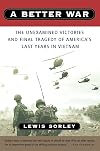
Lewis Sorley is graduate of West Point with a doctorate in history from Johns Hopkins University and an American intelligence strategist and military historian. In A Better War, he argues that the United States army under William Westmoreland and the government of South Vietnam fought the Vietnam War rather stupidly prior to the Tet Offensive in 1968, but that once Westmoreland was replaced by Creighton Abrams the war was conducted more intelligently. He even argues (as have many other show more military historians) that the U.S. actually “won” the Tet Offensive on the battle field even though it cost the government the support of the people at home.
Sorley’s tale is one of lost opportunities. In Sorley’s opinion, much progress was made on the battle field from 1968 to 1972, but U.S. domestic politics rendered it all for nought. Most Americans are not even aware or at least tend to forget the details of that progress. We remember instead the last three disastrous years (1972-75) and the final humiliating departure from the American embassy in Saigon. The ultimate loss of the war was due primarily to (1) termination of American political, material, and military support; (2) failure by South Viet Nam to provide effective military leadership at high levels despite come tent and courageous junior officers; and (3) failure to cut off enemy infiltration and resupply through the Ho Chi Minh trail in Cambodia and Laos.
The book make enlightening reading and it was nominated for the Pulitzer Prize in 1999.
(JAB) show less
Sorley’s tale is one of lost opportunities. In Sorley’s opinion, much progress was made on the battle field from 1968 to 1972, but U.S. domestic politics rendered it all for nought. Most Americans are not even aware or at least tend to forget the details of that progress. We remember instead the last three disastrous years (1972-75) and the final humiliating departure from the American embassy in Saigon. The ultimate loss of the war was due primarily to (1) termination of American political, material, and military support; (2) failure by South Viet Nam to provide effective military leadership at high levels despite come tent and courageous junior officers; and (3) failure to cut off enemy infiltration and resupply through the Ho Chi Minh trail in Cambodia and Laos.
The book make enlightening reading and it was nominated for the Pulitzer Prize in 1999.
(JAB) show less

5755. Thunderbolt General Creighton Abrams and the Army of his Times, by Lewis Sorley (read 31 Aug 2021) This biography, published in 1992, is well researched and is laudatory of Abrams, who followed General Westmoreland as the American general in Vietnam. Abrams graduated from West Point in 1936 was in World War II at the Battle of the Bulge, and was the American general in Vietnam as the war was trying to be Vietnamized. After Vietnam he was named Army Chief of Staff but died before he show more served two years as such. His wife was Catholic and his six kids were all raised Catholic and he himself became a Catholic a few years before he died on Sept 4, 1974.. He was a tough guy and no doubt inspired fear at times in those serving under him, I found the closing chapters of the book moving and it raised my feeling about the book . The author is a West Point grad himself and spends much time exploring Abrams' ideas on military concepts and how the Army should be. show less
Lists
You May Also Like


Statistics
- Works
- 12
- Members
- 584
- Popularity
- #42,937
- Rating
- 4.0
- Reviews
- 9
- ISBNs
- 23
- Favorited
- 1