
Dave Zirin
Author of Things That Make White People Uncomfortable
About the Author
Dave Zirin is the sports editor for the Nation and the author of Game Over: How Politics Has Turned the Sports World Upside Down and Several other books.
Image credit: Dave Zirin
Works by Dave Zirin
A People’s History of Sports in the United States: 250 Years of Politics, Protest, People, and Play (2008) 175 copies, 1 review
Brazil's Dance with the Devil: The World Cup, The Olympics, and the Struggle for Democracy (2014) 86 copies, 1 review
Not just a game 3 copies
Associated Works
Tagged
Common Knowledge
- Other names
- Zirin, David M.
- Birthdate
- 1973
- Gender
- male
- Occupations
- sports writer
- Organizations
- The Nation
- Nationality
- USA
- Associated Place (for map)
- USA
Members
Reviews

Best for: Anyone interested in a compelling story about how a professional athlete lives his values.
In a nutshell: Former (sniff) Seattle Seahawk and current Philadelphia Eagle team member Michael Bennett shares his prospective on a wide range of topics, including the NCAA, the NFL, racism, and sexism.
Line that sticks with me:
“They also tell us to stick to sports when we speak out on issues. But they don’t seem to have a problem when we’re making commercials, selling their kids show more sneakers they can’t afford or fast food that will give them colon cancer.”
“But none of this is new, and we shouldn’t pretend it is. Racists may be more confident now because of who is in the White House, but it’s been there all along.”
“I think their real reason for calling me a liar is their whole worldview is built around the idea that racism in policing doesn’t exist. They would rather live in the comfort of that fiction than be forced to confront the uncomfortable truth: that racial profiling is a reality.”
“I realized that I wouldn’t be the person I aspire to be if I called out injustice here at home and just stopped at our border. It doesn’t work that way.”
Why I chose it: I mean, a former Seahawk writing about things like social justice? Sign me up.
Review:
I grew up loving professional football. I was a 49ers fan, and got to attend many games growing up. However, I didn’t watch a single game in the 2017-2018 season, because of how the league treated Colin Kaepernick. I wrote about my decision here: https://www.hownottobeajerkwhen.com/figuring-out-how-to-live-your-values-nfl-edi....
But living in Seattle, it was impossible to avoid news of the Seahawks, and Michael Bennett (until recently) was a major piece of that team. So when I heard he was writing a book — and with Dave Zirin, whose work I’ve reviewed before (https://cannonballread.com/2014/06/world-cup-fever/) — I knew I had to pick it up. Saw it at the airport before returning to London this week, and I’ve not been able to put it down.
This book has so many insights, it was hard to limit the number of quotes to share above. Mr. Bennett talks openly about how hard college life is for ‘student-athletes’ (who he says would more accurately be called ‘athlete-students’), how the NCAA and universities don’t give a shit about their players. He talks about life in the NFL, and the fear of CTE and how poorly retired players are treated. He shares how important the brotherhood of the Seahawks locker room has been in his growth as a player and a Black man.
He covers many topics I expected him to, like the racism inherent in calling the NFL team owners ‘owners’ when so many of the employees are Black, or Mr. Bennett’s involvement in the anthem protests. In fact, the preface could stand alone as a wonderful essay on the need to stand up (or, in this case, sit down) for what’s right. But he also talks about things like the importance of access to healthful food, or his thoughts on Palestine, or the importance of forgiveness, which I wasn’t expecting.
I think this is a book anyone with an opinion on the role of college or professional athletes should read. I also think this is a good book for anyone who is looking for inspiration to keep fighting injustice.
Note: Mr. Bennett was charged in late March with assaulting someone working security at the Super Bowl in 2017 (a felony, because the person is over 65). I find it hard to believe that the incident went down as suggested in the indictment; I’m especially suspect because of the way the Houston police chief shared it (Google the press conference if you’re interested). Mr. Bennett’s attorney has said: “He just flat-out didn’t do it. It wasn’t a case of, ‘He didn’t shove her that hard,’ or anything like that. … He never touched her.” That said, I wasn’t there, so if that’s something that might affect your interest in picking up this book, I wanted to put it out there. show less
In a nutshell: Former (sniff) Seattle Seahawk and current Philadelphia Eagle team member Michael Bennett shares his prospective on a wide range of topics, including the NCAA, the NFL, racism, and sexism.
Line that sticks with me:
“They also tell us to stick to sports when we speak out on issues. But they don’t seem to have a problem when we’re making commercials, selling their kids show more sneakers they can’t afford or fast food that will give them colon cancer.”
“But none of this is new, and we shouldn’t pretend it is. Racists may be more confident now because of who is in the White House, but it’s been there all along.”
“I think their real reason for calling me a liar is their whole worldview is built around the idea that racism in policing doesn’t exist. They would rather live in the comfort of that fiction than be forced to confront the uncomfortable truth: that racial profiling is a reality.”
“I realized that I wouldn’t be the person I aspire to be if I called out injustice here at home and just stopped at our border. It doesn’t work that way.”
Why I chose it: I mean, a former Seahawk writing about things like social justice? Sign me up.
Review:
I grew up loving professional football. I was a 49ers fan, and got to attend many games growing up. However, I didn’t watch a single game in the 2017-2018 season, because of how the league treated Colin Kaepernick. I wrote about my decision here: https://www.hownottobeajerkwhen.com/figuring-out-how-to-live-your-values-nfl-edi....
But living in Seattle, it was impossible to avoid news of the Seahawks, and Michael Bennett (until recently) was a major piece of that team. So when I heard he was writing a book — and with Dave Zirin, whose work I’ve reviewed before (https://cannonballread.com/2014/06/world-cup-fever/) — I knew I had to pick it up. Saw it at the airport before returning to London this week, and I’ve not been able to put it down.
This book has so many insights, it was hard to limit the number of quotes to share above. Mr. Bennett talks openly about how hard college life is for ‘student-athletes’ (who he says would more accurately be called ‘athlete-students’), how the NCAA and universities don’t give a shit about their players. He talks about life in the NFL, and the fear of CTE and how poorly retired players are treated. He shares how important the brotherhood of the Seahawks locker room has been in his growth as a player and a Black man.
He covers many topics I expected him to, like the racism inherent in calling the NFL team owners ‘owners’ when so many of the employees are Black, or Mr. Bennett’s involvement in the anthem protests. In fact, the preface could stand alone as a wonderful essay on the need to stand up (or, in this case, sit down) for what’s right. But he also talks about things like the importance of access to healthful food, or his thoughts on Palestine, or the importance of forgiveness, which I wasn’t expecting.
I think this is a book anyone with an opinion on the role of college or professional athletes should read. I also think this is a good book for anyone who is looking for inspiration to keep fighting injustice.
Note: Mr. Bennett was charged in late March with assaulting someone working security at the Super Bowl in 2017 (a felony, because the person is over 65). I find it hard to believe that the incident went down as suggested in the indictment; I’m especially suspect because of the way the Houston police chief shared it (Google the press conference if you’re interested). Mr. Bennett’s attorney has said: “He just flat-out didn’t do it. It wasn’t a case of, ‘He didn’t shove her that hard,’ or anything like that. … He never touched her.” That said, I wasn’t there, so if that’s something that might affect your interest in picking up this book, I wanted to put it out there. show less
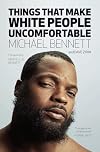
While what constitutes "whiteness" is a matter of debate, and I don't view myself as being "white" (and as a Jew, I'm sure that racists would agree with that), this book ended up making me a bit uncomfortable anyway.
Watching (American) football has always been a bit of a guilty pleasure of mine. Well, I suppose I'd say that I didn't find it a GUILTY pleasure until I read "League of Denial" by Mark Fainaru-Wada and Steve Fainaru (highly recommended, by the way) and saw just how the NFL (and show more the NCAA) was NOT handling the concussion crisis. And so watching football became a guilty pleasure - one that I still indulged in, but felt a little bad about doing so every time I had a game on the television.
I supported Kaepernick's, among others', protest of the national anthem. Raised by a secular Jew and a liberal Quaker for most of my life, I was already well-acquainted with those who didn't stand for the national anthem or repeat the pledge of allegiance. My grandfather (the Quaker) was a WW2 vet (non-combat role) and never once said the words to the national anthem or the pledge of allegiance. To him, those things weren't about patriotism or being a "real American" or other such nonsense. He pledged his allegiance to humanity and our shared experience, not to one nation in particular. I myself have never said the pledge of allegiance, either; my grandfather made it abundantly clear that before I could say those words, I had to understand what they meant and what exactly I was promising.
Somehow, in the course of national dialogue, what the players who were protesting against got twisted into something unrecognizable. There seemed to be two camps of people who were angry against the protesters: 1) those who said that they were protesting the military (they aren't) or weren't patriotic (wrong) and 2) those who said that black athletes are all spoiled millionaires who don't give a shit anyway and are just stirring up the pot.
Bennett clearly and concisely explains just why he started protesting. I've heard several interviews given by Bennett, and I've always thought him as a well-spoken man, and this translates well into his book (not sure why he needed a co-author, because it sounds quite a bit like Bennett's interviews and public speeches - maybe the co-author helped guide him to various topics? Not sure.). And he isn't afraid to tackle difficult topics - from his childhood, to racism, to concussions, to college football players enduring life-altering injuries all while not being paid (even though they bring in millions every year for their universities), to Kaepernick being "white balled" by the NFL establishment for daring to speak truth, etc. The only subjects that made me uncomfortable were the football-related topics; like I said, I'm having a difficult time reconciling my love for the game with the injuries that players routinely endure for "entertainment." He also draws attention to the power dynamics between "owners" of teams and the players.
Most often, I found myself saying "yes" and "tell it like it is" as Bennett spoke about these subjects. So, like I said, I wasn't particularly uncomfortable reading this book. But I would LOVE LOVE LOVE to have any and every football fan who thinks the protests are about the military or patriotism or spoiled millionaire athletes "not just sticking to football" read this book. I guarantee that this book would make THEM uncomfortable. Unfortunately, I don't think many will, simply because they have Breitbart and Trump and Fox News to tell them what to think, so why bother using their brains?
As for me, especially the chapter about the NCAA, I'm conflicted even more about football. I don't think I'll watch the NFL anymore, especially because of the new rule not allowing players to kneel anymore (and Trump's ridiculous injection of himself into this manufactured debate about patriotism and the military, as if a draft dodger and someone who MOCKED a gold star family and a POW [John McCain] has ANY RIGHT AT ALL to comment about patriotism or the military - and seriously FUCK every single supporter of Trump's who gets all pissy about athletes protesting police brutality but don't care about Trump's actions).
I like how Bennett isn't about focusing blame on people; he's all about moving forward, about doing as much good as possible for all people, for seeing that we're all members of the human race and we should start acting like it, damn it.
Highly recommended, especially for football fans - but you don't have to be a football fan to enjoy this book. show less
Watching (American) football has always been a bit of a guilty pleasure of mine. Well, I suppose I'd say that I didn't find it a GUILTY pleasure until I read "League of Denial" by Mark Fainaru-Wada and Steve Fainaru (highly recommended, by the way) and saw just how the NFL (and show more the NCAA) was NOT handling the concussion crisis. And so watching football became a guilty pleasure - one that I still indulged in, but felt a little bad about doing so every time I had a game on the television.
I supported Kaepernick's, among others', protest of the national anthem. Raised by a secular Jew and a liberal Quaker for most of my life, I was already well-acquainted with those who didn't stand for the national anthem or repeat the pledge of allegiance. My grandfather (the Quaker) was a WW2 vet (non-combat role) and never once said the words to the national anthem or the pledge of allegiance. To him, those things weren't about patriotism or being a "real American" or other such nonsense. He pledged his allegiance to humanity and our shared experience, not to one nation in particular. I myself have never said the pledge of allegiance, either; my grandfather made it abundantly clear that before I could say those words, I had to understand what they meant and what exactly I was promising.
Somehow, in the course of national dialogue, what the players who were protesting against got twisted into something unrecognizable. There seemed to be two camps of people who were angry against the protesters: 1) those who said that they were protesting the military (they aren't) or weren't patriotic (wrong) and 2) those who said that black athletes are all spoiled millionaires who don't give a shit anyway and are just stirring up the pot.
Bennett clearly and concisely explains just why he started protesting. I've heard several interviews given by Bennett, and I've always thought him as a well-spoken man, and this translates well into his book (not sure why he needed a co-author, because it sounds quite a bit like Bennett's interviews and public speeches - maybe the co-author helped guide him to various topics? Not sure.). And he isn't afraid to tackle difficult topics - from his childhood, to racism, to concussions, to college football players enduring life-altering injuries all while not being paid (even though they bring in millions every year for their universities), to Kaepernick being "white balled" by the NFL establishment for daring to speak truth, etc. The only subjects that made me uncomfortable were the football-related topics; like I said, I'm having a difficult time reconciling my love for the game with the injuries that players routinely endure for "entertainment." He also draws attention to the power dynamics between "owners" of teams and the players.
Most often, I found myself saying "yes" and "tell it like it is" as Bennett spoke about these subjects. So, like I said, I wasn't particularly uncomfortable reading this book. But I would LOVE LOVE LOVE to have any and every football fan who thinks the protests are about the military or patriotism or spoiled millionaire athletes "not just sticking to football" read this book. I guarantee that this book would make THEM uncomfortable. Unfortunately, I don't think many will, simply because they have Breitbart and Trump and Fox News to tell them what to think, so why bother using their brains?
As for me, especially the chapter about the NCAA, I'm conflicted even more about football. I don't think I'll watch the NFL anymore, especially because of the new rule not allowing players to kneel anymore (and Trump's ridiculous injection of himself into this manufactured debate about patriotism and the military, as if a draft dodger and someone who MOCKED a gold star family and a POW [John McCain] has ANY RIGHT AT ALL to comment about patriotism or the military - and seriously FUCK every single supporter of Trump's who gets all pissy about athletes protesting police brutality but don't care about Trump's actions).
I like how Bennett isn't about focusing blame on people; he's all about moving forward, about doing as much good as possible for all people, for seeing that we're all members of the human race and we should start acting like it, damn it.
Highly recommended, especially for football fans - but you don't have to be a football fan to enjoy this book. show less
Brazil's Dance with the Devil: The World Cup, The Olympics, and the Struggle for Democracy by Dave Zirin

I love soccer, and I’ve been looking forward to this World Cup since, well, since it ended in 2010. Back then I watched games at pubs in England and Germany between revisions to my thesis; this year I’ll do more listening via a streaming app since now I have a desk job. Like many people, I spent my youth loving the Olympics (and later, the World Cup) without really thinking about the impact the games have on the cities and countries that seek to host them.
The past few years, however, show more especially in the lead up to the seemingly extraordinarily corrupt Sochi games, have brought the issues of these large-scale sporting events to my mind. I mean, I’d heard about bribery in Salt Lake City, and I know that, on a smaller scale, new stadiums are often sold as an economic boon to a city but rarely if ever actually make up for the economic and social costs. When I saw that Dave Zirin, sports writer for The Nation, was writing a book about the lead-up to the World Cup and the Olympics in Brazil, I knew I had to check it out to try to educate myself.
This is a good book. It’s written in a way that kept me engaged, and I think part of that comes from Mr. Zirin’s talent as a magazine writer. While he’s written other books, I primarily associate him with shorter pieces, and this book feels like an extension of a short piece (in a good way). He condensed a lot of complicated history into a few pages, which obviously can’t tell the full story, but it gave enough background to set the current stage. He shared interviews with the residents at risk of being evicted by World Cup and Olympics construction, and helped shatter (for me anyway) the idea that favelas are primarily dangerous 'slums'. He doesn’t gloss over the real problems that already existed in some of these areas, but he also shares why these communities feel so connected to their homes, and why what the government is looking to do to them is so troubling. I’ve known for a while that my education in this area is woefully lacking; I’m more than a little embarrassed that it took the World Cup coming to Brazil for me to seek out more information on it.
I did want more from this book, but it’s hard for me to put my finger on what that is. I’m so glad he wrote it, and I hope more people read it. I also hope that he does a follow-up book on what happened during the World Cup, what else is happening with the Olympics, and perhaps offers up some suggestions on how we can throw these giant events without them turning into corrupt endeavors that serve to make the rich richer. show less
The past few years, however, show more especially in the lead up to the seemingly extraordinarily corrupt Sochi games, have brought the issues of these large-scale sporting events to my mind. I mean, I’d heard about bribery in Salt Lake City, and I know that, on a smaller scale, new stadiums are often sold as an economic boon to a city but rarely if ever actually make up for the economic and social costs. When I saw that Dave Zirin, sports writer for The Nation, was writing a book about the lead-up to the World Cup and the Olympics in Brazil, I knew I had to check it out to try to educate myself.
This is a good book. It’s written in a way that kept me engaged, and I think part of that comes from Mr. Zirin’s talent as a magazine writer. While he’s written other books, I primarily associate him with shorter pieces, and this book feels like an extension of a short piece (in a good way). He condensed a lot of complicated history into a few pages, which obviously can’t tell the full story, but it gave enough background to set the current stage. He shared interviews with the residents at risk of being evicted by World Cup and Olympics construction, and helped shatter (for me anyway) the idea that favelas are primarily dangerous 'slums'. He doesn’t gloss over the real problems that already existed in some of these areas, but he also shares why these communities feel so connected to their homes, and why what the government is looking to do to them is so troubling. I’ve known for a while that my education in this area is woefully lacking; I’m more than a little embarrassed that it took the World Cup coming to Brazil for me to seek out more information on it.
I did want more from this book, but it’s hard for me to put my finger on what that is. I’m so glad he wrote it, and I hope more people read it. I also hope that he does a follow-up book on what happened during the World Cup, what else is happening with the Olympics, and perhaps offers up some suggestions on how we can throw these giant events without them turning into corrupt endeavors that serve to make the rich richer. show less

There are flashes of brilliance in this book. Parts of the book show thoughtful deductions on the subject of sports and its place in society. Parts of the book are horrible screeds, however, you sense that the author loves sports and is trying to tell the people watching all those sporting events that sports are a reflection of us. If we want our society to be better then we have to ask our atheletes to be better as well. Not better athletes but better people.
Lists
Awards


You May Also Like


Associated Authors
Statistics
- Works
- 13
- Also by
- 1
- Members
- 1,097
- Popularity
- #23,415
- Rating
- 3.8
- Reviews
- 24
- ISBNs
- 41
- Languages
- 1
- Favorited
- 2