
Cesare Beccaria (1738–1794)
Author of On Crimes and Punishments
About the Author
Works by Cesare Beccaria
Beccaria: 'On Crimes and Punishments' and Other Writings (Cambridge Texts in the History of Political Thought) (1995) 64 copies
Opere 5 copies
[Edizione nazionale delle opere di Cesare Beccaria] 6: Atti di governo: (serie 1.: 1771-1777) 2 copies
Carteggio 1 copy
Atti di governo 1 copy
I classici del pensiero [Corriere della sera]: Cesare Beccaria. Dei delitti e delle pene (2006) 1 copy
Scritti maggiori 1 copy
Opere scelte 1 copy
Scritti filosofici e letterari. A cura di Luigi Firpo, Gianni Francioni e Gianmarco Gaspari (1984) 1 copy
La pena di morte 1 copy
Opere. Vol. I 1 copy
Opere. Vol. II 1 copy
Tagged
Common Knowledge
- Canonical name
- Beccaria, Cesare
- Legal name
- Beccaria-Bonesana, Cesare, Marquis of
- Birthdate
- 1738-03-15
- Date of death
- 1794-11-28
- Gender
- male
- Education
- University of Pavia (law)
- Occupations
- philosopher
politician
jurist - Relationships
- Manzoni, Alessandro (grandson)
- Nationality
- Italy
- Birthplace
- Milan, Duchy of Milan
- Places of residence
- Milan, Duchy of Milan
- Place of death
- Milan, Duchy of Milan
- Associated Place (for map)
- Milan, Duchy of Milan
Members
Reviews
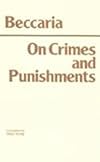
On Crimes and Punishment, Cesare Beccaria argues for different punishments.
He starts with a famous quote,
"Every punishment which does not arise from absolute necessity is tyrannical." -- Montesquieu
Laws are conditions under which Men are united.
Punishments are necessities to defend public liberty.
Beccaria writes on all types of crimes, including Adultery, Suicide and Sodomy.
How do you convict Suicide? After all, the person has died.
It seemed that he has a strong case to argue for most show more of crimes and punishment.
One quote which I loved was, "The Laws is greater than of those by whom they are violated, the risk of torturing an innocent person is greater."
I imagine for death penalty, torture, the risk of inflicting pain on innocent people is greater. As I was learning about death penalty in the United States, they abolished it around 1850's - 1890's due to a lot of pressure from Social Justice groups. A few states still have death penalty.
During the late 1800s, Some people find it entertaining when someone was hanged in public. They would drink in public while watching execution. Now these are not in the book.
Overall a great introduction to Crimes and Punishment.
Deus Vult
--Gottfried-- show less
He starts with a famous quote,
"Every punishment which does not arise from absolute necessity is tyrannical." -- Montesquieu
Laws are conditions under which Men are united.
Punishments are necessities to defend public liberty.
Beccaria writes on all types of crimes, including Adultery, Suicide and Sodomy.
How do you convict Suicide? After all, the person has died.
It seemed that he has a strong case to argue for most show more of crimes and punishment.
One quote which I loved was, "The Laws is greater than of those by whom they are violated, the risk of torturing an innocent person is greater."
I imagine for death penalty, torture, the risk of inflicting pain on innocent people is greater. As I was learning about death penalty in the United States, they abolished it around 1850's - 1890's due to a lot of pressure from Social Justice groups. A few states still have death penalty.
During the late 1800s, Some people find it entertaining when someone was hanged in public. They would drink in public while watching execution. Now these are not in the book.
Overall a great introduction to Crimes and Punishment.
Deus Vult
--Gottfried-- show less
On Crimes and Punishment, Cesare Beccaria argues for different punishments.
He starts with a famous quote,
"Every punishment which does not arise from absolute necessity is tyrannical." -- Montesquieu
Laws are conditions under which Men are united.
Punishments are necessities to defend public liberty.
Beccaria writes on all types of crimes, including Adultery, Suicide and Sodomy.
How do you convict Suicide? After all, the person has died.
It seemed that he has a strong case to argue for most show more of crimes and punishment.
One quote which I loved was, "The Laws is greater than of those by whom they are violated, the risk of torturing an innocent person is greater."
I imagine for death penalty, torture, the risk of inflicting pain on innocent people is greater. As I was learning about death penalty in the United States, they abolished it around 1850's - 1890's due to a lot of pressure from Social Justice groups. A few states still have death penalty.
During the late 1800s, Some people find it entertaining when someone was hanged in public. They would drink in public while watching execution. Now these are not in the book.
Overall a great introduction to Crimes and Punishment.
Deus Vult
--Gottfried-- show less
He starts with a famous quote,
"Every punishment which does not arise from absolute necessity is tyrannical." -- Montesquieu
Laws are conditions under which Men are united.
Punishments are necessities to defend public liberty.
Beccaria writes on all types of crimes, including Adultery, Suicide and Sodomy.
How do you convict Suicide? After all, the person has died.
It seemed that he has a strong case to argue for most show more of crimes and punishment.
One quote which I loved was, "The Laws is greater than of those by whom they are violated, the risk of torturing an innocent person is greater."
I imagine for death penalty, torture, the risk of inflicting pain on innocent people is greater. As I was learning about death penalty in the United States, they abolished it around 1850's - 1890's due to a lot of pressure from Social Justice groups. A few states still have death penalty.
During the late 1800s, Some people find it entertaining when someone was hanged in public. They would drink in public while watching execution. Now these are not in the book.
Overall a great introduction to Crimes and Punishment.
Deus Vult
--Gottfried-- show less

First published in 1764, when Beccaria was twenty-six years old, under the title Dei delitti e delle pene. One of the earliest translations found its way into John Adams' library.
This edition is dedicated not only to Beccaria, but to the Hons. John Sirica, Peter Rodino and Sam Ervin, "who saved America's democracy from bigotry and stupidity -- equally as harmful as are seditious revolutions."
This edition is dedicated not only to Beccaria, but to the Hons. John Sirica, Peter Rodino and Sam Ervin, "who saved America's democracy from bigotry and stupidity -- equally as harmful as are seditious revolutions."
An essay on crimes & punishments, translated from the Italian. With a commentary, attributed to M. de Voltaire, translated from the French by Cesare Beccaria
On the subject of the Criminal law, all were agreed that the punishment of death should be abolished, except for treason and murder, and that, for other felonies should be substituted hard labor in the public works, and in some cases the Lex talionis. ... Beccaria, and other writers on crimes and punishments had satisfied the reasonable world of the unrightfulness and inefficacy of the punishment of crimes by death; and hard labor on roads, canals and other public works, had been suggested show more as a proper substitute. — Thomas Jefferson's Autobiography
I recommend Beccaria on crimes & punishments [among other books on political economy] because of the demonstrative manner in which he has treated that branch of the subject. — Thomas Jefferson to John Norvell, 11 June 1807 show less
I recommend Beccaria on crimes & punishments [among other books on political economy] because of the demonstrative manner in which he has treated that branch of the subject. — Thomas Jefferson to John Norvell, 11 June 1807 show less
Lists
You May Also Like


Associated Authors
Statistics
- Works
- 72
- Members
- 893
- Popularity
- #28,688
- Rating
- 3.8
- Reviews
- 20
- ISBNs
- 151
- Languages
- 13
- Favorited
- 2
