

Mikita Brottman
Author of The Maximum Security Book Club: Reading Literature in a Men's Prison
About the Author
Mikita Brottman, PhD, is an Oxford-educated scholar, author, and psychoanalyst. She has written seven previous books, including The Great Grisby: Two Thousand Years of Literary, Royal Philosophical, and Artistic Dog Lovers and Their Exceptional Animals, and is a professor of humanities at the show more Maryland institute College of Art in Baltimore, where she lives. show less
Works by Mikita Brottman
Meat is Murder!: New Edition: An Illustrated Guide to Cannibal Culture (Creation Cinema Collection) (1998) 71 copies
Hollywood Hex: An Illustrated History of Cursed Movies (Creation Cinema Collection) (1999) 47 copies, 1 review
The Great Grisby: Two Thousand Years of Literary, Royal, Philosophical, and Artistic Dog Lovers and Their Exceptional Animals (2014) 28 copies
Jack Nicholson 1 copy
Associated Works
Tagged
Common Knowledge
- Birthdate
- 1966
- Gender
- female
- Nationality
- United Kingdom (birth)
- Birthplace
- Sheffield, England, UK
- Map Location
- USA
Members
Reviews
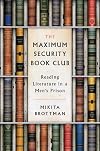
Outside of America’s political system, the misnamed “Criminal Justice System” is the nation’s most broken institution. In aggregate, states and the federal government spend upwards of $100 billion each year to punish people who have broken laws and call the punishment “rehabilitation” or “correction.” Any institution with an 82% failure rate such as the incarceration system does simply is not working.
Brottman’s book traces her experience inside on of these institutions. She show more meets with nine convicts regularly to read and discuss great books. Along the way, she tells about their lives, their backgrounds,their crimes and the hopelessness that she sees inside the walls of this system of cages. Yet she also chronicles the resilience and hope some men are capable of.
The book is an insightful look into the system and its impact on its victims, for to call these convicts anything else dismisses their realities. The author gains insights into the books she shares with these men that often amaze her and sometimes even raise her to higher levels of her own understanding of the books.
It is a worthwhile read both for its actual content and for its implications. Since every single other nation of the world has both lower incarceration rates and lower recidivity rates, it is also an indictment of a society that fails to correct a system that wastes billions of dollars and hundreds of thousands of lives rich in human capital. show less
Brottman’s book traces her experience inside on of these institutions. She show more meets with nine convicts regularly to read and discuss great books. Along the way, she tells about their lives, their backgrounds,their crimes and the hopelessness that she sees inside the walls of this system of cages. Yet she also chronicles the resilience and hope some men are capable of.
The book is an insightful look into the system and its impact on its victims, for to call these convicts anything else dismisses their realities. The author gains insights into the books she shares with these men that often amaze her and sometimes even raise her to higher levels of her own understanding of the books.
It is a worthwhile read both for its actual content and for its implications. Since every single other nation of the world has both lower incarceration rates and lower recidivity rates, it is also an indictment of a society that fails to correct a system that wastes billions of dollars and hundreds of thousands of lives rich in human capital. show less
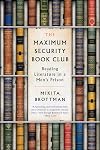
The author, a professor, decided to start a book club in a men’s prison. There were only nine members, so she got to know them while they discussed “literature”. Yes, many classics that I’m not even a fan of (some were ok; I haven’t read all they discussed, but I don’t even want to read some of them!).
I really liked this. Each chapter was a different book and she described a bit about one of the men, alternating for a different person in each following chapter. There were some show more illustrated portraits of all the men who participated and photographs of some of them. Since the books were not ones I’ve read or (if I have) ones I don’t remember well, though they might have been “ok”, there might have been a few references I missed. To be honest, I was more interested in the men’s lives in the prison… and out of the prison for the two that Mikita met up with after they were released. It was nice to get that bit of an update on them. show less
I really liked this. Each chapter was a different book and she described a bit about one of the men, alternating for a different person in each following chapter. There were some show more illustrated portraits of all the men who participated and photographs of some of them. Since the books were not ones I’ve read or (if I have) ones I don’t remember well, though they might have been “ok”, there might have been a few references I missed. To be honest, I was more interested in the men’s lives in the prison… and out of the prison for the two that Mikita met up with after they were released. It was nice to get that bit of an update on them. show less
Professor and psychoanalyst Mikita Brottman recounts her experiences leading nine inmates in a book club/reading group at Jessup Correctional Institution. Her reading assignments: Conrad's 'Heart of Darkness', Melville's 'Bartleby the Scrivener', Bukowski's 'Ham on Rye', Burrough's 'Junkie', Braly's 'On the Yard', Shakespeare's 'MacBeth', Stevenson's 'The Strange Case of Dr. Jekyll and Mr. Hyde', Poe's 'The Black Cat', Kafka's 'The Metamorphosis ', and Nabokov's 'Lolita'. Each book receives show more a chapter, including Brottman's own experience with the book, her reasons for choosing it, and the discussion that ensued. Many of her choices seem very dark and challenging, until you learn of her own hardscrabble upbringing.
It was a delight to go back and revisit some old favorites, as well as discover some new 'must-reads.' A favorite question of authors is "What book would you most like to experience as if for the very first time?" In "Maximum Security Book Club" it was a treat to see these classics through fresh and unique perspectives. It surprised me that Brottman herself was so surprised whe her group was able to read carefully and critically. Her selections for the group seem to have been a mix of her own particular tastes as well as a certain pre-conceived notion as to what would be thought provoking. She did elicit strong opinions, but often not in the ways she had anticipated, most especially with 'Lolita'. This was an instance in which the pupils had much to teach their instructor -- and quite rightly.
Along the way, we meet and engage with the men who make up this group. They all are serving hard time for horrible crimes. That they are both capable of great violence and yet, at times, great insight is one of the more powerful aspects of the book. Some might feel 'Prisoners Are People Too' a mere platitude. Others will clutch to a need to dehumanize and vilify. As a former prosecutor, I have seen true evil and understand society's need for justice, retribution and protection. Yet the fact remains: American jails have swollen beyond the level of any other civilized nation. Many of those who populate our prisons will be released and returned to society. Their successful assimilation is the best for us all. Recognizing our common humanity goes a long way along that score. show less
It was a delight to go back and revisit some old favorites, as well as discover some new 'must-reads.' A favorite question of authors is "What book would you most like to experience as if for the very first time?" In "Maximum Security Book Club" it was a treat to see these classics through fresh and unique perspectives. It surprised me that Brottman herself was so surprised whe her group was able to read carefully and critically. Her selections for the group seem to have been a mix of her own particular tastes as well as a certain pre-conceived notion as to what would be thought provoking. She did elicit strong opinions, but often not in the ways she had anticipated, most especially with 'Lolita'. This was an instance in which the pupils had much to teach their instructor -- and quite rightly.
Along the way, we meet and engage with the men who make up this group. They all are serving hard time for horrible crimes. That they are both capable of great violence and yet, at times, great insight is one of the more powerful aspects of the book. Some might feel 'Prisoners Are People Too' a mere platitude. Others will clutch to a need to dehumanize and vilify. As a former prosecutor, I have seen true evil and understand society's need for justice, retribution and protection. Yet the fact remains: American jails have swollen beyond the level of any other civilized nation. Many of those who populate our prisons will be released and returned to society. Their successful assimilation is the best for us all. Recognizing our common humanity goes a long way along that score. show less
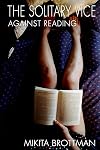
Don't be fooled by the title. Mikita Brottman loves to read.It's merely a ploy to draw the reader in.(Worked on me). What she actually argues against is literary snobbery. She takes offence to those who proclaim that the "Literary Classics' are the only worthwhile way to examine the depths of the human psyche. Brottman discusses a number of genres which she personally feels have given her more insight into the human mind. Some of her favorites are modern bestsellers, tell all bios, true show more crime books, and psychoanalyst case studies. She makes strong and compelling arguments for all these genres, and I'll probably find myself dipping into some of them. show less
Lists
Bibliomemoirs (1)
True Crime (1)
Awards


You May Also Like


Associated Authors
Statistics
- Works
- 20
- Also by
- 1
- Members
- 893
- Popularity
- #28,688
- Rating
- 3.5
- Reviews
- 43
- ISBNs
- 61
- Languages
- 1
