

Suzanne Fisher Staples (1945–2022)
Author of Shabanu: Daughter of the Wind
About the Author
Image credit: Suzanne Fisher Staples
Series
Works by Suzanne Fisher Staples
Callie's Paradox 2 copies
Associated Works
From One Experience to Another: Award-Winning Authors Sharing Real-Life Experiences Through Fiction (1997) — Contributor — 47 copies
Tagged
Common Knowledge
- Birthdate
- 1945-08-27
- Date of death
- 2022-04-29
- Gender
- female
- Education
- Cedar Crest College, Allentown, PA (BA, World Literature and International Politics)
Keystone College, LaPlume, PA (Associate in Liberal Arts) - Occupations
- Marketing Director
UPI reporter, Bureau Chief (South Asia)
literacy consultant, advocate and tutor
novelist
Artist-in-residence, Keystone College, LaPlume, PA
editor - Cause of death
- cancer (pancreatic)
- Nationality
- USA
- Birthplace
- Philadelphia, Pennsylvania, USA
- Places of residence
- Philadelphia, Pennsylvania, USA
Nicholson, Pennsylvania, USA
Hong Kong - Place of death
- Nicholson, Pennsylvania
- Associated Place (for map)
- Pennsylvania, USA
Members
Reviews

This book picks up five or six years after Shabanu -- this review contains spoilers for that book. We see Shabanu now as the youngest wife of a wealthy older man, raising her young daughter Mumtaz. The first three wives look down on Shabanu, and she fears for her safety and that of Mumtaz. She would also like to see Mumtaz educated, so her future will be more secure. Shabanu's plan is to live at the haveli, her husband's city house, while the government is in session. She can find Mumtaz a show more tutor there, and they will be safe from the other wives, who prefer to live in a newer and more stylish part of town. But when one of Shabanu's only friends is forced into an arranged marriage even more distasteful than Shabanu's own, plans must need change once again...
I found this a rather stressful read, as Shabanu's life is one of nearly constant anxiety and hidden danger. Of course, this also made for a quick and compelling read. I'm not entirely satisfied with the book's ending, but there is a third book, so I will probably read that one and see if it resolves some of the things I found problematic. show less
I found this a rather stressful read, as Shabanu's life is one of nearly constant anxiety and hidden danger. Of course, this also made for a quick and compelling read. I'm not entirely satisfied with the book's ending, but there is a third book, so I will probably read that one and see if it resolves some of the things I found problematic. show less
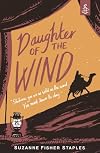
I was convinced by this moving story of a young teenage girl, Shabanu, raised in a nomadic desert family. Her account of her daily life - it's written in the first person - gave me some real insight into her life, and its real differences from 21st century European life. But her emotions as she confronts the marriage choices made for her as circumstances change around her are ones it's easy to identify with too. She has some very hard lessons to learn which are not the kind of lesson it show more would be palatable for a young western girl to accept. But as her mother warns, 'Shabanu, you are wild as the wind. You must learn to obey. Otherwise . . . I am afraid for you.' show less
During the Afghan war and fall of the Taliban rule the lives of a shepherd girl intertwine with that of an American woman. Najmah has lived a simple life with her family, helping tend the animals and garden. Then her father and brother are forcefully conscripted into the war by the Taliban. Later, bombing destroys Namjah's home, killing her mother and baby brother. She escapes, disguised as a boy, with the friends of a neighbor. Elaine, now Nusrat, is married to an Afghan doctor. She show more relocated with him to his country so he could help out at a hospital during the war. She has not heard from him for many months. In the meantime, she teaches war refugee children at her home and visits her in-laws. Eventually Najmah is brought to Nusrat's little school. Nusrat learns that Najmah is really a girl, without her family and alone among the dangers of the war and the Taliban. She takes in Najmah to live with her until they can figure out what to do. show less
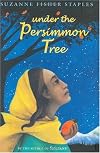
Suzanne Fisher Staples is a local author, by which I mean she lives within 25 or 30 miles of me, by very familiar back roads. She plans an annual symposium called The Gathering at Keystone College in LaPlume, PA. She writes for "young readers", but as a former reporter based in Pakistan, Afghanistan and India, she covered a lot of difficult territory and now uses her knowledge of the region and its varied cultures to create engaging and informative fiction that appeals to adults as well. In show more Under the Persimmon Tree she gives us two main characters, Najmah, a twelve year old Afghani girl orphaned by war in post-9/11 Afghanistan, who travels, sometimes alone and disguised as a boy, to a refugee camp across the border in Peshawar, Pakistan; and Nusrat, an American woman who converted to Islam and traveled to her husband's homeland of Pakistan with him on a humanitarian mission. Nusrat teaches refugee children in the garden of her home outside Peshawar, while she waits for word from her husband, a doctor who has gone into the war zones to provide medical assistance in field clinics. Naturally, we anticipate an intersection of the lives of these two characters, whose stories are written in alternating chapters. Najmah's journey is told to us in her voice, in first person, in the present tense. Nusrat's story comes to us from her point of view, but in the third person, also in the present tense. I suppose the author felt the difference would make it easier for young readers to make the shift from chapter to chapter, but I didn't care for that aspect of the book. I'm not a fan of present tense, either. But there is excellence in this story; there is insight into Muslim daily life; into the impact of generations of war on people whose lives are mostly about survival, no matter who holds power; and about the simple acts of kindness and generosity that can bring about healing and growth. The ending feels inevitable, but not totally predictable. I enjoyed it, even though there were spots where the "informative" part was a little too obvious.
Review written in November 2015 show less
Review written in November 2015 show less
Lists
Awards


You May Also Like


Associated Authors
Statistics
- Works
- 10
- Also by
- 4
- Members
- 3,877
- Popularity
- #6,536
- Rating
- 3.8
- Reviews
- 85
- ISBNs
- 121
- Languages
- 7
- Favorited
- 6