

Jocelin de Brakelond (–1211)
Author of Chronicle of the Abbey of Bury St. Edmunds (Oxford World's Classics)
About the Author
Works by Jocelin de Brakelond
Chronicle of the Abbey of Bury St. Edmunds (Oxford World's Classics) (1989) — Author — 261 copies, 4 reviews
The Chronicle of Jocelin of Brakelond Concerning the Acts of Samson Abbot of the Monastery of St. Edmund (1202) — Author — 26 copies
The chronicle of Jocelin of Brakelond: a picture of monastic life in the days of Abbot Samson (2012) — Author — 6 copies
Associated Works
Tagged
Common Knowledge
- Canonical name
- Jocelin de Brakelond
- Birthdate
- mid 12th century
- Date of death
- 1211
- Gender
- male
- Occupations
- monk
- Nationality
- UK
- Places of residence
- Bury St. Edmunds, Suffolk, England, UK
- Burial location
- Bury St Edmunds, Suffolk
- Associated Place (for map)
- UK
Members
Reviews
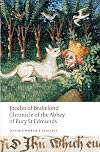
Written by a monk of the Abbey of Bury St Edmunds in the 12th century, the cover blurb of this book will tell you that it's a chronicle of various happenings in that abbey over a period of some thirty years. Technically, that's true. Mostly, however, this book is a record of the author's—Jocelin of Brakelond's—overwhelming crush on Abbot Samson. He's the perfect abbot, you guys! And Jocelin spent a lot of time trying to figure out the perfect New Year's gift for him (which Samson really show more liked, you know). I spent most of my time reading this giggling in a manner that's probably vastly inappropriate for a serious-minded grad student. But whatever, it was hilarious. show less
A window in to a lost world. It’s not at all what I expected from something called a chronicle, but is really a memoir with the personalities of the writer and his subjects clearly shining through.
This is a society totally dominated by the Church, which has both secular and spiritual power and can do anything to the people who live on its land, from chopping their heads off to controlling whether or not their neighbours will say good morning to them. It must have been very difficult for show more anyone who couldn’t or wasn’t allowed to conform. You can see this most clearly in the way the Jews are treated. It was literally impossible for them to live anything approaching a normal life. Jocelin lists his complains against them and comments “Even more incongruous, during the troubles [when the townspeople were murdering them] their wives and children were sheltered in our pittancery.” Warts and all, those personalities.
This is only 100 years after the Conquest and the society is still clearly divided into Norman and Anglo-Saxon. The Abbot, I take from some of the comments, must have been Anglo-Saxon which explains why the king does not know him when he is elected.
I live not far from the Abbey and was able to visit while reading this and it really brought the ruins and the book alive. Go there if you can. It’s quite an experience to contrast the power structures in the chronicle with the tottering structures left by the Reformation.
The OUP edition is a good one. Excellent notes and an introduction that really is a marvellous piece of scene-setting and may well be a masterpiece of its kind. show less
This is a society totally dominated by the Church, which has both secular and spiritual power and can do anything to the people who live on its land, from chopping their heads off to controlling whether or not their neighbours will say good morning to them. It must have been very difficult for show more anyone who couldn’t or wasn’t allowed to conform. You can see this most clearly in the way the Jews are treated. It was literally impossible for them to live anything approaching a normal life. Jocelin lists his complains against them and comments “Even more incongruous, during the troubles [when the townspeople were murdering them] their wives and children were sheltered in our pittancery.” Warts and all, those personalities.
This is only 100 years after the Conquest and the society is still clearly divided into Norman and Anglo-Saxon. The Abbot, I take from some of the comments, must have been Anglo-Saxon which explains why the king does not know him when he is elected.
I live not far from the Abbey and was able to visit while reading this and it really brought the ruins and the book alive. Go there if you can. It’s quite an experience to contrast the power structures in the chronicle with the tottering structures left by the Reformation.
The OUP edition is a good one. Excellent notes and an introduction that really is a marvellous piece of scene-setting and may well be a masterpiece of its kind. show less
An interesting and fun read. One I wish we'd had as a textbook in some of my classes. My full review: http://allbookedup-elena.blogspot.com/2010/07/chronicle-of-abbey-of-bury-st-edmu...
You May Also Like


Associated Authors
Statistics
- Works
- 8
- Also by
- 1
- Members
- 312
- Popularity
- #75,594
- Rating
- 3.5
- Reviews
- 4
- ISBNs
- 8