
Florence Laughlin
Author of The Little Leftover Witch
Works by Florence Laughlin
Associated Works
Here Boy! Lots of Stories for Everyone Who Likes Dogs (1966) — Contributor, some editions — 10 copies, 1 review
Tagged
Common Knowledge
- Gender
- female
Members
Reviews

When Lucinda Doon finds a little lost witch outside her window one Halloween night, she takes the bedraggled, cross little creature in, and soon Felina - who cannot get home because her broom is broken - has become a part of the Doon family. Not always friendly, and frequently uncooperative, Felina is slowly integrated into human life, becoming more and more like a little girl, as the year progresses. There are definite setbacks, but in the end love proves to be the strongest magic of all, show more and Felina discovers that she belongs with the Doons...
Originally published in 1960, The Little Leftover Witch was reprinted in 2013, with new cover art, making it available to young readers again. Unlike so many other witchy adventures I have read for the beginning chapter-book audience, this is less of a fantasy - although there are fantastical elements - and more of a family story. Felina is different from the Doons, but the things that set her apart could have been entirely non-magical, and it would not have made any difference to the emotional tenor of the story. This is very much a tale of fostering, and then adoption, and it is poignant, humorous and ultimately heartwarming. While the patience of the Doons, in the face of Felina's outbursts, and stubborn clinging to some of her witchy accoutrements, sometimes feels almost superhuman, it is still quite satisfying to witness. Felina's own transformation is likewise deeply satisfying, as she slowly learns to trust her new family, and to feel that she is one of them. Recommended to young readers looking for family stories and/or (somewhat) witchy tales. show less
Originally published in 1960, The Little Leftover Witch was reprinted in 2013, with new cover art, making it available to young readers again. Unlike so many other witchy adventures I have read for the beginning chapter-book audience, this is less of a fantasy - although there are fantastical elements - and more of a family story. Felina is different from the Doons, but the things that set her apart could have been entirely non-magical, and it would not have made any difference to the emotional tenor of the story. This is very much a tale of fostering, and then adoption, and it is poignant, humorous and ultimately heartwarming. While the patience of the Doons, in the face of Felina's outbursts, and stubborn clinging to some of her witchy accoutrements, sometimes feels almost superhuman, it is still quite satisfying to witness. Felina's own transformation is likewise deeply satisfying, as she slowly learns to trust her new family, and to feel that she is one of them. Recommended to young readers looking for family stories and/or (somewhat) witchy tales. show less
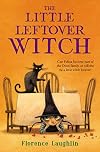
Unfortunately, this new edition does not have the pictures by Sheila Greenwald. Doing a Google image search reveals some, and makes it clear that they would have added a lot to the story.
And I feel fortunate in that I'm old enough to recognize some of the dated cultural references and assumptions. They might jar a modern child. (Otoh, they might intrigue him or her.)
However, it's still a nearly perfect fable about an abandoned, forlorn child who acts out her insecurities but is loved by her show more new family nonetheless, and finally learns to love them back and to feel secure and be happy.
No, it is not about squelching differences - the resolution is explicit about that. And no, it is not about modern Pagan 'good' witches. It is a fable. Iow, it is a theme that is made subtle by being disguised as a fun children's story.
I wish I had known it when I was young. Absolutely delightful. Highly recommended. (And very short, so you can easily read it yourself before passing it to your child, if you're still nervous.) I will try to find others by author. show less
And I feel fortunate in that I'm old enough to recognize some of the dated cultural references and assumptions. They might jar a modern child. (Otoh, they might intrigue him or her.)
However, it's still a nearly perfect fable about an abandoned, forlorn child who acts out her insecurities but is loved by her show more new family nonetheless, and finally learns to love them back and to feel secure and be happy.
No, it is not about squelching differences - the resolution is explicit about that. And no, it is not about modern Pagan 'good' witches. It is a fable. Iow, it is a theme that is made subtle by being disguised as a fun children's story.
I wish I had known it when I was young. Absolutely delightful. Highly recommended. (And very short, so you can easily read it yourself before passing it to your child, if you're still nervous.) I will try to find others by author. show less

Sweet little old-fashioned chapter book about a family who takes in a little lost witch. Yes, at times it slips toward the saccharine, and the story is definitely dated. But for the most part, this is just a nice story about the power of love.
Some readers seem to take issue with how Felina is changed, seeing this as a kind of brainwashing or repression of her interesting differences. Certainly a more skilled author would have spent time showing how the family changed, too. But this story is show more not one about a child from a different culture who is repressed into our society's modes of behavior. It isn't about culture at all--the author never shows us what the witches' society is like because it doesn't matter. It just represents Felina's inability to be part of a normal family. (I grant you, that's "normal" for 1960.) The story is part of the family of stories of children damaged and distanced by their early experiences, who are accepted, loved, and taught to be part of society again. Think of [b:Understood Betsy|347151|Understood Betsy|Dorothy Canfield Fisher|http://d.gr-assets.com/books/1245261923s/347151.jpg|3234038], [b:The Good Master|258038|The Good Master |Kate Seredy|http://d.gr-assets.com/books/1347518127s/258038.jpg|250092], [b:The Secret Garden|2998|The Secret Garden|Frances Hodgson Burnett|http://d.gr-assets.com/books/1327873635s/2998.jpg|3186437], etc.
(BTW this story is the OPPOSITE of the trope about the repressed people who take in the orphaned stranger, and find they are changed by the child, instead of the other way around. [b:Anne of Green Gables|8127|Anne of Green Gables (Anne of Green Gables, #1)|L.M. Montgomery|http://d.gr-assets.com/books/1309203168s/8127.jpg|3464264] changes Marilla far more than Marilla "civilizes" her; [b:Heidi|93|Heidi (Kingfisher Classics)|Johanna Spyri|http://d.gr-assets.com/books/1312041159s/93.jpg|1738595] opens her grandfather's heart to love and friendship again.) show less
Some readers seem to take issue with how Felina is changed, seeing this as a kind of brainwashing or repression of her interesting differences. Certainly a more skilled author would have spent time showing how the family changed, too. But this story is show more not one about a child from a different culture who is repressed into our society's modes of behavior. It isn't about culture at all--the author never shows us what the witches' society is like because it doesn't matter. It just represents Felina's inability to be part of a normal family. (I grant you, that's "normal" for 1960.) The story is part of the family of stories of children damaged and distanced by their early experiences, who are accepted, loved, and taught to be part of society again. Think of [b:Understood Betsy|347151|Understood Betsy|Dorothy Canfield Fisher|http://d.gr-assets.com/books/1245261923s/347151.jpg|3234038], [b:The Good Master|258038|The Good Master |Kate Seredy|http://d.gr-assets.com/books/1347518127s/258038.jpg|250092], [b:The Secret Garden|2998|The Secret Garden|Frances Hodgson Burnett|http://d.gr-assets.com/books/1327873635s/2998.jpg|3186437], etc.
(BTW this story is the OPPOSITE of the trope about the repressed people who take in the orphaned stranger, and find they are changed by the child, instead of the other way around. [b:Anne of Green Gables|8127|Anne of Green Gables (Anne of Green Gables, #1)|L.M. Montgomery|http://d.gr-assets.com/books/1309203168s/8127.jpg|3464264] changes Marilla far more than Marilla "civilizes" her; [b:Heidi|93|Heidi (Kingfisher Classics)|Johanna Spyri|http://d.gr-assets.com/books/1312041159s/93.jpg|1738595] opens her grandfather's heart to love and friendship again.) show less
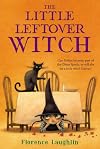
I love a cute Halloween book, regardless of the age it was written for! I stumbled across The Little Leftover Witch by Florence Laughlin and decided to give into the whimsy of the spooky season. It was time to indulge myself!
This book was utterly cute and had the sweetest ending. It's the kind of fun and joy I want in the spooky season. Thoroughly impressed with this book and I highly recommend it for middle grade readers wanting something spooky but positive. There's no horrors, just lots show more of fun and Easter eggs of what you might expect a little girl witch to do and like.
It might be old fashioned, but I think it holds up over time. This should be a Fall/Halloween classic!
Four out of five stars. show less
This book was utterly cute and had the sweetest ending. It's the kind of fun and joy I want in the spooky season. Thoroughly impressed with this book and I highly recommend it for middle grade readers wanting something spooky but positive. There's no horrors, just lots show more of fun and Easter eggs of what you might expect a little girl witch to do and like.
It might be old fashioned, but I think it holds up over time. This should be a Fall/Halloween classic!
Four out of five stars. show less
Lists
You May Also Like


Associated Authors
Statistics
- Works
- 12
- Also by
- 2
- Members
- 303
- Popularity
- #77,623
- Rating
- 3.9
- Reviews
- 9
- ISBNs
- 13