
Anna Elizabeth Bennett
Author of Little Witch
About the Author
Works by Anna Elizabeth Bennett
Associated Works
Tagged
Common Knowledge
- Birthdate
- 1915 (estimate calculated from death date and age.)
- Date of death
- 2002 (at age 87)
- Gender
- female
- Education
- Adelphi College
Pratt Library School - Occupations
- children's book author
children's librarian
poet
short story writer - Organizations
- Brooklyn Children's Museum
Brooklyn Public Library - Nationality
- USA
- Places of residence
- Brooklyn, New York, USA
Lansing, Michigan, USA
Massachusetts, USA - Associated Place (for map)
- USA
Members
Reviews
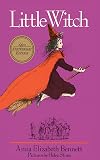
I chalk it up to growing up in the 1960s and the influence of Bewitched on TV. Before Twilight “niced up” vampires, Elizabeth Montgomery’s portrayal of good witch Samantha Stevens polished up the image of witches. Since then I’ve befriended a number of Wiccans, who can be characterized as good witches. So when I read Little Witch, I was gobsmacked to discover poor Minikin living in dread fear of her mother, Madam Snickasnee, a most evil witch, one who delights in turning innocent show more children — well, except for that delinquent Billy Martin — into flowerpots and in otherwise terrorizing her town. I’d forgotten that witches for centuries were feared.
Minikin — who goes by Minx — has, despite being 9 years old, never been to school, never had any friends, never had any fun. She longs to live as a normal girl, but the neighborhood children flee at her appearance, crying Witch’s child!” She spends her nights, while her mother flies out on her broomstick, trying unsuccessfully to conjure up a fairy. But an encounter with a sweet little orphan named Frances, her many siblings, and her big-hearted grandmother serve to change Minx’s life.
Little Witch has the slower pace and more moralizing tone that you’d expect from a children’s book from the 1950s; however, I enjoyed it all the same and the lessons that you shouldn’t judge someone by their family and that you should try to be brave and do what’s right are always good ones. show less
Minikin — who goes by Minx — has, despite being 9 years old, never been to school, never had any friends, never had any fun. She longs to live as a normal girl, but the neighborhood children flee at her appearance, crying Witch’s child!” She spends her nights, while her mother flies out on her broomstick, trying unsuccessfully to conjure up a fairy. But an encounter with a sweet little orphan named Frances, her many siblings, and her big-hearted grandmother serve to change Minx’s life.
Little Witch has the slower pace and more moralizing tone that you’d expect from a children’s book from the 1950s; however, I enjoyed it all the same and the lessons that you shouldn’t judge someone by their family and that you should try to be brave and do what’s right are always good ones. show less

Nine-year-old Minikin, also known as Minx, was deeply unhappy with her life as a witch's child. She hated living in her dirty unkempt home, and feared her mother, the terrible Madam Snickasnee, who was known to turn young children into potted plants. Most of all, Minx longed to go to school, and to make friends her own age. When she sneaks out of the house one day, her decision to enroll herself in school involves her in a number of adventures, leading to friendship, and eventually, to her show more freedom from Madam Snickasnee and the granting of her heart's desire - a true family.
Having seen it recommended in a number of places - according to the blurb on the rear cover of this 60th Anniversary Edition, it was #7 in a School Library Journal poll of the top 100 children's novels - I was eager to pick Little Witch up, particularly given my 'witchy witches' project, in which I have been looking at the depiction of witches in picture and early chapter-books. Unfortunately, although it was moderately charming, I wasn't all that impressed. The story felt rather predictable - I simply couldn't work up much interest in the main character, and never felt involved in her trials and tribulations - and was written in such a way that I felt almost as if the author were giving a report of events, rather than really making them come alive for the reader. I did like the illustrations, which had a distinctly mid-20th-century charm, and were the most magical part of the book. show less
Having seen it recommended in a number of places - according to the blurb on the rear cover of this 60th Anniversary Edition, it was #7 in a School Library Journal poll of the top 100 children's novels - I was eager to pick Little Witch up, particularly given my 'witchy witches' project, in which I have been looking at the depiction of witches in picture and early chapter-books. Unfortunately, although it was moderately charming, I wasn't all that impressed. The story felt rather predictable - I simply couldn't work up much interest in the main character, and never felt involved in her trials and tribulations - and was written in such a way that I felt almost as if the author were giving a report of events, rather than really making them come alive for the reader. I did like the illustrations, which had a distinctly mid-20th-century charm, and were the most magical part of the book. show less

Minikin Snickasnee - called Minx for short - was nine years old and wished with all her heart that she was not a witch's child. ...
It may sound like fun to be the daughter of Madam Snickasnee and be forbidden to go to school, to wash behind your ears, or go to bed at night. You might even like to see certain people you know turned into potted plants and have your own flying broomstick. ...
But Minx didn't like riding around in the dark or cooking up horrid pots of Black Spell Brew. Even a show more witch's child rebels, and one day, Minx sneaked off to school. ...
The principal was certainly surprised to see his newest pupil arriving on a broomstick, and life got much more exciting for a lot of people - the school-children, Mr. Beanpot the detective and Mrs. Sputter of the Parent-Teachers' Association. ... show less
It may sound like fun to be the daughter of Madam Snickasnee and be forbidden to go to school, to wash behind your ears, or go to bed at night. You might even like to see certain people you know turned into potted plants and have your own flying broomstick. ...
But Minx didn't like riding around in the dark or cooking up horrid pots of Black Spell Brew. Even a show more witch's child rebels, and one day, Minx sneaked off to school. ...
The principal was certainly surprised to see his newest pupil arriving on a broomstick, and life got much more exciting for a lot of people - the school-children, Mr. Beanpot the detective and Mrs. Sputter of the Parent-Teachers' Association. ... show less
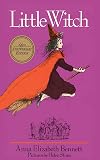
I read this many times when I was a kid but I think it must have been a library book because I don't have a copy. This stood the test of time well; a bit quirky and enjoyable. I love the idea that it is perfectly normal to everyone that the witch lives on the edge of town and her daughter rides a broomstick to school.
Lists
Awards


You May Also Like


Associated Authors
Statistics
- Works
- 2
- Also by
- 2
- Members
- 414
- Popularity
- #58,865
- Rating
- 4.0
- Reviews
- 12
- ISBNs
- 11