
Mary Calhoun (1926–2015)
Author of Hot-Air Henry
About the Author
Mary Calhoun was born on August 3, 1926 in Keokuk, Iowa. She received a bachelor of arts degree in journalism from the University of Iowa. She worked at the Omaha World Herald before marrying fellow journalist Frank Calhoun. Her first book, Making the Mississippi Shout, was published in 1957. She show more wrote more than 50 children's books during her lifetime including the Katie John series, Julie's Tree, Henry the Sailor Cat, and Cross-Country Cat. She died on October 27, 2015 at the age of 89. (Bowker Author Biography) show less
Series
Works by Mary Calhoun
Adventures with children: Exploring ways of learning & teaching in the church school (1987) 5 copies
Houn' dog 2 copies
Depend on Katie John 1 copy
Depend on Katie John 1 copy
Associated Works
Cricket Magazine, Vol. 12, No. 7, March 1985 — Author — 1 copy
Tagged
Common Knowledge
- Legal name
- Wilkins, Mary Louise Huiskamp
- Other names
- Calhoun, Mary Louise Huiskamp
- Birthdate
- 1926-08-03
- Date of death
- 2015-10-27
- Gender
- female
- Education
- University of Iowa (BA, Journalism)
- Organizations
- Daily Iowan
Omaha World-Herald - Nationality
- USA
- Birthplace
- Keokuk, Iowa, USA
- Places of residence
- Clark, Colorado, USA
Steamboat Springs, Colorado, USA
Chicago, Illinois, USA
Omaha, Nebraska, USA
Mount Vernon, Washington, USA
Rangely, Colorado, USA - Place of death
- Boulder, Colorado, USA
- Burial location
- St. Paul's Episcopal Church Columbarium, Steamboat Springs, Routt County, Colorado, USA
- Associated Place (for map)
- Colorado, USA
Members
Discussions
YA/Young Girl-Growing Up Katie(y) Scholastic Book? in Name that Book (September 2011)
Middle grade book--kids with a magic box in Name that Book (August 2011)
Reviews

When this picture-book retelling of an old African-American folktale - in which the super-sized Big Sixteen slays the devil himself, only to find that his great strength makes him as unwelcome in heaven, as he is in hell - was first published in the early 1980s, the review in the prestigious Horn Book Magazine was slightly less than complimentary:
"The picture book version is an unbelievable combination of stereotyping, violence, and blasphemy: The black-and-white illustrations are unfunny, show more crude, ugly and offensive. Big Sixteen is powerfully built but of very little brain, obsequious in manner and speech. Yassuh! The devil's wife seems to be the prototype of the prostitute; the Devil's children, with their horns, tails, and bulging eyes, are the most grotesque little varmints in picture books. Aside from its gross depiction of black people, the book is also reprehensible for the violence shown when witless Big Sixteen viciously killed the Devil."
Needless to say, when I read the above, in Betsy Hearne's article "Nobody Knows...", published in the September/October 2009 issue of the Horn Book Magazine (devoted to the theme of "Trouble"), and realized that the "gross" illustrations were done by none other than Trina Schart Hyman, whose artwork I generally adore, I had to track down a copy for myself, to see what I thought. The dearth of online reviews of Big Sixteen, and the scarcity of copies in a county library system that stocks multiple copies of many of Hyman's other titles, seemed to indicate the silencing power of a review like the one quoted above, and made me all the more determined to read the book, and decide for myself.
So... what to make of it? Is it full of stereotypes, violence and blasphemy? Are the illustrations racist? It's an odd thing, but I found myself so conscious of the negative review while reading, that I had a hard time making up my mind. It's certainly true that Big Sixteen, although strong, is not terribly assertive. He does everything his white owner demands, and answers "Yessuh," so there may be some justice to the claim that he is an "obsequious" stereotype. On the other hand, this tale comes out of the African-American folk tradition (I believe another retelling can be found in Raw Head, Bloody Bones: African-American Tales of the Supernatural), so unless Calhoun's version differs significantly from others, I have to wonder whether the reviewers' argument is with the telling or the tale. After all, that other great African-American strong-man, John Henry, wasn't exactly a figure of rebellion. Is he too a stereotype? He may be...
I don't think the story is any more violent than other folk and fairy-tales I have read. Yes, Big Sixteen kills the devil, but compared to some of the doings in the Brother Grimm, or Hans Christian Andersen, that doesn't seem so terribly extreme. As for blasphemy, I'm not sure I even know what to make of the charge. Is it blasphemy that Big Sixteen kills the Devil? That the Devil and his family are depicted as black? That Saint Peter and the angels are depicted as black? That Big Sixteen is turned away from both heaven and hell? Or that the story addresses these themes in the first place? Which, again, makes me wonder: is the "blasphemy" a function of the telling or the tale?
And finally: the illustrations. Is the depiction of the Devil's wife and children racist? To be perfectly frank, I thought it was rather tasteless, like one of those horribly oversexed Boris Vallejo fantasy paintings, in which scantily clad women are objectified. But the problematic nature of the image, for me, rests in its references (intentional or not) to misogyny, rather than racism, particularly in light of the idea - with its long and troubling history in our culture - that fully sexual women are "of the devil." Of course, misogyny and racism aren't mutually exclusive, but consider the fairly tasteful depiction of a black Saint Peter and his angels. The Horn Book reviewer quoted above (whose name I do not have, alas!) makes no mention of this image. Could it be because its inclusion would undermine the argument that black people in general - rather than the Devil and his brood, specifically - are depicted "grossly" here? Which raises the question: is his or her objection really to stereotypes? Or to the simple fact that the Devil and his family are (like every other character save the white owner) black?
In the end, my judgment of Big Sixteen is as follows: the story is intriguing, and I hope to track down other tellings. The illustrations are a little weak, given that this is Trina Schart Hyman we're talking about. The depiction of the Devil's wife is troubling, in its reference to a style I find misogynistic. I wouldn't really recommend this one. But by the same token, I don't know that I agree with everything in the Horn Book review, either. show less
"The picture book version is an unbelievable combination of stereotyping, violence, and blasphemy: The black-and-white illustrations are unfunny, show more crude, ugly and offensive. Big Sixteen is powerfully built but of very little brain, obsequious in manner and speech. Yassuh! The devil's wife seems to be the prototype of the prostitute; the Devil's children, with their horns, tails, and bulging eyes, are the most grotesque little varmints in picture books. Aside from its gross depiction of black people, the book is also reprehensible for the violence shown when witless Big Sixteen viciously killed the Devil."
Needless to say, when I read the above, in Betsy Hearne's article "Nobody Knows...", published in the September/October 2009 issue of the Horn Book Magazine (devoted to the theme of "Trouble"), and realized that the "gross" illustrations were done by none other than Trina Schart Hyman, whose artwork I generally adore, I had to track down a copy for myself, to see what I thought. The dearth of online reviews of Big Sixteen, and the scarcity of copies in a county library system that stocks multiple copies of many of Hyman's other titles, seemed to indicate the silencing power of a review like the one quoted above, and made me all the more determined to read the book, and decide for myself.
So... what to make of it? Is it full of stereotypes, violence and blasphemy? Are the illustrations racist? It's an odd thing, but I found myself so conscious of the negative review while reading, that I had a hard time making up my mind. It's certainly true that Big Sixteen, although strong, is not terribly assertive. He does everything his white owner demands, and answers "Yessuh," so there may be some justice to the claim that he is an "obsequious" stereotype. On the other hand, this tale comes out of the African-American folk tradition (I believe another retelling can be found in Raw Head, Bloody Bones: African-American Tales of the Supernatural), so unless Calhoun's version differs significantly from others, I have to wonder whether the reviewers' argument is with the telling or the tale. After all, that other great African-American strong-man, John Henry, wasn't exactly a figure of rebellion. Is he too a stereotype? He may be...
I don't think the story is any more violent than other folk and fairy-tales I have read. Yes, Big Sixteen kills the devil, but compared to some of the doings in the Brother Grimm, or Hans Christian Andersen, that doesn't seem so terribly extreme. As for blasphemy, I'm not sure I even know what to make of the charge. Is it blasphemy that Big Sixteen kills the Devil? That the Devil and his family are depicted as black? That Saint Peter and the angels are depicted as black? That Big Sixteen is turned away from both heaven and hell? Or that the story addresses these themes in the first place? Which, again, makes me wonder: is the "blasphemy" a function of the telling or the tale?
And finally: the illustrations. Is the depiction of the Devil's wife and children racist? To be perfectly frank, I thought it was rather tasteless, like one of those horribly oversexed Boris Vallejo fantasy paintings, in which scantily clad women are objectified. But the problematic nature of the image, for me, rests in its references (intentional or not) to misogyny, rather than racism, particularly in light of the idea - with its long and troubling history in our culture - that fully sexual women are "of the devil." Of course, misogyny and racism aren't mutually exclusive, but consider the fairly tasteful depiction of a black Saint Peter and his angels. The Horn Book reviewer quoted above (whose name I do not have, alas!) makes no mention of this image. Could it be because its inclusion would undermine the argument that black people in general - rather than the Devil and his brood, specifically - are depicted "grossly" here? Which raises the question: is his or her objection really to stereotypes? Or to the simple fact that the Devil and his family are (like every other character save the white owner) black?
In the end, my judgment of Big Sixteen is as follows: the story is intriguing, and I hope to track down other tellings. The illustrations are a little weak, given that this is Trina Schart Hyman we're talking about. The depiction of the Devil's wife is troubling, in its reference to a style I find misogynistic. I wouldn't really recommend this one. But by the same token, I don't know that I agree with everything in the Horn Book review, either. show less
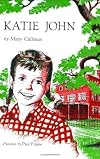
If I had read this book when I was younger, I would have been OBSESSED! Katie John is a tiny version of younger me, flaws and all. Constant scheming and never ending energy to follow through with the schemes, always underestimated by adults, a tendency to get into outrageous pickles, and a deep, abiding love for old houses. It’s me to a tee!
Tone-wise, it’s super similar to the Betsy-Tacy series, so readers who like those books are likely to enjoy this one, also. And it’s got some show more seriously pleasant cozy vibes, too! Katie John’s world is a feel-good place to retreat to when the real world gets too stressful. Definitely picking up the next book in the series! show less
Tone-wise, it’s super similar to the Betsy-Tacy series, so readers who like those books are likely to enjoy this one, also. And it’s got some show more seriously pleasant cozy vibes, too! Katie John’s world is a feel-good place to retreat to when the real world gets too stressful. Definitely picking up the next book in the series! show less

Sizzle was a witch with a reputation for raising outstanding witch cats: they knew how to spit and scratch and slink with the best of them, how to yowl, and (most importantly) how to stare unblinkingly at a bubbling pot, thereby ensuring the success of the potion in brew. Witches came to Hissing Hill from all over, sure of finding the sort of cats they needed. And then one day, a little yellow kitten named Gold was born - a true disgrace to her clowder of black cats. Was this the end of show more Sizzle's famous cat-breeding? Would her cats now be (horrors!) nice!?!
I enjoyed The Witch of Hissing Hill - the second witchy (and catty!) picture-book from Mary Calhoun that I have read, following upon Wobble, the Witch Cat - although I do become a little impatient with stories that confirm the "evil" nature of black cats, even in fun. (Full disclosure: I have an almost completely black cat, who is a darling). I can't say the illustrations by Janet McCaffery, which have a distinctly vintage feel to them, were really to my taste, but they are certainly vivid! Long out-of-print, and probably only available through the library, this is one Halloween tale I would recommend primarily to those, like myself, specifically looking for older holiday titles. show less
I enjoyed The Witch of Hissing Hill - the second witchy (and catty!) picture-book from Mary Calhoun that I have read, following upon Wobble, the Witch Cat - although I do become a little impatient with stories that confirm the "evil" nature of black cats, even in fun. (Full disclosure: I have an almost completely black cat, who is a darling). I can't say the illustrations by Janet McCaffery, which have a distinctly vintage feel to them, were really to my taste, but they are certainly vivid! Long out-of-print, and probably only available through the library, this is one Halloween tale I would recommend primarily to those, like myself, specifically looking for older holiday titles. show less

Re-read.
Oh, poor Katie John. Everything she touches twists around and bites her in this wonderful book about being almost-but-not-quite an adolescent. Does she really hate boys? Is she really crazy? Reading this is not unlike living through it. *squirm* Recommended.
Oh, poor Katie John. Everything she touches twists around and bites her in this wonderful book about being almost-but-not-quite an adolescent. Does she really hate boys? Is she really crazy? Reading this is not unlike living through it. *squirm* Recommended.
Lists
Awards


You May Also Like


Associated Authors
Statistics
- Works
- 62
- Also by
- 3
- Members
- 3,229
- Popularity
- #7,925
- Rating
- 3.8
- Reviews
- 70
- ISBNs
- 156
- Languages
- 3
- Favorited
- 2
