
Neville Symington
Author of The Analytic Experience
About the Author
Neville Symington is a psychoanalyst who trained in London at the Institute of the British Psychoanalytical Society and today lives and practises in Sydney, Australia. He has a website at www.nevillesymington.com
Series
Works by Neville Symington
Narzissmus 1 copy
Tagged
Common Knowledge
- Gender
- male
- Occupations
- psychoanalyst
Members
Reviews
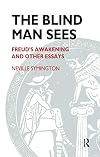
The papers in this book have been written over a period of fifteen years and tackle various subjects within psychoanalysis. The main theme to arise from these writings, and the central argument in this latest work from the eminent psychoanalyst Neville Symington, is the similarity between psychoanalysis and religion. Symington argues that psychoanalysis can be seen as a scientific religion with Freud as the leader of the movement. He examines the various stages of the journey made by a show more religious leader from "blindness" to "founding an institution" and finds counterparts in the development of psychoanalysis while drawing examples from Buddhism, Christianity and Islam.
Symington invites the reader on a journey with him - to examine the human mind, our society, the process of psychoanalysis, science and philosophy. He successfully uses examples from the consulting room to illuminate his arguments. Symington's honest accounts of the search for answers relevant to all of us encourage the reader to think further and deeper than he or she had intended.
"The psychoanalyst examines scientifically the emotional pattern in himself and the other. He can only do this to the extent to which he is self-aware. As what is he is exercising is the inner pattern of his and the other's relationship, then, according to my definition, what he is engaged in is a religious activity. As he is doing it in an orderly way about a determinate subject-matter, he is acting as a scientist. Hence my claim that psychoanalysis is a scientific religion." -- Neville Symington from the Introduction show less
Symington invites the reader on a journey with him - to examine the human mind, our society, the process of psychoanalysis, science and philosophy. He successfully uses examples from the consulting room to illuminate his arguments. Symington's honest accounts of the search for answers relevant to all of us encourage the reader to think further and deeper than he or she had intended.
"The psychoanalyst examines scientifically the emotional pattern in himself and the other. He can only do this to the extent to which he is self-aware. As what is he is exercising is the inner pattern of his and the other's relationship, then, according to my definition, what he is engaged in is a religious activity. As he is doing it in an orderly way about a determinate subject-matter, he is acting as a scientist. Hence my claim that psychoanalysis is a scientific religion." -- Neville Symington from the Introduction show less
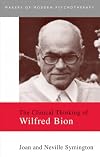
The Symingtons offer a erudite introduction to Bion that elucidates some major aspects of Bion's theory. I believe this will be a helpful resource as I shift to reading Bion's writing and provides me with some major themes to keep in mind when wading through such dense psychoanalytic theory.
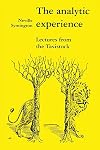
This introduction to the psychoanalytic process also presents a review of Freud's theory of the psyche, a summary of the work of Freud's close associates, and a brief survey of later developments in psychoanalysis through the work of Balint, Bion, Fairbairn, Klein, and Winnicott. Symington's book is closely based on the author's in-service training lectures at the Tavistock Clinic, London. The conversational style of the lecture format translates very well to the printed page, resulting in a show more readily accessible and engaging expression of the author's critically sympathetic understanding of psychoanalysis. It imparts a sense of the interpersonal resonance between analyst and patient and provides an even-handed overview of the major analytic theories. show less
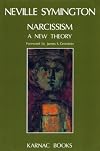
Symington's theory of narcissism is fundamental, lucid, and is informed by thoughtful clinical practice and scholarship. As the book is edited from a series of lectures, I found the material to be accessible and useful.
You May Also Like


Statistics
- Works
- 18
- Members
- 350
- Popularity
- #68,328
- Rating
- 3.9
- Reviews
- 8
- ISBNs
- 79
- Languages
- 3