
Adam Phillips (1) (1954–)
Author of Missing Out: In Praise of the Unlived Life
For other authors named Adam Phillips, see the disambiguation page.
About the Author
Adam Phillips is the author of six previous books, including "The Beast in the Nursery" & "Monogamy" (both available form Vintage). Formerly the principal child psychotherapist at Charing Cross Hospital in London, he lives in England. (Bowker Author Biography)
Works by Adam Phillips
On Kissing, Tickling, and Being Bored: Psychoanalytic Essays on the Unexamined Life (1993) 333 copies, 3 reviews
Associated Works
A Philosophical Enquiry into the Origin of Our Ideas of the Sublime and Beautiful (1757) — Editor, some editions — 1,224 copies, 7 reviews
Tagged
Common Knowledge
- Canonical name
- Phillips, Adam
- Birthdate
- 1954-09-19
- Gender
- male
- Education
- Clifton College, Clifton, Bristol, England, UK
St John's College, University of Oxford (BA) - Occupations
- psychotherapist
literary critic
essayist - Organizations
- Charing Cross Hospital
National Health Service - Awards and honors
- Royal Society of Literature (Fellow, 2012)
- Short biography
- Adam Phillips is a British psychotherapist and essayist.
Since 2003 he has been the general editor of the new Penguin Modern Classics translations of Sigmund Freud. He is also a regular contributor to the London Review of Books.
Joan Acocella, writing in The New Yorker, described Phillips as "Britain's foremost psychoanalytic writer", an opinion echoed by historian Élisabeth Roudinesco in Le Monde. [Wikipedia] - Nationality
- UK
- Birthplace
- Cardiff, Wales, UK
- Places of residence
- London, England, UK
- Map Location
- Wales, UK
Members
Reviews
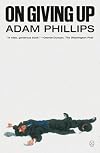
What is On Giving Up about? Adam Phillips’s work is many things - illuminating, provocative, layered, literary - but to summarize him, that’s a challenge. There is a quality to Phillips’ writing in which whatever one decides it’s about, it might well be about its opposite. His books flow in precise literary sentences that rarely resolve into one clear idea. Which is entirely the point. When Phillips considers a proposition, he notices how it fails, how it is inadequate, how — show more unstated and maybe unnoticed — its counterpoint may be just as relevant. As Phillips writes, “What are we omitting, and why?” A fair thing to ask, but you see how that complicates the What is it about? question.
I’ll venture a possibility. We might admire giving something up - alcohol, smoking, a bad relationship - in the belief that the sacrifice is good for us. But we rarely admire simply giving up. We aspire to hope, but not to despair. For Phillips, the book is about “… the essential and far-reaching ambiguity of a simple idea. We give things up when we believe we can change; we give up when we believe we can’t.”
In Phillips’ account of giving up, the very idea of giving something up coexists meaningfully with the idea of giving up. Giving something up is believing in one’s life and its capacity for change. But within that conviction may lie many assumptions, including the belief that life is always worth living. As Phillips writes, “So at one end of this imaginary spectrum there is giving up as a kind of enlightening disillusionment, which brings with it the question, and the possibility, of a future; at the other there is the terminal disillusionment that leads to suicide.”
I struggle with Phillips as I read him. I accuse him of linguistic trickery, of the deliberate misuse of language. But I am not certain he’s wrong, maybe only viscerally disturbing. Is the giving up of drinking really on a continuum with the giving up on life? He anticipates the objection that I never fully relinquish. He argues that I have not fully appreciated the assumptions and subtleties that giving up - and suicide -carry. He says it better than I could, and in his own characteristic style:
“[I}t is never clear to us whether suicide is what we call a choice, or the abrogation of choice – the choice, among other other things, to give up choosing. We are left, wondering what, if anything, could predispose someone to suicide. What could it be about a life, or supposedly about life itself, that could make this decision unequivocal? And why, by the same token, might someone need to feel that suicide was not in their repertoire?
The last is a good question. It is one of Phillips’ talents to ask questions, to suggest complexities not fully apprehended, to wonder. And objections land as if a blow upon a ghost. He wasn’t really there, he was only dealing in possibilities. Maybe I am right, and Phillips provocatively elusive. Even deliberately slippery, with an agenda to show me the limits of my viewpoint. I rail, I disagree, I protest, and I come away surer that I see only part of the picture. show less
I’ll venture a possibility. We might admire giving something up - alcohol, smoking, a bad relationship - in the belief that the sacrifice is good for us. But we rarely admire simply giving up. We aspire to hope, but not to despair. For Phillips, the book is about “… the essential and far-reaching ambiguity of a simple idea. We give things up when we believe we can change; we give up when we believe we can’t.”
In Phillips’ account of giving up, the very idea of giving something up coexists meaningfully with the idea of giving up. Giving something up is believing in one’s life and its capacity for change. But within that conviction may lie many assumptions, including the belief that life is always worth living. As Phillips writes, “So at one end of this imaginary spectrum there is giving up as a kind of enlightening disillusionment, which brings with it the question, and the possibility, of a future; at the other there is the terminal disillusionment that leads to suicide.”
I struggle with Phillips as I read him. I accuse him of linguistic trickery, of the deliberate misuse of language. But I am not certain he’s wrong, maybe only viscerally disturbing. Is the giving up of drinking really on a continuum with the giving up on life? He anticipates the objection that I never fully relinquish. He argues that I have not fully appreciated the assumptions and subtleties that giving up - and suicide -carry. He says it better than I could, and in his own characteristic style:
“[I}t is never clear to us whether suicide is what we call a choice, or the abrogation of choice – the choice, among other other things, to give up choosing. We are left, wondering what, if anything, could predispose someone to suicide. What could it be about a life, or supposedly about life itself, that could make this decision unequivocal? And why, by the same token, might someone need to feel that suicide was not in their repertoire?
The last is a good question. It is one of Phillips’ talents to ask questions, to suggest complexities not fully apprehended, to wonder. And objections land as if a blow upon a ghost. He wasn’t really there, he was only dealing in possibilities. Maybe I am right, and Phillips provocatively elusive. Even deliberately slippery, with an agenda to show me the limits of my viewpoint. I rail, I disagree, I protest, and I come away surer that I see only part of the picture. show less
On Kissing, Tickling, and Being Bored: Psychoanalytic Essays on the Unexamined Life by Adam Phillips
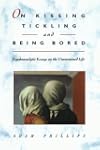
In a style that is writerly and audacious, Adam Phillips takes up a variety of seemingly ordinary subjects underinvestigated by psychoanalysis--kissing, worrying, risk, solitude, composure, even farting as it relates to worrying.
He argues that psychoanalysis began as a virtuoso improvisation within the science of medicine, but that virtuosity has given way to the dream of science that only the examined life is worth living. Phillips goes on to show how the drive to omniscience has been show more unfortunate both for psychoanalysis and for life. He reveals how much one's psychic health depends on establishing a realm of life that successfully resists examination. show less
He argues that psychoanalysis began as a virtuoso improvisation within the science of medicine, but that virtuosity has given way to the dream of science that only the examined life is worth living. Phillips goes on to show how the drive to omniscience has been show more unfortunate both for psychoanalysis and for life. He reveals how much one's psychic health depends on establishing a realm of life that successfully resists examination. show less
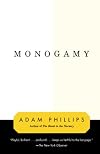
A slim, pithy book in clear, elegant English, but not an easy read, as monogamy itself is not an easy matter, when we delve beneath so many couples' self-congratulatory optimism.

Adam Phillips gets it, which means, whatever else it means, that he often doesn't. One is reminded here of the message of Viktor Frankl and Brene Brown - that the key to psychological integration is to locate the origin of our happiness in our unhappiness. One key difference between Phillips and these others, of course, is that Phillips is a practitioner, while the other two are thinkers. As a result, Phillips doesn't give us the answer directly, knowing as he does, as we do, that the only show more true way for us to change is if we lead and experience the change ourselves. His lyrical poetic style opens questions and slips nuggets of wisdom through, undetected right under our noses, leaving us with our own internal dialogues and wishing us well to find our own way there. A tour de force. show less
Lists
Awards


You May Also Like


Associated Authors
Statistics
- Works
- 32
- Also by
- 6
- Members
- 3,381
- Popularity
- #7,536
- Rating
- 3.6
- Reviews
- 57
- ISBNs
- 235
- Languages
- 14
- Favorited
- 1
