
Nick Bilton
Author of American Kingpin: The Epic Hunt for the Criminal Mastermind Behind the Silk Road
About the Author
Nick Bilton is the lead technology writer for the New York Times Bits blog and a reporter for the paper he has also worked in the research and development labs at the times. Where he helps chart the path for the future of news.
Works by Nick Bilton
American Kingpin: The Epic Hunt for the Criminal Mastermind Behind the Silk Road (2017) 714 copies, 25 reviews
Hatching Twitter: A True Story of Money, Power, Friendship, and Betrayal (2013) 454 copies, 22 reviews
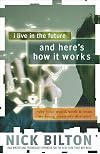
I Live in the Future & Here's How It Works: Why Your World, Work, and Brain Are Being Creatively Disrupted (2010) 185 copies, 3 reviews
Fake Famous 1 copy
Tagged
Common Knowledge
- Birthdate
- 1977
- Gender
- male
- Education
- The New School
School of Visual Arts - Occupations
- writer
researcher
podcaster - Agent
- Katinka Matson (Brockman, Inc.)
Brian Siberell (CAA)
Bryan Lourd (CAA)
Eric Sherman (Ziffren Brittenham) - Nationality
- England
- Birthplace
- Darlington, County Durham, England, UK
- Places of residence
- Leeds, Yorkshire, England, UK
Parkland, Florida, USA
Los Angeles, California, USA
Members
Reviews
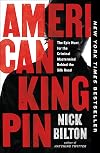
A really good look at the genesis and evolution of the Silk Road website, from a place to sell pot and 'shrooms to a place to sell weapons, poison and body parts and the hunt for Ross Ulbricht, creator of the site. Ulbricht's website led to countless deaths, but the Orange Menace thought 11 years in prison was enough. Read this book and you will seethe with anger that this dangerous man was pardoned. And you will likely seethe with anger at the fact that, despite the lessons of 9/11, federal show more agencies still couldn't play nice together or Ulbricht would have been caught much sooner. My favorite "character" was Gary, the IRS guy who read everything 3 times. As someone with mild OCD, I could relate. And Gary was instrumental in identifying Ulbricht. show less

American Kingpin is the implausible but true story of a twenty-something self-taught programmer with intense libertarian beliefs, named Ross Ulbricht, who, in 2011, single-handedly set up a soon-to-be very popular covert site on the Dark Web called “the Silk Road.” The site was started as a marketplace for illegal drugs, but Ulbricht eventually expanded operations to trade in forged passports, counterfeit cash, guns, poisons, and even body parts. By using the Dark Web platform Tor, show more financing his activities with Bitcoin, and adopting the nom-de-guerre Dread Pirate Roberts, Ulbricht remained anonymous, free, and unpunished for two years.
[The Dark Web is a part of the internet that is incapable of being penetrated by conventional search engines. Therefore it tends to be used by those engaged in illicit activities and/or those excessively concerned with privacy. Tor is the internet browser of choice for exploring the Dark Web. It operates on a worldwide network of servers specifically made for private communication. Tor was created by the U.S. Naval Research Laboratory in the mid-1990s by military researchers, and employs technology enabling users to engage in online activity with masked identities, encrypting any data sent from anyone's computer. Bitcoin makes it possible to send and receive money without giving any personal identifying information.]
In June 2011, "Gawker" published an article about the site which led to an increase in website traffic, helping to expand the Silk Road to a $1.2 billion per year enterprise. Once the site was known publicly, U.S. Senator Charles Schumer asked federal law enforcement authorities to shut it down, including the Drug Enforcement Administration (DEA) and Department of Justice. As the Feds closed in, Ulbricht took even more drastic steps to protect himself and silence anyone who might know his identity. After an online quest that seemed as thrilling for this reader as any car chase in the movies, Ulbricht was finally arrested, convicted, and sentenced to a life in prison. (He is currently working on securing a presidential pardon.)
Nick Bilton was able to piece together the convoluted history of the rise and eventual capture of Ulbricht with the help of some relentless government agents finding unusual clues as to Ulbricht’s identity and whereabouts. Adding yet another dramatic twist to the story was the involvement of two now-convicted, corrupt federal agents. A Secret Service agent stole hundreds of thousands of dollars worth of bitcoin from the Silk Road, and a DEA agent attempted to extort Ulbricht, and even sold him secret information from the Silk Road investigation.
Bilton is somewhat sympathetic in his treatment of Ulbricht, whom he describes as oddly idealistic in attempting to establish a libertarian Shangri-La where freedom-loving people could enjoy personal pleasures without interference from Big Brother. Judge Katherine Forrest, who ultimately sentenced him, was not similarly disposed. In her words:
"You are no better a person than any other drug dealer, and your education does not give you a special place of privilege in our criminal system.”
Evaluation: American Kingpin is a fascinating account of a tale almost too quixotic to be fiction. If you want a non-fiction page turner, this book will not disappoint.
(JAB) show less
[The Dark Web is a part of the internet that is incapable of being penetrated by conventional search engines. Therefore it tends to be used by those engaged in illicit activities and/or those excessively concerned with privacy. Tor is the internet browser of choice for exploring the Dark Web. It operates on a worldwide network of servers specifically made for private communication. Tor was created by the U.S. Naval Research Laboratory in the mid-1990s by military researchers, and employs technology enabling users to engage in online activity with masked identities, encrypting any data sent from anyone's computer. Bitcoin makes it possible to send and receive money without giving any personal identifying information.]
In June 2011, "Gawker" published an article about the site which led to an increase in website traffic, helping to expand the Silk Road to a $1.2 billion per year enterprise. Once the site was known publicly, U.S. Senator Charles Schumer asked federal law enforcement authorities to shut it down, including the Drug Enforcement Administration (DEA) and Department of Justice. As the Feds closed in, Ulbricht took even more drastic steps to protect himself and silence anyone who might know his identity. After an online quest that seemed as thrilling for this reader as any car chase in the movies, Ulbricht was finally arrested, convicted, and sentenced to a life in prison. (He is currently working on securing a presidential pardon.)
Nick Bilton was able to piece together the convoluted history of the rise and eventual capture of Ulbricht with the help of some relentless government agents finding unusual clues as to Ulbricht’s identity and whereabouts. Adding yet another dramatic twist to the story was the involvement of two now-convicted, corrupt federal agents. A Secret Service agent stole hundreds of thousands of dollars worth of bitcoin from the Silk Road, and a DEA agent attempted to extort Ulbricht, and even sold him secret information from the Silk Road investigation.
Bilton is somewhat sympathetic in his treatment of Ulbricht, whom he describes as oddly idealistic in attempting to establish a libertarian Shangri-La where freedom-loving people could enjoy personal pleasures without interference from Big Brother. Judge Katherine Forrest, who ultimately sentenced him, was not similarly disposed. In her words:
"You are no better a person than any other drug dealer, and your education does not give you a special place of privilege in our criminal system.”
Evaluation: American Kingpin is a fascinating account of a tale almost too quixotic to be fiction. If you want a non-fiction page turner, this book will not disappoint.
(JAB) show less
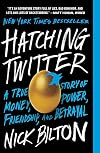
I've never read about such a group of immature, whiny, backstabbing losers in my life! To think that some reviewers consider them brilliant is really pretty funny. They were mediocre thinkers with mediocre talent who couldn't cut it in real places, like Xerox PARC or Google, so they wind up at a start up, broke and desperate. The one who has had success, Ev, is good for the seed money. He at least founded Blogger, so he actually had done something, which was sold to Google for millions, show more making him successful. The other three Twitter founders -- Noah, Jack, and Biz -- were pretty much losers. They founded a company called Odeo that was going to take podcasting by storm, but were beaten to the punch by Apple. Jack and Noah drunkenly came up with the idea for Twitter one night, as an idea to escape loneliness. Noah came up with the name. And so it began. Ev stayed in the background, Biz handled publicity, Noah was the CEO and Jack was in charge of Engineering. I believe, if my memory serves me. This didn't last long. They had a board with capital invested and soon there was rumbling, with Ev doing his fair share of the rumbling. And so Noah was forced out. Jack was brought on as CEO and Ev as chairman. Biz did what he did best. In a little while, Twitter starts taking off, slowly, very slowly at first, but surely. Jack didn't want hash tags, but they emerged and they were brilliant. However, it became clear to everyone that Jack couldn't run a company. They were losing money left and right, weren't making a dime, everyone was on edge, and Ev and the board had had it up to here. So more backstabbing. And Jack was out the door. To plot his revenge. Ev took over as CEO. After all, he had successfully run Blogger, so why not this? Sounded good. Twitter had bought another company a little while before this happened and Jack had asked their main engineer to become director of ops at Twitter, a position this man didn't feel he was qualified for. After Jack was gone, the board asked him for a briefing. He told them, in a state of disbelief, that there was no backup to the system. That if the system crashed, Twitter was gone. And that Twitter was held together with string and wires to begin with. Not good news. They got to work fixing that. Jack had been in way over his head. [Let me interject here. It's clear that the author HATES Jack in this book, and has a serious man crush on Ev, so you have to take everything written about them with a grain of salt.] Okay. Twitter has grown to millions and millions of users. Hosting many millions of tweets daily. Ev has helped people like Oprah tweet her first tweet live on TV. But Jack has been plotting with one of the board members, who -- and this is never clearly explained -- loves Jack dearly, to get Jack back into the company. I could go on and on, but long story short, Ev is backstabbed by Jack and the board, is shoved out the door, Jack comes back as head honcho, Biz quits, we never hear from Noah again, and Twitter continues on, in spite of total incompetence and arrogance. Good book to read, disgusting people to read about. Cautiously recommended. show less
I Live in the Future & Here's How It Works: Why Your World, Work & Brain Are Being Creatively Disrupted by Nick Bilton
This is a review of the book itself, not anything that the author has said outside of this book.
While this is a book that predicts a number of things that could happen in the future, the author forget about the qr codes they included in every chapter and the future of them. Those qr codes are meant to go to the author's website (which doesn't exist at the time of this review) and the app mentioned at the beginning doesn't exist anymore either.
Some of the things the author talked about has show more come true in 2022 which is very cool.
"Instead of our relying on professional editors to package a home page or produce a printed page, our online friends are now our de facto editors, providing a supply of news and information that is highly personalized and tailored to our interests. As a result, these relationships are much more than “social.” They are hugely influential."
When reading the footnotes, the links are either cut off (that may be due to my e-reader) or don't exist anymore (as it's been 13 years since some of those links were first published).
The first chapter is on the sex / porn industry, I think it's very bold to start on that chapter and if I were working on that book I would suggest for it to be moved to a later chapter so that readers get invested into the book earlier.
The author does mention what exact street they lived on (at the time of the writing), which I think is very weird and I hope they moved shortly before publishing. They also touch on points related to Christian and "the church" every once in a while which some readers may not like.
Overall it's an interesting book, which some people may laugh at and some may find interesting. It's not a book I would read again and the type of people that would enjoy this book may be very small.
"Fear of the new and fear of the unknown are common afflictions. At their worst, they can stunt or stop innovation. More commonly, though, this technology hypochondria—or technochondria, if you will—rattles a large part of the population, leading to a divide between those who rush forward with new experiences, fearful that they might miss something, and those whose fright leaves them feeling disoriented and left behind."
"what so many of us have trouble grasping—is how difficult it is to foresee exactly what changes a new technology ultimately will bring." show less
While this is a book that predicts a number of things that could happen in the future, the author forget about the qr codes they included in every chapter and the future of them. Those qr codes are meant to go to the author's website (which doesn't exist at the time of this review) and the app mentioned at the beginning doesn't exist anymore either.
Some of the things the author talked about has show more come true in 2022 which is very cool.
"Instead of our relying on professional editors to package a home page or produce a printed page, our online friends are now our de facto editors, providing a supply of news and information that is highly personalized and tailored to our interests. As a result, these relationships are much more than “social.” They are hugely influential."
When reading the footnotes, the links are either cut off (that may be due to my e-reader) or don't exist anymore (as it's been 13 years since some of those links were first published).
The first chapter is on the sex / porn industry, I think it's very bold to start on that chapter and if I were working on that book I would suggest for it to be moved to a later chapter so that readers get invested into the book earlier.
The author does mention what exact street they lived on (at the time of the writing), which I think is very weird and I hope they moved shortly before publishing. They also touch on points related to Christian and "the church" every once in a while which some readers may not like.
Overall it's an interesting book, which some people may laugh at and some may find interesting. It's not a book I would read again and the type of people that would enjoy this book may be very small.
"Fear of the new and fear of the unknown are common afflictions. At their worst, they can stunt or stop innovation. More commonly, though, this technology hypochondria—or technochondria, if you will—rattles a large part of the population, leading to a divide between those who rush forward with new experiences, fearful that they might miss something, and those whose fright leaves them feeling disoriented and left behind."
"what so many of us have trouble grasping—is how difficult it is to foresee exactly what changes a new technology ultimately will bring." show less
Lists
Awards


You May Also Like


Associated Authors
Statistics
- Works
- 6
- Members
- 1,364
- Popularity
- #18,850
- Rating
- 4.1
- Reviews
- 50
- ISBNs
- 35
- Languages
- 7
- Favorited
- 1