
Michael J. Seidlinger
Author of Anybody Home?
About the Author
Works by Michael J. Seidlinger
Makeout 1 copy
Associated Works
In Heaven, Everything Is Fine: Fiction Inspired by David Lynch (2013) — Contributor — 56 copies, 1 review
Tagged
Common Knowledge
- Birthdate
- 1985
- Gender
- male
- Education
- Valencia College (AA)
University of Central Florida (BA)
George Washington University (Master of Professional Studies in Publishing) - Occupations
- writer
editor
publisher - Organizations
- Civil Coping Mechanisms
Electric Literature - Nationality
- USA
- Places of residence
- Washington, D.C., USA
- Associated Place (for map)
- D.C., USA
Members
Reviews
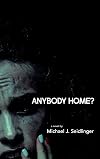
I am on record as loathing the chest-pokey, accusatory second-person narrative voice. Looking at the rating above, you're entitled to wonder what happened to that vat of extra-thick contumely I keep simmering away on the Stove of Rage firing my soul.
Author Seidlinger (MOTHER OF A MACHINE GUN, the ineffable six-stars-of-five THE FUN WE'VE HAD) pulls it off better than I have seen it done elsewhere. This post-apocalyptic Clockwork-Orange level story of the inevitable end of surveillance show more capitalism's seemingly unstoppable rise...Siri, Alexa, Ring, Google's absolute right to track your every move to earn more profits ring bells?...by poking your chest to remind you of who it is, exactly, who's consuming these "conveniences." The second-person feels accusatory because it is an accusation, a Zola-level J'accuse...! to our corrupt, passively complicit consumer ethos.
The joke here, it's no spoiler to say, is an "unscripted reality show" based around a home invasion. No one would watch that for real, would they, a group of people being terrorized for our amusement? I present In Cold Blood, book and film, as countervailing evidence for the antiquity of this trope being used for entertainment...there are other, older, examples of hostage-taking entertainments like Key Largo but they moved the action to a slightly less personal sphere...so no one's got any sound footing to tut and scoff at the premise. Not even me, the maharajah of TutAndScoff.
So what happens? You know already what happens, there's a family of sorts that gets home-invaded and different things happen to them. Nothing, in keeping with the reality-TV format, is personal. It's all done for the viewers, the audience (note that these words are from different senses and this should be very closely attended to), the dramatis personæ having only designations like "Invader #1" or "Victim #4". In his usual "you didn't imagine this would all be on the surface, did you?" style, Author Seidlinger slings his arrows into the tiniest cracks in the jaded consumer's armor, making this a book far better delectated than consumed. It is, in fact, horror in the sense it's really quite horrifying in what it says, but a supernatural-horror fan will leave the read unhappy, while a revenge-driven horror fan won't get far into it before discovering their needs are not being met. This is more existential horror, a horror that eases the bathroom door open inch by inch before ripping open the shower curtain and flinging cold water on you in order to elicit the screech of terror, outrage, and angry embarrassment at Being Caught.
Make no mistake: You're caught.
You're the one watching; you're the one there's a meta-home-invader to explain to, and to coach "Invader #3" and cohorts. You're the reason this story exists, is being enacted before your "horrified" eyes. You, consumer of the fear and anguish of others.
Which is why I will now say something I have never said before, and never expect to say again:
Author Seidlinger (MOTHER OF A MACHINE GUN, the ineffable six-stars-of-five THE FUN WE'VE HAD) pulls it off better than I have seen it done elsewhere. This post-apocalyptic Clockwork-Orange level story of the inevitable end of surveillance show more capitalism's seemingly unstoppable rise...Siri, Alexa, Ring, Google's absolute right to track your every move to earn more profits ring bells?...by poking your chest to remind you of who it is, exactly, who's consuming these "conveniences." The second-person feels accusatory because it is an accusation, a Zola-level J'accuse...! to our corrupt, passively complicit consumer ethos.
The joke here, it's no spoiler to say, is an "unscripted reality show" based around a home invasion. No one would watch that for real, would they, a group of people being terrorized for our amusement? I present In Cold Blood, book and film, as countervailing evidence for the antiquity of this trope being used for entertainment...there are other, older, examples of hostage-taking entertainments like Key Largo but they moved the action to a slightly less personal sphere...so no one's got any sound footing to tut and scoff at the premise. Not even me, the maharajah of TutAndScoff.
So what happens? You know already what happens, there's a family of sorts that gets home-invaded and different things happen to them. Nothing, in keeping with the reality-TV format, is personal. It's all done for the viewers, the audience (note that these words are from different senses and this should be very closely attended to), the dramatis personæ having only designations like "Invader #1" or "Victim #4". In his usual "you didn't imagine this would all be on the surface, did you?" style, Author Seidlinger slings his arrows into the tiniest cracks in the jaded consumer's armor, making this a book far better delectated than consumed. It is, in fact, horror in the sense it's really quite horrifying in what it says, but a supernatural-horror fan will leave the read unhappy, while a revenge-driven horror fan won't get far into it before discovering their needs are not being met. This is more existential horror, a horror that eases the bathroom door open inch by inch before ripping open the shower curtain and flinging cold water on you in order to elicit the screech of terror, outrage, and angry embarrassment at Being Caught.
Make no mistake: You're caught.
You're the one watching; you're the one there's a meta-home-invader to explain to, and to coach "Invader #3" and cohorts. You're the reason this story exists, is being enacted before your "horrified" eyes. You, consumer of the fear and anguish of others.
Which is why I will now say something I have never said before, and never expect to say again:
Second-person narration rocks.show less
Rating: 4.5* of five
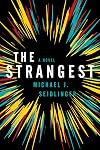
The Publisher Says: Michael Seidlinger has dared tackle one of the literary classics of the 20th century literature and reimagined it for the 21st: and in Albert Camus’ anti-hero Meursault, at once apathetic and violent, unable to connect with his fellow humans, Seidlinger exhumes a perfect metaphor for the Internet Generation. Zachary Weinham, anchorless in terms of morals and committed to nothing except commenting on comments and their comments etc., finds himself show more involved in the sinister machinations of Rios, someone he meets in a bar, and allows himself to be set up—whether out of apathy or a desire for self-destruction it’s hard to tell. A murder ensues. Shunned by his friends and associates, not sure of what he has gotten into, Zachary heads for confrontation with society—and his own moral values.
I RECEIVED A DRC FROM THE PUBLISHER VIA EDELWEISS+. THANK YOU.
My Review: Routine readers will recall Michael Seidlinger's name. The Fun We've Had was 2014's 6-stars-of-five read; Mother of a Machine Gun, a novella deconstructing Identity and Motherhood from a son's perspective; Falter Kingdom, Anybody Home?, all of them four star-plus reads for me. This book's appeal to me wasn't as immediate or as visceral as the other reads were. I'm somewhat trapped in Meursault's Otherness via Camus. Exploring his identity further didn't necessarily strike me as urgent, and there's nothing Michael Seidlinger creates that stops short of Urgency.
I've said of him before:
I stand by those words, I believe them to be fair in their assessment of his talent and his presentation of it. So this book? It came out almost a decade ago and...I wasn't a fan, exactly, because...well...Meursault.
In my never-ending quest to tie up loose ends, since I can't tie Michael up but *can* finish reviewing the DRCs of his work that I have, I thought a real review of this book to end 2022 would feel condign.
When taking on classics, there are two ways to approach them from a positive energy field: Hommage or retelling. Leave it to a poet to say, "naaah," and enter into a dialogue with the piece. The Stranger, subject of Camus's astonishing and ever-fresh novella of Meursault's crime and punishment, is now about Zachary, The Strangest...the man, like Guy is to Bruno from Strangers on a Train, whose blankness is observing the surfaces of a mediated landscape with no concrete referents. Only what is outside The Strangest is real. This, of course, means he has no reality because his internal world is only the external world reflected on the shiny, frictionless surfaces of his many mirrors. Like a human Hubble Space Telescope, he has only the visible light of distant, unreachable reality to furnish meaning and encourage existence.
What makes that so dangerous is visible in the social-media obsessed, whipped to a froth "activism" and "radicalization" of many, many empty shells with AR-15s. Nothing outside can give a person a core, as Camus made plain in Meursault's completely avoidable descent into murder. And here, though it's framed by a modern concern unknown to the Camus of 1944, we're going down the same rabbit-hole. No core? Barely a shell! Constantly obsessed with fitting in, The Strangest isn't ever going to achieve that.
"For a line to exist, it would first have to be crossed."
You can't fit if you have no shape.
And that is the thing, in 2015, Michael Seidlinger saw and said that, to my slight embarrassment, I did not pay enough attention to. The way that Meursault would go along the hot and sandy beach in Algeria to get along was fundamentally different from The Strangest's endlessly, heatlessly reflective but never reflexive attempts to build Reality from the weak material of light. There is no real reason not to murder someone, a lot of someones in fact, if there is no texture or heft to the world for you. It's light, from a screen or from a geometric solid, it's only light and therefore has only the meaning your analysis gives it.
If light and its shadows are all you possess, there is no reason to obsess over life and fate and pain and grief. Death is only the light going out, only the local light covered or extinguished. Light still exists. Shadows and darkness aren't real.
Maybe one of the most chilling meditations I've read in 2022. I can't call it perfect...it's cold and disconnected, so doesn't make the impact something so important should...but I can call it excellent. Highly recommended for serious thinkers about twenty-first century life and society. show less
The Publisher Says: Michael Seidlinger has dared tackle one of the literary classics of the 20th century literature and reimagined it for the 21st: and in Albert Camus’ anti-hero Meursault, at once apathetic and violent, unable to connect with his fellow humans, Seidlinger exhumes a perfect metaphor for the Internet Generation. Zachary Weinham, anchorless in terms of morals and committed to nothing except commenting on comments and their comments etc., finds himself show more involved in the sinister machinations of Rios, someone he meets in a bar, and allows himself to be set up—whether out of apathy or a desire for self-destruction it’s hard to tell. A murder ensues. Shunned by his friends and associates, not sure of what he has gotten into, Zachary heads for confrontation with society—and his own moral values.
I RECEIVED A DRC FROM THE PUBLISHER VIA EDELWEISS+. THANK YOU.
My Review: Routine readers will recall Michael Seidlinger's name. The Fun We've Had was 2014's 6-stars-of-five read; Mother of a Machine Gun, a novella deconstructing Identity and Motherhood from a son's perspective; Falter Kingdom, Anybody Home?, all of them four star-plus reads for me. This book's appeal to me wasn't as immediate or as visceral as the other reads were. I'm somewhat trapped in Meursault's Otherness via Camus. Exploring his identity further didn't necessarily strike me as urgent, and there's nothing Michael Seidlinger creates that stops short of Urgency.
I've said of him before:
Every writer needs a trope. Seidlinger's is musical brevity. He'd be called a poet if he made less sense.
–and–
Seidlinger is what a mating between Djuna Barnes and Samuel Beckett would've produced: Illusionless in his pessimism, joyful in his schadenfreude, and both human and humane enough to wrap his bitter pills in pretty words.
I stand by those words, I believe them to be fair in their assessment of his talent and his presentation of it. So this book? It came out almost a decade ago and...I wasn't a fan, exactly, because...well...Meursault.
In my never-ending quest to tie up loose ends, since I can't tie Michael up but *can* finish reviewing the DRCs of his work that I have, I thought a real review of this book to end 2022 would feel condign.
When taking on classics, there are two ways to approach them from a positive energy field: Hommage or retelling. Leave it to a poet to say, "naaah," and enter into a dialogue with the piece. The Stranger, subject of Camus's astonishing and ever-fresh novella of Meursault's crime and punishment, is now about Zachary, The Strangest...the man, like Guy is to Bruno from Strangers on a Train, whose blankness is observing the surfaces of a mediated landscape with no concrete referents. Only what is outside The Strangest is real. This, of course, means he has no reality because his internal world is only the external world reflected on the shiny, frictionless surfaces of his many mirrors. Like a human Hubble Space Telescope, he has only the visible light of distant, unreachable reality to furnish meaning and encourage existence.
What makes that so dangerous is visible in the social-media obsessed, whipped to a froth "activism" and "radicalization" of many, many empty shells with AR-15s. Nothing outside can give a person a core, as Camus made plain in Meursault's completely avoidable descent into murder. And here, though it's framed by a modern concern unknown to the Camus of 1944, we're going down the same rabbit-hole. No core? Barely a shell! Constantly obsessed with fitting in, The Strangest isn't ever going to achieve that.
"For a line to exist, it would first have to be crossed."
You can't fit if you have no shape.
And that is the thing, in 2015, Michael Seidlinger saw and said that, to my slight embarrassment, I did not pay enough attention to. The way that Meursault would go along the hot and sandy beach in Algeria to get along was fundamentally different from The Strangest's endlessly, heatlessly reflective but never reflexive attempts to build Reality from the weak material of light. There is no real reason not to murder someone, a lot of someones in fact, if there is no texture or heft to the world for you. It's light, from a screen or from a geometric solid, it's only light and therefore has only the meaning your analysis gives it.
If light and its shadows are all you possess, there is no reason to obsess over life and fate and pain and grief. Death is only the light going out, only the local light covered or extinguished. Light still exists. Shadows and darkness aren't real.
Maybe one of the most chilling meditations I've read in 2022. I can't call it perfect...it's cold and disconnected, so doesn't make the impact something so important should...but I can call it excellent. Highly recommended for serious thinkers about twenty-first century life and society. show less
Falter Kingdom by Michael J. Seidlinger
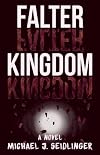
Already at the age of thirty, Michael J. Seidlinger is the author of nine literary novels, books he produces at what can seem to other writers (myself included) as a dizzying pace. With his latest, Falter Kingdom, Seidlinger slows down just long enough to give us a jaw dropping, cleverly paced tale of demonic possession and addiction, social media and fundamental truth.
Though Falter Kingdom (with its teenage protagonist) may qualify as YA in the show more strictest sense, the book’s subject matter should tip potential readers that this is no jaunt through Narnia or Wonderland. Evincing neither the British manners nor the broad, whimsical world building of old-school YA, Falter Kingdom is alternative YA, the sort parents might want to keep Suzy and Jimmy from reading, something young adults will find nonetheless. Instead of fantasy, Seidlinger gives his readers contemporary hyper-realism with one major change: Demonic possession is not just a possibility but a reality, one that dominates the book’s narrative arc and produces a truly terrifying climax.
Protagonist Hunter Warden is a high school senior struggling with the usual problems of the high school senior: popularity (or the lack thereof), romance (or the lack thereof), and moods dominated by anomie, confusion, and self-loathing. Hunter’s parents don’t have time for him, his girlfriend is clueless, and his friends all seem frenemies in disguise. Along comes a demon named H. and Hunter may have found his new best friend. That, or a fiend ready to possess and destroy him.
Falter Kingdom is a tale very much about our modern world, the ennui that goes with information overload and sensory excess, and the opportunities for sadness and addiction that seem to lurk in so many hidden corners. This is not a happy novel, but a smart, enthralling one, a book that’s sure to gain Seidlinger fans among teens and twenties, readers who will, no doubt, be following his work for years to come.
http://www.thenervousbreakdown.com/kbaumeister/2016/08/the-nervous-breakdowns-re... show less
Already at the age of thirty, Michael J. Seidlinger is the author of nine literary novels, books he produces at what can seem to other writers (myself included) as a dizzying pace. With his latest, Falter Kingdom, Seidlinger slows down just long enough to give us a jaw dropping, cleverly paced tale of demonic possession and addiction, social media and fundamental truth.
Though Falter Kingdom (with its teenage protagonist) may qualify as YA in the show more strictest sense, the book’s subject matter should tip potential readers that this is no jaunt through Narnia or Wonderland. Evincing neither the British manners nor the broad, whimsical world building of old-school YA, Falter Kingdom is alternative YA, the sort parents might want to keep Suzy and Jimmy from reading, something young adults will find nonetheless. Instead of fantasy, Seidlinger gives his readers contemporary hyper-realism with one major change: Demonic possession is not just a possibility but a reality, one that dominates the book’s narrative arc and produces a truly terrifying climax.
Protagonist Hunter Warden is a high school senior struggling with the usual problems of the high school senior: popularity (or the lack thereof), romance (or the lack thereof), and moods dominated by anomie, confusion, and self-loathing. Hunter’s parents don’t have time for him, his girlfriend is clueless, and his friends all seem frenemies in disguise. Along comes a demon named H. and Hunter may have found his new best friend. That, or a fiend ready to possess and destroy him.
Falter Kingdom is a tale very much about our modern world, the ennui that goes with information overload and sensory excess, and the opportunities for sadness and addiction that seem to lurk in so many hidden corners. This is not a happy novel, but a smart, enthralling one, a book that’s sure to gain Seidlinger fans among teens and twenties, readers who will, no doubt, be following his work for years to come.
http://www.thenervousbreakdown.com/kbaumeister/2016/08/the-nervous-breakdowns-re... show less
I RECEIVED AN ARC FROM THE PUBLISHER. THANK YOU.
My Review: Make friends with the Darkness Within. There's never going to be a way to get rid of it, so pick a coping strategy: Denial will fail in quicktime; submission will have dreadfully uncomfortable consequences; but making friends with the Darkness Within, making its vision and its urgings (not to mention urges) a source of strength...that way billionairedom lies!
The real question this book presents to its younger-skewing audience is: Who show more exactly is it that's possessed? What makes someone a possessor? Where, in other words, does the real power lie? (Wordplay decidedly not optional)
What makes this a four-star read but not a five-star one, for me, is Hunter as a stream-of-consciousness narrator. He doesn't think like a high-school senior, said the grandfather of more than one such being. It's only problematic, to be honest, because it's a book aimed at the high-school aged crowd. If it were simply another of Author Seidlinger's unease-inducing, perception-defying novels, I'd never even bring it up. But aimed where it is, I expect it to go there; it didn't make the trip in this reader's perception.
The story itself...how the Falter Kingdom is accessed, what the Falter Kingdom represents...is the usual Author Seidlinger-esque mindfuck of "sure, look at the pretty surfaces, but remember that this author dude laughed through the entire Saw franchise." It's perfect, in terms of believably attracting the teen-boy victims these demons are in search of. It's believable metaphorically..."don't go into that tunnel," says Adult, thus guaran-damn-teeing the kid will and thus will learn from this initiation...it's handled in a quite amusingly perfect way, and it satisfies the narrative need for a driver of action.
I'm all for it. Read, remember, respond with the desired shivers and frissons and half-laughs of memory.
***As an aside, this review vanished from Goodreads last year which caused me no little amount of angst. Must've been a victim of the stupid-people-friendly redesign's early stages. Luckily it's been safely parked on my YA tab, but this year's publication of ANYBODY HOME? brought it into the full glare of public scrutiny. show less
My Review: Make friends with the Darkness Within. There's never going to be a way to get rid of it, so pick a coping strategy: Denial will fail in quicktime; submission will have dreadfully uncomfortable consequences; but making friends with the Darkness Within, making its vision and its urgings (not to mention urges) a source of strength...that way billionairedom lies!
The real question this book presents to its younger-skewing audience is: Who show more exactly is it that's possessed? What makes someone a possessor? Where, in other words, does the real power lie? (Wordplay decidedly not optional)
What makes this a four-star read but not a five-star one, for me, is Hunter as a stream-of-consciousness narrator. He doesn't think like a high-school senior, said the grandfather of more than one such being. It's only problematic, to be honest, because it's a book aimed at the high-school aged crowd. If it were simply another of Author Seidlinger's unease-inducing, perception-defying novels, I'd never even bring it up. But aimed where it is, I expect it to go there; it didn't make the trip in this reader's perception.
The story itself...how the Falter Kingdom is accessed, what the Falter Kingdom represents...is the usual Author Seidlinger-esque mindfuck of "sure, look at the pretty surfaces, but remember that this author dude laughed through the entire Saw franchise." It's perfect, in terms of believably attracting the teen-boy victims these demons are in search of. It's believable metaphorically..."don't go into that tunnel," says Adult, thus guaran-damn-teeing the kid will and thus will learn from this initiation...it's handled in a quite amusingly perfect way, and it satisfies the narrative need for a driver of action.
I'm all for it. Read, remember, respond with the desired shivers and frissons and half-laughs of memory.
***As an aside, this review vanished from Goodreads last year which caused me no little amount of angst. Must've been a victim of the stupid-people-friendly redesign's early stages. Luckily it's been safely parked on my YA tab, but this year's publication of ANYBODY HOME? brought it into the full glare of public scrutiny. show less
You May Also Like


Associated Authors
Statistics
- Works
- 20
- Also by
- 1
- Members
- 273
- Popularity
- #84,853
- Rating
- 3.6
- Reviews
- 15
- ISBNs
- 33
- Favorited
- 1