
Don Lawrence (1928–2003)
Author of Storm, 02 : De laatste vechter
About the Author
Image credit: Don Lawrence at Galerie Lambiek in 1990
Series
Works by Don Lawrence
Op leven en dood 12 copies
Het purperen licht 12 copies
Mysterieuze krachten op Elekton 10 copies
The Art of the Trigan Empire: A Catalogue of Original Trigan Empire Art for Sale from the Look and Learn Archive (2008) — Illustrator — 8 copies
Olac de gladiator 5 copies
De steen der koningen 4 copies
De kronieken van 30 jaar Storm 4 copies
Trigië, nr. 18: De genezende gokker 2 copies
Halmar De Zoon van de Zeewolf - 1 2 copies
Trigië: Kolonie in Opstand 1 copy
Storm Integraal 5 1 copy
10 1 copy
Grenzen 1 copy
Aviation and airport security : management, improvement strategies and future challenges (2017) 1 copy
Trigië 7, 9, 10, 15, 18, 20 1 copy
TRIGAN - Geschichte des fantastischen Reiches.... HARDCOVER Bd. 9, Die grüne Plage (Rijperman) - Don Lawrence (1985) 1 copy
TRIGAN Bd 3 Luxusausgabe in Kunstleder. (Hethke Comics) Luxus-Hardcover-Album — Illustrator — 1 copy
Trigië: Het Purpuren Licht 1 copy
Storm Integral (2021) #3 1 copy
Trigië: Stad onder Vuur 1 copy
Associated Works
Tagged
Common Knowledge
- Legal name
- Lawrence, Donald Southam
- Other names
- Don Lawrence
- Birthdate
- 1928-11-17
- Date of death
- 2003-12-29
- Gender
- male
- Occupations
- comic book artist
- Awards and honors
- Guest of Honour, Eastercon, UK (1989)
IPC prijs (beste tekenaar ∙ 1976)
Society of Illustration (Lifetime Achievement Award ∙ 1980)
Grand Prix Spatial, 1981
Gouden Bommel Award, 1987
Stripschapprijs (1994) (show all 8)
Pantera di Lucca (Lifetime Achievement Award ∙ 1998)
Knight of the Order of Oranje-Nassau, 2003 - Relationships
- Lodewijk, Martin (coworker)
Dunn, Philip (coworker)
Matena, Dick (coworker)
Gosnell, Kelvin (coworker) - Cause of death
- emphysema
- Nationality
- UK
- Birthplace
- London, England, UK
- Place of death
- Jevington, England, UK
- Associated Place (for map)
- England, UK
Members
Reviews
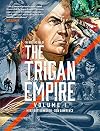
When I was a wee lad my parents said they would pay for me to get two comics a week (one fun one, and one adventure one) as long as I also got an educational one of their choosing. The one they chose was “Look & Learn.” - What they didn’t realize was L&L was the home of the greatest historical science-fiction epic ever told in British comics - The Trigan Empire.
I have an earlier hardback volume that includes selected chapters, but in 2020 Rebellion Comics set out to reprint the entire show more saga over multiple volumes - a treatment it fully deserves.
Trigan Empire uses the framework of the Roman Empire, mixed in with tropes from other Earth empires such as the Greeks, Aztecs, Arabian, Egyptian and other contemporary cultures then adds in supersonic aircraft, hovercraft, spaceships, strange alien fauna and flora, to tell a generation tale of the intrigues of a star-spanning empire born on a distant world. - All sumptuously told through the astounding painted artwork of Don Lawrence, a master illustrator and story teller.
When I first read these in the mid-sixties I understood what comics could be. Now I’m in my own personal sixties I still regard this as a masterpiece of the medium that puts most modern comics art to shame. show less
I have an earlier hardback volume that includes selected chapters, but in 2020 Rebellion Comics set out to reprint the entire show more saga over multiple volumes - a treatment it fully deserves.
Trigan Empire uses the framework of the Roman Empire, mixed in with tropes from other Earth empires such as the Greeks, Aztecs, Arabian, Egyptian and other contemporary cultures then adds in supersonic aircraft, hovercraft, spaceships, strange alien fauna and flora, to tell a generation tale of the intrigues of a star-spanning empire born on a distant world. - All sumptuously told through the astounding painted artwork of Don Lawrence, a master illustrator and story teller.
When I first read these in the mid-sixties I understood what comics could be. Now I’m in my own personal sixties I still regard this as a masterpiece of the medium that puts most modern comics art to shame. show less
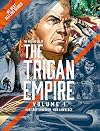
I am afraid this got a star for nostalgia so if you were not an eleven year old boy in the 1960s in Britain, I suggest you knock that star off. Nevertheless, this is solid British comic book stuff, a mash-up between the classics to be taught in grammar schools and scifi.
There are Dan Dare-like adventures in space, sword fights, heroic family struggles, imperial conquest, evil aliens (lots of evil aliens), invasion of the 'earth' (Eleckton) and invasion from earth to the moon, nods to classic show more mythology, dog fights in the air ... what's not to love about it.
Don Lawrence's famous art work is, of course, what makes it very British, with a particular heroic fantasy quality all its own which will be instantly recognisable to anyone who came across the 'educational' boy's magazine (dull and worthy in other respects) 'Look and Learn' back in the day.
The story by Mike Butterworth should not be dismissed out of hand just because it is completely absurd especially in its assumptions about time, space and technology. Butterworth managed to do something unique - to get inside the mind of an intelligent unformed pre-adolescent.
If you forget everything that you have learned or experienced since you were between 10 and 12, you will also forget its absurdities and just lose yourself in the variations of some basic themes that boys of that age can hold onto - above all, fantasies of power and suspicion of other minds.
Each story line builds the plot of the rise and fall of a Roman analogue empire (this volume is only the first of four) yet the story lines tend to centre on a very few themes of which one is the way that minds can be changed to become other than they are by malignant intervention.
This world is one of simple good and evil but certainly not along politically correct lines. We are not supposed to turn a hair at conquest or slavery so long as the slaves are well treated and the conquest is by a noble and just hero. And we channel our inner boy to go along with that.
This is very male stuff from another age. 'Girls' turn up rarely as either natural healers (basically mummies), as peace-ensuring wives (Trigo's imperial wife gets one episode and is forgotten) or wicked witches or manipulators who might see the error of their ways - and then become a healer.
The core heroic community is a family with a granddad (Peric, the most brilliant scientist on Electron), a 'dad' (Trigo), an uncle (dim but brave Brag - the evil uncle gets topped in episode one), the heir with which the reader can identify (Janno) and his mate (the green-coloured Keren).
Since the reader can choose Brag or Trigo as 'Dad' (Janno is actually Brag's son), he has the nice psychological option of reading back his own father into either option but always seeing Trigo as role model - brave, resourceful, allowed to correct his mistakes, loved by his people.
The villains are not complex. They are always unutterably evil (except the errant niece Thara who is just weak and the only one who is a woman), The Lokan King is just Ming the Merciless while Thulla is the mad scientist of pulp fiction we have all grown to know and love.
This works for some 12 episodes before the two best friends get joined by the nearest thing 1967 could produce to a nerd (Roffa) and (to set us off on Volume 2) a major plot twist that completely buggers up the comfortable family model and which I am damned if I am going to spoil for you.
This tale was always structured for fairly intelligent, or rather educated, boys, the ones who went to grammar schol in those days, because it presupposed that the reader would get sufficient of the classical and science fiction tropes to appreciate the mash-up.
The fact that the reader was not at all expected to apply critical thinking to the implementation of the mash-up is entirely beside the point. Once you had accepted the absurd premise, it hung together surprisingly well with analogue fauna, flora, architecture, war tactics and so forth.
There is no doubt that the art work is superb, almost cinematic, geared like the text to a particular segment of childhood at a particular time in history and it is good to see a publisher invest in bringing it to nostalgics and comic book fans wanting to know the history of their loved medium. show less
There are Dan Dare-like adventures in space, sword fights, heroic family struggles, imperial conquest, evil aliens (lots of evil aliens), invasion of the 'earth' (Eleckton) and invasion from earth to the moon, nods to classic show more mythology, dog fights in the air ... what's not to love about it.
Don Lawrence's famous art work is, of course, what makes it very British, with a particular heroic fantasy quality all its own which will be instantly recognisable to anyone who came across the 'educational' boy's magazine (dull and worthy in other respects) 'Look and Learn' back in the day.
The story by Mike Butterworth should not be dismissed out of hand just because it is completely absurd especially in its assumptions about time, space and technology. Butterworth managed to do something unique - to get inside the mind of an intelligent unformed pre-adolescent.
If you forget everything that you have learned or experienced since you were between 10 and 12, you will also forget its absurdities and just lose yourself in the variations of some basic themes that boys of that age can hold onto - above all, fantasies of power and suspicion of other minds.
Each story line builds the plot of the rise and fall of a Roman analogue empire (this volume is only the first of four) yet the story lines tend to centre on a very few themes of which one is the way that minds can be changed to become other than they are by malignant intervention.
This world is one of simple good and evil but certainly not along politically correct lines. We are not supposed to turn a hair at conquest or slavery so long as the slaves are well treated and the conquest is by a noble and just hero. And we channel our inner boy to go along with that.
This is very male stuff from another age. 'Girls' turn up rarely as either natural healers (basically mummies), as peace-ensuring wives (Trigo's imperial wife gets one episode and is forgotten) or wicked witches or manipulators who might see the error of their ways - and then become a healer.
The core heroic community is a family with a granddad (Peric, the most brilliant scientist on Electron), a 'dad' (Trigo), an uncle (dim but brave Brag - the evil uncle gets topped in episode one), the heir with which the reader can identify (Janno) and his mate (the green-coloured Keren).
Since the reader can choose Brag or Trigo as 'Dad' (Janno is actually Brag's son), he has the nice psychological option of reading back his own father into either option but always seeing Trigo as role model - brave, resourceful, allowed to correct his mistakes, loved by his people.
The villains are not complex. They are always unutterably evil (except the errant niece Thara who is just weak and the only one who is a woman), The Lokan King is just Ming the Merciless while Thulla is the mad scientist of pulp fiction we have all grown to know and love.
This works for some 12 episodes before the two best friends get joined by the nearest thing 1967 could produce to a nerd (Roffa) and (to set us off on Volume 2) a major plot twist that completely buggers up the comfortable family model and which I am damned if I am going to spoil for you.
This tale was always structured for fairly intelligent, or rather educated, boys, the ones who went to grammar schol in those days, because it presupposed that the reader would get sufficient of the classical and science fiction tropes to appreciate the mash-up.
The fact that the reader was not at all expected to apply critical thinking to the implementation of the mash-up is entirely beside the point. Once you had accepted the absurd premise, it hung together surprisingly well with analogue fauna, flora, architecture, war tactics and so forth.
There is no doubt that the art work is superb, almost cinematic, geared like the text to a particular segment of childhood at a particular time in history and it is good to see a publisher invest in bringing it to nostalgics and comic book fans wanting to know the history of their loved medium. show less

I was forbidden comics as a child - maybe one of the reasons I'm so hooked on them now - but I was allowed the occassional education magazine, and when I was nine I was given a year's subscription to Look & Learn.
It was a great mag but the highlight was The Trigan Empire, a DPS, a fantasy adventure graphic featuring a Roman-style civilization of Aryan warriors plus men with blue skins and strange animals on the planet Elekton.
The Trigans transpormed from primitve nomads to space travellers show more with a magnificent city and a huge empire within a few decades, led by Trigo, and displaying an incongruous mix of high and low technology where men wearing Grecian-style shirts wield swords in one hand and laser guns in the other, as much at home on horseback as they are in atmospheric craft.
The primitive nomadic warriors dream of a great city is made real by Peric, a scientist and engineer, who plays Merlin to Trigo's Arthur. Although parallels are drawn between the stories and The Roman Empire, I am reminded more of Camelot - despite the flimsy clothes, where the Trigan Empire , like Britain, is under threat for the Hericons and Lokans - or warring tribes of Britons.
The stories are great, the colours vibrant and the drawing dynamic: people are not that well rendered and the artist cannot draw women at all - but the buildings, landscape and artifacts make up for all defects.
This is dick fic, pure and simple - very pure actually, sex never rears it's head, there are no romances and, other than Peric's daughter, women seldom grace the pages. I loved the Trigan Empire and was delighted to find the Hamlyn collection, featuring the early stories, on a visit to England. show less
It was a great mag but the highlight was The Trigan Empire, a DPS, a fantasy adventure graphic featuring a Roman-style civilization of Aryan warriors plus men with blue skins and strange animals on the planet Elekton.
The Trigans transpormed from primitve nomads to space travellers show more with a magnificent city and a huge empire within a few decades, led by Trigo, and displaying an incongruous mix of high and low technology where men wearing Grecian-style shirts wield swords in one hand and laser guns in the other, as much at home on horseback as they are in atmospheric craft.
The primitive nomadic warriors dream of a great city is made real by Peric, a scientist and engineer, who plays Merlin to Trigo's Arthur. Although parallels are drawn between the stories and The Roman Empire, I am reminded more of Camelot - despite the flimsy clothes, where the Trigan Empire , like Britain, is under threat for the Hericons and Lokans - or warring tribes of Britons.
The stories are great, the colours vibrant and the drawing dynamic: people are not that well rendered and the artist cannot draw women at all - but the buildings, landscape and artifacts make up for all defects.
This is dick fic, pure and simple - very pure actually, sex never rears it's head, there are no romances and, other than Peric's daughter, women seldom grace the pages. I loved the Trigan Empire and was delighted to find the Hamlyn collection, featuring the early stories, on a visit to England. show less
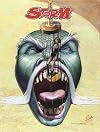
Storm es un astronauta que se dispone a realizar una misión prácticamente suicida: entrar en una gigantesca mancha roja en Júpiter, una zona de grandes huracanes. Storm pierde el conocimiento, y tras despertar vuelve a la Tierra. Su sorpresa vendrá al darse cuenta que ha pasado por una especie de vórtice temporal que le ha llevado, o a un futuro lejano, o a un pasado remoto. Y es que los océanos han desaparecido, saliendo a la luz el lecho marino, y el entorno es totalmente extraño. show more Aquí empezarán las aventuras del astronauta Storm.
Este primer volumen integral de ‘Storm’ se compone de los álbumes ‘El mundo profundo’ y ‘El último guerrero’. La historia no me ha maravillado, pero el dibujo y el color son excelentes. show less
Este primer volumen integral de ‘Storm’ se compone de los álbumes ‘El mundo profundo’ y ‘El último guerrero’. La historia no me ha maravillado, pero el dibujo y el color son excelentes. show less
Lists
You May Also Like


Associated Authors
Statistics
- Works
- 103
- Also by
- 4
- Members
- 1,964
- Popularity
- #13,088
- Rating
- 3.7
- Reviews
- 8
- ISBNs
- 275
- Languages
- 6
- Favorited
- 2