
Lauren Stringer
Author of Winter Is the Warmest Season
About the Author
Image credit: Photo by Matthew Smith
Works by Lauren Stringer
When Stravinsky Met Nijinsky: Two Artists, Their Ballet, and One Extraordinary Riot (2013) 94 copies, 3 reviews
Winter Fun 4 copies
Associated Works
The Shape of the World: A Portrait of Frank Lloyd Wright (2017) — Illustrator — 102 copies, 2 reviews
Tagged
Common Knowledge
- Gender
- female
Members
Reviews

"Winter is the warmest season," begins this delightfully poetic picture-book celebration of a time of year that many would consider chilly, demonstrating that it's all about perspective. It may be snowy outside, and the temperature may be dropping low, but the young narrator of Lauren Stringer's book reflects with joy on the warmth of his own experiences - the downy coat and fuzzy boots he wears; the delicious soup and hot chocolate he consumes; the coziness of cuddling with the family cats, show more and sleeping under heavy blankets; and the steamy, dragon-like exhalations of the radiators - providing copious support for his claim that "My world is warmest in winter."
With a simple narrative that emphasizes simple pleasures, and charming acrylic illustrations that perfectly capture the young narrator's joy and contentment - not to mention the titular warmth he is extolling - Winter Is the Warmest Season was a joy to read! I appreciated the fact that, without ever losing her sense of fun, or descending into any sort of didacticism, Lauren Stringer managed to highlight the idea that the same circumstances can look radically different (even diametrically opposed), when seen from a different perspective. Highly recommended to young readers who love Winter, to those who hate Winter (and need a little comfort), and to anyone who appreciates beautiful picture-book art. I'm glad that, despite having missed this one back in December, when it was one of our Picture-Book Club selections, that I decided to read it after all. It was well worth the effort required to track it down! show less
With a simple narrative that emphasizes simple pleasures, and charming acrylic illustrations that perfectly capture the young narrator's joy and contentment - not to mention the titular warmth he is extolling - Winter Is the Warmest Season was a joy to read! I appreciated the fact that, without ever losing her sense of fun, or descending into any sort of didacticism, Lauren Stringer managed to highlight the idea that the same circumstances can look radically different (even diametrically opposed), when seen from a different perspective. Highly recommended to young readers who love Winter, to those who hate Winter (and need a little comfort), and to anyone who appreciates beautiful picture-book art. I'm glad that, despite having missed this one back in December, when it was one of our Picture-Book Club selections, that I decided to read it after all. It was well worth the effort required to track it down! show less

Author/illustrator Lauren Stringer offers a tribute to the first coming of autumn—the eponymous Yellow Time—in this seasonal picture book celebration of the season. Heralded by the crows, this change in season brings showers of yellow leaves, and windy days of breathtaking beauty...
Poetic text is paired with bright watercolor and acrylic illustrations in Yellow Time, which offers an appealing look at the autumnal season. I enjoyed the brightness of the book, and the fact that it focuses show more on a color—yellow—less frequently associated with the season than some others (such as orange and red). I did rather wish that some attention was paid in the narrative to the source of all this yellow—namely, the ash trees which predominate in Minnesota and other parts of the midwest—but leaving that aside I found this one enjoyable, and recommend it to those seeking picture books about autumn, and the changing of the leaves. It would make a nice companion to similar titles where other kinds of trees and other colors predominate. show less
Poetic text is paired with bright watercolor and acrylic illustrations in Yellow Time, which offers an appealing look at the autumnal season. I enjoyed the brightness of the book, and the fact that it focuses show more on a color—yellow—less frequently associated with the season than some others (such as orange and red). I did rather wish that some attention was paid in the narrative to the source of all this yellow—namely, the ash trees which predominate in Minnesota and other parts of the midwest—but leaving that aside I found this one enjoyable, and recommend it to those seeking picture books about autumn, and the changing of the leaves. It would make a nice companion to similar titles where other kinds of trees and other colors predominate. show less
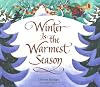
In my opinion, this is an average book. I liked the illustrations in the book as they are very vibrant and truly enhance the story in making the reader feel warm. The illustrations fit well with the text as the story discusses things to do in the winter to keep you warm. I think that the language and writing is very simple and would be good for K-2nd graders as each page only includes a sentence or two. The big idea of the story is somewhat average or unimportant as it discusses the show more different types of foods and drinks you can make in the winter in order to stay warm. show less
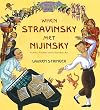
When Stravinsky Met Nijinsky: Two Artists, Their Ballet, and One Extraordinary Riot by Lauren Stringer
Highly Recommended
In this non-fiction picture book, the reader is introduced to Igor Stravinsky and Vaslav Nijinsky. The author introduces Stravinsky as a famous Russian composer and Ninjinsky as a famous Russian ballet dancer. The two decided to collaborate and create something new that the world had not seen or heard yet. It was so different that “at rehearsal, some of the dancers declared it a mess and one or two musician walked out.” The world premier of the Rite of Spring took show more place at the Theatre des Champs Elysees in May of 1913 (clearly illustrated in the book). Some of the audience hated it and some loved seeing something so new. Some people began yelling and fighting in the aisles. Stravinsky and Nijinsky were pleased that they had begun something very different and new on the night of their premier.
The illustrations reflect the dissonant, atonal, avant garde feeling of the Rite of Spring. The idea of cubism and Russian folk tales are woven throughout the pages. There are instruments and music notes all over the place. The images are very colorful and very loud…just like the ballet. This book would be perfect for a read aloud in an upper elementary or middle school music class. It introduces a movement and the idea of artists collaborating. A lot of messages are conveyed in this picture book. It would also be a good story to read in art class. It conveys the idea of cubism and telling a story through visual art. The reader can see that the illustrations were inspired by Picasso and Matisse. This one night was revolutionary in the world of art. Things were quickly changing and it was hard for some people to get used to this change.
I think some musical and artistic background is needed to fully appreciate this book, or at least someone who can explain it to children. It is very informative. The author provides notes at the end about both Stravinsky and Nijinsky. It also provides more information about The Rite of Spring and the illustrations. One thing that really stood out to me was that despite the near riot breaking in the theatre, the conductor Pierre Monteux conducted Stravinsky’s score from beginning to end without missing a beat. Amazing! I don’t agree with the Horn Book review about the inaccuracy of the text. For an introductory book, it’s great. Also, the rhythm of the text reflects the rhythm of the music. It is not too much. This is an interesting and fun book. There is also an accompanying AR test for those students interested. show less
In this non-fiction picture book, the reader is introduced to Igor Stravinsky and Vaslav Nijinsky. The author introduces Stravinsky as a famous Russian composer and Ninjinsky as a famous Russian ballet dancer. The two decided to collaborate and create something new that the world had not seen or heard yet. It was so different that “at rehearsal, some of the dancers declared it a mess and one or two musician walked out.” The world premier of the Rite of Spring took show more place at the Theatre des Champs Elysees in May of 1913 (clearly illustrated in the book). Some of the audience hated it and some loved seeing something so new. Some people began yelling and fighting in the aisles. Stravinsky and Nijinsky were pleased that they had begun something very different and new on the night of their premier.
The illustrations reflect the dissonant, atonal, avant garde feeling of the Rite of Spring. The idea of cubism and Russian folk tales are woven throughout the pages. There are instruments and music notes all over the place. The images are very colorful and very loud…just like the ballet. This book would be perfect for a read aloud in an upper elementary or middle school music class. It introduces a movement and the idea of artists collaborating. A lot of messages are conveyed in this picture book. It would also be a good story to read in art class. It conveys the idea of cubism and telling a story through visual art. The reader can see that the illustrations were inspired by Picasso and Matisse. This one night was revolutionary in the world of art. Things were quickly changing and it was hard for some people to get used to this change.
I think some musical and artistic background is needed to fully appreciate this book, or at least someone who can explain it to children. It is very informative. The author provides notes at the end about both Stravinsky and Nijinsky. It also provides more information about The Rite of Spring and the illustrations. One thing that really stood out to me was that despite the near riot breaking in the theatre, the conductor Pierre Monteux conducted Stravinsky’s score from beginning to end without missing a beat. Amazing! I don’t agree with the Horn Book review about the inaccuracy of the text. For an introductory book, it’s great. Also, the rhythm of the text reflects the rhythm of the music. It is not too much. This is an interesting and fun book. There is also an accompanying AR test for those students interested. show less
Lists
Awards


You May Also Like


Associated Authors
Statistics
- Works
- 6
- Also by
- 12
- Members
- 547
- Popularity
- #45,592
- Rating
- 3.9
- Reviews
- 21
- ISBNs
- 15