
Anne F. Rockwell (1934–2018)
Author of Apples and Pumpkins
About the Author
Anne Rockwell was born in Memphis, Tennessee on February 8, 1934. She moved to New York City at the age of 18 and found a job doing typing work for a textbook publisher. She studied at Pratt Graphic Arts Center and at the Sculpture Center. She became an author and illustrator. Her first children's show more book, Paul and Arthur Search for the Egg, was published in 1964. Her other books included Boats, Fire Engines, Things That Go, Our Earth, and Only Passing Through: The Story of Sojourner Truth. She collaborated on several books with her husband Harlow Rockwell including Sally's Caterpillar and The Toolbox. After her husband's death, she collaborated with her daughter Lizzy Rockwell. Their books included Career Day and Zoo Day. She died of natural causes on April 10, 2018 at the age of 85. (Bowker Author Biography) show less
Series
Works by Anne F. Rockwell
A Spy Called James: The True Story of James Lafayette, Revolutionary War Double Agent (2016) 174 copies, 6 reviews
Spy Called James: The True Story of James Armistead Lafayette, Revolutionary War Double Agent 47 copies
Fall preschool story time kit 6 copies
the emergency room 2 copies
The Emperor's New Clothes 1 copy
My Pet Hamster 1 copy
Bugs are Insects 1 copy
Sally's caterpillar 1 copy
Valentines Day 1 copy
Things to play with 1 copy
ST. PATRICKS DAY 1 copy
The Glass Valentine 1 copy
The Lion And The Mouse 1 copy
The Gingerbread Man 1 copy
The Shoemaker And The Elves 1 copy
The Three Little Pigs 1 copy
Valentine's Day Mouse 1 copy
Big Wheels 1 copy
Associated Works
The Turtle and the Two Ducks: Animal Fables Retold from LA Fontaine (1981) — Illustrator — 20 copies, 1 review
Tagged
Common Knowledge
- Birthdate
- 1934-02-08
- Date of death
- 2018-04-10
- Gender
- female
- Relationships
- Rockwell, Harlow (spouse)
Rockwell, Lizzy (daughter) - Nationality
- USA
- Birthplace
- Memphis, Tennessee, USA
- Places of residence
- New York, New York, USA
Old Greenwich, Connecticut, USA - Associated Place (for map)
- USA
Members
Reviews
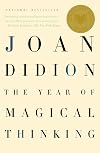
I never liked the term Magical Thinking. To me it's a term people use to characterize the way others think--others not rational like themselves. Not long ago, I read Thinking Fast and Slow. (The Insert book/author feature isn't working today). The author, Daniel Kahneman, takes pains to indicate the types and occasion in which people think less than rationally. He didn't include grief among those occasions. I always took irrationality as the norm--the first draft of thinking edited later to show more clean it up.
Joan Didion finds her self thinking her dead husband will return but she knows he won't. Her internal magician isn't fooling her. She knows it's just a game she's playing with herself because she wishes he could return. The suddenness of his death in an "ordinary instant" disrupts the natural editing process and she becomes aware of this aspect of her thought process. It's temporary. A year later at the end of the book, she already sees herself reverting to the unmagical ordinariness.
When I started the book, her almost Virginia Wolfian stream of consciousness drew me right in. Unlike Virginia Wolfe, Joan Didion adds a layer of obsession tying everything together. She consults the literature, she searches her memory and revises what she finds, she documents the threads holding her relationships together--relationships that are in the process of going or already gone and we experience the intimacy of it. And then we experience the loss of it.
These are the moments when the book is at its best. At other times, her obsessions remove us from the intimacy. This is what obsession is meant to do. It's a mental trick to remove us with distracting repetition from overwhelming or unpleasant emotions. Other reviews have called Ms. Didion cold because she's more of the obsessive than the hysteric they would prefer. I don't share their preference.
Nor am I bothered as other were by the fabulosity (yes, spellcheck, I'm aware you don't think that's a word) of her life. They complain of her name-dropping or wealth-flaunting but that's just who she is and how she lives and it doesn't protect her from what she has to experience.
I have never read her fiction. I'm afraid I won't like it. I like her though--the "her" of this book and of "Slouching Toward Bethlehem, so I'll give it a chance at some point. show less
Joan Didion finds her self thinking her dead husband will return but she knows he won't. Her internal magician isn't fooling her. She knows it's just a game she's playing with herself because she wishes he could return. The suddenness of his death in an "ordinary instant" disrupts the natural editing process and she becomes aware of this aspect of her thought process. It's temporary. A year later at the end of the book, she already sees herself reverting to the unmagical ordinariness.
When I started the book, her almost Virginia Wolfian stream of consciousness drew me right in. Unlike Virginia Wolfe, Joan Didion adds a layer of obsession tying everything together. She consults the literature, she searches her memory and revises what she finds, she documents the threads holding her relationships together--relationships that are in the process of going or already gone and we experience the intimacy of it. And then we experience the loss of it.
These are the moments when the book is at its best. At other times, her obsessions remove us from the intimacy. This is what obsession is meant to do. It's a mental trick to remove us with distracting repetition from overwhelming or unpleasant emotions. Other reviews have called Ms. Didion cold because she's more of the obsessive than the hysteric they would prefer. I don't share their preference.
Nor am I bothered as other were by the fabulosity (yes, spellcheck, I'm aware you don't think that's a word) of her life. They complain of her name-dropping or wealth-flaunting but that's just who she is and how she lives and it doesn't protect her from what she has to experience.
I have never read her fiction. I'm afraid I won't like it. I like her though--the "her" of this book and of "Slouching Toward Bethlehem, so I'll give it a chance at some point. show less
"Grief has no distance. Grief comes in waves, paroxysms, sudden apprehensions that weaken the knees and blind the eyes and obliterate the dailiness of life."
This is a raw, deeply introspective memoir about grief. Written after her husband’s sudden death and her daughter’s grave illness (who died after the book was published), it chronicles her attempt to process unimaginable loss while confronting the fragility of life.
Joan Didion is celebrated for her literary analysis of societal and show more personal crises. Before her fame as a memoirist and novelist, she worked as an editor at Vogue and was part of the "New Journalism" movement, blending literary techniques with traditional reporting, which cemented her reputation as one of America’s most important literary figures.
To me, the title of this book was a bit misleading. I anticipated a narrative about how Didion used “magical thinking” to pull herself through grief—a kind of personal empowerment story. Instead, I found the book to be a harrowing descent into her sorrow. I later learned that her “magical thinking” was actually her desperate belief that she could somehow control or reverse these events.
Didion’s typical New York literary style often alienated me. The text is sprinkled with niche cultural references and name-drops that even well-read people might struggle to grasp. These, combined with too much focus on the minutiae of her daily life, pulled me away from her grief and left me feeling a bit annoyed.
I had hoped this book would offer insights into grief that would resonate even with those who hadn’t experienced the loss of a loved one—perhaps those grieving other life changes or struggles. Unfortunately, this wasn’t the case for me. The book felt too specific and too personal to Didion’s experience to offer me much comfort or perspective.
Although this book is a poignant exploration of loss, it’s not for everyone. It's not going to uplift you or deliver much accessible wisdom on grieving. I think it might resonate more with intellectuals who have lost someone close to them and who appreciate a more cerebral exploration of grief. show less
This is a raw, deeply introspective memoir about grief. Written after her husband’s sudden death and her daughter’s grave illness (who died after the book was published), it chronicles her attempt to process unimaginable loss while confronting the fragility of life.
Joan Didion is celebrated for her literary analysis of societal and show more personal crises. Before her fame as a memoirist and novelist, she worked as an editor at Vogue and was part of the "New Journalism" movement, blending literary techniques with traditional reporting, which cemented her reputation as one of America’s most important literary figures.
To me, the title of this book was a bit misleading. I anticipated a narrative about how Didion used “magical thinking” to pull herself through grief—a kind of personal empowerment story. Instead, I found the book to be a harrowing descent into her sorrow. I later learned that her “magical thinking” was actually her desperate belief that she could somehow control or reverse these events.
Didion’s typical New York literary style often alienated me. The text is sprinkled with niche cultural references and name-drops that even well-read people might struggle to grasp. These, combined with too much focus on the minutiae of her daily life, pulled me away from her grief and left me feeling a bit annoyed.
I had hoped this book would offer insights into grief that would resonate even with those who hadn’t experienced the loss of a loved one—perhaps those grieving other life changes or struggles. Unfortunately, this wasn’t the case for me. The book felt too specific and too personal to Didion’s experience to offer me much comfort or perspective.
Although this book is a poignant exploration of loss, it’s not for everyone. It's not going to uplift you or deliver much accessible wisdom on grieving. I think it might resonate more with intellectuals who have lost someone close to them and who appreciate a more cerebral exploration of grief. show less
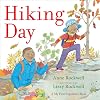
A young child and her family go to a nearby hill for a hike to the summit.
This is a great introductory book for families who love nature and science. The language is pretty short and simple, so it's perfect for those with limited attention spans or even those little ones beginning to read on their own with assistance. I like how scientific concepts such as camouflage and hibernation were baked in without being specifically spelled out, setting the stage for more advanced learning later but show more without overwhelming the very young with technical terms.
The illustrations fit the story perfectly, and I'm pretty much always a fan of Lizzy Rockwell's distinctive style. I also loved how this time the focus is on a Black family just doing everyday things, highlighting Black joy. show less
This is a great introductory book for families who love nature and science. The language is pretty short and simple, so it's perfect for those with limited attention spans or even those little ones beginning to read on their own with assistance. I like how scientific concepts such as camouflage and hibernation were baked in without being specifically spelled out, setting the stage for more advanced learning later but show more without overwhelming the very young with technical terms.
The illustrations fit the story perfectly, and I'm pretty much always a fan of Lizzy Rockwell's distinctive style. I also loved how this time the focus is on a Black family just doing everyday things, highlighting Black joy. show less
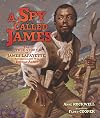
A Spy Called James: The True Story of James Lafayette, Revolutionary War Double Agent by Anne Rockwell
* I received a free copy of this book from the publisher through NetGalley in exchange for my honest review.*
Overall Rating: 4 out of 5
I very much appreciate this book for existing in the first place — it’s a wonderful idea to introduce children to stories like these at a young age, especially stories like James’s are hardly ever told in schools. At least, they weren’t very often told in my schools when I was younger, but I hope that’s changing. As the description says, James show more Lafayette was a spy for George Washington’s Army during the American Revolution, and had to fight to obtain the rights that were given to other former slaves who served in the army because “spies” were not generally covered under the agreement that was made between slaves and the newly formed American government.
The story itself is simply told in a language that children will understand, but covers all the details. And I love the illustrations. They’re soft water-color type illustrations with a lot of blended colors and soft lines. It’s very child-friendly and I know I enjoyed looking at the pictures, so I think they might, too.
I could see this being in a classroom for children to enjoy during free reading time, or even have it being read aloud to children as part of a history lesson. And, of course, it’s a nice addition to the home library, especially for a history-lover.
Originally posted on Purple People Readers. show less
Overall Rating: 4 out of 5
I very much appreciate this book for existing in the first place — it’s a wonderful idea to introduce children to stories like these at a young age, especially stories like James’s are hardly ever told in schools. At least, they weren’t very often told in my schools when I was younger, but I hope that’s changing. As the description says, James show more Lafayette was a spy for George Washington’s Army during the American Revolution, and had to fight to obtain the rights that were given to other former slaves who served in the army because “spies” were not generally covered under the agreement that was made between slaves and the newly formed American government.
The story itself is simply told in a language that children will understand, but covers all the details. And I love the illustrations. They’re soft water-color type illustrations with a lot of blended colors and soft lines. It’s very child-friendly and I know I enjoyed looking at the pictures, so I think they might, too.
I could see this being in a classroom for children to enjoy during free reading time, or even have it being read aloud to children as part of a history lesson. And, of course, it’s a nice addition to the home library, especially for a history-lover.
Originally posted on Purple People Readers. show less
Lists
Back to School (1)
Awards


You May Also Like


Associated Authors
Statistics
- Works
- 218
- Also by
- 5
- Members
- 21,867
- Popularity
- #983
- Rating
- 3.7
- Reviews
- 538
- ISBNs
- 677
- Languages
- 6
- Favorited
- 1