
Noah Van Sciver
Author of Fante Bukowski
About the Author
Image credit: By Noah Van Sciver
Series
Works by Noah Van Sciver
Blammo #6 5 copies
1999 3 copies
Blammo #7 3 copies
Weekend For Two 2 copies
My Hot Date 2 copies
Slow Graffiti #3 2 copies
Blammo 1-5 1 copy
I don't hate your guts 1 copy
Blammo #8 1/2 1 copy
Maple Terrace #1 1 copy
Maple Terrace #2 1 copy
Weekend Alone 1 copy
The Complete Blammo 1-5 1 copy
Blammo 1 copy
Dueling 1 copy
The Death of Elijah Lovejoy 1 copy
Maple Terrace #3 1 copy
Associated Works
The Graphic Canon of Children's Literature: The World's Greatest Kids' Lit as Comics and Visuals (2014) — Illustrator — 100 copies, 1 review
Unknown Origins & Untimely Ends: A Collection of Unsolved Mysteries (2013) — Contributor — 14 copies, 1 review
Tagged
Common Knowledge
- Birthdate
- 1984-07-07
- Gender
- male
- Occupations
- cartoonist
- Organizations
- The Church of Jesus Christ of Latter-day Saints (formerly)
- Nationality
- USA
- Birthplace
- Merchantville, New Jersey, USA
- Associated Place (for map)
- New Jersey, USA
Members
Reviews
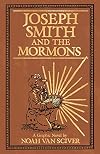
Noah Van Sciver’s Joseph Smith and the Mormons traces the history of the church from Joseph Smith’s youth through his death, primarily focusing on events from Smith’s perspective. The story touches on some of the controversies of the early church, but Van Sciver writes more as an author creating a book for members of the church than as an historian. A true examination of Mormon history would benefit from a background analysis of their place in the Second Great Awakening amid other show more fledgling religions – such as the Shakers, the Oneida Community, and the Public Universal Friend – all of whom laid down roots in the religious soil of upstate New York and its burned over district.
Van Sciver takes a great deal at face value, giving this book the appearance of an apologia. For example, he portrays the Mormons receiving divine revelation either in the form of angelic visitation or prophetic dreams, but those like William Law who doubt or question receive nothing when they pray on the issues that trouble them. His one conceit is to portray Smith’s initial revelations secondhand, with Smith relating them as he claimed they occurred. Further, Van Sciver depicts those who object to the new religion’s tenets as physically ugly (pgs. 9, 77, 217, 251, 286, 373, 379, 407). The most significant controversy that Van Sciver discusses is the practice of “spiritual marriage,” a religious form of polygamy. In this, Van Sciver accurately portrays Smith as a philandering man who justified his urges through his position in the religion he founded (pgs. 169, 207, 224, 227-229, 303, 307, 330, 339, 359). Though minor, Van Sciver also portrays the fraud of the Kirtland Safety-Society, but he shows Smith’s involvement as minimal and aboveboard (pgs. 208, 234).
In reproducing the white supremacy at the heart of the Mormon church’s founding, Van Sciver only depicts Black Americans as voiceless characters laboring in the background (pgs. 6, 217, 283, 387). Native Americans similarly appear either as passive recipients of Smith’s book or as misappropriated human remains that the early Mormons repurposed as proof of their beliefs (pgs. 145, 199, 322). In this, the book reproduces the fan-fiction style alternate history of Native Americans that Smith promulgated in which he claimed that belief would make them “a white and delightsome people” (pg. 145). These beliefs later led to the Mormons’ abuses under the Indian Placement Program from 1954-1996. Van Sciver explains this horrendous history in his notes (pg. 444-445), but more skepticism when describing the events themselves would have been appropriate.
As he explains in his author’s note, Van Sciver wrote this during an attempt to better understand the faith he was raised in as a child and had grown away from. Joseph Smith and the Mormons works well as a basic introduction to the history of a religious movement, but those who want to know more about the church and its place within the Second Great Awakening and early nineteenth century history should continue their research. show less
Van Sciver takes a great deal at face value, giving this book the appearance of an apologia. For example, he portrays the Mormons receiving divine revelation either in the form of angelic visitation or prophetic dreams, but those like William Law who doubt or question receive nothing when they pray on the issues that trouble them. His one conceit is to portray Smith’s initial revelations secondhand, with Smith relating them as he claimed they occurred. Further, Van Sciver depicts those who object to the new religion’s tenets as physically ugly (pgs. 9, 77, 217, 251, 286, 373, 379, 407). The most significant controversy that Van Sciver discusses is the practice of “spiritual marriage,” a religious form of polygamy. In this, Van Sciver accurately portrays Smith as a philandering man who justified his urges through his position in the religion he founded (pgs. 169, 207, 224, 227-229, 303, 307, 330, 339, 359). Though minor, Van Sciver also portrays the fraud of the Kirtland Safety-Society, but he shows Smith’s involvement as minimal and aboveboard (pgs. 208, 234).
In reproducing the white supremacy at the heart of the Mormon church’s founding, Van Sciver only depicts Black Americans as voiceless characters laboring in the background (pgs. 6, 217, 283, 387). Native Americans similarly appear either as passive recipients of Smith’s book or as misappropriated human remains that the early Mormons repurposed as proof of their beliefs (pgs. 145, 199, 322). In this, the book reproduces the fan-fiction style alternate history of Native Americans that Smith promulgated in which he claimed that belief would make them “a white and delightsome people” (pg. 145). These beliefs later led to the Mormons’ abuses under the Indian Placement Program from 1954-1996. Van Sciver explains this horrendous history in his notes (pg. 444-445), but more skepticism when describing the events themselves would have been appropriate.
As he explains in his author’s note, Van Sciver wrote this during an attempt to better understand the faith he was raised in as a child and had grown away from. Joseph Smith and the Mormons works well as a basic introduction to the history of a religious movement, but those who want to know more about the church and its place within the Second Great Awakening and early nineteenth century history should continue their research. show less
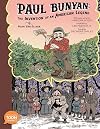
In a bit of "have your cake and eat it too"-ism, Noah Van Sciver recounts the tall tales of Paul Bunyan while throwing in a few pages criticizing Bunyan as a lumber industry mascot whose very existence was propaganda for the disastrous clearcutting and deforestation that changed the face of the North American continent and displaced indigenous populations. I'm sure some segments of the readership will be eager to denounce this as a woke version of Paul Bunyan.
Around Van Sciver's graphic show more novel are several text pieces by indigenous writers touching on the colonialism that Bunyan represents that really add more depth to what Van Sciver is getting at in his story. I wish Van Sciver had kicked his tale up a few grade levels and added more pages to more fully integrate the additional material into the narrative, because you just know a lot of readers are going to skip the pages without word balloons.
Anyhow, I appreciate this take on Bunyan and how it made me see him in a new light. And it gave me an excuse to spend some time googling information about folklore vs. "fakelore."
Also, now I really want to read a book mentioned in the endmatter: Nenaboozhoo and Paul Bunyan.
FOR REFERENCE:
Contents:
• Introduction: The Power of Storytelling / Lee Francis IV (a/k/a Dr. IndigiNerd), writer
• Paul Bunyan: The Invention of an American Legend / Noah Van Sciver, writer and illustrator
• Postscript: The Invention of an American Legend / Deondre Smiles, writer
• Tree-Dwelling Little People / Marlena Myles, writer and illustrator
• Important Plants & Trees
• About the Authors show less
Around Van Sciver's graphic show more novel are several text pieces by indigenous writers touching on the colonialism that Bunyan represents that really add more depth to what Van Sciver is getting at in his story. I wish Van Sciver had kicked his tale up a few grade levels and added more pages to more fully integrate the additional material into the narrative, because you just know a lot of readers are going to skip the pages without word balloons.
Anyhow, I appreciate this take on Bunyan and how it made me see him in a new light. And it gave me an excuse to spend some time googling information about folklore vs. "fakelore."
Also, now I really want to read a book mentioned in the endmatter: Nenaboozhoo and Paul Bunyan.
FOR REFERENCE:
Contents:
• Introduction: The Power of Storytelling / Lee Francis IV (a/k/a Dr. IndigiNerd), writer
• Paul Bunyan: The Invention of an American Legend / Noah Van Sciver, writer and illustrator
• Postscript: The Invention of an American Legend / Deondre Smiles, writer
• Tree-Dwelling Little People / Marlena Myles, writer and illustrator
• Important Plants & Trees
• About the Authors show less
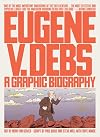
The authors of this graphic biography are so bad at writing comic books that they felt compelled to add four to six pages of text at the start of every chapter to try to explain the choppy, opaque, context-free mess that follows. People march across the page with little or no introduction and, too often, for no reason.
My favorite non sequitur comes at the end of Chapter 2 when we are told, "Depressed at his wife's death in an automobile accident, the great editor, J. A. Wayland, commits show more suicide." Wayland had only been referenced previously in one panel as the editor of the Appeal to Reason, a socialist newspaper. If his death is so important, perhaps his life should have been also?
Ironically, the best and most coherent chapter -- Debs' sedition trial -- was written by the guy who only gets a "with" credit on the cover. Next time, give him his own book free of those fools Paul Buhle and Steve Max. Noah Van Sciver's art is fine, but I'm lumping him in with Buhle and Max as an enabler because he knows how to make a good graphic novel and went ahead and drew this instead.
FOR REFERENCE:
Contents: Time Line of Debs's Life -- Debs: An Introduction -- 1. The Rise of Eugene V. Debs -- 2. "Debsian Socialism" -- 3. Triumph – and the Edge of Tragedy -- 4. Martyr Debs -- 5. The Debs Legacy: Norman Thomas, Michael Harrington, Bernie Sanders -- Further Reading -- Acknowledgments -- List of Sustaining Contributors show less
My favorite non sequitur comes at the end of Chapter 2 when we are told, "Depressed at his wife's death in an automobile accident, the great editor, J. A. Wayland, commits show more suicide." Wayland had only been referenced previously in one panel as the editor of the Appeal to Reason, a socialist newspaper. If his death is so important, perhaps his life should have been also?
Ironically, the best and most coherent chapter -- Debs' sedition trial -- was written by the guy who only gets a "with" credit on the cover. Next time, give him his own book free of those fools Paul Buhle and Steve Max. Noah Van Sciver's art is fine, but I'm lumping him in with Buhle and Max as an enabler because he knows how to make a good graphic novel and went ahead and drew this instead.
FOR REFERENCE:
Contents: Time Line of Debs's Life -- Debs: An Introduction -- 1. The Rise of Eugene V. Debs -- 2. "Debsian Socialism" -- 3. Triumph – and the Edge of Tragedy -- 4. Martyr Debs -- 5. The Debs Legacy: Norman Thomas, Michael Harrington, Bernie Sanders -- Further Reading -- Acknowledgments -- List of Sustaining Contributors show less
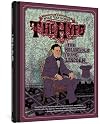
You'd think it'd feel weird when a guy who's so good at old-school underground comics humor decides to do a realistic historical character piece; but it doesn't, because Van Sciver's strengths are all put to great use here.
First, his dialogue is great-- economical, illuminating, and hilarious. This is a very funny book, and the humor is grounded in character. The most memorable example is an early scene where Lincoln (on his roommate's advice) slouches off to a brothel, feeling both sordid show more and curious, but at the last minute realizes he can't afford the $5 fee and makes the most awkward exit possible while still trying to be friendly. Another writer might have turned the anxiety up to 11 and made it into a joke about 19th-century sexual hangups, or had the woman's response be all nonplused impatience; but here it has a gentle tone that hints at the care and strength behind Lincoln's oddness, and the real joke is a timeless one: both romance and horniness have to take a rain check when you're broke. And then the joke, instead of closing the scene, is displaced by the kind of line whose odd wording sticks in your head for no obvious reason: "I actually forgot my hat."
Second, the goofy but textured visual style-- which owes something to Crumb and to Gahan Wilson-- works surprisingly well for drama, in the same way that an actor who's very good at comedy is often the best choice for a serious role: he knows how to communicate something real through precise exaggeration. His faces are expressive and tactile in a way that makes me want to grab them by the ears. And his female characters are clearly of the same species as the men-- something a lot of male humor cartoonists have trouble with (I think of it as the Bloom County/Howard the Duck effect: the male author-identified characters are midget animals or gangly bigfeet, while the female love interest is all smooth lines, pert of body and nose), but Van Sciver lets all the people be people, lumpy heads and all.
Third, he's honest about the dark side: when he did stories about depression and anxiety in Blammo, they were often funny but he wasn't kidding, and the parts of this book that deal with major depression are some of the most accurate I've ever seen. It's hard to express how inconsistent the experience can be. Lincoln becomes hideously non-functional, but when other people try to help him he passively accepts, while still being sure he's doomed. At a particularly joyless low, he proposes marriage to a stranger because maybe that'll help somehow. He's never sure whether this is something that's happening to him or something he's doing, or why it gets better when it does. Even though Lincoln mentions wanting to accomplish great things some day, it's not about how a great man's vision helps him overcome the darkness; he just manages to survive it, mostly because although he feels alone, he isn't.
My only problem with the book is that the pace feels a little off in the last third: Van Sciver spends a fair amount of time on Lincoln's half-assed duel with James Shields, which is a good story, but would've worked better for me if it were the middle of a longer book rather than the end of a medium-short one. If the whole thing were as well constructed as the first half it'd be one of the best books of the decade. As it is, it's just extremely good, unique, and full of heart. show less
First, his dialogue is great-- economical, illuminating, and hilarious. This is a very funny book, and the humor is grounded in character. The most memorable example is an early scene where Lincoln (on his roommate's advice) slouches off to a brothel, feeling both sordid show more and curious, but at the last minute realizes he can't afford the $5 fee and makes the most awkward exit possible while still trying to be friendly. Another writer might have turned the anxiety up to 11 and made it into a joke about 19th-century sexual hangups, or had the woman's response be all nonplused impatience; but here it has a gentle tone that hints at the care and strength behind Lincoln's oddness, and the real joke is a timeless one: both romance and horniness have to take a rain check when you're broke. And then the joke, instead of closing the scene, is displaced by the kind of line whose odd wording sticks in your head for no obvious reason: "I actually forgot my hat."
Second, the goofy but textured visual style-- which owes something to Crumb and to Gahan Wilson-- works surprisingly well for drama, in the same way that an actor who's very good at comedy is often the best choice for a serious role: he knows how to communicate something real through precise exaggeration. His faces are expressive and tactile in a way that makes me want to grab them by the ears. And his female characters are clearly of the same species as the men-- something a lot of male humor cartoonists have trouble with (I think of it as the Bloom County/Howard the Duck effect: the male author-identified characters are midget animals or gangly bigfeet, while the female love interest is all smooth lines, pert of body and nose), but Van Sciver lets all the people be people, lumpy heads and all.
Third, he's honest about the dark side: when he did stories about depression and anxiety in Blammo, they were often funny but he wasn't kidding, and the parts of this book that deal with major depression are some of the most accurate I've ever seen. It's hard to express how inconsistent the experience can be. Lincoln becomes hideously non-functional, but when other people try to help him he passively accepts, while still being sure he's doomed. At a particularly joyless low, he proposes marriage to a stranger because maybe that'll help somehow. He's never sure whether this is something that's happening to him or something he's doing, or why it gets better when it does. Even though Lincoln mentions wanting to accomplish great things some day, it's not about how a great man's vision helps him overcome the darkness; he just manages to survive it, mostly because although he feels alone, he isn't.
My only problem with the book is that the pace feels a little off in the last third: Van Sciver spends a fair amount of time on Lincoln's half-assed duel with James Shields, which is a good story, but would've worked better for me if it were the middle of a longer book rather than the end of a medium-short one. If the whole thing were as well constructed as the first half it'd be one of the best books of the decade. As it is, it's just extremely good, unique, and full of heart. show less
Awards


You May Also Like


Associated Authors
Statistics
- Works
- 54
- Also by
- 12
- Members
- 721
- Popularity
- #35,209
- Rating
- 3.5
- Reviews
- 31
- ISBNs
- 44
- Languages
- 6
- Favorited
- 1