
Paula Bomer
Author of Inside Madeleine
Works by Paula Bomer
Associated Works
Tagged
Common Knowledge
- Gender
- female
Members
Reviews

I am old enough to remember the uproar that the publication of Brett Easton Ellis's "American Psycho" caused, and no amount of commentary about the book's sharp satire or valuable social comment is ever going to convince me to read it. "The Stalker", however, seems to be a junior-high version of that book: it's set a little later, has a younger main character, and has a lower body count. But it's still got a gaping hole of a personality at its center, and, therefore, that means that it can show more only be so much fun to read. While a large percentage of the true crime and horror audience is fascinated by — if not unabashedly enamoured of — cold, unfeeling psychopaths, the unfortunate fact is that they are, in themselves, not terribly interesting, and, consequently, not all that much fun to be around. Hannah Arendt was right about this one: evil is flat, and only good has any real depth or productive capacity. It doesn't take long to get bored when you're hanging around with suburban personality void Doughty Savile, even though things do get pretty gruesome.
"The Stalker" isn't a bad book, exactly, but it struck me as a bit of an unnecessary detour for its author. I liked her short story collection "Inside Madeline" because it wasn't merely shocking: any writer, after all, can slice their characters to bits, or place them in the way of tragedy. But Paula Bomer is a good enough writer to make her characters more than pain sponges or plot devices. The characters in "Inside Madeline" experienced crushing and tangible disappointment that is difficult to record on the page. "The Stalker" does have nice touches: she shows how Doughty can be cunning in some situations while remaining helplessly naive in others. He's alert to the smallest personality tics of some of the people around him while also consistently missing the bigger picture. This differs significantly from the way that much of the entertainment industry depicts psychopaths, a label that, in the end, probably fits our main character pretty well. And Bomer's writing is clean and satisfying. But a quick glance over her biography suggests that the shocking and the macabre is what she has built her career on, and so telling the same story twice doesn't really suit her, even if "American Psycho" is almost thirty-five years old now. This one was fine, and I'll buy her next one, but I suppose I felt a bit let down. show less
"The Stalker" isn't a bad book, exactly, but it struck me as a bit of an unnecessary detour for its author. I liked her short story collection "Inside Madeline" because it wasn't merely shocking: any writer, after all, can slice their characters to bits, or place them in the way of tragedy. But Paula Bomer is a good enough writer to make her characters more than pain sponges or plot devices. The characters in "Inside Madeline" experienced crushing and tangible disappointment that is difficult to record on the page. "The Stalker" does have nice touches: she shows how Doughty can be cunning in some situations while remaining helplessly naive in others. He's alert to the smallest personality tics of some of the people around him while also consistently missing the bigger picture. This differs significantly from the way that much of the entertainment industry depicts psychopaths, a label that, in the end, probably fits our main character pretty well. And Bomer's writing is clean and satisfying. But a quick glance over her biography suggests that the shocking and the macabre is what she has built her career on, and so telling the same story twice doesn't really suit her, even if "American Psycho" is almost thirty-five years old now. This one was fine, and I'll buy her next one, but I suppose I felt a bit let down. show less
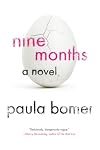
I would be very curious to talk to another person who read this book. More specifically, a person who read this book and either like it or could identify for more than a few seconds with the main character, Sonia. Because despite the fact that she and I have several similarities in our lives – I just could not stand her.
Which I suspected would be the case going into “Nine Months” given the blurb I’d read. I didn’t expect that a story about a woman who abandoned her husband and two show more children while pregnant with her third would be either touching or heartwarming. But I thought I would come to understand why Sonia made that decision – at least from her point of view.
But the closest I came was summed up with this. “All her life, all of her thirty-five years, she’s only wanted to experience everything…”
Sonia is selfish, hedonistic, incredibly crude, critical of everyone except herself, verbally abusive and just not very interesting. Although I am sure she finds herself fascinating.
With such a main character, a book could still be interesting if the characters surrounding her were well drawn, layered…even just realistic. But the stereotypes here are just eye rolling. Upper-middle class entitled New York wives? Check. “Clarissa and Riva believed in their inheritances. They believed in staying home and shopping. They believed that they were their husbands’ wives and their children’s mother. And those who didn’t believe didn’t have the same God. Those who didn’t believe weren’t saved.”
The over nurturing to the point of creepiness Earth mother? Check. Gun loving and toting xenophobic mother? Check. Overworked husband who doesn’t understand his wife’s needs? Check.
This is a story about a woman who wants for almost nothing…and mostly wants what she can’t have. She wants to make no choices and every choice. She wants it all and none of it. Nothing seems to make her happy. Which makes for a very unhappy reader. show less
Which I suspected would be the case going into “Nine Months” given the blurb I’d read. I didn’t expect that a story about a woman who abandoned her husband and two show more children while pregnant with her third would be either touching or heartwarming. But I thought I would come to understand why Sonia made that decision – at least from her point of view.
But the closest I came was summed up with this. “All her life, all of her thirty-five years, she’s only wanted to experience everything…”
Sonia is selfish, hedonistic, incredibly crude, critical of everyone except herself, verbally abusive and just not very interesting. Although I am sure she finds herself fascinating.
With such a main character, a book could still be interesting if the characters surrounding her were well drawn, layered…even just realistic. But the stereotypes here are just eye rolling. Upper-middle class entitled New York wives? Check. “Clarissa and Riva believed in their inheritances. They believed in staying home and shopping. They believed that they were their husbands’ wives and their children’s mother. And those who didn’t believe didn’t have the same God. Those who didn’t believe weren’t saved.”
The over nurturing to the point of creepiness Earth mother? Check. Gun loving and toting xenophobic mother? Check. Overworked husband who doesn’t understand his wife’s needs? Check.
This is a story about a woman who wants for almost nothing…and mostly wants what she can’t have. She wants to make no choices and every choice. She wants it all and none of it. Nothing seems to make her happy. Which makes for a very unhappy reader. show less
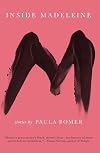
The stories and the novella in "inside Madeline" may or may not change your life, but after reading it, I'm pretty convinced that it's author does two things magnificently well: she presents an intimate, detailed topography of the seedier side of high school social hierarchies and presents an overwhelmingly forceful portrait of female sexual desire. Not every reader will particularly enjoy the content of these stories or the ruthlessly straightforward, unromantic they're set down, but Bomer show more certainly knows her territory. These stories hit fast and hard, and, to stick with our chosen metaphor, pull absolutely no punches. Her depictions of female friendships, particularly those that subtle class and subcultural lines, are exquisitely nuanced, and she seems to have a special talent for describing that moment that youthful exuberance meets cold, hard, wrenchingly painful disappointment. "Reading to the Blind Girl" in particular seems designed to ruin an optimistic college sophomore's day, a deftly unresolvable portrait of young-adult cruelty and loss. Bomer also seems fond of setting her stories in the eighties and early nineties, a period in which populist rock excess gave way to underground scenester cachet and lots of rock kids seemed painfully aware of the amount of cultural capital they possessed. If you had a subscription to SPIN or watched "120 Minutes" every week on MTV, this one might bring back memories.
And then there's the sex. Depictions of sex by female writers often tend to pass over the animal act to focus on the telling detail, the fleeting emotion, or the soft glow of orgasm. Bomer, by contrast, sees sex as relentlessly, bluntly physical, as consuming need and moist mechanical grind. This may disgust or alarm some readers -- and to be fair, a lot of alarming things happen in these stories -- but those who like their sexual encounters, real or fictional, to be quick, dirty, and pointedly unromantic will find a lot to like here. And fans of Mary Gaitskill should stop doing whatever they're doing and buy "Inside Madeline" immediately. But there's also much more here than just prurience and bodily fluids. The novella that gives this collection its name is a surprisingly sensitive portrait of its titular character that uses negative literary space to excellent effect. It's a sympathetic piece that uses excess to trace the shape of its protagonist's empty places. Bomer writes like so much of us is composed of our joyful, desperate, needy bodies, but she doesn't forget that that's not all we are. She also wants to show us that that's not all there is inside of Maddy. show less
And then there's the sex. Depictions of sex by female writers often tend to pass over the animal act to focus on the telling detail, the fleeting emotion, or the soft glow of orgasm. Bomer, by contrast, sees sex as relentlessly, bluntly physical, as consuming need and moist mechanical grind. This may disgust or alarm some readers -- and to be fair, a lot of alarming things happen in these stories -- but those who like their sexual encounters, real or fictional, to be quick, dirty, and pointedly unromantic will find a lot to like here. And fans of Mary Gaitskill should stop doing whatever they're doing and buy "Inside Madeline" immediately. But there's also much more here than just prurience and bodily fluids. The novella that gives this collection its name is a surprisingly sensitive portrait of its titular character that uses negative literary space to excellent effect. It's a sympathetic piece that uses excess to trace the shape of its protagonist's empty places. Bomer writes like so much of us is composed of our joyful, desperate, needy bodies, but she doesn't forget that that's not all we are. She also wants to show us that that's not all there is inside of Maddy. show less
The basics: Nine Months is the story of Brooklyn wife and mom of two Sonia, who finds herself unintentionally and unhappily pregnant with number three. With frustration mounting, Sonia takes off on a cross-country trip alone--and does so many things pregnant women aren't supposed to do.
My thoughts: I've been saving Nine Months to read until I was very, very pregnant. I'm so glad I did because it was fun to live vicariously through Sonia. I'm happily pregnant, of course, but I also really show more dislike being pregnant. The thought of being pregnant again--ever--terrifies me. I can relate to Sonia's feeling of helplessness, but as real as it is, this novel is also escapist fun. It's fantasy that's firmly planted in reality:
""You’re pregnant. You’re doing a great job. I know it’s hard.” “You don’t know how hard it is. And I’m not doing a ‘great job.’ I haven’t done anything, except fuck you. This is happening to me, don’t you understand? I have nothing to do with it. It’s taking over me. It’s taking over my body and my soul, for God’s sake, like some parasite, like some alien virus.” Tears come to her eyes."
Through her marriage and her children, Sonia has lost something of herself. She's been looking forward to having her youngest in school so she can (finally) return to her art. Another child would hinder those plans; it would also mean their already cramped Brooklyn two-bedroom apartment would become impossible to live in.
There's a rawness and an honesty to both Sonia and Bomer's writing that I loved: "Not for the first time, she hates the fact that she is raising her kids in New York, where people treat their children like a combination between a science and an art project." This novel is wickedly funny in a way that isn't necessarily socially acceptable. It's dark and comical, but it's also firmly grounded in reality:
"The baby’s mouth roots around like a baby bird, unable to grasp on. So Sonia squeezes her nipple and colostrum comes out and the infant’s lips touch the pre-milk milk and then, it works—the baby tries to suck. First slowly, and then, as if something in her wired-for-survival brain clicks, she ferociously latches on to Sonia’s nipple and sucks on her like that’s what she’s been put on this earth to do. Which is, in fact, true. Her daughter is here to suck the life out of her, and leave her for the spent, middle-aged woman she soon will be."
The situations Sonia encounters are real, and perhaps her actions are too. For me? I wouldn't have the guts to act as recklessly as she does.
Favorite passage: "And as much as she feared being a minority in Kensington, she fears even more being literally stranded among people who are supposedly just like her. She’s never felt that anyone was just like her, regardless of skin color or money—it’s just not a dream she could ever buy into. It doesn’t ring any bell for her."
The verdict: I adored Nine Months as much for Sonia's illicit adventures as I did for Bomer's writing. It's a brave novel, and the combination of literary escape and social commentary is a winning one. show less
My thoughts: I've been saving Nine Months to read until I was very, very pregnant. I'm so glad I did because it was fun to live vicariously through Sonia. I'm happily pregnant, of course, but I also really show more dislike being pregnant. The thought of being pregnant again--ever--terrifies me. I can relate to Sonia's feeling of helplessness, but as real as it is, this novel is also escapist fun. It's fantasy that's firmly planted in reality:
""You’re pregnant. You’re doing a great job. I know it’s hard.” “You don’t know how hard it is. And I’m not doing a ‘great job.’ I haven’t done anything, except fuck you. This is happening to me, don’t you understand? I have nothing to do with it. It’s taking over me. It’s taking over my body and my soul, for God’s sake, like some parasite, like some alien virus.” Tears come to her eyes."
Through her marriage and her children, Sonia has lost something of herself. She's been looking forward to having her youngest in school so she can (finally) return to her art. Another child would hinder those plans; it would also mean their already cramped Brooklyn two-bedroom apartment would become impossible to live in.
There's a rawness and an honesty to both Sonia and Bomer's writing that I loved: "Not for the first time, she hates the fact that she is raising her kids in New York, where people treat their children like a combination between a science and an art project." This novel is wickedly funny in a way that isn't necessarily socially acceptable. It's dark and comical, but it's also firmly grounded in reality:
"The baby’s mouth roots around like a baby bird, unable to grasp on. So Sonia squeezes her nipple and colostrum comes out and the infant’s lips touch the pre-milk milk and then, it works—the baby tries to suck. First slowly, and then, as if something in her wired-for-survival brain clicks, she ferociously latches on to Sonia’s nipple and sucks on her like that’s what she’s been put on this earth to do. Which is, in fact, true. Her daughter is here to suck the life out of her, and leave her for the spent, middle-aged woman she soon will be."
The situations Sonia encounters are real, and perhaps her actions are too. For me? I wouldn't have the guts to act as recklessly as she does.
Favorite passage: "And as much as she feared being a minority in Kensington, she fears even more being literally stranded among people who are supposedly just like her. She’s never felt that anyone was just like her, regardless of skin color or money—it’s just not a dream she could ever buy into. It doesn’t ring any bell for her."
The verdict: I adored Nine Months as much for Sonia's illicit adventures as I did for Bomer's writing. It's a brave novel, and the combination of literary escape and social commentary is a winning one. show less
Awards

You May Also Like
Associated Authors
Statistics
- Works
- 8
- Also by
- 1
- Members
- 148
- Popularity
- #140,179
- Rating
- 3.4
- Reviews
- 10
- ISBNs
- 17