
Gianaclis Caldwell
Author of Mastering Artisan Cheesemaking: The Ultimate Guide for Home-Scale and Market Producers
About the Author
Gianaclis Caldwell is an expert cheese and yogurt maker and the author of several books. A regular contributor to Fermentation and Culture magazines, she teaches and consults across the United States. She lives and operates her family's dairy, Pholia Farm, in Rogue River, Oregon.
Works by Gianaclis Caldwell
Mastering Artisan Cheesemaking: The Ultimate Guide for Home-Scale and Market Producers (2012) 88 copies, 1 review
Holistic Goat Care: A Comprehensive Guide to Raising Healthy Animals, Preventing Common Ailments, and Troubleshooting Problems (2017) 25 copies
The Farmstead Creamery Advisor: The Complete Guide to Building and Running a Small, Farm-Based Cheese Business (2010) 24 copies
The Small-Scale Dairy: The Complete Guide to Milk Production for the Home and Market (2014) 23 copies
The Small-Scale Cheese Business: The Complete Guide to Running a Successful Farmstead Creamery (2014) 18 copies
Homemade Yogurt & Kefir: 71 Recipes for Making & Using Probiotic-Rich Ferments (2020) 17 copies, 4 reviews
The Binding 2 copies
Tagged
Common Knowledge
- Birthdate
- 1961
- Gender
- female
- Nationality
- USA
- Birthplace
- Grants Pass, Oregon, USA
- Places of residence
- Rogue River, Oregon, USA
- Associated Place (for map)
- Oregon, USA
Members
Reviews
Homemade Yogurt & Kefir: 71 Recipes for Making & Using Probiotic-Rich Ferments by Gianaclis Caldwell

Don't poison yourself
The ARC has two serious mistakes, one dangerous, one simply wrong. The simple mistake is that "sous vide" is translated as "under pressure" when in fact it means "under vacuum". I can't imagine how this mistake happened because the French word for "pressure" is "pression" which is close to English.
The dangerous mistake is in the recipe for soy milk. I wrote to Storey informing them of this mistake and they wrote back saying they were looking into it. But they did not show more follow up to confirm that they had corrected the error in the final version of the book, so I must drop my rating to a 1 because it presents incorrect information that could be harmful.
Raw soybeans contain several chemicals that are classed as "anti-nutrients" or harmful chemicals. Soy must be processed, usually by heat, to deactivate the anti-nutrients before feeding to animals or people. You can confirm this information by searching on Google Scholar using the words "soybean", "soyabean" and "anti-nutrients".
I was taught to toast the raw beans in a dry skillet till they were very hot (not burned) before processing them. Another heat treatment is to make the milk and then boil it for a while. Either heat treatment will work but it MUST be done. Ms Caldwell's recipe does neither and the poisons are not removed.
Without these mistakes, the book would have ranked high. I have quite a few dairy books including some from university dairy programs and this book compares well because it is so thorough. Sweeteners, textures, various thickening agents, lot of other good information. Well designed data tables and clear photos get the lessons across without fuss. Sources for starter cultures are listed in several places.
Very detailed. Very scientific. Very clear reading. I learned a lot of useful new information about dairy ferments that I like to eat but don't usually make – like kefir. I am also reminded of products I have not seen for a while like the Russian baked milk yogurt called ryazhenka.
There are bits of trivia I could add to the book like being aware that some powdered milk is made to mix with cold water and some with warm, and that Afghan dried yogurt is hard, stinky balls that are very strong tasting (too strong for me) last all through the winter months.
Most of the book is really good, but we can't go around poisoning our readers can we?
I received a review copy of "Homemade Yogurt & Kefir: 71 Recipes for Making & Using Probiotic-Rich Ferments" by Gianaclis Caldwell from Storey Publishing through NetGalley.com. show less
The ARC has two serious mistakes, one dangerous, one simply wrong. The simple mistake is that "sous vide" is translated as "under pressure" when in fact it means "under vacuum". I can't imagine how this mistake happened because the French word for "pressure" is "pression" which is close to English.
The dangerous mistake is in the recipe for soy milk. I wrote to Storey informing them of this mistake and they wrote back saying they were looking into it. But they did not show more follow up to confirm that they had corrected the error in the final version of the book, so I must drop my rating to a 1 because it presents incorrect information that could be harmful.
Raw soybeans contain several chemicals that are classed as "anti-nutrients" or harmful chemicals. Soy must be processed, usually by heat, to deactivate the anti-nutrients before feeding to animals or people. You can confirm this information by searching on Google Scholar using the words "soybean", "soyabean" and "anti-nutrients".
I was taught to toast the raw beans in a dry skillet till they were very hot (not burned) before processing them. Another heat treatment is to make the milk and then boil it for a while. Either heat treatment will work but it MUST be done. Ms Caldwell's recipe does neither and the poisons are not removed.
Without these mistakes, the book would have ranked high. I have quite a few dairy books including some from university dairy programs and this book compares well because it is so thorough. Sweeteners, textures, various thickening agents, lot of other good information. Well designed data tables and clear photos get the lessons across without fuss. Sources for starter cultures are listed in several places.
Very detailed. Very scientific. Very clear reading. I learned a lot of useful new information about dairy ferments that I like to eat but don't usually make – like kefir. I am also reminded of products I have not seen for a while like the Russian baked milk yogurt called ryazhenka.
There are bits of trivia I could add to the book like being aware that some powdered milk is made to mix with cold water and some with warm, and that Afghan dried yogurt is hard, stinky balls that are very strong tasting (too strong for me) last all through the winter months.
Most of the book is really good, but we can't go around poisoning our readers can we?
I received a review copy of "Homemade Yogurt & Kefir: 71 Recipes for Making & Using Probiotic-Rich Ferments" by Gianaclis Caldwell from Storey Publishing through NetGalley.com. show less
Mastering Artisan Cheesemaking: The Ultimate Guide for Home-Scale and Market Producers by Gianaclis Caldwell
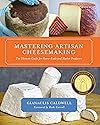
I've been making cheeses at home for a little while now, so I've started to get comfortable with the "hows." At this point, though, it's really valuable for me to have picked up this book, as it explains in significant depth, the "whys." Why do we wait certain amounts of time for certain results? Why do we cut curd at certain stages in different cheeses? Why is a "clean break" not the same for every cheese? Why are we always instructed to stir in rennet in a gentle up-and-down motion, rather show more than just stirring as we're used to stirring anything else?
From the basics of the ions and molecules to the affinage and macroscopic levels, this book will provide you with a wealth of understanding of your cheese making.
The only improvement I wish could be made is in the information on the recipes. The recipes are given only with descriptors, presumably so that the cheese maker doesn't have his or her eyes shut to individual possibilities and creative changes that can be made. However, it would be very helpful to also have a list in each recipe section or individual recipes of types of well-known cheeses which are examples of the given category. Those of us who come from cheese-lacking home and regional traditions benefit greatly from learning about the desired characters of different cheeses, and also how to categorize the ones we are familiar with. show less
From the basics of the ions and molecules to the affinage and macroscopic levels, this book will provide you with a wealth of understanding of your cheese making.
The only improvement I wish could be made is in the information on the recipes. The recipes are given only with descriptors, presumably so that the cheese maker doesn't have his or her eyes shut to individual possibilities and creative changes that can be made. However, it would be very helpful to also have a list in each recipe section or individual recipes of types of well-known cheeses which are examples of the given category. Those of us who come from cheese-lacking home and regional traditions benefit greatly from learning about the desired characters of different cheeses, and also how to categorize the ones we are familiar with. show less
Homemade Yogurt & Kefir: 71 Recipes for Making & Using Probiotic-Rich Ferments by Gianaclis Caldwell
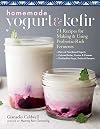
Thank you NetGalley and Storey Publishing for the advance copy of this beautiful book, Homemade Yogurt & Kefir: 71 Recipes for Making & Using Probiotic-Rich Ferments
by Gianaclis Caldwell.
If you love Yogurt and Yogurt making, you will love this book. If you don’t love Yogurt, you will do so after you read this book and give it a try. But, first, a caveat. I need to start this review by explaining why I rated this book five stars; otherwise, the less scholarly among us might roll their eyes show more upward, point a finger at me and say – where is your credibility? This book is mostly a treatise on the subject of Yogurt/Kefir making. We can probably agree that anyone can get a degree or diploma (or in my case a few) and still not be scholarly. So, when you see terms like pH, microbiome, fungi, viruses, bacteria, molds, pathogens, antimicropials, proiotic antibiotic, yeasts you might be tempted to bail out quietly (not me, of course, but I have a few years of Yogurt making under my belt). Next, the author traces the history of Yogurt and Kefir making all over the world from early 1900s, and there is sprinkling of sociology and anthropology for good measure. So even if upon graduating from High School, you swore to yourself that you would never read another history or chemistry book as long as you live, don’t quit on this book because, if you do, you will lose out on something great.
So, notwithstanding the above, the author’s message comes across loud and clear:
There are many ways to make Yogurt, but all you really need is a small amount of Yogurt or Kefir, to use for a starter, and milk (albeit with certain reservations that the book will explain).
Everyone knows that Yogurt is healthy and delicious. What everyone does not know is that Yogurt is easy and economical to make on your own. If your kids don’t love it plain, most will love it if you pour into serving size cups, over delicious surprises at the bottom of the cup: fruits, jam, nuts, chocolate bits, or honey to be stirred in or scooped up with each spoonful of Yogurt (Chapter Four). For the more sophisticated palette, herbs and spices can be added during the fermentation process or after. Yogurt smoothies are delicious with sweet ripe bananas, strawberries, peaches, mango (careful, not all fruit goes nicely with Yogurt) – or you can add the mashed fruits to the incubation process.
Also, for the more sophisticated palettes there is a very interesting chapter on infusions (tea-like) which I am excited about and will be trying this week. Also, I’m keen to try the Indian Mishti Doi, Russian Ryazhenka with carmelized milk sugars and the Vietnamese Sữa chua which sounds a little more like a dessert pudding than Yogurt. GC also describes how to make butter and buttermilk – I don’t know about the butter, but I’m sure going to try the buttermilk. I’m super anxious to try the Yogurt ricotta (Chapter Eight – under cheeses). If I succeed, I will add a comment at a later date.
For the grand finale GC treats us to some amazing recipes for Yogurt based Saucy Salads and Condiments: Indian and Ethiopia Raitas, Greek Tzatziki, Baba Ghanoush, Dips and Dressing and Chilled Creamy Soups (YUM).
There are instructions on how to make dry Yogurt for rehydration later. What possible use, you might ask? She mentions that campers might like. GC also explains how you can thicken the Yogurt to a cheese spreading consistency by draining (not to be confused with thickening agents described in Chapter Five). Basically this is how you make Labne. If you try this, don’t be shocked by the fact that milk/Yogurt is mostly water so when making cheese from your Yogurt, the process will separate into the desired cheese product and about 80-90% murky yellowish water byproduct (whey). If you want a creamier more spreadable cheese you can peek and stop the draining when it reaches the desired consistency, otherwise you will end up with a thick cream cheese-like consistency. Add a little salt, olive oil and zaatar and voila, you have Labne. GC explains that you need not toss the whey but you can drink it, make Whey Kefir, compost it in your garden, etc. I generally reserve the whey and use instead of water when making pizza or bagel dough. For those of you who like to make beer, I believe that you can make mead/stout from whey, but I digress….
Chapter Seven provides recipes for Plant Milk (non-dairy) Ferments. There is a chapter on non-dairy ferment that might appeal to vegan. Chapter Eight instructs on cultured butters, cultured creams and Yogurt and Kefir cheeses.
Regarding the equipment necessary to take up this new delicious Yogurt-making hobby, do not be thwarted by the utensils described in the earliest chapters, nor by the lengthy temperature discussions and preparations. It takes GC until Chapter Three, under Tools and Equipment, to let you know that there are any number of appliances that will facilitate the process. She did not mention my favorite, some bread machines like mine (Morphy Richards) have a Yogurt cycle. GC does list something called a Bread Proofing Box but I don’t know what that is – maybe it’s the same. If you use my bread machine the preparation time for plain delicious Yogurt is about 30 seconds. All you need to do is to put in some Yogurt as a starter (you can use some of your own home-made Yogurt or store-bought) and pour in a quart of milk, stir briefly, shut the machine, set the cycle, and walk away. In about eight hours the Yogurt is done. As GC explains, you might have to experiment with the types of milk and Yogurt that you use (over processed milk or Yogurt that has stabilizers and additives will have weaker results). By now I have the right Yogurt starter and the right milk to make a thick creamy Yogurt. When I first got started my Yogurt was tasty but too loose, now when I try to pour the from the glass bottle where I store it in the fridge, I have to shake it vigorously like a ketchup bottle in order to release (and usually have to stick in a knife or spoon to help release from the bottle).
Now, going back to the more scholarly aspects of the book (rolling your eyes again?), there is no need to panic, I will cut to the chase. Just start by making the Yogurt and fooling around with the different ideas GC proposes throughout the book. Once you get the knack, you too can become an expert and connoisseur in very little time, at which point you will probably want to go back and reread the earlier chapters (I have done so twice) for the more scientific aspects of the process because there is much to learn from her treatise. GC gives ideas to experiment with, and to perfect your home-made Yogurt by understanding the chemical process involved and even culturally (no pun intended) with regional and ethnic preferences.
Merged review:
Thank you NetGalley and Storey Publishing for the advance copy of this beautiful book, Homemade Yogurt & Kefir: 71 Recipes for Making & Using Probiotic-Rich Ferments
by Gianaclis Caldwell.
If you love Yogurt and Yogurt making, you will love this book. If you don’t love Yogurt, you will do so after you read this book and give it a try. But, first, a caveat. I need to start this review by explaining why I rated this book five stars; otherwise, the less scholarly among us might roll their eyes upward, point a finger at me and say – where is your credibility? This book is mostly a treatise on the subject of Yogurt/Kefir making. We can probably agree that anyone can get a degree or diploma (or in my case a few) and still not be scholarly. So, when you see terms like pH, microbiome, fungi, viruses, bacteria, molds, pathogens, antimicropials, proiotic antibiotic, yeasts you might be tempted to bail out quietly (not me, of course, but I have a few years of Yogurt making under my belt). Next, the author traces the history of Yogurt and Kefir making all over the world from early 1900s, and there is sprinkling of sociology and anthropology for good measure. So even if upon graduating from High School, you swore to yourself that you would never read another history or chemistry book as long as you live, don’t quit on this book because, if you do, you will lose out on something great.
So, notwithstanding the above, the author’s message comes across loud and clear:
There are many ways to make Yogurt, but all you really need is a small amount of Yogurt or Kefir, to use for a starter, and milk (albeit with certain reservations that the book will explain).
Everyone knows that Yogurt is healthy and delicious. What everyone does not know is that Yogurt is easy and economical to make on your own. If your kids don’t love it plain, most will love it if you pour into serving size cups, over delicious surprises at the bottom of the cup: fruits, jam, nuts, chocolate bits, or honey to be stirred in or scooped up with each spoonful of Yogurt (Chapter Four). For the more sophisticated palette, herbs and spices can be added during the fermentation process or after. Yogurt smoothies are delicious with sweet ripe bananas, strawberries, peaches, mango (careful, not all fruit goes nicely with Yogurt) – or you can add the mashed fruits to the incubation process.
Also, for the more sophisticated palettes there is a very interesting chapter on infusions (tea-like) which I am excited about and will be trying this week. Also, I’m keen to try the Indian Mishti Doi, Russian Ryazhenka with carmelized milk sugars and the Vietnamese Sữa chua which sounds a little more like a dessert pudding than Yogurt. GC also describes how to make butter and buttermilk – I don’t know about the butter, but I’m sure going to try the buttermilk. I’m super anxious to try the Yogurt ricotta (Chapter Eight – under cheeses). If I succeed, I will add a comment at a later date.
For the grand finale GC treats us to some amazing recipes for Yogurt based Saucy Salads and Condiments: Indian and Ethiopia Raitas, Greek Tzatziki, Baba Ghanoush, Dips and Dressing and Chilled Creamy Soups (YUM).
There are instructions on how to make dry Yogurt for rehydration later. What possible use, you might ask? She mentions that campers might like. GC also explains how you can thicken the Yogurt to a cheese spreading consistency by draining (not to be confused with thickening agents described in Chapter Five). Basically this is how you make Labne. If you try this, don’t be shocked by the fact that milk/Yogurt is mostly water so when making cheese from your Yogurt, the process will separate into the desired cheese product and about 80-90% murky yellowish water byproduct (whey). If you want a creamier more spreadable cheese you can peek and stop the draining when it reaches the desired consistency, otherwise you will end up with a thick cream cheese-like consistency. Add a little salt, olive oil and zaatar and voila, you have Labne. GC explains that you need not toss the whey but you can drink it, make Whey Kefir, compost it in your garden, etc. I generally reserve the whey and use instead of water when making pizza or bagel dough. For those of you who like to make beer, I believe that you can make mead/stout from whey, but I digress….
Chapter Seven provides recipes for Plant Milk (non-dairy) Ferments. There is a chapter on non-dairy ferment that might appeal to vegan. Chapter Eight instructs on cultured butters, cultured creams and Yogurt and Kefir cheeses.
Regarding the equipment necessary to take up this new delicious Yogurt-making hobby, do not be thwarted by the utensils described in the earliest chapters, nor by the lengthy temperature discussions and preparations. It takes GC until Chapter Three, under Tools and Equipment, to let you know that there are any number of appliances that will facilitate the process. She did not mention my favorite, some bread machines like mine (Morphy Richards) have a Yogurt cycle. GC does list something called a Bread Proofing Box but I don’t know what that is – maybe it’s the same. If you use my bread machine the preparation time for plain delicious Yogurt is about 30 seconds. All you need to do is to put in some Yogurt as a starter (you can use some of your own home-made Yogurt or store-bought) and pour in a quart of milk, stir briefly, shut the machine, set the cycle, and walk away. In about eight hours the Yogurt is done. As GC explains, you might have to experiment with the types of milk and Yogurt that you use (over processed milk or Yogurt that has stabilizers and additives will have weaker results). By now I have the right Yogurt starter and the right milk to make a thick creamy Yogurt. When I first got started my Yogurt was tasty but too loose, now when I try to pour the from the glass bottle where I store it in the fridge, I have to shake it vigorously like a ketchup bottle in order to release (and usually have to stick in a knife or spoon to help release from the bottle).
Now, going back to the more scholarly aspects of the book (rolling your eyes again?), there is no need to panic, I will cut to the chase. Just start by making the Yogurt and fooling around with the different ideas GC proposes throughout the book. Once you get the knack, you too can become an expert and connoisseur in very little time, at which point you will probably want to go back and reread the earlier chapters (I have done so twice) for the more scientific aspects of the process because there is much to learn from her treatise. GC gives ideas to experiment with, and to perfect your home-made Yogurt by understanding the chemical process involved and even culturally (no pun intended) with regional and ethnic preferences. show less
by Gianaclis Caldwell.
If you love Yogurt and Yogurt making, you will love this book. If you don’t love Yogurt, you will do so after you read this book and give it a try. But, first, a caveat. I need to start this review by explaining why I rated this book five stars; otherwise, the less scholarly among us might roll their eyes show more upward, point a finger at me and say – where is your credibility? This book is mostly a treatise on the subject of Yogurt/Kefir making. We can probably agree that anyone can get a degree or diploma (or in my case a few) and still not be scholarly. So, when you see terms like pH, microbiome, fungi, viruses, bacteria, molds, pathogens, antimicropials, proiotic antibiotic, yeasts you might be tempted to bail out quietly (not me, of course, but I have a few years of Yogurt making under my belt). Next, the author traces the history of Yogurt and Kefir making all over the world from early 1900s, and there is sprinkling of sociology and anthropology for good measure. So even if upon graduating from High School, you swore to yourself that you would never read another history or chemistry book as long as you live, don’t quit on this book because, if you do, you will lose out on something great.
So, notwithstanding the above, the author’s message comes across loud and clear:
There are many ways to make Yogurt, but all you really need is a small amount of Yogurt or Kefir, to use for a starter, and milk (albeit with certain reservations that the book will explain).
Everyone knows that Yogurt is healthy and delicious. What everyone does not know is that Yogurt is easy and economical to make on your own. If your kids don’t love it plain, most will love it if you pour into serving size cups, over delicious surprises at the bottom of the cup: fruits, jam, nuts, chocolate bits, or honey to be stirred in or scooped up with each spoonful of Yogurt (Chapter Four). For the more sophisticated palette, herbs and spices can be added during the fermentation process or after. Yogurt smoothies are delicious with sweet ripe bananas, strawberries, peaches, mango (careful, not all fruit goes nicely with Yogurt) – or you can add the mashed fruits to the incubation process.
Also, for the more sophisticated palettes there is a very interesting chapter on infusions (tea-like) which I am excited about and will be trying this week. Also, I’m keen to try the Indian Mishti Doi, Russian Ryazhenka with carmelized milk sugars and the Vietnamese Sữa chua which sounds a little more like a dessert pudding than Yogurt. GC also describes how to make butter and buttermilk – I don’t know about the butter, but I’m sure going to try the buttermilk. I’m super anxious to try the Yogurt ricotta (Chapter Eight – under cheeses). If I succeed, I will add a comment at a later date.
For the grand finale GC treats us to some amazing recipes for Yogurt based Saucy Salads and Condiments: Indian and Ethiopia Raitas, Greek Tzatziki, Baba Ghanoush, Dips and Dressing and Chilled Creamy Soups (YUM).
There are instructions on how to make dry Yogurt for rehydration later. What possible use, you might ask? She mentions that campers might like. GC also explains how you can thicken the Yogurt to a cheese spreading consistency by draining (not to be confused with thickening agents described in Chapter Five). Basically this is how you make Labne. If you try this, don’t be shocked by the fact that milk/Yogurt is mostly water so when making cheese from your Yogurt, the process will separate into the desired cheese product and about 80-90% murky yellowish water byproduct (whey). If you want a creamier more spreadable cheese you can peek and stop the draining when it reaches the desired consistency, otherwise you will end up with a thick cream cheese-like consistency. Add a little salt, olive oil and zaatar and voila, you have Labne. GC explains that you need not toss the whey but you can drink it, make Whey Kefir, compost it in your garden, etc. I generally reserve the whey and use instead of water when making pizza or bagel dough. For those of you who like to make beer, I believe that you can make mead/stout from whey, but I digress….
Chapter Seven provides recipes for Plant Milk (non-dairy) Ferments. There is a chapter on non-dairy ferment that might appeal to vegan. Chapter Eight instructs on cultured butters, cultured creams and Yogurt and Kefir cheeses.
Regarding the equipment necessary to take up this new delicious Yogurt-making hobby, do not be thwarted by the utensils described in the earliest chapters, nor by the lengthy temperature discussions and preparations. It takes GC until Chapter Three, under Tools and Equipment, to let you know that there are any number of appliances that will facilitate the process. She did not mention my favorite, some bread machines like mine (Morphy Richards) have a Yogurt cycle. GC does list something called a Bread Proofing Box but I don’t know what that is – maybe it’s the same. If you use my bread machine the preparation time for plain delicious Yogurt is about 30 seconds. All you need to do is to put in some Yogurt as a starter (you can use some of your own home-made Yogurt or store-bought) and pour in a quart of milk, stir briefly, shut the machine, set the cycle, and walk away. In about eight hours the Yogurt is done. As GC explains, you might have to experiment with the types of milk and Yogurt that you use (over processed milk or Yogurt that has stabilizers and additives will have weaker results). By now I have the right Yogurt starter and the right milk to make a thick creamy Yogurt. When I first got started my Yogurt was tasty but too loose, now when I try to pour the from the glass bottle where I store it in the fridge, I have to shake it vigorously like a ketchup bottle in order to release (and usually have to stick in a knife or spoon to help release from the bottle).
Now, going back to the more scholarly aspects of the book (rolling your eyes again?), there is no need to panic, I will cut to the chase. Just start by making the Yogurt and fooling around with the different ideas GC proposes throughout the book. Once you get the knack, you too can become an expert and connoisseur in very little time, at which point you will probably want to go back and reread the earlier chapters (I have done so twice) for the more scientific aspects of the process because there is much to learn from her treatise. GC gives ideas to experiment with, and to perfect your home-made Yogurt by understanding the chemical process involved and even culturally (no pun intended) with regional and ethnic preferences.
Merged review:
Thank you NetGalley and Storey Publishing for the advance copy of this beautiful book, Homemade Yogurt & Kefir: 71 Recipes for Making & Using Probiotic-Rich Ferments
by Gianaclis Caldwell.
If you love Yogurt and Yogurt making, you will love this book. If you don’t love Yogurt, you will do so after you read this book and give it a try. But, first, a caveat. I need to start this review by explaining why I rated this book five stars; otherwise, the less scholarly among us might roll their eyes upward, point a finger at me and say – where is your credibility? This book is mostly a treatise on the subject of Yogurt/Kefir making. We can probably agree that anyone can get a degree or diploma (or in my case a few) and still not be scholarly. So, when you see terms like pH, microbiome, fungi, viruses, bacteria, molds, pathogens, antimicropials, proiotic antibiotic, yeasts you might be tempted to bail out quietly (not me, of course, but I have a few years of Yogurt making under my belt). Next, the author traces the history of Yogurt and Kefir making all over the world from early 1900s, and there is sprinkling of sociology and anthropology for good measure. So even if upon graduating from High School, you swore to yourself that you would never read another history or chemistry book as long as you live, don’t quit on this book because, if you do, you will lose out on something great.
So, notwithstanding the above, the author’s message comes across loud and clear:
There are many ways to make Yogurt, but all you really need is a small amount of Yogurt or Kefir, to use for a starter, and milk (albeit with certain reservations that the book will explain).
Everyone knows that Yogurt is healthy and delicious. What everyone does not know is that Yogurt is easy and economical to make on your own. If your kids don’t love it plain, most will love it if you pour into serving size cups, over delicious surprises at the bottom of the cup: fruits, jam, nuts, chocolate bits, or honey to be stirred in or scooped up with each spoonful of Yogurt (Chapter Four). For the more sophisticated palette, herbs and spices can be added during the fermentation process or after. Yogurt smoothies are delicious with sweet ripe bananas, strawberries, peaches, mango (careful, not all fruit goes nicely with Yogurt) – or you can add the mashed fruits to the incubation process.
Also, for the more sophisticated palettes there is a very interesting chapter on infusions (tea-like) which I am excited about and will be trying this week. Also, I’m keen to try the Indian Mishti Doi, Russian Ryazhenka with carmelized milk sugars and the Vietnamese Sữa chua which sounds a little more like a dessert pudding than Yogurt. GC also describes how to make butter and buttermilk – I don’t know about the butter, but I’m sure going to try the buttermilk. I’m super anxious to try the Yogurt ricotta (Chapter Eight – under cheeses). If I succeed, I will add a comment at a later date.
For the grand finale GC treats us to some amazing recipes for Yogurt based Saucy Salads and Condiments: Indian and Ethiopia Raitas, Greek Tzatziki, Baba Ghanoush, Dips and Dressing and Chilled Creamy Soups (YUM).
There are instructions on how to make dry Yogurt for rehydration later. What possible use, you might ask? She mentions that campers might like. GC also explains how you can thicken the Yogurt to a cheese spreading consistency by draining (not to be confused with thickening agents described in Chapter Five). Basically this is how you make Labne. If you try this, don’t be shocked by the fact that milk/Yogurt is mostly water so when making cheese from your Yogurt, the process will separate into the desired cheese product and about 80-90% murky yellowish water byproduct (whey). If you want a creamier more spreadable cheese you can peek and stop the draining when it reaches the desired consistency, otherwise you will end up with a thick cream cheese-like consistency. Add a little salt, olive oil and zaatar and voila, you have Labne. GC explains that you need not toss the whey but you can drink it, make Whey Kefir, compost it in your garden, etc. I generally reserve the whey and use instead of water when making pizza or bagel dough. For those of you who like to make beer, I believe that you can make mead/stout from whey, but I digress….
Chapter Seven provides recipes for Plant Milk (non-dairy) Ferments. There is a chapter on non-dairy ferment that might appeal to vegan. Chapter Eight instructs on cultured butters, cultured creams and Yogurt and Kefir cheeses.
Regarding the equipment necessary to take up this new delicious Yogurt-making hobby, do not be thwarted by the utensils described in the earliest chapters, nor by the lengthy temperature discussions and preparations. It takes GC until Chapter Three, under Tools and Equipment, to let you know that there are any number of appliances that will facilitate the process. She did not mention my favorite, some bread machines like mine (Morphy Richards) have a Yogurt cycle. GC does list something called a Bread Proofing Box but I don’t know what that is – maybe it’s the same. If you use my bread machine the preparation time for plain delicious Yogurt is about 30 seconds. All you need to do is to put in some Yogurt as a starter (you can use some of your own home-made Yogurt or store-bought) and pour in a quart of milk, stir briefly, shut the machine, set the cycle, and walk away. In about eight hours the Yogurt is done. As GC explains, you might have to experiment with the types of milk and Yogurt that you use (over processed milk or Yogurt that has stabilizers and additives will have weaker results). By now I have the right Yogurt starter and the right milk to make a thick creamy Yogurt. When I first got started my Yogurt was tasty but too loose, now when I try to pour the from the glass bottle where I store it in the fridge, I have to shake it vigorously like a ketchup bottle in order to release (and usually have to stick in a knife or spoon to help release from the bottle).
Now, going back to the more scholarly aspects of the book (rolling your eyes again?), there is no need to panic, I will cut to the chase. Just start by making the Yogurt and fooling around with the different ideas GC proposes throughout the book. Once you get the knack, you too can become an expert and connoisseur in very little time, at which point you will probably want to go back and reread the earlier chapters (I have done so twice) for the more scientific aspects of the process because there is much to learn from her treatise. GC gives ideas to experiment with, and to perfect your home-made Yogurt by understanding the chemical process involved and even culturally (no pun intended) with regional and ethnic preferences. show less
Homemade Yogurt & Kefir: 71 Recipes for Making & Using Probiotic-Rich Ferments by Gianaclis Caldwell
I was reading this because I am interested in kefir. The author goes into serious depth about yogurt but only lightly brushes over the processes for kefir. If you are interested in some serious dairy-making this may be the book for you as it moves from simple to complex yogurts and on all the way to soft cheeses. There is a chapter on vegan yogurts- please take the time to read the second review here about the dangers of raw soybeans-, a chapter on just the probiotics and a thorough review show more of equipment. Perhaps the final 15-20% of the book is devoted to recipes using cultured milks, most of these were unimpressive. This is a book for the serious dairy-maker not the average home cook.
library book read 3/26/2024 show less
library book read 3/26/2024 show less
You May Also Like


Statistics
- Works
- 8
- Members
- 251
- Popularity
- #91,085
- Rating
- 4.1
- Reviews
- 5
- ISBNs
- 13