
MeiLin Miranda
Author of Lovers and Beloveds: An Intimate History of the Greater Kingdom
About the Author
Image credit: Photo: Colleen Robbins
Series
Works by MeiLin Miranda
Associated Works
Tagged
Common Knowledge
- Gender
- female
Members
Reviews

Meilin Miranda was one of my first friends on Twitter and someone with whom I enjoy spending time in real life whenever I find myself in her home city, so it would be hard, if not impossible, for me to be objective about her work. But I'm not a book reviewer or a book blogger, so I don't have to be. So with that in mind, read on.
First of all, I demand The Machine God be immediately adapted into an anime screenplay and turned over to Hayao Miyazaki and/or Isao Takahata immediately. As in this show more story begs to be brought to the screen by Studio Ghibli.
The novel -- short by today's standards but packing a whole lot of everything good in its few pages -- takes place in a shared fictional universe with a lot of steampunk elements, a rich and interesting history, and a great big island floating above a sizable population center: A legend-shrouded cataclysm a thousand years ago tore a grand old city right out of the earth and flung it into the sky, where it has been ever since, casting a shadow over the gradually resettled land below and tantalizing scholars and engineers with its unattainable nearness.
Unattainable until the discovery of a semi-magical petroleum stand-in called variously "black mercury" or "ichor" allows the city below's "autogyro" flying machines to achieve the great heights necessary to mount an expedition up to the floating island. Are there people there? Are there solutions to the mystery of how that huge chunk of land decided to cheat the law of gravity? Are there artifacts to study and/or trade in, and thus make someone famous and maybe even rich?
Our hero is a charming and slightly naive academic, Adewole, master of languages old and new, collector of folklore, specialist in legends about the floating island even though he comes from a faraway land and only wound up in the Drifting Isle's shadow due to a series of mishaps and betrayals, only to embark on a life of little respect and not a little contempt from the dean and most of the rest of the university where he holds a "useless" token chair in the humanities -- taking up space and soaking up money that everybody else thinks would be better put to use endowing yet another engineering professorship at an already science/technology-heavy school.
Everybody, that is, except for the one person whose opinion really counts, she who runs the city (the world of the Drifting Isle accords women a powerful socio-political position that threatens to nudge somewhat beyond equality into matriarchy, but not quite), who therefore happens to be the one who gets to choose the team to make first contact with the denizens, if any, of the Floating Island. Someone with a gift for language, a feel for forgotten lore and a talent for uncovering the true elements of various myths and legends is just the sort such an expedition needs.
Soon Adewole and his best friend, Deviatka (an engineering professor) are exploring the ruins of the city above, getting acquainted with the struggling locals they find there, and fretting over how the dean of their university will doubtless exploit their discoveries for his own profit -- social and economic -- as he has done to Deviatka so many, many times before.
And then Adewole makes a discovery that blows even their worst and wildest worries right out of the water with its implications, its historical import and its threat, both physical and moral, to the present and the future, possibly of their entire world.
Like I said, Ms. Miranda packed a whole lot into just a few pages -- wry and pointed commentary on academic politics and the tensions between pure and applied research, the ethical implications of the quest for knowledge for its own sake, the public and private morality of holders of political and academic power, and yes, whether or not someone at some point actually managed to build a mecha so big and powerful that it could legitimately be referred to as a Machine God.
And I haven't even gotten to the best part yet, because the world of the Drifting Isle is a world in which more and more birds are turning up sentient and capable of using human language all the time. An early scene with sparrows lecturing Adewole about how if he doesn't share a bit of his pastry with him he's basically a rude selfish jerk sets the amusing and yet also deadly serious tone here. Plus there is a talking owl so wise and cool and drily funny that she knocks Bubo and Glimfeather right out of contention for for the title of Most Awesome Fictional Owl of All Time (and no, I do not consider Hedwig even to be an also-ran here, sorry, Potterniks). Owls get notions, you know.
But above all, there is Adewole, with whom you would have to be the world's biggest jerk not to fall in love with before you're even through the very first chapter. His personal history is full of heartbreak and struggle; his talents are prodigious (yet he is modest about them); his behavior when faced with a truly unique set of challenges is completely believable and completely understandable, which is all the more remarkable when one considers the cruel set of dilemmas his creator set before him. He is, in other words, a shining example of Miranda's signature sweet, deserving young male hero, whose life is circumscribed by women but who is man enough to think that's just fine and to go on and be awesome in a way that harms no one and helps many. When he meets someone whose lot in life has been orders of magnitude harder than his, he doesn't even think to compare his misfortunes to hers, just swears that he will do all in his power to find a way to make it as close to better as he can. He is, in other words, so loveable that you can't even roll your eyes at him, or hate loving him, or love hating him, or even think he's a bit too much of a Boy Scout. You just want to be his best friend. Especially since, well, spoilers.
Now I'm curious about the rest of the Drifting Isle Chronicles, which I should be getting my grubby hands on soon for being a backer for Ms. Miranda's Kickstarter to get this one published in style. Dudes, I have the best taste in Kickstarter projects.
Oh, and a little bird told me (hee!) that Ms. Miranda is going to write more books set in this universe, so HOORAY! show less
First of all, I demand The Machine God be immediately adapted into an anime screenplay and turned over to Hayao Miyazaki and/or Isao Takahata immediately. As in this show more story begs to be brought to the screen by Studio Ghibli.
The novel -- short by today's standards but packing a whole lot of everything good in its few pages -- takes place in a shared fictional universe with a lot of steampunk elements, a rich and interesting history, and a great big island floating above a sizable population center: A legend-shrouded cataclysm a thousand years ago tore a grand old city right out of the earth and flung it into the sky, where it has been ever since, casting a shadow over the gradually resettled land below and tantalizing scholars and engineers with its unattainable nearness.
Unattainable until the discovery of a semi-magical petroleum stand-in called variously "black mercury" or "ichor" allows the city below's "autogyro" flying machines to achieve the great heights necessary to mount an expedition up to the floating island. Are there people there? Are there solutions to the mystery of how that huge chunk of land decided to cheat the law of gravity? Are there artifacts to study and/or trade in, and thus make someone famous and maybe even rich?
Our hero is a charming and slightly naive academic, Adewole, master of languages old and new, collector of folklore, specialist in legends about the floating island even though he comes from a faraway land and only wound up in the Drifting Isle's shadow due to a series of mishaps and betrayals, only to embark on a life of little respect and not a little contempt from the dean and most of the rest of the university where he holds a "useless" token chair in the humanities -- taking up space and soaking up money that everybody else thinks would be better put to use endowing yet another engineering professorship at an already science/technology-heavy school.
Everybody, that is, except for the one person whose opinion really counts, she who runs the city (the world of the Drifting Isle accords women a powerful socio-political position that threatens to nudge somewhat beyond equality into matriarchy, but not quite), who therefore happens to be the one who gets to choose the team to make first contact with the denizens, if any, of the Floating Island. Someone with a gift for language, a feel for forgotten lore and a talent for uncovering the true elements of various myths and legends is just the sort such an expedition needs.
Soon Adewole and his best friend, Deviatka (an engineering professor) are exploring the ruins of the city above, getting acquainted with the struggling locals they find there, and fretting over how the dean of their university will doubtless exploit their discoveries for his own profit -- social and economic -- as he has done to Deviatka so many, many times before.
And then Adewole makes a discovery that blows even their worst and wildest worries right out of the water with its implications, its historical import and its threat, both physical and moral, to the present and the future, possibly of their entire world.
Like I said, Ms. Miranda packed a whole lot into just a few pages -- wry and pointed commentary on academic politics and the tensions between pure and applied research, the ethical implications of the quest for knowledge for its own sake, the public and private morality of holders of political and academic power, and yes, whether or not someone at some point actually managed to build a mecha so big and powerful that it could legitimately be referred to as a Machine God.
And I haven't even gotten to the best part yet, because the world of the Drifting Isle is a world in which more and more birds are turning up sentient and capable of using human language all the time. An early scene with sparrows lecturing Adewole about how if he doesn't share a bit of his pastry with him he's basically a rude selfish jerk sets the amusing and yet also deadly serious tone here. Plus there is a talking owl so wise and cool and drily funny that she knocks Bubo and Glimfeather right out of contention for for the title of Most Awesome Fictional Owl of All Time (and no, I do not consider Hedwig even to be an also-ran here, sorry, Potterniks). Owls get notions, you know.
But above all, there is Adewole, with whom you would have to be the world's biggest jerk not to fall in love with before you're even through the very first chapter. His personal history is full of heartbreak and struggle; his talents are prodigious (yet he is modest about them); his behavior when faced with a truly unique set of challenges is completely believable and completely understandable, which is all the more remarkable when one considers the cruel set of dilemmas his creator set before him. He is, in other words, a shining example of Miranda's signature sweet, deserving young male hero, whose life is circumscribed by women but who is man enough to think that's just fine and to go on and be awesome in a way that harms no one and helps many. When he meets someone whose lot in life has been orders of magnitude harder than his, he doesn't even think to compare his misfortunes to hers, just swears that he will do all in his power to find a way to make it as close to better as he can. He is, in other words, so loveable that you can't even roll your eyes at him, or hate loving him, or love hating him, or even think he's a bit too much of a Boy Scout. You just want to be his best friend. Especially since, well, spoilers.
Now I'm curious about the rest of the Drifting Isle Chronicles, which I should be getting my grubby hands on soon for being a backer for Ms. Miranda's Kickstarter to get this one published in style. Dudes, I have the best taste in Kickstarter projects.
Oh, and a little bird told me (hee!) that Ms. Miranda is going to write more books set in this universe, so HOORAY! show less
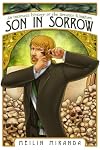
A while back, I reviewed An Intimate History of the Greater Kingdom: Lovers and Beloveds. And I really enjoyed it. It was a glorious mix of epic politics and an erotic coming of age that just made me happy all the way through. Did I have some quibbles? Sure, but they were minor, and the whole thing was just a lovely book.
Recently, MeiLin Miranda sent me book two in the series, Son in Sorrow, and I'm happy to say, I love this one. Lovers and Beloveds was a good, solid, first book, and Son in show more Sorrow is even better.
These books cover so much and so deeply they are hard to categorize, but I'll try. These are the stories of what it takes to go from being a boy to a man to a king.There are scads of boy-turns-into-man stories out there, and usually they just scratch the surface, as if making a few hard decisions and killing monsters is enough to do the job. It's not. And Miranda does a brilliant job showing this.
These stories deal with not just the idea of making hard decisions, but also the soft ones, the ones that look easy on the surface but ripple outward over the years. In Lovers and Beloved the joys, erotic and emotional, of love were studied. In Son in Sorrow, the pain of love lost, jealousy, and the desire for revenge are on the menu.
This is love bound by the larger world filled with political intrigue. It's not enough that Temmin, now twenty, has to sort himself out, but he must do it on a grand stage as the Heir of a mighty kingdom, in the eyes of everyone and with scores of men out to plot his downfall.
Like Lovers, Son in Sorrow is filled with first rate world building. This reads as a history of a real world, just one you've never met before. Like Lovers, the story in story technique is used to great effect as a way to help young Temmin understand what he needs to know to help grasp at least some of what is going on around him.
Unlike Lovers, Son in Sorrow spends more time with the secondary characters. Plot threads only hinted at in Lovers get picked up, taken along for a quick tantalizing visit, and then left to germinate. Characters who flitted in and out of Lovers get their own screen time, and I'm eagerly awaiting to see where they go. A few new ones pop up as well, and seeing how well Miranda has done with the first two books, I'm happily anticipating and debating where they'll come in later in the story and how.
This is an author who does her homework. The Greater History is a complex and EPIC tale, and so far, more than 600 pages into the series we're still meeting new characters, learning new history, and setting up what is going to be an absolute corker of a tale. Yet, with the fact that this is all set up for a greater story, the bits we've already gotten do not feel unimportant or rushed. There's no sense of the author biding her time, just waiting for all the characters to get into place. This planning for the grand show to come is just as important, and interesting, as what I hope will be heading our way in the future.
So, that said, out you get for a copy of Lovers and Beloveds and Son in Sorrow. Read them! Then bookmark Miss Miranda's page so that you can get in on the next one as soon as it's out. It will be well worth your time. show less
Recently, MeiLin Miranda sent me book two in the series, Son in Sorrow, and I'm happy to say, I love this one. Lovers and Beloveds was a good, solid, first book, and Son in show more Sorrow is even better.
These books cover so much and so deeply they are hard to categorize, but I'll try. These are the stories of what it takes to go from being a boy to a man to a king.There are scads of boy-turns-into-man stories out there, and usually they just scratch the surface, as if making a few hard decisions and killing monsters is enough to do the job. It's not. And Miranda does a brilliant job showing this.
These stories deal with not just the idea of making hard decisions, but also the soft ones, the ones that look easy on the surface but ripple outward over the years. In Lovers and Beloved the joys, erotic and emotional, of love were studied. In Son in Sorrow, the pain of love lost, jealousy, and the desire for revenge are on the menu.
This is love bound by the larger world filled with political intrigue. It's not enough that Temmin, now twenty, has to sort himself out, but he must do it on a grand stage as the Heir of a mighty kingdom, in the eyes of everyone and with scores of men out to plot his downfall.
Like Lovers, Son in Sorrow is filled with first rate world building. This reads as a history of a real world, just one you've never met before. Like Lovers, the story in story technique is used to great effect as a way to help young Temmin understand what he needs to know to help grasp at least some of what is going on around him.
Unlike Lovers, Son in Sorrow spends more time with the secondary characters. Plot threads only hinted at in Lovers get picked up, taken along for a quick tantalizing visit, and then left to germinate. Characters who flitted in and out of Lovers get their own screen time, and I'm eagerly awaiting to see where they go. A few new ones pop up as well, and seeing how well Miranda has done with the first two books, I'm happily anticipating and debating where they'll come in later in the story and how.
This is an author who does her homework. The Greater History is a complex and EPIC tale, and so far, more than 600 pages into the series we're still meeting new characters, learning new history, and setting up what is going to be an absolute corker of a tale. Yet, with the fact that this is all set up for a greater story, the bits we've already gotten do not feel unimportant or rushed. There's no sense of the author biding her time, just waiting for all the characters to get into place. This planning for the grand show to come is just as important, and interesting, as what I hope will be heading our way in the future.
So, that said, out you get for a copy of Lovers and Beloveds and Son in Sorrow. Read them! Then bookmark Miss Miranda's page so that you can get in on the next one as soon as it's out. It will be well worth your time. show less
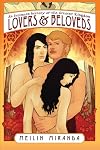
Lovers and Beloveds: An Intimate History of the Greater Kingdom Book One
A while back an email popped up in my inbox requesting I read Lovers and Beloveds for review. I did my usual routine of checking the book out, looking at it's reviews, reading the back page copy, and bits and pieces of text. It looked good. My initial impression was steampunk erotic fantasy. It sounded right up my alley.
Then another interesting factoid hit my radar; it was groupfunded, a major plus. If that term means show more nothing to you, prepare to learn. Groupfunding (more on this in a later article on Kickstarter.com) is a technique where you get a bunch of people to give you money to pay for you to do your project. Call it modern day patronage. On a practical level that means this book was good enough, in the bits and pieces released by the author, to get total strangers to give her money to hire an editor, artist, etc. While total money generated is not a definitive ruler for a book's quality, I've waded through a lot of self-published fiction that no one in their right mind would buy, let alone decide to patronize. I was thrilled to get into this book.
It turns out my initial impressions of Lovers and Beloveds was off, but not in a bad way. It is a coming of age tale wrapped around a story of sexual domination (a story within the story writing technique is used to good effect in this book) exploring how the one story furthers the other. It's a tale of a young man preparing for his eventual kinghood and the paths he may take to get there.
It is set in a fantasy land with an 1890's-1910ish technology level. But the technology is just in the background. To call it steampunk would be similar to calling Sherlock Holmes steampunk, sure it's the right era, but to do so misses the point of steampunk.
It is erotica: coming of age, realpolitik, intelligently crafted with layers and story lines beyond the sex, and wrapped up in the sexual politics of what it means to be a man or a woman erotica. As such, if you don't happen to enjoy reading explicit sex or sexual violence, just put the book down and head for the next one on your list. Assuming such reading does not bother you, go get a copy, you'll be well rewarded.
Lovers and Beloveds uses erotic sex as a vehicle to explore the paths of power and the relationships of dominance and privilege. All things a boy needs to learn to become a man who will be a king. The sex is well written, very hot, and it's easy to see why the main character, Temmin, finds himself aroused and dismayed by that arousal when seeing the main character of the inner story raped.
I think calling this book fantasy might be a bit misleading. There is magic in this world, but it's use is minimal. My guess is that in later books in the series it will become important, (perhaps there will be a magical coming of age in the next book?) but for the opening book it's just sort of there. Really, this reads more like historical fiction than fantasy. Take out the few brief magic bits, and this could very easily be set in a fictionalized 1890's Colonial India or Hong Kong.
Temmin reads as a genuine young man. He's spoiled but trying to be a good person. He can be self-absorbed and whiny, but he's an eighteen-year-old who just had his world turned upside down. He's earned his whininess, and there's something wrong with a person who isn't self absorbed when his entire reality shifts. Basically, the fact that he is annoying on occasion is entirely in character and should the annoying bits be removed, he wouldn't read true.
The writing is tight. Scenes flow from one to the next with no major issues. If there were grammar errors, I didn't notice them. Dialog and voice may not be exceptional, but they were more than competent and worked with the characters. I never found myself thinking, "There's no way Temmin (or any other character) would say that!" There are bits where as a reader I found myself wondering why we were meeting certain characters and plot lines, but the quality of the rest of the story and knowing this is book one of a series makes me think they are the seeds of future plot points. The story within the story may have been a bit longer than strictly necessary, but that's my own personal taste (I tend to skim epic battle scenes), and for all I know in the next book the bits I thought were long may be vitally important.
I look forward to seeing how Temmin will mature into his future. show less
A while back an email popped up in my inbox requesting I read Lovers and Beloveds for review. I did my usual routine of checking the book out, looking at it's reviews, reading the back page copy, and bits and pieces of text. It looked good. My initial impression was steampunk erotic fantasy. It sounded right up my alley.
Then another interesting factoid hit my radar; it was groupfunded, a major plus. If that term means show more nothing to you, prepare to learn. Groupfunding (more on this in a later article on Kickstarter.com) is a technique where you get a bunch of people to give you money to pay for you to do your project. Call it modern day patronage. On a practical level that means this book was good enough, in the bits and pieces released by the author, to get total strangers to give her money to hire an editor, artist, etc. While total money generated is not a definitive ruler for a book's quality, I've waded through a lot of self-published fiction that no one in their right mind would buy, let alone decide to patronize. I was thrilled to get into this book.
It turns out my initial impressions of Lovers and Beloveds was off, but not in a bad way. It is a coming of age tale wrapped around a story of sexual domination (a story within the story writing technique is used to good effect in this book) exploring how the one story furthers the other. It's a tale of a young man preparing for his eventual kinghood and the paths he may take to get there.
It is set in a fantasy land with an 1890's-1910ish technology level. But the technology is just in the background. To call it steampunk would be similar to calling Sherlock Holmes steampunk, sure it's the right era, but to do so misses the point of steampunk.
It is erotica: coming of age, realpolitik, intelligently crafted with layers and story lines beyond the sex, and wrapped up in the sexual politics of what it means to be a man or a woman erotica. As such, if you don't happen to enjoy reading explicit sex or sexual violence, just put the book down and head for the next one on your list. Assuming such reading does not bother you, go get a copy, you'll be well rewarded.
Lovers and Beloveds uses erotic sex as a vehicle to explore the paths of power and the relationships of dominance and privilege. All things a boy needs to learn to become a man who will be a king. The sex is well written, very hot, and it's easy to see why the main character, Temmin, finds himself aroused and dismayed by that arousal when seeing the main character of the inner story raped.
I think calling this book fantasy might be a bit misleading. There is magic in this world, but it's use is minimal. My guess is that in later books in the series it will become important, (perhaps there will be a magical coming of age in the next book?) but for the opening book it's just sort of there. Really, this reads more like historical fiction than fantasy. Take out the few brief magic bits, and this could very easily be set in a fictionalized 1890's Colonial India or Hong Kong.
Temmin reads as a genuine young man. He's spoiled but trying to be a good person. He can be self-absorbed and whiny, but he's an eighteen-year-old who just had his world turned upside down. He's earned his whininess, and there's something wrong with a person who isn't self absorbed when his entire reality shifts. Basically, the fact that he is annoying on occasion is entirely in character and should the annoying bits be removed, he wouldn't read true.
The writing is tight. Scenes flow from one to the next with no major issues. If there were grammar errors, I didn't notice them. Dialog and voice may not be exceptional, but they were more than competent and worked with the characters. I never found myself thinking, "There's no way Temmin (or any other character) would say that!" There are bits where as a reader I found myself wondering why we were meeting certain characters and plot lines, but the quality of the rest of the story and knowing this is book one of a series makes me think they are the seeds of future plot points. The story within the story may have been a bit longer than strictly necessary, but that's my own personal taste (I tend to skim epic battle scenes), and for all I know in the next book the bits I thought were long may be vitally important.
I look forward to seeing how Temmin will mature into his future. show less
Interesting world. I liked learning about the cities not through dry description but through the homesickness of the main character. It’s especially easy to empathize with his loss of good coffee.
Also contributing to the depth of his character is his sorrow at the death of his sister. It is a fresh wound that keeps getting probed; I found his reactions very realistic and rather touching. I believe his struggle with this loss is the real plot of the book. Floating city? Machine god? show more Talking birds? Bah. Extra bonus stuff.
The villain surprised me only a little, mostly I just didn’t understand the character. It was explained but it still felt rather strange.
The author did a good job of making this a solid stand-alone book while interesting me in the setting. I am planning to read the other books in the series.
(Read on a Kindle.) show less
Also contributing to the depth of his character is his sorrow at the death of his sister. It is a fresh wound that keeps getting probed; I found his reactions very realistic and rather touching. I believe his struggle with this loss is the real plot of the book. Floating city? Machine god? show more Talking birds? Bah. Extra bonus stuff.
The villain surprised me only a little, mostly I just didn’t understand the character. It was explained but it still felt rather strange.
The author did a good job of making this a solid stand-alone book while interesting me in the setting. I am planning to read the other books in the series.
(Read on a Kindle.) show less
This review was written for LibraryThing Member Giveaways.
You May Also Like
Associated Authors
Statistics
- Works
- 14
- Also by
- 2
- Members
- 125
- Popularity
- #160,150
- Rating
- 4.3
- Reviews
- 14
- ISBNs
- 8
- Favorited
- 1

