
Catholic Book Publishing Co
Author of Christian Prayer: The Liturgy of the Hours
About the Author
Series
Works by Catholic Book Publishing Co
The Divine Office, Volume 1: Daily Prayer for Advent, Christmastide and Weeks 1-9 (1974) 197 copies, 1 review
The Liturgy of the Hours According to the Roman Rite (Volume II Lenten Season and Easter Season) (1974) 189 copies
St. Joseph Weekday Missal, Complete Edition, Vol. 1, Advent to Pentecost (1975) 127 copies, 1 review
Saint Joseph Concise Bible History a clear and readable account of the history of salvation (1976) — Author — 98 copies
Small Sacramentary 4 copies
St. Joseph's Hymnal 3 copies
St. Joseph Sunday Missal Prayerbook and Hymnal for 2026 [Paperback] Catholic Book Publishing Corp (2025) 2 copies
The Psalms 1 copy
Parish Mass Book and Hymnal [St. Joseph Edition] According to the New Revised Liturgy for Every Day (1965) 1 copy
The Roman Missal 1 copy
Prayer to the Saints 1 copy
Lives of the Saints Volume 1 1 copy
New St Joseph's weekly missal complete edition volume 1 Advent to Pentecost in accordance with Vatican II (1975) 1 copy
THE NEW AMERICAN BIBLE 1 copy
New St. Joseph Daily Missal and Hymnal — Author — 1 copy
Sagrada Biblia 1 copy
New Saint Joseph Weekday Missal Complete Edition in Accordance with Vatican II (In Two Volumes) 1 copy
The Holy Spirit 1 copy
Tagged
Common Knowledge
Members
Discussions
Liturgy of the Hours (Divine Office) in Learning to Pray (January 2023)
Reviews
The Psalms : New International Version : with helpful appendix, an index of Sunday responsorial Psalms and a table of the four-week Psalter for morning and evening prayer by Catholic Book Publishing
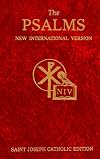
I keep this small volume in my Chaplain Kit. All 150 canticles are displayed with frequent paragraphs in a size meant to be read. (Or sung!)
The Preface notes that "In the life of Christians, there can never be too many translations of the Psalter." The "unity of the chosen people's prayer guided its elaboration as well as its adoption by the Church." [Preface 7] We take this as a signed form of Unitarian Universalism.
The short Liturgical Introduction enumerates uses and issues concerning show more the Psalms. They are received without a discernible basis for their Order, and often the meaning and function remains unknown -- Psalm 2 and 110 for example. The Superscriptions themselves are not definitive or clear. [18]
The Intro goes on to acknowledge both a wide spectrum of "attitudes toward God" [19]. We also take as an admission the fact that Christianity attempts to usurp, wholesale, the legacy and significance of a Chosen People. This point is underlined with the curious and unlikely claim that Jesus rejoiced with these canticles. [8] Did he dance like King David?
The rejoicing and unity expressed by cited Psalm 122:1 provides nothing to suggest Christ sang of his own coming. The indulgence in overstatement is not a weakness of the Notes, but a delicious provocation. I love these Notes which cite Scriptural authority and are numerous.
Understanding the topical grouping of the Psalms can ease their usage for the synthetic functionalist. The "Alleluia" psalms largely appear in the first half. Then there are psalms of the Kingdom, which acclaim the Lord as King--47; 93; 96; 97; 98; 99; 145. Christians expressly re-read royal psalms "in a Messianic perspective". [20]
Another cluster voices love of the People for Jerusalem, known as the "canticles of Zion"--24; 46; 48; 78; 84; 87; 122.
Many songs of thanksgiving are expressed in modulations of gratitude, often mixed with complaints, repentance, and sorrow. 13; 16; 22; 23; 31; 32. Indeed, most of the Psalms are laments. Psalms 22 and 77 echo theodicies from Book of Job. Indeed, the last words of Jesus on the Cross repeat Psalm 22:1--"My God, my God, why have you forsaken me?" show less
The Preface notes that "In the life of Christians, there can never be too many translations of the Psalter." The "unity of the chosen people's prayer guided its elaboration as well as its adoption by the Church." [Preface 7] We take this as a signed form of Unitarian Universalism.
The short Liturgical Introduction enumerates uses and issues concerning show more the Psalms. They are received without a discernible basis for their Order, and often the meaning and function remains unknown -- Psalm 2 and 110 for example. The Superscriptions themselves are not definitive or clear. [18]
The Intro goes on to acknowledge both a wide spectrum of "attitudes toward God" [19]. We also take as an admission the fact that Christianity attempts to usurp, wholesale, the legacy and significance of a Chosen People. This point is underlined with the curious and unlikely claim that Jesus rejoiced with these canticles. [8] Did he dance like King David?
The rejoicing and unity expressed by cited Psalm 122:1 provides nothing to suggest Christ sang of his own coming. The indulgence in overstatement is not a weakness of the Notes, but a delicious provocation. I love these Notes which cite Scriptural authority and are numerous.
Understanding the topical grouping of the Psalms can ease their usage for the synthetic functionalist. The "Alleluia" psalms largely appear in the first half. Then there are psalms of the Kingdom, which acclaim the Lord as King--47; 93; 96; 97; 98; 99; 145. Christians expressly re-read royal psalms "in a Messianic perspective". [20]
Another cluster voices love of the People for Jerusalem, known as the "canticles of Zion"--24; 46; 48; 78; 84; 87; 122.
Many songs of thanksgiving are expressed in modulations of gratitude, often mixed with complaints, repentance, and sorrow. 13; 16; 22; 23; 31; 32. Indeed, most of the Psalms are laments. Psalms 22 and 77 echo theodicies from Book of Job. Indeed, the last words of Jesus on the Cross repeat Psalm 22:1--"My God, my God, why have you forsaken me?" show less

I grabbed this coloring book from a Little Free Library due to the adorable images, particularly the leopard and bald eagle ones. One glaringly hilarious error is on pg. 4: "BATS are small birds and live in caves."
CHRISTIAN PRAYER; THE LITURGY OF THE HOURS; MORNING PRAYER DAYTIME PRAYER (SELECTIONS); EVENING PRAYER NIGHT PRAYER OFFI by Catholic Book Publishing Co
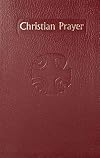
I find myself returning again and again to this particular devotion. While it's not really meant for lay people, it most certainly can be used by non-religious. One can choose which of the Hours to use depending on one's schedule.
That said, the book is not intuitively obvious to use. There is a lot of to-in and fro-ing, back and forth among the different sections in order to obtain the correct prayers and readings. But if you start with Morning Prayer, and work your way through that, the show more "logic" of the book becomes clear. There are a number of permanent ribbon book marks to help with the page flipping.
I know that there are many objections to the non-inclusive language. I find that I can ignore that aspect and use the Office to focus my attention on what is important, which is the message. In that regard, I find it a powerful tool. show less
That said, the book is not intuitively obvious to use. There is a lot of to-in and fro-ing, back and forth among the different sections in order to obtain the correct prayers and readings. But if you start with Morning Prayer, and work your way through that, the show more "logic" of the book becomes clear. There are a number of permanent ribbon book marks to help with the page flipping.
I know that there are many objections to the non-inclusive language. I find that I can ignore that aspect and use the Office to focus my attention on what is important, which is the message. In that regard, I find it a powerful tool. show less

An brief but interesting read, worthwhile even if one only reads the appended Church documents. Unfortunately, this book is marred by an awful English translation. I'd like to find a copy of the authoritative Latin.
You May Also Like


Associated Authors
Statistics
- Works
- 148
- Members
- 4,441
- Popularity
- #5,635
- Rating
- 4.1
- Reviews
- 25
- ISBNs
- 299
- Languages
- 2

