
Meg Howrey
Author of The Wanderers
About the Author
Image credit: via Goodreads
Works by Meg Howrey
Tagged
Common Knowledge
- Other names
- Flyte, Magnus
- Birthdate
- 20th century
- Gender
- female
- Occupations
- dancer
ballet dancer - Organizations
- Joffrey Ballet
- Short biography
- Half of the duo that is Magnus Flyte.
- Nationality
- USA
- Birthplace
- Illinois, USA
- Places of residence
- New York, New York, USA
Los Angeles, California, USA - Associated Place (for map)
- USA
Members
Reviews
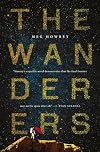
PRE-SPOILERS PART: Meg Howrey has done perhaps the best job of relating the current thinking/engineering of getting humans to Mars. And she does so without going into in-the-weeds tech jargon. But if you are at all familiar with the various humans-to-mars mission ideas swirling around these days, you will recognize almost everything she describes and appreciate the accuracy. But more importantly, The Wanderers is about the interior lives of the astronauts and their families. It is obvious to show more me that Howrey has read multiple astronaut autobiographies as well as works by aerospace psychologists. She really understands how astronauts think. If you grew up wanting to be an astronaut, or have ever seriously pursued the dream of space travel, or have done work that supports those who travel in space, then you will find beautiful prose here that may seem like someone pulled secrets from your soul.
Oh, and lot of the dialog is damned funny.
[Audiobook note: The reader, Mozhan Marno, is quite good and handles the various accents (Russian, Japanese) superbly.]
SPOILERS PART: Like [book:The Martian|18007564], The Wanderers has no villain. The conflict and suspense come merely from the situations in which the astronaut trainees and their family members find themselves. I find this immensely refreshing. I also appreciate that Howrey avoids most of the all-too-familiar tropes of Mars-mission fiction: the last-minute crewmember swap-out, the crewmember who goes nuts, the catastrophic dust storm, some bio-contamination from Mars that threatens the crew, etc. Of course, she avoids this in part by writing not about an actual mission to Mars, but a simulation of one. Or does she?
SUPER-SPOILERY PART: Seriously, don't read this until after you finish the book.
No, really. I meant it. Have you finished the book?
Okay. It was just a simulation, and Sergei, Helen, and Yoshi would have been able to quickly realize why based on physics.
You really finished the book? Because I'm gonna drop the spoiler here. Alright then.
In the story, the astronauts are told that Prime engineers have created tools that weigh 38% of what they do on Earth to help with the simulated feeling of being on Mars, and have weighted the boots of the astronauts' Mars exosuits to prevent injury-inducing running and jumping while working outside. But whether inside the "lander" or outside on "Mars", there is no way to change the rate at which things fall. If the astronauts had really been sent to Mars, they would have known it by the simple fact that anything dropped would fall to the ground much more slowly than on Earth.
BUT it is to Howrey's credit that I didn't even start worrying about this question until almost the last few pages of the book. I was so swept up in the story that my skepticism was dampened. There is some seriously good writing here. show less
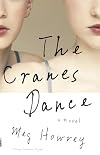
Much darker and more ballet-y than Howrey's more recent ballet novel (They're Going to Love You, which I loved) and also less original -- it felt pretty of a kind with others in the "woman's descent in mental illness" genre. Which isn't to say that it wasn't good! It was very good. I found the voice of charmingly cynical narrator Kate both compelling and entertaining, and the descriptions of Gwen's illness were genuinely quite eerie (the mouse thing! what the fuck!!!). If you're looking for show more something creepy and thriller-y, but not an actual honest-to-god thriller, this would be a good pick. show less
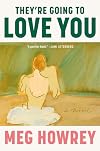
I am about as graceful as a duck in a tutu, wobbly and pigeon-toed but that doesn't stop me from being attracted to books set in the professional dance world. There's something so dreamy about ballerinas, pancake tutus, pointe shoes, and the seemingly effortless way they glide across a stage. But all that ethereal grace and art hide a tough and punishing underside: stress on the body, serious athletics, hard work, body expectations both for weight and height, dedication, and a short show more professional window. Meg Howrey's remarkable novel of a father and daughter's relationship, They're Going to Love You, revolves around this competitive and unforgiving world.
Told from the perspective of an adult Carlisle, and alternating between her past and present, this is a story of family drama, love, belonging, betrayal, the sometimes fragile bond of the parent/child relationship, finding peace, and ballet. Carlisle is the daughter of a former Ballanchine ballerina and a noted choreographer. Her parents divorced when she was young and she only got to see her father and his partner James for a few weeks in the summer. She adored life with her father and James, who recognized her natural talent and mentored her in the dance world. She wanted more than anything to belong to them and to their NYC dance world, despite the devastation that AIDS was wreaking in it, and she seemed to be well on her way to becoming a professional ballerina herself. But something happened both professionally and personally and she's been estranged from her father and James for years when she receives a phone call from James telling her that her father is dying and she should come back to NYC to say goodbye.
The cause of the estrangement is only slowly revealed as Carlisle relives for the reader the summer that the rupture occurred. She's a fascinating character and the novel is first person so we see all of her hestitations, questions, and regrets. It's easy to see that even as a 40 or 50 year old woman, she's still looking to be someone's first choice (James is her father's first choice and her step-father and half brother are her mother's). As she prepares to go to New York to see her father again, can she put the past aside, forgive, and finally choose herself no matter what awaits her? The ballet pieces are interesting and technical, but not too technical for non-dancers. The writing itself is elegant and balletic and the story presents common themes in intriguing new ways.
This novel is one of the Women's National Book Association's Great Group Reads for 2023. show less
Told from the perspective of an adult Carlisle, and alternating between her past and present, this is a story of family drama, love, belonging, betrayal, the sometimes fragile bond of the parent/child relationship, finding peace, and ballet. Carlisle is the daughter of a former Ballanchine ballerina and a noted choreographer. Her parents divorced when she was young and she only got to see her father and his partner James for a few weeks in the summer. She adored life with her father and James, who recognized her natural talent and mentored her in the dance world. She wanted more than anything to belong to them and to their NYC dance world, despite the devastation that AIDS was wreaking in it, and she seemed to be well on her way to becoming a professional ballerina herself. But something happened both professionally and personally and she's been estranged from her father and James for years when she receives a phone call from James telling her that her father is dying and she should come back to NYC to say goodbye.
The cause of the estrangement is only slowly revealed as Carlisle relives for the reader the summer that the rupture occurred. She's a fascinating character and the novel is first person so we see all of her hestitations, questions, and regrets. It's easy to see that even as a 40 or 50 year old woman, she's still looking to be someone's first choice (James is her father's first choice and her step-father and half brother are her mother's). As she prepares to go to New York to see her father again, can she put the past aside, forgive, and finally choose herself no matter what awaits her? The ballet pieces are interesting and technical, but not too technical for non-dancers. The writing itself is elegant and balletic and the story presents common themes in intriguing new ways.
This novel is one of the Women's National Book Association's Great Group Reads for 2023. show less
The Wanderers was pitched to me for fans of The Martian and Station Eleven. The former is one of my all-time favorite books. Even though I was in the minority about my disregard for the latter novel, my love for Andy Weir‘s novel was more than enough to want me to read Meg Howrey‘s novel. I put this out there as a warning. This is not The Martian. It is more like Emily St. John Mandel‘s novel than anything close to Weir’s. Yet, I enjoyed it much more than I did Station Eleven.
There show more is a danger when comparing a new novel to one that was such a runaway success and one that was a critical darling, but The Wanderers manages to sidestep that danger by throwing in a few unanswered questions that shakes up the entire experiment. In fact, some readers will be downright angry that these questions remain unanswered. That Ms. Howrey chooses not to provide answers is telling and forces readers to change their approach to the novel. It is a brave statement for a storyteller, especially when your novel is being compared to one that is anything but nuanced or introspective. However, it works well within the pages of The Wanderers as it forces you to focus on the esoteric rather than on the adventure itself.
Mars will always appeal as the next great frontier for exploration, and even a fake mission to Mars is fascinating. There is plenty of science to legitimize the experiment. I have no idea whether the science holds up to scrutiny, but within the novel, everything seems acceptable. The experiment is so successful at times that it even blurs the lines of reality and fiction for readers. The astronauts feel real sensations – the tug of gravity and its release upon leaving Earth’s atmosphere, the frigid temperatures on Mars, the fear of watching the radiation recorders creep into danger levels – and so do the readers. It is an extraordinary thing, especially since it is all fake.
I wanted an action-adventure, and I got literary fiction. I wanted excitement, and I got philosophy. Strangely, I am okay with that. I am not the type of reader who will underline profound passages or even take notes. I read to escape, and there was just enough action to make me okay with the copious amounts of introspection within The Wanderers. I can appreciate the development and growth each of the astronauts achieve on their “journey” and will take away some ideas upon which I need to reflect. I finish the novel satisfied with the story, with my response, and with its lasting impact. show less
There show more is a danger when comparing a new novel to one that was such a runaway success and one that was a critical darling, but The Wanderers manages to sidestep that danger by throwing in a few unanswered questions that shakes up the entire experiment. In fact, some readers will be downright angry that these questions remain unanswered. That Ms. Howrey chooses not to provide answers is telling and forces readers to change their approach to the novel. It is a brave statement for a storyteller, especially when your novel is being compared to one that is anything but nuanced or introspective. However, it works well within the pages of The Wanderers as it forces you to focus on the esoteric rather than on the adventure itself.
Mars will always appeal as the next great frontier for exploration, and even a fake mission to Mars is fascinating. There is plenty of science to legitimize the experiment. I have no idea whether the science holds up to scrutiny, but within the novel, everything seems acceptable. The experiment is so successful at times that it even blurs the lines of reality and fiction for readers. The astronauts feel real sensations – the tug of gravity and its release upon leaving Earth’s atmosphere, the frigid temperatures on Mars, the fear of watching the radiation recorders creep into danger levels – and so do the readers. It is an extraordinary thing, especially since it is all fake.
I wanted an action-adventure, and I got literary fiction. I wanted excitement, and I got philosophy. Strangely, I am okay with that. I am not the type of reader who will underline profound passages or even take notes. I read to escape, and there was just enough action to make me okay with the copious amounts of introspection within The Wanderers. I can appreciate the development and growth each of the astronauts achieve on their “journey” and will take away some ideas upon which I need to reflect. I finish the novel satisfied with the story, with my response, and with its lasting impact. show less
Lists
Overdue Podcast (1)
Ballet Fiction (1)
Awards


You May Also Like


Associated Authors
Statistics
- Works
- 5
- Members
- 1,188
- Popularity
- #21,642
- Rating
- 3.8
- Reviews
- 68
- ISBNs
- 43
- Languages
- 2
- Favorited
- 1