
Hillary L. Chute
Author of Why Comics? From Underground to Everywhere
About the Author
Image credit: Hillary L. Chute
Works by Hillary L. Chute
Associated Works
Tagged
Common Knowledge
- Birthdate
- 1976
- Gender
- female
- Education
- Rutgers University
- Nationality
- USA
- Birthplace
- Boston, Massachusetts, USA
- Associated Place (for map)
- Massachusetts, USA
Members
Reviews
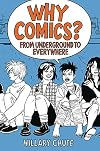
Hilary Chute wrote an exhaustive scholarly overview of the comics (comix) art world. The descriptions were occasionally brilliant and brought an understanding of the philosophies behind world-view graphic illustrations. As a reference for other academics, the book is probably excellent. For general interest and informative background (in lay terms) to understanding this medium, not so much.
Some passages were a tad dry for a casual reader to explore. That's as it should be, since the intended show more audience was perhaps not the general public. Which begs the question: why does Chute reference comix-made-into-movies aspect? Other than acknowledging the impact of cartooning, what is the point?
She also is eager to show the reader how political and societal comics render insights on the state of governments and leading lights of the day. I agree that critical cartoons are a very effective medium to draw attention to outrageous politicians and societal cultures, if that was her aim. But delivered in an art history discourse, perhaps misses the audience with whom she really wanted to speak. Many of the topics are covered so obliquely, that the reader has to dig through the narrative to discover the salient points about a specific artist and their work. At least I have learned a little of why the term graphic novel annoys people: it belittles the artist's work and may denigrate its impact.
Despite these niggles, I recommend the book to readers interested in the backstory of political satire and cultural lampooning. I enjoyed the nostalgia of seeing so many underground comix that were popular in the 1960's. It was great to revisit the origin of Alison Bechdel's Rules. show less
Some passages were a tad dry for a casual reader to explore. That's as it should be, since the intended show more audience was perhaps not the general public. Which begs the question: why does Chute reference comix-made-into-movies aspect? Other than acknowledging the impact of cartooning, what is the point?
She also is eager to show the reader how political and societal comics render insights on the state of governments and leading lights of the day. I agree that critical cartoons are a very effective medium to draw attention to outrageous politicians and societal cultures, if that was her aim. But delivered in an art history discourse, perhaps misses the audience with whom she really wanted to speak. Many of the topics are covered so obliquely, that the reader has to dig through the narrative to discover the salient points about a specific artist and their work. At least I have learned a little of why the term graphic novel annoys people: it belittles the artist's work and may denigrate its impact.
Despite these niggles, I recommend the book to readers interested in the backstory of political satire and cultural lampooning. I enjoyed the nostalgia of seeing so many underground comix that were popular in the 1960's. It was great to revisit the origin of Alison Bechdel's Rules. show less
This really should be titled “Why independent graphic novels are the literature for our age,” as that seems to be the central premise.
It’s a well written and nicely designed read, and Chute clearly knows her subject. But it has a more narrow focus than the title would suggest which put me off for a while as it gave only passing mention to the more mainstream aspects of the medium’s history and growth.
And if you are a fan of the independent comics scene you are already probably show more familiar with the titles discussed which left me wondering who exactly the intended audience is. show less
It’s a well written and nicely designed read, and Chute clearly knows her subject. But it has a more narrow focus than the title would suggest which put me off for a while as it gave only passing mention to the more mainstream aspects of the medium’s history and growth.
And if you are a fan of the independent comics scene you are already probably show more familiar with the titles discussed which left me wondering who exactly the intended audience is. show less

I found this book on NetGalley, and I immediately requested it. I've been on a feminist comics kick lately. I've been reading all the feminist comics I can track down, and I've devoured the few examinations of this genre that I could find.
Graphic Women discusses the works of five female cartoonists: Aline Kominsky-Crumb, Phoebe Gloeckner, Lynda Barry, Marjane Satrapi, and Alison Bechdel. Before reading this book, I'd read works by Marjane Satrapi and Alison Bechdel. I was vaguely familiar show more with Lynda Barry, and completely unfamiliar with Aline Kominsky-Crumb and Phoebe Gloeckner.
The book opened with a brief history of the underground comics movement. This section was primarily about the men who were prominent within the movement, but it gave a context for the women the book examines.
The first chapter focused on Aline Kominsky-Crumb, wife of R. Crumb. The chapter provided a summary of her work with a number of excerpts, so I was able to follow the argument even though I'd never read anything by her. I thought I would come out of the chapter with a list of books to read, but the opposite happened. This chapter convinced me to never read anything by Kominsky-Crumb. Nonetheless, the information was useful. A number of other female cartoonists reference Kominsky-Crumb as an influence, and now I am able to see that in their work.
I'd also never heard of Phoebe Gloeckner. The chapter about her work hooked me on this book. Chute examined how Gloeckner's art supported her disturbing quasi-autobiographies. The disturbing nature of Gloecker's story is emphasized by art that is realistic, and both alluring and intensely disturbing. This chapter examines the interplay between fiction and memoir, and how that interplay can be used to effectively tell womens' stories.
I have a passing familiarity with Lynda Barry, so I was able to follow her chapter more than the first two. I really enjoyed the discussion of the materials Barry uses in her mixed media pieces, and how those relate to the stories she tells. Lynda Barry's chapter suffered from the lack of color more than the others.
I am more familiar with Marjane Satrapi's work than any of the other cartoonists covered in this book. This chapter focused on the narrative of women as witnesses to history. Unlike the others, Persepolis is more than a personal narrative- it is the narrative of a country. Graphic Women examines how Satrapi blends personal and political histories.
The chapter is about Alison Bechdel, who has been a figure in underground comics for decades. She gained some prominence with her comic Dykes to Watch Out For. (Which, these days, is most often referenced when discussing the "Bechdel Test.") Her more recent work, Fun Home, has made waves outside the tradition comics readership. Graphic Women examines the ways in which she, like Lynda Barry, integrates items from her past into the graphical landscape of her narrative.
Ultimately, Graphic Women is an examination of a particular genre of graphic novel- autobiographical comics penned by women. It studies how the art supports the narrative differently than prose would. It also traces the evolution of this genre from the underground work of artists like Aline Kominsky-Crumb to the internationally recognized works of Marjane Satrapi and Alison Bechdel. I'd recommend Graphic Women to anyone interested in the history of comics in general, or especially in feminist or underground comics. show less
Graphic Women discusses the works of five female cartoonists: Aline Kominsky-Crumb, Phoebe Gloeckner, Lynda Barry, Marjane Satrapi, and Alison Bechdel. Before reading this book, I'd read works by Marjane Satrapi and Alison Bechdel. I was vaguely familiar show more with Lynda Barry, and completely unfamiliar with Aline Kominsky-Crumb and Phoebe Gloeckner.
The book opened with a brief history of the underground comics movement. This section was primarily about the men who were prominent within the movement, but it gave a context for the women the book examines.
The first chapter focused on Aline Kominsky-Crumb, wife of R. Crumb. The chapter provided a summary of her work with a number of excerpts, so I was able to follow the argument even though I'd never read anything by her. I thought I would come out of the chapter with a list of books to read, but the opposite happened. This chapter convinced me to never read anything by Kominsky-Crumb. Nonetheless, the information was useful. A number of other female cartoonists reference Kominsky-Crumb as an influence, and now I am able to see that in their work.
I'd also never heard of Phoebe Gloeckner. The chapter about her work hooked me on this book. Chute examined how Gloeckner's art supported her disturbing quasi-autobiographies. The disturbing nature of Gloecker's story is emphasized by art that is realistic, and both alluring and intensely disturbing. This chapter examines the interplay between fiction and memoir, and how that interplay can be used to effectively tell womens' stories.
I have a passing familiarity with Lynda Barry, so I was able to follow her chapter more than the first two. I really enjoyed the discussion of the materials Barry uses in her mixed media pieces, and how those relate to the stories she tells. Lynda Barry's chapter suffered from the lack of color more than the others.
I am more familiar with Marjane Satrapi's work than any of the other cartoonists covered in this book. This chapter focused on the narrative of women as witnesses to history. Unlike the others, Persepolis is more than a personal narrative- it is the narrative of a country. Graphic Women examines how Satrapi blends personal and political histories.
The chapter is about Alison Bechdel, who has been a figure in underground comics for decades. She gained some prominence with her comic Dykes to Watch Out For. (Which, these days, is most often referenced when discussing the "Bechdel Test.") Her more recent work, Fun Home, has made waves outside the tradition comics readership. Graphic Women examines the ways in which she, like Lynda Barry, integrates items from her past into the graphical landscape of her narrative.
Ultimately, Graphic Women is an examination of a particular genre of graphic novel- autobiographical comics penned by women. It studies how the art supports the narrative differently than prose would. It also traces the evolution of this genre from the underground work of artists like Aline Kominsky-Crumb to the internationally recognized works of Marjane Satrapi and Alison Bechdel. I'd recommend Graphic Women to anyone interested in the history of comics in general, or especially in feminist or underground comics. show less
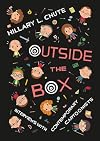
Excellent exploration of the art and nature of sequential art/graphic novels. It's a great way to learn more about/from artists you already know, discover ones you don't know, learn about the history of the field, and think about the ideas underlying the works.
Lists
Awards


You May Also Like


Associated Authors
Statistics
- Works
- 8
- Also by
- 2
- Members
- 423
- Popularity
- #57,687
- Rating
- 4.1
- Reviews
- 8
- ISBNs
- 22
- Favorited
- 1