
Susan J. Douglas (1) (1950–)
Author of Where the Girls Are: Growing Up Female with the Mass Media
For other authors named Susan J. Douglas, see the disambiguation page.
About the Author
Susan J. Douglas is the author of Where the Girls Are, The Mommy Myth, and other works of cultural history and criticism. She is the Catherine Neafie Kellogg Professor of Communication Studies and chair of the department at the University of Michigan. Her work has appeared in The Nation, The show more Progressive, Ms., The Village Voice, and In These Times. She lives in Ann Arbor, Michigan. show less
Image credit: Susan J. Douglas [credit: Peabody Awards]
Works by Susan J. Douglas
Enlightened Sexism: The Seductive Message that Feminism's Work Is Done (2010) 358 copies, 10 reviews
The Mommy Myth: The Idealization of Motherhood and How It Has Undermined All Women (2004) 306 copies, 9 reviews
Listening In: Radio and the American Imagination, from Amos 'n' Andy and Edward R. Murrow to Wolfman Jack and Howard Stern (1999) 92 copies, 1 review
Associated Works
Tagged
Common Knowledge
- Canonical name
- Douglas, Susan J.
- Legal name
- Douglas, Susan Jeanne
- Birthdate
- 1950
- Gender
- female
- Education
- Brown University
- Occupations
- feminist columnist
cultural critic
communication studies professor - Organizations
- University of Michigan
Peabody Awards Board of Jurors - Awards and honors
- Arthur F. Thurnau Professor for excellence in undergraduate education
- Relationships
- Durham, T. R., husband
- Nationality
- USA
- Places of residence
- Ann Arbor, Michigan, USA
- Associated Place (for map)
- Michigan, USA
Members
Reviews
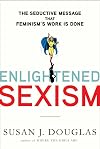
In this book, Douglas examines how girls and women are represented in the media. Popular culture says that full equality for women has been achieved. Of course, any reflective, thoughtful adult would recognize that this is a myth. But the media doesn’t recognize it, and instead perpetrates the idea that feminism is now pointless and even bad for you. This is part of what defines “enlightened sexism.” The definition also includes the idea that, because women are now equal, it is amusing show more to resurrect sexist stereotypes. TV shows and movies that show women in power—the judges, high-powered attorneys, police chiefs and surgeons—while very nice to see, do not reflect the reality of life for women in our society. One of Douglas’s main points is that these fantasies distract us from the ongoing status of women as second class citizens.
Douglas examines a vast array of shows and personalities to expose enlightened sexism. She cites others as good examples of feminist media. Just some that she discusses include: Murphy Brown, Beverly Hills 90210, Buffy the Vampire Slayer, Loreena Bobbit, Ally McBeal, Living Single, Grey’s Anatomy, Sex & the City, Cosmo and Vogue magazines, reality TV, Mean Girls, Clueless, celebrity culture (including the search for the ‘baby bump’), Hilary Clinton, Sarah Palin, Desperate Housewives and the dearth of lesbian characters and celebrities. This is a partial list, and she discusses many others.
Although I haven’t seen half of the shows she discusses, I still found Enlightened Sexism extremely interesting. At times it was so discouraging and depressing that I had to put it aside for a few days. However, Douglas has a great sense of humour, which helped to elevate the extreme bleakness of the material. She also writes in a conversational tone that makes for smooth reading.
This is a must-read for anyone interested in cultural studies, media studies or women’s studies. Also recommended for anyone who is female or knows anyone who is female. show less
Douglas examines a vast array of shows and personalities to expose enlightened sexism. She cites others as good examples of feminist media. Just some that she discusses include: Murphy Brown, Beverly Hills 90210, Buffy the Vampire Slayer, Loreena Bobbit, Ally McBeal, Living Single, Grey’s Anatomy, Sex & the City, Cosmo and Vogue magazines, reality TV, Mean Girls, Clueless, celebrity culture (including the search for the ‘baby bump’), Hilary Clinton, Sarah Palin, Desperate Housewives and the dearth of lesbian characters and celebrities. This is a partial list, and she discusses many others.
Although I haven’t seen half of the shows she discusses, I still found Enlightened Sexism extremely interesting. At times it was so discouraging and depressing that I had to put it aside for a few days. However, Douglas has a great sense of humour, which helped to elevate the extreme bleakness of the material. She also writes in a conversational tone that makes for smooth reading.
This is a must-read for anyone interested in cultural studies, media studies or women’s studies. Also recommended for anyone who is female or knows anyone who is female. show less
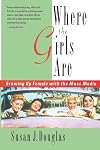
Chapter 8, "I Am Woman, Hear Me Roar", describing media coverage of the women's lib movement 1968-70, is infuriating. Now I know where every (modern) negative stereotype of women and every dismissive, tired anti-woman/feminist argument comes from. Even more insidious is why women got day care and right to choose but couldn't make a dent in being seen as lesser people and sex objects. "The more things change..."
The Mommy Myth: The Idealization of Motherhood and How It Has Undermined All Women by Susan J. Douglas
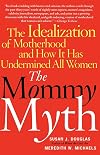
As far as outlining how motherhood has been portrayed in the medias over the past five decades at least (e.g. newspapers, celebrity magazines, adverts, movies, soaps and series etc.) this book, it has to be said, is a great exposé.
Personally for instance, I fully agree with the authors that the myth of motherhood (and its gung-ho glorification and idealisation, no matter how harmful for women themselves...) is partly rooted in what Betty Friedan had called the "feminine mystique"; and so I show more fully agree with them to say that, far from having once and for all rejected such bogus, essentialist view, our Western societies have, on the contrary, felt right back into it and with a vengeance. It shows: from how mothers are being judged and scrutinised no matter the choices that they make to (far more concerning in my opinion as a father and fathers' right activists...) completely inane parenting and childcare laws, making a mockery of equality and equity, we still have a long way to go for the "mystique" to be truly and finally debunked!
Still on the positive side, I particularly welcomed how they are not shy in denouncing women themselves for still entertaining the mystique, by relying, in great part, on a mediatic bashing in which they have become fully complicit. The chapters on the so-called "mommy wars", for example, are as on point as those on a celebrity culture causing more harm than good. This, of course, certainly doesn't mean that they leave the men abiding to a patriarchal culture off the hook! As they rightly remind us, it's the media scares once entertained about childcare settings and mothers supposedly "neglecting" their kids that fully served the political agendas of the religious, ultra-capitalistic Right arching us back into traditional gender roles. Their focus is, here, on the USA back in the late 1980s and early 1990s, but when it comes to media scares to serve reactionary politics (e.g. women portrayed as better suited to be parents; men to be excluded from parenting legislations) nothing much has changed indeed, including in Britain (where I live) and where, obnoxiously enough, such reactionary views and media scares are currently being peddled, not by sexist patriarchs but... feminists themselves (but that's another debate...)!
Having said that, I took issues with certain aspects of this book too. Many other reviewers (and mothers especially) pointed it out already, but then it's true: for all their Grand Talk about rejecting the "mommy wars" the authors, nevertheless, echo some of its most obnoxious views. Women finding motherhood fulfilling by itself, and mothers choosing a traditional role of housewives over a career as a a result, for example, are here particularly mocked and ridiculed. I, for one, would have expected better than such laughing patronising coming from other women and mothers themselves.
Another tiring (and harmful) bashing is when it comes to fathers. In the end, I couldn't be bothered anymore to count how many times men as dads were being ridiculed and dismissed as being useless; unable to care for children; lazy slobs doing nothing round the house; cheats flying off with mistresses twice their age; and/ or just plain absentees because, y'know, men can't be bothered about parenting. Now, I get it, it's supposed to be a funny book with a sarcastic tone. The thing, though, is that for academics supposedly concerned about how representation can sabotage and damage whole groups of people, their clear inability to see the point when it comes to how such tiring yet never tired clichés entertained about fathers (neglected as they are since, again, parenting laws are currently everything but egalitarian...) is not an attitude that will bring gender equity any time soon...
On a side note I could, also, go on about some of the most jaw-dropping claims being made. In matter of feminism, for instance, it's one thing to be gung-ho in admiring the leading theoreticians of the second wave. But to have us swallowing that such theoreticians were not misandrists, anti-motherhood, and anti-family is, quite frankly, ludicrous. Shulamith Firestone, for example (since they dedicate entire pages celebrating her especially) was so against paternity and fatherhood that she preached the destruction of the family unit to be replaced by temporary, polygamous sexual contracts; the replacing of natural pregnancies by artificial means of reproductions so men wouldn't know who are their children; and, even, went as far as to fully condone paedophilia as a mean to "liberate women and their children" from fathers. That type of feminism is many things, but concerned about children's interest and gender equality and equity? Certainly not.
In the end, then, this book will be likeable or not only depending on what you are looking for in it. As an history of the mediatic portrayal of motherhood over the past decades, and how this portrayal has arched back women into harmful prejudices, this is a very enlightening read indeed. The more so since it makes women accountable for their own participating into such arch backing too. As an aspiring to gender equality and equity, though, it's, sadly, an epic fail. On the one hand, no mother should ever be scorned or attacked for her choices; yet the authors are doing just that by mis-portraying those valuing motherhood in and of itself. On the other hand, fathers deserve better than to be laughed and scorned at every corner if we truly want to debunk once and for all the sexist prejudices holding us back in matter of parenting; yet the authors fail, here too, to do so by (on the contrary!) peddling sexist, harmful clichés of their own when it comes to fatherhood. Ha! But they proudly identify, not only as feminists but, especially, feminists owning it to the second wave to have shaped their views. Question is, then: has this brand of feminism ever really been about equality? I have my opinion. I will leave it to you and yours. show less
Personally for instance, I fully agree with the authors that the myth of motherhood (and its gung-ho glorification and idealisation, no matter how harmful for women themselves...) is partly rooted in what Betty Friedan had called the "feminine mystique"; and so I show more fully agree with them to say that, far from having once and for all rejected such bogus, essentialist view, our Western societies have, on the contrary, felt right back into it and with a vengeance. It shows: from how mothers are being judged and scrutinised no matter the choices that they make to (far more concerning in my opinion as a father and fathers' right activists...) completely inane parenting and childcare laws, making a mockery of equality and equity, we still have a long way to go for the "mystique" to be truly and finally debunked!
Still on the positive side, I particularly welcomed how they are not shy in denouncing women themselves for still entertaining the mystique, by relying, in great part, on a mediatic bashing in which they have become fully complicit. The chapters on the so-called "mommy wars", for example, are as on point as those on a celebrity culture causing more harm than good. This, of course, certainly doesn't mean that they leave the men abiding to a patriarchal culture off the hook! As they rightly remind us, it's the media scares once entertained about childcare settings and mothers supposedly "neglecting" their kids that fully served the political agendas of the religious, ultra-capitalistic Right arching us back into traditional gender roles. Their focus is, here, on the USA back in the late 1980s and early 1990s, but when it comes to media scares to serve reactionary politics (e.g. women portrayed as better suited to be parents; men to be excluded from parenting legislations) nothing much has changed indeed, including in Britain (where I live) and where, obnoxiously enough, such reactionary views and media scares are currently being peddled, not by sexist patriarchs but... feminists themselves (but that's another debate...)!
Having said that, I took issues with certain aspects of this book too. Many other reviewers (and mothers especially) pointed it out already, but then it's true: for all their Grand Talk about rejecting the "mommy wars" the authors, nevertheless, echo some of its most obnoxious views. Women finding motherhood fulfilling by itself, and mothers choosing a traditional role of housewives over a career as a a result, for example, are here particularly mocked and ridiculed. I, for one, would have expected better than such laughing patronising coming from other women and mothers themselves.
Another tiring (and harmful) bashing is when it comes to fathers. In the end, I couldn't be bothered anymore to count how many times men as dads were being ridiculed and dismissed as being useless; unable to care for children; lazy slobs doing nothing round the house; cheats flying off with mistresses twice their age; and/ or just plain absentees because, y'know, men can't be bothered about parenting. Now, I get it, it's supposed to be a funny book with a sarcastic tone. The thing, though, is that for academics supposedly concerned about how representation can sabotage and damage whole groups of people, their clear inability to see the point when it comes to how such tiring yet never tired clichés entertained about fathers (neglected as they are since, again, parenting laws are currently everything but egalitarian...) is not an attitude that will bring gender equity any time soon...
On a side note I could, also, go on about some of the most jaw-dropping claims being made. In matter of feminism, for instance, it's one thing to be gung-ho in admiring the leading theoreticians of the second wave. But to have us swallowing that such theoreticians were not misandrists, anti-motherhood, and anti-family is, quite frankly, ludicrous. Shulamith Firestone, for example (since they dedicate entire pages celebrating her especially) was so against paternity and fatherhood that she preached the destruction of the family unit to be replaced by temporary, polygamous sexual contracts; the replacing of natural pregnancies by artificial means of reproductions so men wouldn't know who are their children; and, even, went as far as to fully condone paedophilia as a mean to "liberate women and their children" from fathers. That type of feminism is many things, but concerned about children's interest and gender equality and equity? Certainly not.
In the end, then, this book will be likeable or not only depending on what you are looking for in it. As an history of the mediatic portrayal of motherhood over the past decades, and how this portrayal has arched back women into harmful prejudices, this is a very enlightening read indeed. The more so since it makes women accountable for their own participating into such arch backing too. As an aspiring to gender equality and equity, though, it's, sadly, an epic fail. On the one hand, no mother should ever be scorned or attacked for her choices; yet the authors are doing just that by mis-portraying those valuing motherhood in and of itself. On the other hand, fathers deserve better than to be laughed and scorned at every corner if we truly want to debunk once and for all the sexist prejudices holding us back in matter of parenting; yet the authors fail, here too, to do so by (on the contrary!) peddling sexist, harmful clichés of their own when it comes to fatherhood. Ha! But they proudly identify, not only as feminists but, especially, feminists owning it to the second wave to have shaped their views. Question is, then: has this brand of feminism ever really been about equality? I have my opinion. I will leave it to you and yours. show less
Susan J. Douglas is the author of the 1994 [Where the Girls Are: Growing up Female with the Mass Media], a deliciously insightful and witty book about how the mass media had portrayed women during the 1950s through the 1970s. As Publishers Weekly notes, she “considers the paradox of a generation of women raised to see themselves as bimbos becoming the very group that found its voice in feminism.” I loved this book and I never looked at television the same again. I think I may have even show more sent a note off to Ms. Douglas begging for a sequel.
While not exactly a sequel, [Enlightened Sexism: The Seductive Message that Feminism’s Work is Done] once again examines the mass media and the often conflicting images of women it presents – this time from roughly 1990 to the present. But instead of examining how the mass media may have contributed or reflected the feminist movement, this time she’s using the same kind of study as a wake-up call and call to arms, thus joining an increasing number of voices who are saying the same thing.
Douglas, with her characteristic wit, argues that the battle for equality has not been won and that many of the images of female power the mass media has been giving us over the last 15 or so years has been little more than fantasy.
"What the media have been giving us, then, are little more than fantasies of power. They assure girls and women, repeatedly, that women’s liberation is a fait accompli and that we are stronger, more successful, more sexually in control, more fearless, and more held in awe than we actually are… Of course women in fictional TV shows can be in the highest positions of authority, but in real life—maybe not such a good idea. Instead, the wheedling, seductive message to young women is that being decorative is the highest form of power—when, of course, if it were, Dick Cheney would have gone to work every day in a sequined tutu."
Douglas’s term “enlightened sexism” is a nod to an earlier book titled [Enlightened Racism]. “Enlightened sexism is feminist in its outward appearance (of course you can buy or be anything you want) but sexist in its intent (hold on, girls, only up to a certain point, and not in any way that discomfits men or pushes feminist goals one more centimeter forward). While enlightened sexism seems to support women’s equality, it is dedicated to the undoing of feminism.”
Examining the mass media, particularly television from 1990 onward, Douglas chronicles the rise in this enlightened sexism, and the examination is – like in her earlier book – fascinating. It’s a lot to digest and probably not a book one would want to read quickly. Let me give you the highlights using the chapter headings (rather oversimplified, I’m afraid):
-1990 and the show “Beverly Hills 90210” – one of the first programs successfully aimed at the teenage girl market.
- “Castration Anxiety” – images of dangerous women (remember Loreena Bobbitt, Amy Fisher?) and women who don’t play by the rules (Janet Reno) in the early 1990s.
- “Warrior Women in Thongs” examines shows like “Xena” and “Buffy” in the mid to late 1990s
- “A New Girliness” examines movies such as “Clueless,” “Legally Blonde,” and “Miss Congeniality“ and television shows like “Ally McBeal.”
- In “you Go, Girl”, she examines how African American women and other women of color are portrayed in the mass media during this period (including the success of Oprah, the rise of rap music..etc).
- “Sex “R” Us” looks at the mainstreaming of pornography beginning in the late 1990s. “…the rampant return to the often degrading sexual objectification of women, and the increasing sexualization of children, especially girls.”
-“Reality Bites” looks at so-called reality television from “The Bachelor” to “Survivor” to “Wife Swap.”
-“Lean and Mean” looks at a possible connection between our culture’s pressure for women to fit into a size zero dress while still filling out a 38D bra and the rise of “queen bees” and “mean girls.” I found this a particularly provocative theory and although I’m not convinced entirely of the connection, the exploration of the topic was fascinating.
-“Red Carpet Mania” examines our cultural obsession with celebrity and what the celebrity industry is telling us.
In “Women on Top…Sort Of”, Douglas decodes the media coverage and examines how women are talked about in the last election (Clinton, Palin, Michelle Obama), and other prominent women (Martha Stewart, Katie Couric). She also discusses their television counterparts in shows like “ER,” “Law & Order,” “Commander in Chief,” and “Boston Legal.”
In her last chapter and, in my opinion, to her credit, Douglas takes up a call-to-arms, encouraging us to a new era of media consciousness, a redirection of our energies into a new era of activism that benefits all women, particularly the millions of women currently invisible in the mass media (most of us).
Unlike with the previous book, I hadn’t watched much of the television in the era Douglas covers in this book. I wondered whether my experience of this book would have been different if I had, but I think fundamentally not, although I might have thought some parts slightly less tedious, I suppose.What Douglas does that I find so valuable is to raise our consciousness around the conflicting images and subtle messages presented to us in the mass media, so that we are not just passive receptacles. I enjoyed this book, and found it encouraging that I am not alone in seeing that equality for women is still an illusion and there is indeed more work to do. show less
While not exactly a sequel, [Enlightened Sexism: The Seductive Message that Feminism’s Work is Done] once again examines the mass media and the often conflicting images of women it presents – this time from roughly 1990 to the present. But instead of examining how the mass media may have contributed or reflected the feminist movement, this time she’s using the same kind of study as a wake-up call and call to arms, thus joining an increasing number of voices who are saying the same thing.
Douglas, with her characteristic wit, argues that the battle for equality has not been won and that many of the images of female power the mass media has been giving us over the last 15 or so years has been little more than fantasy.
"What the media have been giving us, then, are little more than fantasies of power. They assure girls and women, repeatedly, that women’s liberation is a fait accompli and that we are stronger, more successful, more sexually in control, more fearless, and more held in awe than we actually are… Of course women in fictional TV shows can be in the highest positions of authority, but in real life—maybe not such a good idea. Instead, the wheedling, seductive message to young women is that being decorative is the highest form of power—when, of course, if it were, Dick Cheney would have gone to work every day in a sequined tutu."
Douglas’s term “enlightened sexism” is a nod to an earlier book titled [Enlightened Racism]. “Enlightened sexism is feminist in its outward appearance (of course you can buy or be anything you want) but sexist in its intent (hold on, girls, only up to a certain point, and not in any way that discomfits men or pushes feminist goals one more centimeter forward). While enlightened sexism seems to support women’s equality, it is dedicated to the undoing of feminism.”
Examining the mass media, particularly television from 1990 onward, Douglas chronicles the rise in this enlightened sexism, and the examination is – like in her earlier book – fascinating. It’s a lot to digest and probably not a book one would want to read quickly. Let me give you the highlights using the chapter headings (rather oversimplified, I’m afraid):
-1990 and the show “Beverly Hills 90210” – one of the first programs successfully aimed at the teenage girl market.
- “Castration Anxiety” – images of dangerous women (remember Loreena Bobbitt, Amy Fisher?) and women who don’t play by the rules (Janet Reno) in the early 1990s.
- “Warrior Women in Thongs” examines shows like “Xena” and “Buffy” in the mid to late 1990s
- “A New Girliness” examines movies such as “Clueless,” “Legally Blonde,” and “Miss Congeniality“ and television shows like “Ally McBeal.”
- In “you Go, Girl”, she examines how African American women and other women of color are portrayed in the mass media during this period (including the success of Oprah, the rise of rap music..etc).
- “Sex “R” Us” looks at the mainstreaming of pornography beginning in the late 1990s. “…the rampant return to the often degrading sexual objectification of women, and the increasing sexualization of children, especially girls.”
-“Reality Bites” looks at so-called reality television from “The Bachelor” to “Survivor” to “Wife Swap.”
-“Lean and Mean” looks at a possible connection between our culture’s pressure for women to fit into a size zero dress while still filling out a 38D bra and the rise of “queen bees” and “mean girls.” I found this a particularly provocative theory and although I’m not convinced entirely of the connection, the exploration of the topic was fascinating.
-“Red Carpet Mania” examines our cultural obsession with celebrity and what the celebrity industry is telling us.
In “Women on Top…Sort Of”, Douglas decodes the media coverage and examines how women are talked about in the last election (Clinton, Palin, Michelle Obama), and other prominent women (Martha Stewart, Katie Couric). She also discusses their television counterparts in shows like “ER,” “Law & Order,” “Commander in Chief,” and “Boston Legal.”
In her last chapter and, in my opinion, to her credit, Douglas takes up a call-to-arms, encouraging us to a new era of media consciousness, a redirection of our energies into a new era of activism that benefits all women, particularly the millions of women currently invisible in the mass media (most of us).
Unlike with the previous book, I hadn’t watched much of the television in the era Douglas covers in this book. I wondered whether my experience of this book would have been different if I had, but I think fundamentally not, although I might have thought some parts slightly less tedious, I suppose.What Douglas does that I find so valuable is to raise our consciousness around the conflicting images and subtle messages presented to us in the mass media, so that we are not just passive receptacles. I enjoyed this book, and found it encouraging that I am not alone in seeing that equality for women is still an illusion and there is indeed more work to do. show less
Awards


You May Also Like


Associated Authors
Statistics
- Works
- 7
- Also by
- 1
- Members
- 1,760
- Popularity
- #14,623
- Rating
- 3.8
- Reviews
- 30
- ISBNs
- 27
- Favorited
- 1
