
Ishion Hutchinson
Author of House of Lords and Commons: Poems
About the Author
Ishion Hutchinson was born in Port Antonio, Jamaica. He is the winner of the 2013 Whiting Writers' Award in poetry, and his poetry collection Far District (2010) won the PEN/Joyee Osterweil Award. He is an assistant professor of English at Cornell University.
Works by Ishion Hutchinson
Associated Works
African American Poetry: 250 Years of Struggle and Song (2020) — Contributor — 237 copies, 4 reviews
So Much Things to Say: 100 Poets from the First Ten Years of the Calabash International Literary Festival (2010) — Contributor — 26 copies, 1 review
Tagged
Common Knowledge
- Legal name
- Hutchinson, Ishion
- Birthdate
- 1983-08-22
- Gender
- male
- Education
- University of West Indies
New York University
University of Utah - Occupations
- dichter
- Awards and honors
- Whiting Writers' Award (2013)
- Nationality
- Jamaica
- Birthplace
- Port Antonio, Jamaica
- Associated Place (for map)
- Port Antonio, Jamaica
Members
Reviews
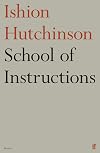
Ishion Hutchinson's School of Instructions is a powerful, well-researched, and deep exploration of West Indian soldiers who fought in British regiments during World War I, interspersed with the life of a young Jamaican boy in the 1990s. Moving back and forth between the two, Hutchinson is also responding specifically to a classic work of World War I writing: David Jones's In Parenthesis, which describes the experience of a Welsh infantryman in the same period. I read some of Jones' work long show more ago - too long ago to be useful to this review - so I really do approach Hutchinson on his own, which might not be the best way to read him.
At the very outset, Hutchinson writes of the young West Indian soldiers on a ship to Albion (Great Britain), responding to orders from English officers: "Ghosts on parade and in devotion, leaping over shadows as the sea broke, with their names interred in the same roster." If that language sounds familiar, it's because Hutchinson writes not only in dialogue with Western-centric accounts of World War I, but also with a deep knowledge of the Bible, and specifically with allusions to the Old Testament's Exodus. Hutchinson is writing from an archive - not just of literary references, but also the physical archive of World War I. From diaries, journals, and letters he constructs this account of bullets that "puncture/these poppies blackened with the unknown names...." Meanwhile, in Jamaica, the young boy named Godspeed studying in a school is punished for inattention by being forced to write out 'the names of all the legible dead' in the cemetery behind the school. In Deir Seneid, near Gaza, the troops in World War are issued respirators as gas kills dozens, spreading a 'charnel stench they could not staunch./These were buried./Not in peace," and in Jamaica, Godspeed gets a blue plastic inhaler and hears the rattle in his own chest.
Hutchinson is writing echoes within echoes within echoes, in a beautifully layered account that takes a patient, thoughtful reader deep into the archive of the World War. His style is reminds me of TS Eliot's in many ways, that open prose filled with cryptic, surreal references, the use of multiple languages and phrases, and bleak humour ("Who broke down the walls of Jericho," Godspeed is asked in school, and responds, pat "It was not me, sir!") But it is also entirely its own thing, built from language that draws from the colonial experience and Hutchinson's own fertile gift for metaphor. Like Godspeed, I too had to memorise Wordsworth's 'and then my heart with pleasure fills/and dances with the daffodils" - I was twenty-five the first time I even saw a daffodil and understood what Wordsworth could have possible meant. As the narrative moves along from chapter to chapter, Godspeed grows through adolescence, and Hutchinson marks time and stanzas by telling you the declining strength of the West Indian battalion fighting its way through the middle East in numbers and simple facts: 740 officers, 1500 men, and "6322 Pt.I McKenzie "C" boy died pneumonia." It is a technique so effective and bleak that Hutchinson's closing "And some there be which have no memorial/and are become as though they had never been born/and their children after them" is a punch that stays with you long after. Highly recommended.
Hutchins show less
At the very outset, Hutchinson writes of the young West Indian soldiers on a ship to Albion (Great Britain), responding to orders from English officers: "Ghosts on parade and in devotion, leaping over shadows as the sea broke, with their names interred in the same roster." If that language sounds familiar, it's because Hutchinson writes not only in dialogue with Western-centric accounts of World War I, but also with a deep knowledge of the Bible, and specifically with allusions to the Old Testament's Exodus. Hutchinson is writing from an archive - not just of literary references, but also the physical archive of World War I. From diaries, journals, and letters he constructs this account of bullets that "puncture/these poppies blackened with the unknown names...." Meanwhile, in Jamaica, the young boy named Godspeed studying in a school is punished for inattention by being forced to write out 'the names of all the legible dead' in the cemetery behind the school. In Deir Seneid, near Gaza, the troops in World War are issued respirators as gas kills dozens, spreading a 'charnel stench they could not staunch./These were buried./Not in peace," and in Jamaica, Godspeed gets a blue plastic inhaler and hears the rattle in his own chest.
Hutchinson is writing echoes within echoes within echoes, in a beautifully layered account that takes a patient, thoughtful reader deep into the archive of the World War. His style is reminds me of TS Eliot's in many ways, that open prose filled with cryptic, surreal references, the use of multiple languages and phrases, and bleak humour ("Who broke down the walls of Jericho," Godspeed is asked in school, and responds, pat "It was not me, sir!") But it is also entirely its own thing, built from language that draws from the colonial experience and Hutchinson's own fertile gift for metaphor. Like Godspeed, I too had to memorise Wordsworth's 'and then my heart with pleasure fills/and dances with the daffodils" - I was twenty-five the first time I even saw a daffodil and understood what Wordsworth could have possible meant. As the narrative moves along from chapter to chapter, Godspeed grows through adolescence, and Hutchinson marks time and stanzas by telling you the declining strength of the West Indian battalion fighting its way through the middle East in numbers and simple facts: 740 officers, 1500 men, and "6322 Pt.I McKenzie "C" boy died pneumonia." It is a technique so effective and bleak that Hutchinson's closing "And some there be which have no memorial/and are become as though they had never been born/and their children after them" is a punch that stays with you long after. Highly recommended.
Hutchins show less
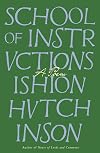
A classic issue of a probably above-decent book of poetry not finding its perfect reader. I was drawn to this as I enjoy war narratives (especially those centering WWI), big Biblical allusions, and critiques of colonialism. I do not enjoy, however, contemporary poetry very much, no how much I try. The lack of explanation for non-Jamaican readers about what was referenced also left me utterly confounded and unable to engage with this is any way.
What’s up with contemporary poetry, and why show more does it seem like such a monumental cult of the impenetrable? Why do I feel like I need to have drunk the ambrosia of the tertiary-educated, upper-class avant-garde to buy into the hegemony of their post-verse art form?
Anyway, enough bitching. I'm not the audience for this. If you want a story looking at the psychic stress of colonial warmongering in the First World War, check out At Night All Blood is Black. show less
What’s up with contemporary poetry, and why show more does it seem like such a monumental cult of the impenetrable? Why do I feel like I need to have drunk the ambrosia of the tertiary-educated, upper-class avant-garde to buy into the hegemony of their post-verse art form?
Anyway, enough bitching. I'm not the audience for this. If you want a story looking at the psychic stress of colonial warmongering in the First World War, check out At Night All Blood is Black. show less
Awards


You May Also Like
Associated Authors
Statistics
- Works
- 4
- Also by
- 9
- Members
- 175
- Popularity
- #122,546
- Rating
- 4.0
- Reviews
- 3
- ISBNs
- 16
- Favorited
- 1