
Ted Kosmatka
Author of The Games
Works by Ted Kosmatka
N-words 6 copies
The Art of Alchemy 3 copies
The One Who Isn't 3 copies
The Color Least Used By Nature 2 copies
The Beast Adjoins 2 copies
The Ascendant 1 copy
The Signal and the Idler 1 copy
Sacrificial Iron 1 copy
Chasing Ivory 1 copy
The Bewilderness Of Lions 1 copy
BITTERSEED 1 copy
Deadnauts 1 copy
Haplotype 1402 {short story} 1 copy
The God Engine 1 copy
The Games Excerpt 1 copy
Cry Room 1 copy
Associated Works
The Year's Best Science Fiction: Twenty-Fifth Annual Collection (2008) — Contributor — 511 copies, 3 reviews
The Year's Best Science Fiction: Twenty-Sixth Annual Collection (2009) — Contributor — 424 copies, 2 reviews
The Year's Best Science Fiction: Twenty-Eighth Annual Collection (2011) — Contributor — 328 copies, 3 reviews
The Year's Best Science Fiction: Twenty-Seventh Annual Collection (2010) — Contributor — 320 copies, 6 reviews
The Best Science Fiction and Fantasy of the Year Volume Two (2008) — Contributor — 175 copies, 4 reviews
The Best Science Fiction and Fantasy of the Year Volume Seven (2013) — Contributor — 154 copies, 3 reviews
The Best Science Fiction and Fantasy of the Year Volume Three (2009) — Contributor — 150 copies, 2 reviews
The Year's Best Science Fiction: Thirty-Fourth Annual Collection (2017) — Contributor — 146 copies, 4 reviews
Do Androids Dream of Electric Sheep Omnibus (2015) — Contributor, some editions — 81 copies, 1 review
The Magazine of Fantasy and Science Fiction January/February 2012, Vol. 122, No. 1 & 2 (2012) — Contributor — 21 copies
The Magazine of Fantasy and Science Fiction June 2008, Vol. 114, No. 6 (2008) — Contributor — 16 copies, 2 reviews
Asimov's Science Fiction: Vol. 33, No. 10 & 11 [October/November 2009] (2009) — Contributor — 13 copies, 2 reviews
Subterranean Magazine Spring 2009 — Contributor — 7 copies
Asimov's Science Fiction: Vol. 44, No. 7 & 8 [July/August 2020] (2020) — Contributor — 5 copies, 1 review
Asimov's Science Fiction: Vol. 45, No. 1 & 2 [January/February 2021] (2020) — Contributor — 3 copies
Tagged
Common Knowledge
- Birthdate
- 1973-12-16
- Gender
- male
- Nationality
- USA
- Birthplace
- Chesterton, Indiana, USA
- Associated Place (for map)
- Indiana, USA
Members
Reviews
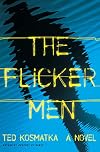
I received this early copy of the book via NetGalley.
Kosmatka has a knack for writing intense thrillers that skirt the edge of hard science while still remaining accessible to layman. In his new book, The Flicker Men, he is even more successful than in his book The Games. It's a fast read full of unpredictable twists and turns. Angus is a broken man to start, and when he finds himself through a new quantum physics experiments, he begins to lose his fellow researchers and his understanding of show more reality.
It comes down to a complex question: what is the meaning of a soul within a body? When Angus's work determines humans have souls and animals do not, it initially sets the stage for a religious dilemma. THAT took me totally off guard--one of those twists that makes perfect sense in hindsight but that I didn't see coming at all. From there, the novel drops deeper into science fiction and the thriller pace intensifies. The ending was remarkably satisfying (which was an issue I had with The Games).
I can't help but compare this to last year's great science fiction novel, The Three-Body Problem, as both deal with issues of science and reality. I found Kosmatka's work more accessible, which is saying something, as my past efforts to parse quantum physics have literally given me migraines. I may not have understood everything, but what I knew enabled me to grasp the stakes of the story and move along. It made for a fantastic read. show less
Kosmatka has a knack for writing intense thrillers that skirt the edge of hard science while still remaining accessible to layman. In his new book, The Flicker Men, he is even more successful than in his book The Games. It's a fast read full of unpredictable twists and turns. Angus is a broken man to start, and when he finds himself through a new quantum physics experiments, he begins to lose his fellow researchers and his understanding of show more reality.
It comes down to a complex question: what is the meaning of a soul within a body? When Angus's work determines humans have souls and animals do not, it initially sets the stage for a religious dilemma. THAT took me totally off guard--one of those twists that makes perfect sense in hindsight but that I didn't see coming at all. From there, the novel drops deeper into science fiction and the thriller pace intensifies. The ending was remarkably satisfying (which was an issue I had with The Games).
I can't help but compare this to last year's great science fiction novel, The Three-Body Problem, as both deal with issues of science and reality. I found Kosmatka's work more accessible, which is saying something, as my past efforts to parse quantum physics have literally given me migraines. I may not have understood everything, but what I knew enabled me to grasp the stakes of the story and move along. It made for a fantastic read. show less
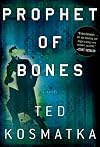
Prophet of Bones is an exciting thriller set in an alternate world where Darwin was discredited and the belief that the earth is only a few thousand years old persists into the 21st century. This is a fascinating premise and Ted Kosmatka really delivers with his sophomore effort.
In a world where the best science believes the earth to only be a few thousand years old, a discovery that threatens that belief triggers a violent reaction that costs Paul Carlsson an eye and several other people show more their lives. Paul manages to smuggle out a genetic sample and some very powerful people want to make sure his discovery never sees the light of day.
Kosmatka does a great job of creating atmosphere. While the pages move by swiftly, there is a pervading sense of tension and dread that oozes from the book. Dangerous experiments that mess with the genetic code are truly terrifying in the wrong hands. By setting the book in a world where Darwin was wrong, Kosmatka effectively highlights not only the threat that new discovery poses to the status quo, but to religion, politics and belief systems.
Prophet of Bones is not a typical thriller. The hero is not a bull-in-the-china-shop type. He is physically imposing, but he is foremost a scientist and a man of conviction. Paul Carlsson is a very interesting character. He is layered and driven. I very much enjoyed Kosmatka’s first book, The Games, but Prophet of Bones is even better. The characters are more rounded and compelling, the monsters are just as terrifying, and the plotting is solid from beginning to end. This is a story that will entertain as well as make you think. Highly recommended.
I was fortunate to receive an advance copy of this book. show less
In a world where the best science believes the earth to only be a few thousand years old, a discovery that threatens that belief triggers a violent reaction that costs Paul Carlsson an eye and several other people show more their lives. Paul manages to smuggle out a genetic sample and some very powerful people want to make sure his discovery never sees the light of day.
Kosmatka does a great job of creating atmosphere. While the pages move by swiftly, there is a pervading sense of tension and dread that oozes from the book. Dangerous experiments that mess with the genetic code are truly terrifying in the wrong hands. By setting the book in a world where Darwin was wrong, Kosmatka effectively highlights not only the threat that new discovery poses to the status quo, but to religion, politics and belief systems.
Prophet of Bones is not a typical thriller. The hero is not a bull-in-the-china-shop type. He is physically imposing, but he is foremost a scientist and a man of conviction. Paul Carlsson is a very interesting character. He is layered and driven. I very much enjoyed Kosmatka’s first book, The Games, but Prophet of Bones is even better. The characters are more rounded and compelling, the monsters are just as terrifying, and the plotting is solid from beginning to end. This is a story that will entertain as well as make you think. Highly recommended.
I was fortunate to receive an advance copy of this book. show less
 This review was written for LibraryThing Early Reviewers.
On the back cover Hugh Howey, author of the "Wool" series says, "If Stephen Hawking and Stephen King wrote a novel together, you'd get Flicker Man"; I couldn't agree more. It's brilliant, disturbing and well thought out and has you question the Universe and where we fit in. We don't really learn who the "Flicker Men" are until late in the book, though once we do, its off to the races at a Le Mans pace! Ted's grasp of science is far beyond most which force feeds the reader into learning show more something new; a good thing at any measure. His ability to catch the reader off guard, ramp up the speed and throw curve balls along the way is the mark of a great storyteller! show less
Yes, this novel really is set in a world 5,880 years old, a world much like ours – same countries, same religions. It even has Google.
And that’s one of the problems.
As a thriller, where the bones of Flores serve as a MacGuffin, this book works. Its dialogue is sharp. The descriptions of the sciences of genetics and physical anthropology are real and well done. It avoids one of the most annoying thriller clichés: the man and woman, strangers to one another, falling in love while running show more for their lives. And it shares a feature with many thrillers: we do not see how the Flores discovery affects the greater world because it is, in the end, just a MacGuffin.
And that points to where this book fails if you’re coming to it as a science fiction reader – which is to be expected since Kosmatka is primarily known as a science fiction writer and his 2007 story, “The Prophet of Flores”, forms the core of the first two parts of the novel.
In terms of the interior logic of the book, its working out of its premise that the young earth of creationists, with all species being the product of divine creation by an “architect”, as the science journals put it, is not very satisfying. I think, in the subtleties of how Kosmatka works with the themes of the creator’s relation to the created (and the created amongst themselves), the role of catastrophe and chance in life, Kosmatka does attempt to show, as he states in the publicity material that came with my review copy, that the world of the creationist is more disturbing than ours. I say attempt because I don’t think he does, in the end, work that notion out satisfactorily.
Those looking for an interesting thriller will probably be satisfied.
But the rest of this review will be for regular readers of science fiction with SPOILERS AHEAD.
First, there is the nature of this novel’s world. Socially and intellectually it doesn’t seem to deviate from ours until 1932 when potassium-argon dating begins to sound the death knell for evolution. The 1954 introduction of carbon dating finally kills evolution as an idea – except in the swamps of pseudoscience. All of the earth sciences and biology must contend with an earth less than 6,000 years old. Now, apart from heresy trials for some geneticists, the banning of certain books, and a vaguely described coalition of churches supporting some politicians, the world seems little different. The effects of removing evolutionary design ideas from various disciplines is totally ignored – after all, as I mentioned, even Google still exists. In the last three decades, political activities by churches (at least in America) are associated with a reaction against secularism and, often, the idea of evolution seen as its chief enabler. I think it unlikely that involvement would be maintained in the world of this novel.
Second, there is the secret of the Flores bones: they show a common ancestor of the Flores’ “hobbits” and man existing more than 6,000 years ago. So, obviously, either the dating methods and science of this world are wrong or … Well, this book opts for the “or” in a villain whose activities are so egregious, whose motivations ultimately stem from the old biblical puzzle of where Cain got his wife, that, I guess, we are to see a world still firmly based on religion as still having the evils of ours or worse. It seems that man, even here, will be seen as just another animal, at least by the villain. In the background are subtle hints of other possible explanations: multiple, competing creators or some sort of gnostic god of destruction or a god running some sort of design experiment lately. (After all, the hero, in his boyhood, is accused of playing god in his mouse breeding. But, no matter which of the four you go with, none emotionally or intellectually convinced me this was a far more disturbing world than ours.
In the end, considered as a whole, I put this novel down as a failure – but an interesting one. show less
And that’s one of the problems.
As a thriller, where the bones of Flores serve as a MacGuffin, this book works. Its dialogue is sharp. The descriptions of the sciences of genetics and physical anthropology are real and well done. It avoids one of the most annoying thriller clichés: the man and woman, strangers to one another, falling in love while running show more for their lives. And it shares a feature with many thrillers: we do not see how the Flores discovery affects the greater world because it is, in the end, just a MacGuffin.
And that points to where this book fails if you’re coming to it as a science fiction reader – which is to be expected since Kosmatka is primarily known as a science fiction writer and his 2007 story, “The Prophet of Flores”, forms the core of the first two parts of the novel.
In terms of the interior logic of the book, its working out of its premise that the young earth of creationists, with all species being the product of divine creation by an “architect”, as the science journals put it, is not very satisfying. I think, in the subtleties of how Kosmatka works with the themes of the creator’s relation to the created (and the created amongst themselves), the role of catastrophe and chance in life, Kosmatka does attempt to show, as he states in the publicity material that came with my review copy, that the world of the creationist is more disturbing than ours. I say attempt because I don’t think he does, in the end, work that notion out satisfactorily.
Those looking for an interesting thriller will probably be satisfied.
But the rest of this review will be for regular readers of science fiction with SPOILERS AHEAD.
First, there is the nature of this novel’s world. Socially and intellectually it doesn’t seem to deviate from ours until 1932 when potassium-argon dating begins to sound the death knell for evolution. The 1954 introduction of carbon dating finally kills evolution as an idea – except in the swamps of pseudoscience. All of the earth sciences and biology must contend with an earth less than 6,000 years old. Now, apart from heresy trials for some geneticists, the banning of certain books, and a vaguely described coalition of churches supporting some politicians, the world seems little different. The effects of removing evolutionary design ideas from various disciplines is totally ignored – after all, as I mentioned, even Google still exists. In the last three decades, political activities by churches (at least in America) are associated with a reaction against secularism and, often, the idea of evolution seen as its chief enabler. I think it unlikely that involvement would be maintained in the world of this novel.
Second, there is the secret of the Flores bones: they show a common ancestor of the Flores’ “hobbits” and man existing more than 6,000 years ago. So, obviously, either the dating methods and science of this world are wrong or … Well, this book opts for the “or” in a villain whose activities are so egregious, whose motivations ultimately stem from the old biblical puzzle of where Cain got his wife, that, I guess, we are to see a world still firmly based on religion as still having the evils of ours or worse. It seems that man, even here, will be seen as just another animal, at least by the villain. In the background are subtle hints of other possible explanations: multiple, competing creators or some sort of gnostic god of destruction or a god running some sort of design experiment lately. (After all, the hero, in his boyhood, is accused of playing god in his mouse breeding. But, no matter which of the four you go with, none emotionally or intellectually convinced me this was a far more disturbing world than ours.
In the end, considered as a whole, I put this novel down as a failure – but an interesting one. show less
This review was written for LibraryThing Early Reviewers.Lists
Awards


You May Also Like


Associated Authors
Statistics
- Works
- 26
- Also by
- 31
- Members
- 699
- Popularity
- #36,216
- Rating
- 3.6
- Reviews
- 103
- ISBNs
- 31
- Languages
- 2
- Favorited
- 1
