
Jamie Delano
Author of John Constantine, Hellblazer: Original Sins
About the Author
Series
Works by Jamie Delano
John Constantine, Hellblazer Vol. 01: Original Sins (New Edition) (2011) — Author — 581 copies, 10 reviews
John Constantine, Hellblazer Vol. 26: The Curse of the Constantines (2022) — Author — 38 copies, 1 review
Hellblazer - Edição de Luxo Vol. 1 4 copies
Batman: Manbat: The Subterraneans: Parts 1, 2 & 3 (Complete) (3 Comics) by Jamie Delano & John Bolton (1995) 4 copies
Ghostdancing 3 copies
Outlaw Nation #19 2 copies
Outlaw Nation #17 2 copies
Hellblazer de Jamie Delano #1 2 copies
Outlaw Nation #14 2 copies
Outlaw Nation #15 2 copies
Outlaw Nation #16 2 copies
Jamie Delano présente Hellblazer - Tome 1 (Jamie Delano présente Hellblaz (1)) (French Edition) (2019) 1 copy
Hellblazer #s 28-31 1 copy
Outlaw Nation #s 3-14 1 copy
Outlaw Nation #s 1-2 1 copy
Hellblazer #s 37-40 1 copy
Hellblazer #10 - 40 1 copy
The Horror In Our Lives 1 copy
Hellblazer #88 1 copy
Outlaw Nation #s 15-19 1 copy
La Leyenda del Dragón 1 copy
Hellblazer #s 33-36 1 copy
Hellblazer #s 13-24 1 copy
Narcopolis 1-4 1 copy
Batman/Manbat #1 1 copy
Homem-Animal: Carne e Sangue 1 copy
Child's Play 1 copy
Nação Fora da Lei vol. 1 1 copy
Hellblazer #s 10-12 1 copy
RVR 1 copy
Animal Man #s 67-79 1 copy
Animal Man Anual #1 1 copy
Animal Man #s 61-66 1 copy
Animal Man #s 57-60 1 copy
Animal Man #s 51-56 1 copy
Hellblazer - Livro Três 1 copy
2020 Visions #5 1 copy
Batman: Manbat #3 1 copy
Batman: Manbat Volume 3 1 copy
Associated Works
9-11: The World's Finest Comic Book Writers & Artists Tell Stories to Remember (2002) — Contributor — 256 copies, 1 review
The Children's Crusade #2 (In Which Avril Mitchell Learns the Story So Far) (1994) — Author — 21 copies
2000 AD: Free Comic Book Day 2013 — Contributor — 2 copies
Tagged
Common Knowledge
- Other names
- James, A. William
- Birthdate
- 1954-01-01
- Gender
- male
- Nationality
- UK
- Birthplace
- Northampton, England, UK
- Places of residence
- Northampton, England, UK (birth)
- Map Location
- England, UK
Members
Reviews
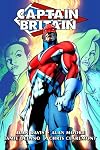
There is a minor bit of weirdness in the 2021 edition of this Captain Britain Omnibus, the apparent writing out of Alan Moore as significant player in the commentary despite Moore producing the most impressive run of issues in the eventual development of the 'Jaspers Warp' story line.
Both Alan Davis' Forward and Jim Krueger's Afterwards and Afterwords contain the same cryptic 'Edited for Content' which may or may not be relevant. Maybe it was a matter of squabbles over 'unpaid invoices' show more surviving forty years on. Who knows and who honestly cares any more?
Be all that as it may, although an incomplete representation of Britain's answer to Captain America, this Omnibus has enough to provide sufficient lore, to show a distinctive British tone to the hero and to mark out the character as Marvel UK rather than Marvel stateside.
He is a creature very much of the early 1980s where there were genuine fears of fascist takeover. Political themes are surprisingly dominant even after Thorpe was displaced for being too political (ironically) by the perhaps more subtle Moore.
Thorpe's story lines from the 1981 re-boot begin the Omnibus which could be seen a mash-up between Valiant, Marvel and 2000AD [founded in 1977] in style (very British). The troubled history of the creative activity behind the character can be read on Wikipedia for those interested enough.
The bottom line is that Marvel allowed and sponsored (no doubt under pressure from young British creatives) a unique and stand-alone super-hero who could be periodically integrated into the Marvel Universe and has been ever since.
Brian Braddock as Captain Britain (and his many multiverse iterations) has the virtue of always being the same essential representative of a national ideal while he or she transmutes constantly into new variants of national destiny and dies and resurrects as magic competes with science.
Moore introduces a cosmic element with a Moorcockian omniverse and set of multiverses. Merlin represents Clarke's oft-cited notion of magic being merely undiscovered science and the relationship between magic and science with rebellious politics suits Moore to the ground.
It also suits the British national character (certainly of that period) where gloomy dystopian fears, a dislike of bullies, a penchant for the supernatural, a respect for practical science, a relative lack of interest in space-faring and a sense of history can co-exist in uneasy balance.
When Moore leaves (over 'unpaid invoices'?) the series weakens substantially but that does not make it bad just a little less interesting and more episodic. Eventually it declines into an X-men 'riff' on intolerance as the logic of Moore's world is explored to its natural limits.
The final two entries have Chris Claremont (Captain Britain's creator) giving Captain Britain a role in exploring the X-juniors' 'teenage angst' in creditable stories whose main purpose seems to be transfer Braddock's sister to the New Mutants story line as Psylocke.
Captain Britain is a character who probably never got his full due but this might be because of his internal contradictions. He was a figure of intense national pride who appeared just when the generations who read 'Commando' were giving way to a more liberal generations of kids.
Some later iterations seem to avoid 'politics' by emphasising the magical elements of his origin story although he subsequently gets integrated into the Avengers' story lines and is certainly not allowed to die off as an integral character although never again one of the top-liners.
Captain Britain will eventually become like a pair of well worn and comfortable carpet slippers no one wants to chuck out for sentimental reasons but where no one is prepared to go out and invest in new slippers with any conviction.
Moore bridges the early contradictions by making Captain Britain a determined fighter against fascism and intolerance while retaining his link to Albion. Grant Morrison subverted this with a prose horror story about Captain Gran Bretan (1986) where the magic is malign.
At least Morrison thought he was worth subverting!
Today, Captain Britain is possible but problematic. To be true to his creation could place him unwittingly somewhere on the nice side of the national populist camp but to deny his 'national meaning' could be to make him a laughable 'woke' nonentity, an add-on to a plethora of US heroes.
So, this book is like a snapshot of a culture when it was still possible to be anti-facist, patriotic and good, a self-questioning fighter against intolerance, all at the same time, before cultures started to divide. He is still in the top 100 in terms of aesthetic appreciation but not popularity.
Moore followers should certainly include it in their reading. Many of the themes of 'V for Vendetta' (1988-1989) and perhaps, Americanised, 'Watchmen' (1986-1987) are to be found in his Captain Britain work from 1982-1984.
Claremont's fertile attempt to Anglicise Captain America and trigger a British allegiance to the Marvel Universe was only a very small part of his formidable output but we should note that, out of it, he created a 'plausible' narrative for Psylocke that enhanced his X-men Universe.
From a British perspective, I suppose we can see 'Captain Britain' as a noble failure and, if we were sour, as both the product and victim of American cultural colonialism. But the core story line stands and could even have future legs under a serious creative hand who could escape the 'woke'.
Yes, he still appears and is dealt with creatively when he does even if he is not the figure that he was in the early 1980s. Despite more recent attempts at revival, he has not broken the barrier that would let him back into superhero eminence. Perhaps the UK market is simply not large enough. show less
Both Alan Davis' Forward and Jim Krueger's Afterwards and Afterwords contain the same cryptic 'Edited for Content' which may or may not be relevant. Maybe it was a matter of squabbles over 'unpaid invoices' show more surviving forty years on. Who knows and who honestly cares any more?
Be all that as it may, although an incomplete representation of Britain's answer to Captain America, this Omnibus has enough to provide sufficient lore, to show a distinctive British tone to the hero and to mark out the character as Marvel UK rather than Marvel stateside.
He is a creature very much of the early 1980s where there were genuine fears of fascist takeover. Political themes are surprisingly dominant even after Thorpe was displaced for being too political (ironically) by the perhaps more subtle Moore.
Thorpe's story lines from the 1981 re-boot begin the Omnibus which could be seen a mash-up between Valiant, Marvel and 2000AD [founded in 1977] in style (very British). The troubled history of the creative activity behind the character can be read on Wikipedia for those interested enough.
The bottom line is that Marvel allowed and sponsored (no doubt under pressure from young British creatives) a unique and stand-alone super-hero who could be periodically integrated into the Marvel Universe and has been ever since.
Brian Braddock as Captain Britain (and his many multiverse iterations) has the virtue of always being the same essential representative of a national ideal while he or she transmutes constantly into new variants of national destiny and dies and resurrects as magic competes with science.
Moore introduces a cosmic element with a Moorcockian omniverse and set of multiverses. Merlin represents Clarke's oft-cited notion of magic being merely undiscovered science and the relationship between magic and science with rebellious politics suits Moore to the ground.
It also suits the British national character (certainly of that period) where gloomy dystopian fears, a dislike of bullies, a penchant for the supernatural, a respect for practical science, a relative lack of interest in space-faring and a sense of history can co-exist in uneasy balance.
When Moore leaves (over 'unpaid invoices'?) the series weakens substantially but that does not make it bad just a little less interesting and more episodic. Eventually it declines into an X-men 'riff' on intolerance as the logic of Moore's world is explored to its natural limits.
The final two entries have Chris Claremont (Captain Britain's creator) giving Captain Britain a role in exploring the X-juniors' 'teenage angst' in creditable stories whose main purpose seems to be transfer Braddock's sister to the New Mutants story line as Psylocke.
Captain Britain is a character who probably never got his full due but this might be because of his internal contradictions. He was a figure of intense national pride who appeared just when the generations who read 'Commando' were giving way to a more liberal generations of kids.
Some later iterations seem to avoid 'politics' by emphasising the magical elements of his origin story although he subsequently gets integrated into the Avengers' story lines and is certainly not allowed to die off as an integral character although never again one of the top-liners.
Captain Britain will eventually become like a pair of well worn and comfortable carpet slippers no one wants to chuck out for sentimental reasons but where no one is prepared to go out and invest in new slippers with any conviction.
Moore bridges the early contradictions by making Captain Britain a determined fighter against fascism and intolerance while retaining his link to Albion. Grant Morrison subverted this with a prose horror story about Captain Gran Bretan (1986) where the magic is malign.
At least Morrison thought he was worth subverting!
Today, Captain Britain is possible but problematic. To be true to his creation could place him unwittingly somewhere on the nice side of the national populist camp but to deny his 'national meaning' could be to make him a laughable 'woke' nonentity, an add-on to a plethora of US heroes.
So, this book is like a snapshot of a culture when it was still possible to be anti-facist, patriotic and good, a self-questioning fighter against intolerance, all at the same time, before cultures started to divide. He is still in the top 100 in terms of aesthetic appreciation but not popularity.
Moore followers should certainly include it in their reading. Many of the themes of 'V for Vendetta' (1988-1989) and perhaps, Americanised, 'Watchmen' (1986-1987) are to be found in his Captain Britain work from 1982-1984.
Claremont's fertile attempt to Anglicise Captain America and trigger a British allegiance to the Marvel Universe was only a very small part of his formidable output but we should note that, out of it, he created a 'plausible' narrative for Psylocke that enhanced his X-men Universe.
From a British perspective, I suppose we can see 'Captain Britain' as a noble failure and, if we were sour, as both the product and victim of American cultural colonialism. But the core story line stands and could even have future legs under a serious creative hand who could escape the 'woke'.
Yes, he still appears and is dealt with creatively when he does even if he is not the figure that he was in the early 1980s. Despite more recent attempts at revival, he has not broken the barrier that would let him back into superhero eminence. Perhaps the UK market is simply not large enough. show less
John Constantine, Hellblazer Vol. 5: Dangerous Habits (New Edition) (John Constantive: Hellblazer (Graphic Novels)) by Garth Ennis
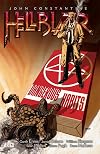
Jamie Delano es un escritor excelente, con una poética Noir que mete imágenes crudas en tu cerebro cada dos por tres. Pero la intromisión de Garth Ennis en este volumen es lo que da a John Constantine su faceta más humana. Obligado a luchar contra el cáncer con los días contados, no sólo se la juega al extremo con las artes que más o menos domina, sino que redescubre una forma de acercarse, sin tapujos, a la amistad. Mi favorito por el momento.

So often American comics and American culture can seem like there's this funny Todestrieb thing going on that won't be satisfied until everything's--in the oddly insightful words of Denis Leary--a six-foot erection with a giant cheeseburger on the end of it. You know? Like, Rambo has his place, but does it all have to be Rambo? Davis and Delano's Captain Britain is one of the early "by Brits for Brits" superhero offerings from the Big Two, and from the carping posture adopted by the old show more punter the Captain saves at the very beginning, to the touching visit to the family of a boy killed by superheroics (the relevant American phrase would be "collateral damage") and their stellar response to the destruction of their flat ("Well, now the Council will have to get us a new one, won't they?" and everyone laughs), to Braddock's casual drinking (held up not like Tony Stark's as all salacious or evidence of his broken soul, but as entirely understandable and a little irresponsible and a little funny), to the moderate use of uncool things like (fairy, not fantasy) elves and changelings, to that moment where civil unrest threatens the government and Brian says "But--this is ENGLAND!" and everyone makes fun of him, to his put-upon nobless-oblige thing in general, to the ludicrous-yet-deadly Technet and Crazy Gang, but most of all in the constant minor fuckups and getting back on of feet--they do the most British thing of all: they muddle on. Where the Americans, in genre fiction or comics or film, would be all out-cheeseburger-erection-that-shoots-armour-piercing-bullets-painted-with-the-stars-and-stripesing each other, and the only suspense would be who ends up the MOST WICKED BAD, the Brits do something a hell of a lot healthier: they remain calm (mostly) and carry on (more or less) and drink and fight together, and the bad guys end up mostly reformed or incarcerated instead of WASTED BY CHEEEBURGER ERECTION BULLETS. It makes you wistful, a bit.
Also, good story, good art. show less
Also, good story, good art. show less
John Constantine Hellblazer Vol. 9: Critical Mass (John Constantine, Hellblazer (Paperback)) by Paul Jenkins
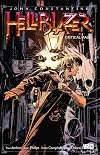
This is a half-n-half anthology which consists of parts that were plainly never intended to be welded together. So it's a not entirely rewarding experience.
Yet there are some entertaining interludes and these include a simply brilliant back-story set in John's youth. This explains his close relationship with Chas and features Constantine at his best, using guile and deceit to bamboozle a bestial horror (which happens to be... erm... Chas' mother). It's deliciously crude and clever, a perfect show more blend of black humour and backstreets noir with a supernatural slant.
The final storyline follows similar themes, as JC must once more outwit the first of the fallen to prevent his soul being harvested in hell. But there's something lacking in the storytelling here. All the Hellblazer elements are present... but it doesn't sparkle or snark like classic Constantine.
here's hoping Vol #10 picks up the pace...
7/10 show less
Yet there are some entertaining interludes and these include a simply brilliant back-story set in John's youth. This explains his close relationship with Chas and features Constantine at his best, using guile and deceit to bamboozle a bestial horror (which happens to be... erm... Chas' mother). It's deliciously crude and clever, a perfect show more blend of black humour and backstreets noir with a supernatural slant.
The final storyline follows similar themes, as JC must once more outwit the first of the fallen to prevent his soul being harvested in hell. But there's something lacking in the storytelling here. All the Hellblazer elements are present... but it doesn't sparkle or snark like classic Constantine.
here's hoping Vol #10 picks up the pace...
7/10 show less
Lists
Awards


You May Also Like


Associated Authors
Statistics
- Works
- 283
- Also by
- 29
- Members
- 5,227
- Popularity
- #4,768
- Rating
- 3.8
- Reviews
- 106
- ISBNs
- 122
- Languages
- 7
- Favorited
- 8