
Vejas Gabriel Liulevicius
Author of World War I: The "Great War"
About the Author
Works by Vejas Gabriel Liulevicius
War Land on the Eastern Front: Culture, National Identity, and German Occupation in World War I (2000) 58 copies, 1 review
Associated Works
Power, Violence and Mass Death in Pre-Modern and Modern Times (2004) — Contributor, some editions — 4 copies
Tagged
Common Knowledge
- Birthdate
- 1966
- Gender
- male
- Nationality
- USA
- Birthplace
- Chicago, Illinois, USA
- Associated Place (for map)
- Illinois, USA
Members
Reviews

This is one of the best Great Courses I have watched or listened to, and I have watched or listened to a great many. First off, Professor Liulevicius is a fluid lecturer who knows how to use the teleprompter, so he rarely stumbles over any words or looks awkward as the camera shifts and he begins to walk the other way across the stage. I know this may sound trivial, but if you have watched some of the newer Great Courses videos, you'll know how important this is to your enjoyment of the show more content.
And the content is excellent. This course, better than anything I have seen before, explains the origins of the "differentness" of Eastern Europe and the connection of events that happened hundreds of years ago to those that are happening today. Professor Liulevicius, who is of Lithuanian ancestry, seems fluent in several Eastern European languages, or at least he has learned to pronounce their words in a convincing manner. This course is notable for its weaving of literature throughout, as Liulevicius recommends works of fiction that provide insight into Eastern Europe and its history. He is also fond of telling Eastern European jokes, many from the communist era. In other hands, this could be awkward, but he pulls it off quite well, and the jokes, even if not always too funny, are definitely indicative of the state of mind of their tellers.
The course includes some helpful visual elements, such as pictures or paintings of the historical figures it discusses, as well as maps and other historical illustrations. There is no video, even when discussing more modern events such as World War II or the rise of Solidarity in Poland. This would probably distract from Professor Liulevicius's coherent, concise narrative. Liulevicius does not shy away from the awful truths of Eastern European history, such as the never-ending persecution of Jews and the Nazi Holocaust, or the displacements of large numbers of civilians throughout history as they were forceably moved to distant locations (or forced to flee as refugees) to make way for more preferred ethnicities. In other cases, the people didn't move, but the borders did - time and time again.
Professor Liulevicius's discussion of World War I is especially enlightening. Unlike the bogged down trench warfare on the Western Front, the war in Eastern Europe was very fluid. This is something that we in the West aren't usually taught much about. Liulevicius is also very good when discussing the horrors of the Yugoslavian Civil War. He often uses the plights of particular individuals to personalize the history he is teaching, and he does so very effectively.
Again, this is one of the best Great Courses, and I highly recommend it. For all its serious subject matter and the horrors it doesn't gloss over, it is still suspenseful and entertaining. show less
And the content is excellent. This course, better than anything I have seen before, explains the origins of the "differentness" of Eastern Europe and the connection of events that happened hundreds of years ago to those that are happening today. Professor Liulevicius, who is of Lithuanian ancestry, seems fluent in several Eastern European languages, or at least he has learned to pronounce their words in a convincing manner. This course is notable for its weaving of literature throughout, as Liulevicius recommends works of fiction that provide insight into Eastern Europe and its history. He is also fond of telling Eastern European jokes, many from the communist era. In other hands, this could be awkward, but he pulls it off quite well, and the jokes, even if not always too funny, are definitely indicative of the state of mind of their tellers.
The course includes some helpful visual elements, such as pictures or paintings of the historical figures it discusses, as well as maps and other historical illustrations. There is no video, even when discussing more modern events such as World War II or the rise of Solidarity in Poland. This would probably distract from Professor Liulevicius's coherent, concise narrative. Liulevicius does not shy away from the awful truths of Eastern European history, such as the never-ending persecution of Jews and the Nazi Holocaust, or the displacements of large numbers of civilians throughout history as they were forceably moved to distant locations (or forced to flee as refugees) to make way for more preferred ethnicities. In other cases, the people didn't move, but the borders did - time and time again.
Professor Liulevicius's discussion of World War I is especially enlightening. Unlike the bogged down trench warfare on the Western Front, the war in Eastern Europe was very fluid. This is something that we in the West aren't usually taught much about. Liulevicius is also very good when discussing the horrors of the Yugoslavian Civil War. He often uses the plights of particular individuals to personalize the history he is teaching, and he does so very effectively.
Again, this is one of the best Great Courses, and I highly recommend it. For all its serious subject matter and the horrors it doesn't gloss over, it is still suspenseful and entertaining. show less
War Land on the Eastern Front: Culture, National Identity, and German Occupation in World War I (Studies in the Social and Cultural History of Modern Warfare) by Vejas Gabriel Liulevicius
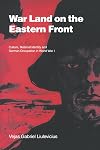
This is a sleeper that never gained a wider public audience. Nevertheless the author is a first-rate scholar and shows how the German experience in the East during World War One shaped their attitudes toward the people of that region. The German contempt and condescension that developed for the various ethnic groups on the Eastern Front would translate into atrocities in the forthcoming war.
As Hitler and the Nazi war machine often overshadow many other topics, research like this is often show more neglected. Liulevicius fills this gap and shows how Hitler was able to play to the sentiments internalized by Germans during their WWI interaction in the East.In effect, this book shows "why" Germans were so receptive to his message. Once Slavs were reduced to a sub-human status, there was no moral quandary in mistreating and annihilating them.
Unfortunately, because this book has remained in relative obscurity, it has been hard to obtain. Only a rare copy is available via the usual online purchase outlets, and it is not a standard in library holdings. If you have access to a nearby university collection or interlibrary loan system that can obtain it, I recommend it. It opens another window in worthwhile line of inquiry. show less
As Hitler and the Nazi war machine often overshadow many other topics, research like this is often show more neglected. Liulevicius fills this gap and shows how Hitler was able to play to the sentiments internalized by Germans during their WWI interaction in the East.In effect, this book shows "why" Germans were so receptive to his message. Once Slavs were reduced to a sub-human status, there was no moral quandary in mistreating and annihilating them.
Unfortunately, because this book has remained in relative obscurity, it has been hard to obtain. Only a rare copy is available via the usual online purchase outlets, and it is not a standard in library holdings. If you have access to a nearby university collection or interlibrary loan system that can obtain it, I recommend it. It opens another window in worthwhile line of inquiry. show less
The Great Courses - Modern History: Utopia and Terror in the 20th Century (Course Number 8313) by The Taching Company (2003-05-04) by Vejas Gabriel Liulevicius

Góð umfjöllun um útópíur 20. aldar og hvernig leiðtogar slíkra samfélaga skilgreindu terror eða grimmdarverk sem nauðsynlegan þátt í að hrinda slíkum draumaríkjum í framkvæmd. Liulevicius fer yfir marga af helstu harðstjórum síðustu aldar og alræðisríki sem flest eiga það sameiginlegt að hafa viljað stofna fyrirmyndarríki eftir að hafa þurrkað burt óæskilega einstaklinga og innrætt restina.
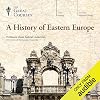
How the East was Won and Lost Again and Again, etc.
Review of the Teaching Company audiobook edition as available on Audible Audio (2015)
I had A History of Eastern Europe on my radar ever since I read my GR friend Antonomasia's very thorough review back in December 2020. It was available via an Audible sale in early September 2021 and I snapped it up immediately. It consists of 24 lectures, each of approximately 30 minutes in duration.
As Anto's review mentions, there is very little about the show more ancient and medieval history of the Eastern European countries. After the introductory Lecture 1, by Lecture 4 we've covered up to the end of the 18th century, by Lecture 7 we've covered the 19th century and by Lecture 8 onwards we are already in the 20th/21st century for the balance of the course.
With my Estonian heritage, I had hoped for more about the Baltic States of Estonia, Latvia and Lithuania, also given that the author/narrator's background was Lithuanian. There really wasn't very much that I didn't know already though. It was interesting to hear more about the Forest Brothers movement of partisans who continued to fight against the Russian occupation of the Baltics for almost 30 years after World War II. The last known Forest Brother was the Estonian August Sabbe (1909-1978) who died while evading capture as late as 1978.
The other most interesting new information I learned was about the role that Anna Walentynowicz (1929-2010) played in the founding of the Solidarity Workers' Union at the Gdansk shipyards in Poland. Walentynowicz's firing by the authorities for her activism was what most kicked off the entire movement. Her role was never prominently known in the West after Lech Walesa became the figurehead.
Even with its sparse early history, this was still an excellent series that covered a lot of information in 12 hours. The narrator's speech has a slight tic, whereby he starts a syllable in a word and then restarts the word again. It is somewhat like a blip or a record skipping. Once you notice it, you can't avoid hearing it every time it occurs, usually several times in each lecture. It is not disruptive though.
The lectures were:
Lecture 1: The Other Europe: Deep Roots of Diversity
Lecture 2: Formative Migrations: Mongols to Germans
Lecture 3: Clashing Golden Ages, 1389–1772
Lecture 4: The Great Crime of Empires: Poland Divided
Lecture 5: The Origins of Nationalism, 1815–1863
Lecture 6: The Age of Empires, 1863–1914
Lecture 7: Jewish Life in the Shtetl
Lecture 8: World War I: Destruction and Rebirth
Lecture 9: From Democrats to Dictators, 1918–1939
Lecture 10: Caught between Hitler and Stalin
Lecture 11: World War II: The Unfamiliar Eastern Front
Lecture 12: The Holocaust and the Nazi Racial Empire
Lecture 13: Postwar Flight and Expulsion
Lecture 14: Behind the Iron Curtain, 1945–1953
Lecture 15: Forest Brothers: Baltic Partisan Warfare
Lecture 16: Life in Totalitarian Captivity, 1953–1980
Lecture 17: Power of the Powerless: Revolts and Unrest
Lecture 18: Solidarity in Poland: Walesa’s Union
Lecture 19: Toppling Idols: The Communist Collapse
Lecture 20: The Turn: The Post-Soviet 1990s
Lecture 21: Yugoslav Wars: Milosevic and Balkan Strife
Lecture 22: The New Europe: Joining NATO and the EU
Lecture 23: The Unfolding Ukraine-Russia Crisis
Lecture 24: Eastern Europe at the Crossroads
Trivia and Link
The audiobook lecture series is accompanied with an extensive book-length 232 page pdf file with illustrations and maps. I think it is available to everyone regardless of whether you have purchased the audiobook at this link. show less
Review of the Teaching Company audiobook edition as available on Audible Audio (2015)
I had A History of Eastern Europe on my radar ever since I read my GR friend Antonomasia's very thorough review back in December 2020. It was available via an Audible sale in early September 2021 and I snapped it up immediately. It consists of 24 lectures, each of approximately 30 minutes in duration.
As Anto's review mentions, there is very little about the show more ancient and medieval history of the Eastern European countries. After the introductory Lecture 1, by Lecture 4 we've covered up to the end of the 18th century, by Lecture 7 we've covered the 19th century and by Lecture 8 onwards we are already in the 20th/21st century for the balance of the course.
With my Estonian heritage, I had hoped for more about the Baltic States of Estonia, Latvia and Lithuania, also given that the author/narrator's background was Lithuanian. There really wasn't very much that I didn't know already though. It was interesting to hear more about the Forest Brothers movement of partisans who continued to fight against the Russian occupation of the Baltics for almost 30 years after World War II. The last known Forest Brother was the Estonian August Sabbe (1909-1978) who died while evading capture as late as 1978.
The other most interesting new information I learned was about the role that Anna Walentynowicz (1929-2010) played in the founding of the Solidarity Workers' Union at the Gdansk shipyards in Poland. Walentynowicz's firing by the authorities for her activism was what most kicked off the entire movement. Her role was never prominently known in the West after Lech Walesa became the figurehead.
Even with its sparse early history, this was still an excellent series that covered a lot of information in 12 hours. The narrator's speech has a slight tic, whereby he starts a syllable in a word and then restarts the word again. It is somewhat like a blip or a record skipping. Once you notice it, you can't avoid hearing it every time it occurs, usually several times in each lecture. It is not disruptive though.
The lectures were:
Lecture 1: The Other Europe: Deep Roots of Diversity
Lecture 2: Formative Migrations: Mongols to Germans
Lecture 3: Clashing Golden Ages, 1389–1772
Lecture 4: The Great Crime of Empires: Poland Divided
Lecture 5: The Origins of Nationalism, 1815–1863
Lecture 6: The Age of Empires, 1863–1914
Lecture 7: Jewish Life in the Shtetl
Lecture 8: World War I: Destruction and Rebirth
Lecture 9: From Democrats to Dictators, 1918–1939
Lecture 10: Caught between Hitler and Stalin
Lecture 11: World War II: The Unfamiliar Eastern Front
Lecture 12: The Holocaust and the Nazi Racial Empire
Lecture 13: Postwar Flight and Expulsion
Lecture 14: Behind the Iron Curtain, 1945–1953
Lecture 15: Forest Brothers: Baltic Partisan Warfare
Lecture 16: Life in Totalitarian Captivity, 1953–1980
Lecture 17: Power of the Powerless: Revolts and Unrest
Lecture 18: Solidarity in Poland: Walesa’s Union
Lecture 19: Toppling Idols: The Communist Collapse
Lecture 20: The Turn: The Post-Soviet 1990s
Lecture 21: Yugoslav Wars: Milosevic and Balkan Strife
Lecture 22: The New Europe: Joining NATO and the EU
Lecture 23: The Unfolding Ukraine-Russia Crisis
Lecture 24: Eastern Europe at the Crossroads
Trivia and Link
The audiobook lecture series is accompanied with an extensive book-length 232 page pdf file with illustrations and maps. I think it is available to everyone regardless of whether you have purchased the audiobook at this link. show less
You May Also Like


Associated Authors
Statistics
- Works
- 83
- Also by
- 3
- Members
- 730
- Popularity
- #34,782
- Rating
- 3.9
- Reviews
- 19
- ISBNs
- 63
- Languages
- 1