

Heinz Höhne (1926–2010)
Author of The Order of the Death's Head: The Story of Hitler's SS
About the Author
Works by Heinz Höhne
Tagged
Common Knowledge
- Canonical name
- Höhne, Heinz
- Birthdate
- 1926
- Date of death
- 2010-03-27
- Gender
- male
- Nationality
- Germany
- Birthplace
- Berlin, Germany
- Place of death
- Großhansdorf, Germany
- Associated Place (for map)
- Germany
Members
Reviews

A detailed, well-written biography of Admiral Wilhelm Canaris, who was killed on Hitler's orders due to his implication in plots to bring down the Nazi government. Unfortunately, the book is marred by the author's conventional leftist bent. Höhne not only fails to credit Canaris as a man of conscience--his antipathy drives the author to underrate Canaris' effectiveness as intelligence chief. Canaris comes off as a slack-witted fool, and clearly no "master spy". One must ask how a fool could show more have survived so long in the Nazi hierarchy--without ever cozying up to Hitler.
Briefly put, Höhne cannot understand that a man can be both an arch-conservative and anti-Nazi. This is a common failing of the intellectual elite of today: they must believe that a man of the right is necessarily an enemy. Yet, as historian John Lukacs has noted, the strongest opposition Hitler faced came not from the left, but the right. Consider Churchill: hardly a liberal, he was the Nazis' most implacable enemy. Just so with Canaris: the German spy chief might best be described as "arch-conservative", even "imperialist" (in the sense of desiring a return to the old Imperial government), but he nurtured the core of military resistance against Hitler; a resistance that twice would try to kill Hitler during the war, and that would have killed him before the war started--had they not been paralyzed by Chamberlain's astounding trip to Munich.
Still, this book shows abundant scholarship, and should be read (critically) on that account. show less
Briefly put, Höhne cannot understand that a man can be both an arch-conservative and anti-Nazi. This is a common failing of the intellectual elite of today: they must believe that a man of the right is necessarily an enemy. Yet, as historian John Lukacs has noted, the strongest opposition Hitler faced came not from the left, but the right. Consider Churchill: hardly a liberal, he was the Nazis' most implacable enemy. Just so with Canaris: the German spy chief might best be described as "arch-conservative", even "imperialist" (in the sense of desiring a return to the old Imperial government), but he nurtured the core of military resistance against Hitler; a resistance that twice would try to kill Hitler during the war, and that would have killed him before the war started--had they not been paralyzed by Chamberlain's astounding trip to Munich.
Still, this book shows abundant scholarship, and should be read (critically) on that account. show less
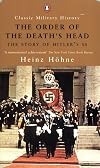
Riveting subject matter (5-star) but the book is either very poorly written (2-star) in a disjointed journalistic style or poorly translated or both.
See what happens when an entire civilized country goes berserk and the wildest conspiracy theory you could ever come up with turns out to be true.
What could be more interesting than Nazi death squads, storm troopers, death camps, medical experiments, entire Death's Head army divisions not even under the control of the military? How could they show more avoid creeping themselves out?
So next time you say it can't happen here, host a tea party. show less
See what happens when an entire civilized country goes berserk and the wildest conspiracy theory you could ever come up with turns out to be true.
What could be more interesting than Nazi death squads, storm troopers, death camps, medical experiments, entire Death's Head army divisions not even under the control of the military? How could they show more avoid creeping themselves out?
So next time you say it can't happen here, host a tea party. show less
An huge and exhaustive look at the bizarre organisation that was at the heart of the Nazi regime. This book exposes almost every detail, including the political infighting, weird rituals and strange personalities that went into the development of this organisation. Not nearly as organised as generally fabled to be, the SS at times survied despite itself.
Not really aimed at a general reader, this book is more a specialist publication, however it would be of use to anyone trying to research show more the Nazis or specifically the SS. show less
Not really aimed at a general reader, this book is more a specialist publication, however it would be of use to anyone trying to research show more the Nazis or specifically the SS. show less
historically interesting, written very long-winded, took me forever to read. maybe it would have been easier in german.
You May Also Like


Associated Authors
Statistics
- Works
- 23
- Members
- 828
- Popularity
- #30,824
- Rating
- 3.6
- Reviews
- 7
- ISBNs
- 50
- Languages
- 6