
Jeff Somers
Author of The Electric Church
About the Author
Image credit: Barbara Nitke
Series
Works by Jeff Somers
Writing Without Rules: How to Write & Sell a Novel Without Guidelines, Experts, or (Occasionally) Pants (2018) 35 copies, 1 review
The Inner Swine 11(3) 1 copy
Oldest Bastard On the Block 1 copy
Idolator 1 copy
This Was Education 1 copy
The Inner Swine Vol 7, #3 1 copy
Associated Works
Life Is Short and Then You Die: Mystery Writers of America Presents First Encounters with Murder (2019) — Contributor — 90 copies
Hanzai Japan: Fantastical, Futuristic Stories of Crime From and About Japan (2015) — Contributor — 45 copies
Fission #4: Stories from the British Science Fiction Association (2024) — Contributor — 14 copies, 9 reviews
Fission #2 Volume 1: Stories from the British Science Fiction Association (2022) — Contributor — 3 copies
Tagged
Common Knowledge
- Birthdate
- 1971
- Gender
- male
- Short biography
- Born in Jersey City, New Jersey but no one believes it because I am not very tough-looking; went to public grammar schools where I learned to curse extravagantly and a private Jesuit High School where I learned, well, Latin, mainly; was an Eagle Scout though my main memories of the Boy Scouts involved being dirty most of the time, drinking cheap blackberry brandy in the woods, and living life on the edge of a Lord-of-the-Flies situation any time we went camping; majored in English during college because I suspected (rightly) that this would allow me to sleep in and skip most of my classes; have been writing since I was about nine when I crafted a ninety page exercise in Tolkien plagiarism titled The War of the Gem; married above my station in life and am living peacefully with stronger-than-she-looks wife and three cats.
- Nationality
- USA
- Places of residence
- Jersey City, New Jersey, USA
- Associated Place (for map)
- New Jersey, USA
Members
Reviews
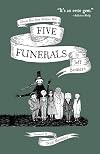
Big Gorey fan since childhood here, and generally a fan of tales that are a bit experimental. This worked for me, but I can imagine there are a lot of people for whom it won't. It's callous in ways, although that's because the characters are callous - I don't get the impression that the author is, or that the message is a callous one, and that's important to me. I very much enjoyed all the different ways that stories could be told - I am a fan of epistolary stories and fiction told as oral show more history, and this slots into those categories and more. It probably helps that the "and more" are things I'm familiar with - the art scene, coverage of underground music, etc - so I felt very at home.
I will almost certainly be getting this for my mother, who introduced me to Edward Gorey, Charles Addams, and the other weird authors in life. Mother's Day is coming up.
I received an election ARC of this book from the publisher via Netgalley in exchange for an honest review. show less
I will almost certainly be getting this for my mother, who introduced me to Edward Gorey, Charles Addams, and the other weird authors in life. Mother's Day is coming up.
I received an election ARC of this book from the publisher via Netgalley in exchange for an honest review. show less
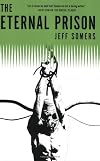
The third, and not at all final book in Somers' Avery Cates series finds Avery old and broken and tired and alone in the decimated remains of New York among the leftover survivors of the plague of the previous book. After wiping out the Electric Church and its clumsy first generation avatars, then nearly wiping out the human race as a plague carrier and helping Dick Marin stage a coup, Cates starts the third book by getting arrested rather than being killed because he is a "Person of show more Interest".
The story then alternates between his time in a prison reminiscent of the camps in The Bridge on the River Kwai and Star Trek: The Undiscovered Country, through to his ultimate escape and the story of a post-escape Cates back at his job as a gun for hire. By the time the two story and time lines join back up at the end of the first part of the book the surprise revelation is really only a surprise to Avery himself.
The rest of the novel follows Avery through this world he has largely created, to New York, then Moscow and back to the desert prison camp. The System Cops and a new Army are at war for control of the remains and each faction has a use for Cates. Avery, of course, plays a role in ending the war while playing whatever side is most advantageous for the moment. A pawn with just a little bit of free will.
While the Cates of The Digital Plague was a man on a mission to kill everyone and everything in his path, thinking it was for his own righteous reasons, the Cates of The Eternal Prison spends a lot of his time not really caring if he lives or dies. Cates learns a lot about himself, and realizes that he is happiest when he is "on a rail", following a clear and set path, to his own ruin, someone else's, or both. Indulging his fatalistic side lets him absolve himself of responsibility both for himself and for the consequences of his actions. Even so, he still has a personal mission of revenge to carry out, and that mission will carry him and us through to a fourth novel and the world after the triple apocalypse of psychotic homicidal robot priests, digital plague and civil war.
This time through Cates is a little less foul mouthed, not much less violent, and a bit more self aware. The Eternal Prison is a good read, and it will draw you along the rail, right next to Avery. show less
The story then alternates between his time in a prison reminiscent of the camps in The Bridge on the River Kwai and Star Trek: The Undiscovered Country, through to his ultimate escape and the story of a post-escape Cates back at his job as a gun for hire. By the time the two story and time lines join back up at the end of the first part of the book the surprise revelation is really only a surprise to Avery himself.
The rest of the novel follows Avery through this world he has largely created, to New York, then Moscow and back to the desert prison camp. The System Cops and a new Army are at war for control of the remains and each faction has a use for Cates. Avery, of course, plays a role in ending the war while playing whatever side is most advantageous for the moment. A pawn with just a little bit of free will.
While the Cates of The Digital Plague was a man on a mission to kill everyone and everything in his path, thinking it was for his own righteous reasons, the Cates of The Eternal Prison spends a lot of his time not really caring if he lives or dies. Cates learns a lot about himself, and realizes that he is happiest when he is "on a rail", following a clear and set path, to his own ruin, someone else's, or both. Indulging his fatalistic side lets him absolve himself of responsibility both for himself and for the consequences of his actions. Even so, he still has a personal mission of revenge to carry out, and that mission will carry him and us through to a fourth novel and the world after the triple apocalypse of psychotic homicidal robot priests, digital plague and civil war.
This time through Cates is a little less foul mouthed, not much less violent, and a bit more self aware. The Eternal Prison is a good read, and it will draw you along the rail, right next to Avery. show less
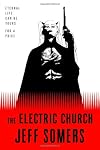
This is a fun read. The good: the main character, Avery Cates, is really well developed and interesting. It has a cool, future-noir, post-war/disaster, police-state setting and a lot of action. Somers' excellent writing style, which is witty, and biting, makes me want to keep reading. Also, cyborgs!
The bad: at times, the story made me feel like I was reading a video game, and some of the action scenes would conjure the soundtrack to The Matrix as I read. Both of these criticisms could fit show more well under 'The good' too, because they aren't necessarily bad things. They just aren't my favourite associations to make with a book.
If you follow Jeff Somers' twitter feed and enjoy it, then you will enjoy reading his books too. I generally try to avoid reading series, but I am willing to continue with what is a five book series to get more of Somers' style and more Avery Cates. show less
The bad: at times, the story made me feel like I was reading a video game, and some of the action scenes would conjure the soundtrack to The Matrix as I read. Both of these criticisms could fit show more well under 'The good' too, because they aren't necessarily bad things. They just aren't my favourite associations to make with a book.
If you follow Jeff Somers' twitter feed and enjoy it, then you will enjoy reading his books too. I generally try to avoid reading series, but I am willing to continue with what is a five book series to get more of Somers' style and more Avery Cates. show less
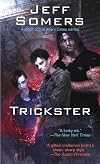
Trickster introduces a new dark and gritty urban fantasy series by Jeff Somers featuring Lem, a low level blood mage. A member of the Idimustari he scrapes by using his talent to fleece the 'normals' with a handful of illusions, refusing to enhance his power by using the blood of others.
Somers' world building is intricate and original. He takes his time establishing the boundaries of his lore and the limitations of magical system. There are just two rules of blood magic, the Rule of show more Perception and the Rule of Volume, which boils down to the more blood, the bigger the 'trick'. While establishing the world takes some time, Trickster eventually launches into fast paced action as Lem and Mags try to stop Renar and Amir from using Claire to enact a spell that will decimate the world's population.
Lem is an anti-hero. Tricksters 'are not good people' as he so often asserts. Aside from using magic to rob 'normals', few have any qualms about bleeding them to supplement their spells. Though Lem is convinced he is no good, he cares for his 'non-breeding life partner' Mags - a low level, slow witted mage and Lem has always refused to use anyone else's 'gas', causing a rift with his mentor and stunting his magical development despite an obvious talent with Words (spell making chants). And when Lem finds a young girl, Claire Mannice, bound and trapped in the trunk of a car of a high level mage he risks his own life to rescue her placing himself squarely in the path of the world's most powerful Archmage, Mika Renar and her apprentice, Cal Amir.
Trickster is seedy, bloody and exciting. Full of morally ambiguous characters in an intriguing and complex setting, I was thoroughly entertained and I am hoping the next installment is available sooner rather than later. show less
Somers' world building is intricate and original. He takes his time establishing the boundaries of his lore and the limitations of magical system. There are just two rules of blood magic, the Rule of show more Perception and the Rule of Volume, which boils down to the more blood, the bigger the 'trick'. While establishing the world takes some time, Trickster eventually launches into fast paced action as Lem and Mags try to stop Renar and Amir from using Claire to enact a spell that will decimate the world's population.
Lem is an anti-hero. Tricksters 'are not good people' as he so often asserts. Aside from using magic to rob 'normals', few have any qualms about bleeding them to supplement their spells. Though Lem is convinced he is no good, he cares for his 'non-breeding life partner' Mags - a low level, slow witted mage and Lem has always refused to use anyone else's 'gas', causing a rift with his mentor and stunting his magical development despite an obvious talent with Words (spell making chants). And when Lem finds a young girl, Claire Mannice, bound and trapped in the trunk of a car of a high level mage he risks his own life to rescue her placing himself squarely in the path of the world's most powerful Archmage, Mika Renar and her apprentice, Cal Amir.
Trickster is seedy, bloody and exciting. Full of morally ambiguous characters in an intriguing and complex setting, I was thoroughly entertained and I am hoping the next installment is available sooner rather than later. show less
Lists
You May Also Like


Associated Authors
Statistics
- Works
- 32
- Also by
- 11
- Members
- 1,917
- Popularity
- #13,424
- Rating
- 3.6
- Reviews
- 73
- ISBNs
- 70
- Languages
- 2
- Favorited
- 5