
Frederick Exley (1929–1992)
Author of A Fan's Notes
About the Author
Frederick Exley was born in Watertown, New York, on March 28, 1929. He grew up in the shadow of his father, a star athlete in the small town. The fame of the father would later haunt the son's writings. Exley received a B.A. from the University of Southern California in 1953. Exley drew heavily on show more his own life experiences of alcoholism, two broken marriages, a number of sexual encounters, a suicide attempt, and three stays in mental hospitals. The first piece of his trilogy, A Fan's Notes: A Fictional Memoir, was published in 1968 and won the William Faulkner Award. His other works included Pages from a Cold Island and Last Notes from Home. He died of a stroke on June 17, 1992 at the age of 63. (Bowker Author Biography) show less
Works by Frederick Exley
Associated Works
Tagged
Common Knowledge
- Canonical name
- Exley, Frederick
- Legal name
- Exley, Frederick Earl
- Other names
- Exley, Fred
- Birthdate
- 1929-03-28
- Date of death
- 1992-06-17
- Gender
- male
- Education
- Hobart College
University of Southern California (AB | 1953 | English) - Occupations
- writer
editor
public relations - Organizations
- New York Central Railroad
Rock Island Railroad - Awards and honors
- William Faulkner Award (1968)
Playboy Editorial Award (1974)
Rosenthal Family Foundation Award (1969) - Cause of death
- stroke
- Nationality
- USA
- Birthplace
- Watertown, New York, USA
- Places of residence
- Alexandria Bay, New York, USA
- Place of death
- Alexandria Bay, New York, USA
- Burial location
- Brookside Cemetery, Watertown, New York, USA
- Map Location
- New York, USA
Members
Reviews
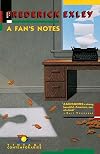
This is probably the most unusual of several semi-autobiographical alcoholic memoirs I’ve read, though it wouldn’t seem so at first glance. Exley’s writing style is conversational and the stories he tells are for the most part plausible and humorous. And yet…
With surprising aplomb, Exley begins the book with an account of his habit of getting totally drunk and making an ass of himself at a sports bar during New York Giants games. He tells of being laughed at by the bartender and show more fellow patrons with full self-awareness and no embarrassment. Pretty soon he reveals his repeated stints at mental hospitals, also without a hint of shame, resentment or regret. Exley doesn’t seem to be in denial of his alcoholism – and very likely clinical depression – but neither does he seem proud of it. He doesn’t wallow like, say, Charles Bukowski. I want to say he sounds distant, but that’s not quite right. He’s mostly unconcerned and a little amused. It’s the same with his drinking: he never seems to worry about it, though it’s clear that he knows he has a problem (he attends AA meetings while in the hospital, but he spends his time there sneering at the participants with two other patients).
Exley’s character comes across as a drunk Ignatius J. Reilly, a self-proclaimed genius living off his mother’s generosity while holding her in contempt. Unlike Reilly, Exley is often aware what an absurd figure he is. A couple of times he claims that he’s turned his back on mainstream life in protest of the emptiness of the American Dream, but his hunger for fame belies his stance.
Then there’s the structure of the novel – or rather, its lack of one. Exley’s tales jump forward onto the future and fall back into the past without much justification. One minute we’re hearing about his obsession with New York Giants halfback Frank Gifford, the next Exley’s back in the mental hospital (for the second time? third?), or back in college at USC with Gifford. Exley’s fixation with the football player is supposed to be the theme that binds the whole book together, but it only appears sporadically, though there is a moving realization of Gifford’s meaning to the author towards the end of the book. This revelation – which there’s no point in discussing, since it won’t make sense out of context – seems to be the climax, but then the book once again goes off into another tangent, diffusing its impact. It doesn’t matter, though, because Exley is so entertaining.
Not surprisingly, Exley’s life was a horrible mess. Critic James Woods starts a review of Richard Yates’s biography with this anecdote: “[Exley] stumbled an hour late into the grim vinyl restaurant where we were to meet, and called me David. He had ‘been on a bender, David’, he explained, and wasn’t good for much, least of all being interviewed. His skin was florid, his nose pitted like an old orange skin, and he had the withered but pot-bellied shape – a gourd on a stick – of the heavy drinker who has lost interest in food. After 15 minutes I turned my tape recorder off: Exley was incoherent, surely the greatest insult a writer could do to himself.” Exley would go on to write two other autobiographical novels in the same vein, but they’ve largely been forgotten. show less
With surprising aplomb, Exley begins the book with an account of his habit of getting totally drunk and making an ass of himself at a sports bar during New York Giants games. He tells of being laughed at by the bartender and show more fellow patrons with full self-awareness and no embarrassment. Pretty soon he reveals his repeated stints at mental hospitals, also without a hint of shame, resentment or regret. Exley doesn’t seem to be in denial of his alcoholism – and very likely clinical depression – but neither does he seem proud of it. He doesn’t wallow like, say, Charles Bukowski. I want to say he sounds distant, but that’s not quite right. He’s mostly unconcerned and a little amused. It’s the same with his drinking: he never seems to worry about it, though it’s clear that he knows he has a problem (he attends AA meetings while in the hospital, but he spends his time there sneering at the participants with two other patients).
Exley’s character comes across as a drunk Ignatius J. Reilly, a self-proclaimed genius living off his mother’s generosity while holding her in contempt. Unlike Reilly, Exley is often aware what an absurd figure he is. A couple of times he claims that he’s turned his back on mainstream life in protest of the emptiness of the American Dream, but his hunger for fame belies his stance.
Then there’s the structure of the novel – or rather, its lack of one. Exley’s tales jump forward onto the future and fall back into the past without much justification. One minute we’re hearing about his obsession with New York Giants halfback Frank Gifford, the next Exley’s back in the mental hospital (for the second time? third?), or back in college at USC with Gifford. Exley’s fixation with the football player is supposed to be the theme that binds the whole book together, but it only appears sporadically, though there is a moving realization of Gifford’s meaning to the author towards the end of the book. This revelation – which there’s no point in discussing, since it won’t make sense out of context – seems to be the climax, but then the book once again goes off into another tangent, diffusing its impact. It doesn’t matter, though, because Exley is so entertaining.
Not surprisingly, Exley’s life was a horrible mess. Critic James Woods starts a review of Richard Yates’s biography with this anecdote: “[Exley] stumbled an hour late into the grim vinyl restaurant where we were to meet, and called me David. He had ‘been on a bender, David’, he explained, and wasn’t good for much, least of all being interviewed. His skin was florid, his nose pitted like an old orange skin, and he had the withered but pot-bellied shape – a gourd on a stick – of the heavy drinker who has lost interest in food. After 15 minutes I turned my tape recorder off: Exley was incoherent, surely the greatest insult a writer could do to himself.” Exley would go on to write two other autobiographical novels in the same vein, but they’ve largely been forgotten. show less
Fredrick Exley (1929-1992) – Photo of the writer as a vulnerable, sensitive young man. In many ways, much too vulnerable and sensitive for mid-20th century American society, a society where a man’s prime virtue is being tough.
A Fan's Notes is the odyssey of one man’s unending heartbreak and retreat into an inner world of fantasy and dreams, a retreat, by his own account and language, punctuated by alcoholism and trips to the madhouse; or, put another way, an autobiographical novel show more about Fredrick Exley’s longtime failure in the years prior to when he finally staked his claim to fame by writing a memoir about his aching, painful life.
First off, let me say bellying up to a bar, drinking, smoking, commiserating, cheering for a sports team while watching a game is not me, which is understatement. I recall walking into a bar when in college and found the whole scene sour and depressing. I haven’t even come close to stepped into a bar once in the past nearly fifty years.
I mention since the Fred Exley in this fictional memoir is a bargoer who drinks, smokes, commiserates, and obsessively cheers for a sports team – the New York Giants. For these reasons and others, including much of the way he talks about women, I do not particularly like the main character.
However, this being said, A Fan’s Notes is a well-written literary gush, reminding me more of Henry Miller than Charles Bukowski, a compelling, excruciatingly honest personal saga, overflowing with keen insights into human nature and caustic observations on American culture, a book I found, for a number of personal reasons, deeply moving when I first read back in 1988 published as part of the Vintage Contemporaries series.
Rereading these past few weeks, I must say I enjoying every well-turned phrase and outrageous, boldfaced, audacious twisting of fact into fiction: author’s self-portrayal as a slovenly lout, alcoholic slob, misogynist pig, lowlife outsider, misfit and complete loser, not to mention misty-eyed dreamer and weaver of fantastic delusions. At the point when Freddie Ex finally pulled his life together enough to begin seriously writing, he probably had more than a few good chuckles and a few shed tears with each draft.
The first personal reason I found this novel moving back in 1988 is very personal: at the time I was having a mid-life crisis, working with a spiteful, nasty boss and unpleasant coworkers in what turned out to be, for me, the wrong career. I had to make a serious change and Exley’s novel, especially those parts where he reflected on the insanity of work world USA, served as something of a literary friend through it all, right up until the time when I made a successful switch.
The second reason has to do with my friend Craig, a sensitive, vulnerable, highly artistic man who reminded me a great deal of Fred Exley. Actually, very much like Exley, Craig worked in the advertising industry, was fired because of drinking, and after marrying and having a couple kids, divorced and, like Exley, returned to live in the basement of his parent’s house. Turns out, Craig was simply too sensitive to function in the “normal” world. And similar to Exley, he idolized Hemingway and tried writing the Great American Novel but, unfortunately, he was no Exley – his writing, right up to the day he dropped dead of a massive heart attack at age 55, was overly sentimental and downright awful.
I relate personal reasons since my guess is Exley’s A Fan’s Notes enjoyed an initial cult following comprised of men (and perhaps women) who, like myself, were either going through a phase of life-transition or those sensitive souls who, for a number of reasons, could never successfully function in conventional society. I also imagine many of these sensitive types, similar to my friend Craig, tried to write first-rate fiction but their efforts fell short. At least they could turn to A Fan’s Notes for some solace.
And I wonder how many of these sensitive souls had strong fathers like Fred Exley, when he writes, “Moreover, my father’s shadow was so imposing that I had scarcely ever, until that moment, had an identity of my own. At the same time I had yearned to emulate and become my father. I also yearned for his destruction.” show less
This book is about sports like Macbeth is about witches. Which is to say, it's just a vehicle for the real action, which is all internal. A gorgeous, eloquent song to despair and alcoholism and redemption.
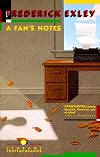
FINAL REVIEW
Fredrick Exley (1929-1992) – Photo of the writer as a vulnerable, sensitive young man. In many ways, much too vulnerable and sensitive for mid-20th century American society, a society where a man’s prime virtue is being tough.
“A Fan's Notes” is the odyssey of one man’s unending heartbreak and retreat into an inner world of fantasy and dreams, a retreat, by his own account and language, punctuated by alcoholism and trips to the madhouse; or, put another way, an show more autobiographical novel about Fredrick Exley’s longtime failure in the years prior to when he finally staked his claim to fame by writing a memoir about his aching, painful life.
First off, let me say bellying up to a bar, drinking, smoking, commiserating, cheering for a sports team while watching a game is not me, which is understatement. I recall walking into a bar when in college and found the whole scene sour and depressing. I haven’t even come close to stepped into a bar once in the past nearly fifty years.
I mention since the Fred Exley in this fictional memoir is a bargoer who drinks, smokes, commiserates, and obsessively cheers for a sports team – the New York Giants. For these reasons and others, including much of the way he talks about women, I do not particularly like the main character. However, this being said, “A Fan’s Notes” is a well-written literary gush, reminding me more of Henry Miller than Charles Bukowski, a compelling, excruciatingly honest personal saga, overflowing with keen insights into human nature and caustic observations on American culture, a book I found, for a number of personal reasons, deeply moving when I first read back in 1988 published as part of the Vintage Contemporaries series.
Rereading these past few weeks, I must say I enjoying every well-turned phrase and outrageous, boldfaced, audacious twisting of fact into fiction: author’s self-portrayal as a slovenly lout, alcoholic slob, misogynist pig, lowlife outsider, misfit and complete loser, not to mention misty-eyed dreamer and weaver of fantastic delusions. At the point when Freddie Ex finally pulled his life together enough to begin seriously writing, he probably had more than a few good chuckles and a few shed tears with each draft.
The first personal reason I found this novel moving back in 1988 is very personal: at the time I was having a mid-life crisis, working with a spiteful, nasty boss and unpleasant coworkers in what turned out to be, for me, the wrong career. I had to make a serious change and Exley’s novel, especially those parts where he reflected on the insanity of work-world USA, served as something of a literary friend through it all, right up until the time when I made a successful switch.
The second reason has to do with my friend Craig, a sensitive, vulnerable, highly artistic man who reminded me a great deal of Fred Exley. Actually, very much like Exley, Craig worked in the advertising industry, was fired because of drinking, and after marrying and having a couple kids, divorced and, like Exley, returned to live in the basement of his parent’s house. Turns out, Craig was simply too sensitive to function in the “normal” world. And similar to Exley, he idolized Hemingway and tried writing the Great American Novel but, unfortunately, he was no Exley – his writing, right up to the day he dropped dead of a massive heart attack at age 55, was overly sentimental and downright awful.
I relate personal reasons since my guess is Exley’s “A Fan’s Notes" enjoyed an initial cult following comprised of men (and perhaps women) who, like myself, were either going through a phase of life-transition or those sensitive souls who, for a number of reasons, could never successfully function in conventional society. I also imagine many of these sensitive types, similar to my friend Craig, tried to write first-rate fiction but their efforts fell short. At least they could turn to “A Fan’s Notes” for some solace.
And I wonder how many of these sensitive souls had strong fathers like Fred Exley, when he writes, “Moreover, my father’s shadow was so imposing that I had scarcely ever, until that moment, had an identity of my own. At the same time I had yearned to emulate and become my father. I also yearned for his destruction.” show less
Fredrick Exley (1929-1992) – Photo of the writer as a vulnerable, sensitive young man. In many ways, much too vulnerable and sensitive for mid-20th century American society, a society where a man’s prime virtue is being tough.
“A Fan's Notes” is the odyssey of one man’s unending heartbreak and retreat into an inner world of fantasy and dreams, a retreat, by his own account and language, punctuated by alcoholism and trips to the madhouse; or, put another way, an show more autobiographical novel about Fredrick Exley’s longtime failure in the years prior to when he finally staked his claim to fame by writing a memoir about his aching, painful life.
First off, let me say bellying up to a bar, drinking, smoking, commiserating, cheering for a sports team while watching a game is not me, which is understatement. I recall walking into a bar when in college and found the whole scene sour and depressing. I haven’t even come close to stepped into a bar once in the past nearly fifty years.
I mention since the Fred Exley in this fictional memoir is a bargoer who drinks, smokes, commiserates, and obsessively cheers for a sports team – the New York Giants. For these reasons and others, including much of the way he talks about women, I do not particularly like the main character. However, this being said, “A Fan’s Notes” is a well-written literary gush, reminding me more of Henry Miller than Charles Bukowski, a compelling, excruciatingly honest personal saga, overflowing with keen insights into human nature and caustic observations on American culture, a book I found, for a number of personal reasons, deeply moving when I first read back in 1988 published as part of the Vintage Contemporaries series.
Rereading these past few weeks, I must say I enjoying every well-turned phrase and outrageous, boldfaced, audacious twisting of fact into fiction: author’s self-portrayal as a slovenly lout, alcoholic slob, misogynist pig, lowlife outsider, misfit and complete loser, not to mention misty-eyed dreamer and weaver of fantastic delusions. At the point when Freddie Ex finally pulled his life together enough to begin seriously writing, he probably had more than a few good chuckles and a few shed tears with each draft.
The first personal reason I found this novel moving back in 1988 is very personal: at the time I was having a mid-life crisis, working with a spiteful, nasty boss and unpleasant coworkers in what turned out to be, for me, the wrong career. I had to make a serious change and Exley’s novel, especially those parts where he reflected on the insanity of work-world USA, served as something of a literary friend through it all, right up until the time when I made a successful switch.
The second reason has to do with my friend Craig, a sensitive, vulnerable, highly artistic man who reminded me a great deal of Fred Exley. Actually, very much like Exley, Craig worked in the advertising industry, was fired because of drinking, and after marrying and having a couple kids, divorced and, like Exley, returned to live in the basement of his parent’s house. Turns out, Craig was simply too sensitive to function in the “normal” world. And similar to Exley, he idolized Hemingway and tried writing the Great American Novel but, unfortunately, he was no Exley – his writing, right up to the day he dropped dead of a massive heart attack at age 55, was overly sentimental and downright awful.
I relate personal reasons since my guess is Exley’s “A Fan’s Notes" enjoyed an initial cult following comprised of men (and perhaps women) who, like myself, were either going through a phase of life-transition or those sensitive souls who, for a number of reasons, could never successfully function in conventional society. I also imagine many of these sensitive types, similar to my friend Craig, tried to write first-rate fiction but their efforts fell short. At least they could turn to “A Fan’s Notes” for some solace.
And I wonder how many of these sensitive souls had strong fathers like Fred Exley, when he writes, “Moreover, my father’s shadow was so imposing that I had scarcely ever, until that moment, had an identity of my own. At the same time I had yearned to emulate and become my father. I also yearned for his destruction.” show less
Lists
1960s (1)
Five star books (1)
Awards


You May Also Like


Associated Authors
Statistics
- Works
- 4
- Also by
- 1
- Members
- 1,556
- Popularity
- #16,556
- Rating
- 4.0
- Reviews
- 14
- ISBNs
- 31
- Languages
- 5
- Favorited
- 8