
John Paul Leon (1972–2021)
Author of Earth X
Series
Works by John Paul Leon
Black Death in America 5 copies
The Massive #13 1 copy
The Massive #12 1 copy
New X-Men #131 - Some Angels Falling — Illustrator — 1 copy
The Massive #9 1 copy
The Massive #7 1 copy
The Massive #2 1 copy
The Massive #3 1 copy
The Massive #4 1 copy
The Massive #5 1 copy
The Massive #11 1 copy
The Massive #8 1 copy
The Massive #6 1 copy
The Massive #15 1 copy
Hit-Girl #8 1 copy
Black Widow: Deadly Origin #1 (of 4) — Illustrator — 1 copy
Black Widow: Deadly Origin #2 (of 4) — Illustrator — 1 copy
Black Widow: Deadly Origin #3 (of 4) — Illustrator — 1 copy
Associated Works
Sheriff of Babylon #01 — Cover artist — 2 copies
Tagged
Common Knowledge
- Canonical name
- Leon, John Paul
- Birthdate
- 1972-04-26
- Date of death
- 2021-05-03
- Gender
- male
- Occupations
- comic book artist
- Nationality
- USA
- Birthplace
- New York, New York, USA
- Places of residence
- Miami, Florida, USA
- Associated Place (for map)
- USA
Members
Reviews

Dash's mother's spirit takes him through Lakota history in order to get him to face his Indian heritage; when faced with her, demise Red Crow is forced to take inventory of his history with and feelings for Gina; Dash has a group of orphans temporary land in his care at the same time as he gets news of his own mother's death and is forced to betray the children because of other people's decisions, Mr. Brass comes to town with his bag of horrors, and Officer Falls Down starts investigating show more Gina's murder. It's dark, it's gruesome, it's violent and cruel, it hits you in the stomach and, before you have caught your breath, comes back and punches you again. It's about humans, trying to survive in the harshest of worlds, desperately clinging to some ideal that they've half forgotten, partially due to an all-encompassing cynicism and partially due to their own growing coldness, but humans at the core, hurt again and again by their hope for something good that, seemingly inevitably, always turns to bad. It's a story that won't leave you alone for a long time after you've closed its pages. It's one of the best examples of noir I have ever encountered and I can only hope I encounter something as good again. show less
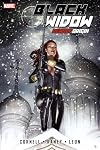
The Black Widow has long been one of my favorite characters in the Marvel Universe. Before the world at large was introduced to her in Iron Man 2, I was reading her adventures. I was thrilled to have her introduced into the cinematic canon because she's a strong female character, a hero of tragic origin with a darkness that brings an enormous amount of depth to her stories. Natasha Romanoff has been involved in many adventures within Marvel comics through the decades, playing an important show more part in various continuities. I hadn't read the Deadly Origin issues, though, and I was looking forward, as I always do, to reading anything Black Widow when I picked this collection up at my local bookstore.
How disappointing.
This story alternates between a plot called the "Icepick Protocol" to kill everyone that Romanoff loves and hinging around the man who was a father figure to her, Ivan...and flashbacks to her past, from her origins as part of the Red Room through her involvement in the Civil War story arc. This is the retconned history for the Black Widow, in which biotechnological enhancements prolong her life substantially, and thus she has lived through a great deal. We see her husband, the Red Guardian, and other interesting glimpses into the Widow's past that has crafted her into the strong and fractured character that she is. The flashbacks seemed to be well-paced within the context of the rest of the story to me, but the dialogue seemed out of character in both present and past on many occasions. The sweep of the story is too broad for so confined a collection...we're simply covering too much of Romanoff's life because we have to see how it collides with present events. The present events are then reduced to a cacophony of violent confrontations that don't leave room for the sort of character evolution that I would hope to see in an origin story.
Then, there's the art.
Two different artists draw this collection: one the modern events, another the flashbacks. The flashback art by Leon is brilliant. The emotions of the characters carry far past the dialogue, and there are moments where I feel I know the Black Widow's character better based only on her facial expression or posture in tableau from these flashback sequences. Comparing this to the majority of the collection...the current events...is striking enough to be painful. In modern day, Romanoff looks as though she's seventeen rather than the woman she is, her apparent age completely incongruous with the skills she evidences in the fighting sequences. Which is sort of noticeable, as fighting sequences are really all we see in the present events.
Overall, I also find the events of the story a bit too steeped in the "off-camera" sex. Yes, the Widow is a product of the Red Room, but she has become so much more as a hero, and this just doesn't do her justice. I think the motivation of the writer was to paint Romanoff as the woman she's become, but this missed the mark entirely.
Deadly Origin's writing is, unfortunately, a lot of failing to do the character of the Black Widow justice. Combined with profoundly disappointing artwork for more than half of the collection, and this is a book that will likely gather dust on my shelf without ever being re-read. If you love the Black Widow, you'll want better. show less
How disappointing.
This story alternates between a plot called the "Icepick Protocol" to kill everyone that Romanoff loves and hinging around the man who was a father figure to her, Ivan...and flashbacks to her past, from her origins as part of the Red Room through her involvement in the Civil War story arc. This is the retconned history for the Black Widow, in which biotechnological enhancements prolong her life substantially, and thus she has lived through a great deal. We see her husband, the Red Guardian, and other interesting glimpses into the Widow's past that has crafted her into the strong and fractured character that she is. The flashbacks seemed to be well-paced within the context of the rest of the story to me, but the dialogue seemed out of character in both present and past on many occasions. The sweep of the story is too broad for so confined a collection...we're simply covering too much of Romanoff's life because we have to see how it collides with present events. The present events are then reduced to a cacophony of violent confrontations that don't leave room for the sort of character evolution that I would hope to see in an origin story.
Then, there's the art.
Two different artists draw this collection: one the modern events, another the flashbacks. The flashback art by Leon is brilliant. The emotions of the characters carry far past the dialogue, and there are moments where I feel I know the Black Widow's character better based only on her facial expression or posture in tableau from these flashback sequences. Comparing this to the majority of the collection...the current events...is striking enough to be painful. In modern day, Romanoff looks as though she's seventeen rather than the woman she is, her apparent age completely incongruous with the skills she evidences in the fighting sequences. Which is sort of noticeable, as fighting sequences are really all we see in the present events.
Overall, I also find the events of the story a bit too steeped in the "off-camera" sex. Yes, the Widow is a product of the Red Room, but she has become so much more as a hero, and this just doesn't do her justice. I think the motivation of the writer was to paint Romanoff as the woman she's become, but this missed the mark entirely.
Deadly Origin's writing is, unfortunately, a lot of failing to do the character of the Black Widow justice. Combined with profoundly disappointing artwork for more than half of the collection, and this is a book that will likely gather dust on my shelf without ever being re-read. If you love the Black Widow, you'll want better. show less

Access a version of the below that includes illustrations on my blog.
Paul Cornell's Black Widow: Deadly Origin is one of those comics that takes the tangled history of a superhero character that's been jerked from status quo to status quo over the years, and tries to retroactively impose some kind of characterization on it all. Natalia Romanova was a super-agent of the U.S.S.R., a Russian superhero's wife, a spy in the West, a member of umpteen superhero teams, and a lover of umpteen male show more superheroes.
I don't think he really succeeds, unfortunately. If Natasha has her own core identity, I'm not sure what it is. Cornell's story alternates between the present day (where there's a plot to kill all those who she's ever loved) and the past (where we get snippets of her history). But there's either too many flashbacks or not enough of them. We never spend more than a page or two in any one time period, making it hard to get an emotional bead on Natasha at any given point. If they were expanded, they might work better. Alternatively, focusing on the present-day story might make Natasha's emotional throughline more clear. But as it is, it still feels more like a jumble of comic book continuity than actual story. I don't think I know Natasha any better as a person than I did before reading.
The art doesn't help. John Paul Leon's art for the flashbacks is nice and stylistic, but sometimes cold and hard to follow. Tom Raney's art for the present-day narrative, on the other hand, is often awkward, and his Natasha looks younger and more girly than Leon's in the flashbacks, which seems... misjudged.
My favorite part was when Natasha breaks into a Russian bunker to acquire some secret information, and all the young guys in the bunker are so excited to be defeated by her they just tell her everything she needs to know, and toast her with champagne as she leaves. The inclusion of Cornell's original pitch, including his editor's comments, is a nice bonus too.
P.S. While writing this review, I came across this really nice review of the story from a feminist perspective on Fuck Yeah, Black Widow! A worthwhile read, and it helped clarify to this Black Widow novice what was preexisting continuity, and what was Paul Cornell's interpolation. show less
Paul Cornell's Black Widow: Deadly Origin is one of those comics that takes the tangled history of a superhero character that's been jerked from status quo to status quo over the years, and tries to retroactively impose some kind of characterization on it all. Natalia Romanova was a super-agent of the U.S.S.R., a Russian superhero's wife, a spy in the West, a member of umpteen superhero teams, and a lover of umpteen male show more superheroes.
I don't think he really succeeds, unfortunately. If Natasha has her own core identity, I'm not sure what it is. Cornell's story alternates between the present day (where there's a plot to kill all those who she's ever loved) and the past (where we get snippets of her history). But there's either too many flashbacks or not enough of them. We never spend more than a page or two in any one time period, making it hard to get an emotional bead on Natasha at any given point. If they were expanded, they might work better. Alternatively, focusing on the present-day story might make Natasha's emotional throughline more clear. But as it is, it still feels more like a jumble of comic book continuity than actual story. I don't think I know Natasha any better as a person than I did before reading.
The art doesn't help. John Paul Leon's art for the flashbacks is nice and stylistic, but sometimes cold and hard to follow. Tom Raney's art for the present-day narrative, on the other hand, is often awkward, and his Natasha looks younger and more girly than Leon's in the flashbacks, which seems... misjudged.
My favorite part was when Natasha breaks into a Russian bunker to acquire some secret information, and all the young guys in the bunker are so excited to be defeated by her they just tell her everything she needs to know, and toast her with champagne as she leaves. The inclusion of Cornell's original pitch, including his editor's comments, is a nice bonus too.
P.S. While writing this review, I came across this really nice review of the story from a feminist perspective on Fuck Yeah, Black Widow! A worthwhile read, and it helped clarify to this Black Widow novice what was preexisting continuity, and what was Paul Cornell's interpolation. show less
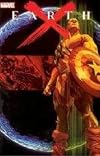
Anything that starts with an introduction from the great Joss Whedon is bound to be good. Seriously good. I had high hopes, and was not disappointed.
This takes a look at some of Marvel’s most beloved heroes in a future where they are anything but extraordinary. When the rest of humanity develops super powers, our heroes find that they aren’t needed as before, and move on with their lives – get old and out of shape, get depressed, and grow apathetic. And yet these heroes are still the show more ones that, in the end, fight to save humanity… which leads this to be a story about people who aren’t so much more special than the rest of humanity fighting to save the world anyway. Seeing these characters on even ground with the rest of humanity gave a completely different perspective than what we’ve seen before.
This is a dark story. Darker than I am used to seeing about Marvel’s superheroes (but that may be because I’m not too familiar with the entire Marvel catalogue). It was so intriguing to see how much some of these heroes have fallen, and to see them go to some really dark places – especially Captain America, Iron Man (and yes that’s taking into account his alcoholism et all) and Mr. Fantastic. I really thoroughly enjoyed exploring the darker side of these guys.
There were a lot of characters in this book that I wasn’t actually familiar with, and that certainly made parts of the story harder to follow while I familiarized myself with them – in particular Machine Man and Uatu, who are both very central and are partial narrators to this story. The two of them had an interesting relationship; as Uatu went blind and couldn’t function as a Watcher, he brought Machine Man up to the moon to watch the earth for him. Right from the beginning, Uatu kept focusing on and criticizing Machine Man’s programmed humanity. At one point, Machine Man pretended to wipe all of his humanity from his system, and it was interesting to see how the roles of Uatu and Machine Man almost completely swapped – all of a sudden, Uatu was asking Machine Man for theories as to why humans were acting in one way, while Machine Man was the one reprimanding Uatu on his curiosity and human characteristics.
I found that the narration jumped around a bit too much for my liking – it showed small bits of different arcs in the story in quick succession, leaving it difficult to keep up with everything that was going on in each area of the world or with each character. I would have almost preferred it if each chapter had been focused on only one story arc. I can see how that would have been difficult for Machine Man and Uatu’s storyline, however, as they were supposed to be able to see everything happening on earth at all times, but as a reader it felt slightly disjointed at times.
All in all, this was an awesome read. It was a great introduction to characters I didn’t know previously, that I would like to learn more about. There are more in the series that I’ll definitely be picking up at some point.
The Bottom Line
Highly recommended to fans of dystopia or superheroes. show less
This takes a look at some of Marvel’s most beloved heroes in a future where they are anything but extraordinary. When the rest of humanity develops super powers, our heroes find that they aren’t needed as before, and move on with their lives – get old and out of shape, get depressed, and grow apathetic. And yet these heroes are still the show more ones that, in the end, fight to save humanity… which leads this to be a story about people who aren’t so much more special than the rest of humanity fighting to save the world anyway. Seeing these characters on even ground with the rest of humanity gave a completely different perspective than what we’ve seen before.
This is a dark story. Darker than I am used to seeing about Marvel’s superheroes (but that may be because I’m not too familiar with the entire Marvel catalogue). It was so intriguing to see how much some of these heroes have fallen, and to see them go to some really dark places – especially Captain America, Iron Man (and yes that’s taking into account his alcoholism et all) and Mr. Fantastic. I really thoroughly enjoyed exploring the darker side of these guys.
There were a lot of characters in this book that I wasn’t actually familiar with, and that certainly made parts of the story harder to follow while I familiarized myself with them – in particular Machine Man and Uatu, who are both very central and are partial narrators to this story. The two of them had an interesting relationship; as Uatu went blind and couldn’t function as a Watcher, he brought Machine Man up to the moon to watch the earth for him. Right from the beginning, Uatu kept focusing on and criticizing Machine Man’s programmed humanity. At one point, Machine Man pretended to wipe all of his humanity from his system, and it was interesting to see how the roles of Uatu and Machine Man almost completely swapped – all of a sudden, Uatu was asking Machine Man for theories as to why humans were acting in one way, while Machine Man was the one reprimanding Uatu on his curiosity and human characteristics.
I found that the narration jumped around a bit too much for my liking – it showed small bits of different arcs in the story in quick succession, leaving it difficult to keep up with everything that was going on in each area of the world or with each character. I would have almost preferred it if each chapter had been focused on only one story arc. I can see how that would have been difficult for Machine Man and Uatu’s storyline, however, as they were supposed to be able to see everything happening on earth at all times, but as a reader it felt slightly disjointed at times.
All in all, this was an awesome read. It was a great introduction to characters I didn’t know previously, that I would like to learn more about. There are more in the series that I’ll definitely be picking up at some point.
The Bottom Line
Highly recommended to fans of dystopia or superheroes. show less
Lists
Awards


You May Also Like
Associated Authors
Statistics
- Works
- 51
- Also by
- 25
- Members
- 1,522
- Popularity
- #16,892
- Rating
- 3.7
- Reviews
- 35
- ISBNs
- 40
- Languages
- 5