
Dzongsar Jamyang Khyentse
Author of What Makes You Not a Buddhist
About the Author
Dzongsar Jamyang Khyentse is a Bhutanese lama who travels and teaches internationally. He is the author of numerous works, including What Makes You Not a Buddhist, The Guru Drinks Bourbon? and Best Foot Forward.
Image credit: via Shambhala Publications
Works by Dzongsar Jamyang Khyentse
Associated Works
Tagged
Common Knowledge
- Other names
- Khyentse Rinpoche, Dzongsar (teaching name)
Khyentse Norbu (filmmaking name) - Birthdate
- 1961
- Gender
- male
- Occupations
- spiritual teacher
dharma teacher
filmmaker - Nationality
- Bhutan
- Places of residence
- Bhutan
- Associated Place (for map)
- Bhutan
Members
Reviews
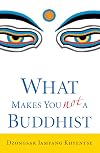
Six-word review: Without the Four Seals, no Buddhist.
Extended review:
During the past 18 years I've read my way through a quantity of Buddhist literature, most of it of the Zen variety. I've seen and heard numerous discussions of the Four Noble Truths.* But this is the first time I can remember encountering the Four Seals, to wit:
All compounded things are impermanent.
All emotions are pain.
All things have no inherent existence.
Nirvana is beyond concepts. (page 3)
The premise of this book is show more simply that a person who does not accept these four truths is not a Buddhist, regardless of what other practices that person might follow or ideas he or she might embrace. And a person who does is:
Once you have intellectually accepted the view, you can apply any method that deepens your understanding and realization. In other words, you can use whatever techniques or practices help you to transform your habit of thinking that things are solid into the habit of seeing them as compounded, interdependent, and impermanent. This is true Buddhist meditation and practice, not just sitting still as if you were a paperweight. (page 119--little dig at Zen there.)
Each of the four statements in turn is the subject of a chapter, followed by a conclusion that enlarges upon the subject of what Buddhism is and what it is not, as well as what prevents Buddhism from being a religion, despite some superficial trappings:
Buddhist disciplines such as maroon robes, rituals and ritual objects, incense and flowers, even monasteries, have form--they can be observed and photographed. We forget that they are a means to an end. We forget that one does not become a follower of Buddha by performing rituals or adopting disciplines such as becoming vegetarian or wearing robes. But the human mind loves rituals and symbols so much that they are almost inevitable and indispensable. Tibetan sand mandalas and Japanese Zen gardens are beautiful; they can inspire us and even be a means to understanding the truth. But the truth itself is neither beautiful nor not beautiful. (page 121)
For me, the most arresting and valuable passage is the one on page 115 that includes the statement: "when you see that you will never come to the end of problem solving, that is the beginning of the search for inner truth."
Sometimes all it takes for something to sink in is to hear it a different way. For me this presentation was a different way and one that served to open my mind a little more. I can't say that I am yet in full possession of the Buddhist view or even close to it, and I may never reach that point; but I don't think I understand less than I did before I read this book.
----
*The Four Noble Truths (approximately):
Life is suffering.
The origin of suffering is desire (craving).
There is an end to suffering.
The Eightfold Path is the way. show less
Extended review:
During the past 18 years I've read my way through a quantity of Buddhist literature, most of it of the Zen variety. I've seen and heard numerous discussions of the Four Noble Truths.* But this is the first time I can remember encountering the Four Seals, to wit:
All compounded things are impermanent.
All emotions are pain.
All things have no inherent existence.
Nirvana is beyond concepts. (page 3)
The premise of this book is show more simply that a person who does not accept these four truths is not a Buddhist, regardless of what other practices that person might follow or ideas he or she might embrace. And a person who does is:
Once you have intellectually accepted the view, you can apply any method that deepens your understanding and realization. In other words, you can use whatever techniques or practices help you to transform your habit of thinking that things are solid into the habit of seeing them as compounded, interdependent, and impermanent. This is true Buddhist meditation and practice, not just sitting still as if you were a paperweight. (page 119--little dig at Zen there.)
Each of the four statements in turn is the subject of a chapter, followed by a conclusion that enlarges upon the subject of what Buddhism is and what it is not, as well as what prevents Buddhism from being a religion, despite some superficial trappings:
Buddhist disciplines such as maroon robes, rituals and ritual objects, incense and flowers, even monasteries, have form--they can be observed and photographed. We forget that they are a means to an end. We forget that one does not become a follower of Buddha by performing rituals or adopting disciplines such as becoming vegetarian or wearing robes. But the human mind loves rituals and symbols so much that they are almost inevitable and indispensable. Tibetan sand mandalas and Japanese Zen gardens are beautiful; they can inspire us and even be a means to understanding the truth. But the truth itself is neither beautiful nor not beautiful. (page 121)
For me, the most arresting and valuable passage is the one on page 115 that includes the statement: "when you see that you will never come to the end of problem solving, that is the beginning of the search for inner truth."
Sometimes all it takes for something to sink in is to hear it a different way. For me this presentation was a different way and one that served to open my mind a little more. I can't say that I am yet in full possession of the Buddhist view or even close to it, and I may never reach that point; but I don't think I understand less than I did before I read this book.
----
*The Four Noble Truths (approximately):
Life is suffering.
The origin of suffering is desire (craving).
There is an end to suffering.
The Eightfold Path is the way. show less
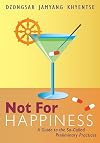
this is a great synthetic summary and exposition of a rich ngondro tradition, but i wish the author was a little more transparent abt the sources of the various specific aspects and sections of the practice; i was particularly surprised by the shallowness of presentation for the kusali visualization meditation, and wish some caveats had been mentioned regarding the more or less incompleteness of presentation (esp. dangers and precautions) for each practice
i strongly object to khyentse's show more arguments abt the necessity of absolute devotion to a separate outer guru, but i have yet to read his "the guru drinks bourbon?"; but even so, his frequent allusions to and dismissal of the accusations of sexual assault against many notable lineage holders of tibetan schools left an incredibly sour taste in my mouth; further joke-asides abt sexual attraction further soured show less
i strongly object to khyentse's show more arguments abt the necessity of absolute devotion to a separate outer guru, but i have yet to read his "the guru drinks bourbon?"; but even so, his frequent allusions to and dismissal of the accusations of sexual assault against many notable lineage holders of tibetan schools left an incredibly sour taste in my mouth; further joke-asides abt sexual attraction further soured show less
This is one of the more accessible books on Buddhism I have read. The author does a good job of explaining the fundamental tenets and beliefs of Buddhism, and I would recommend for that reason.
Where the author loses me is in claiming that Buddhism is not a religion. Yet the origin story of the Buddha is a mythic epic, where Siddhartha faces demons and gods. As is often the case with believers of any faith, his own faith seems so true that it cannot possibly be compared with another religion, show more and therefore is above the label of "religion."
He writes, "Probably the biggest discovery in human history was Siddhartha’s realization that the self does not exist independently, that it is a mere label, and therefore that clinging to it is ignorance." This statement relies on faith. There is actually no evidence to back up this statement, but no doubt it seems inarguably true to those who believe it already.
This was expected when I started reading, so I still recommend this book highly for its clear explanations of Buddhism, especially the Four Seals. And I suppose also for the insight as to What Makes Me Not a Buddhist. show less
Where the author loses me is in claiming that Buddhism is not a religion. Yet the origin story of the Buddha is a mythic epic, where Siddhartha faces demons and gods. As is often the case with believers of any faith, his own faith seems so true that it cannot possibly be compared with another religion, show more and therefore is above the label of "religion."
He writes, "Probably the biggest discovery in human history was Siddhartha’s realization that the self does not exist independently, that it is a mere label, and therefore that clinging to it is ignorance." This statement relies on faith. There is actually no evidence to back up this statement, but no doubt it seems inarguably true to those who believe it already.
This was expected when I started reading, so I still recommend this book highly for its clear explanations of Buddhism, especially the Four Seals. And I suppose also for the insight as to What Makes Me Not a Buddhist. show less
Moving away from conventional presentations of Buddhist teachings, Khyentse challenges readers to make sure they know what they're talking about before they claim to be Buddhist. With wit and irony, Khyentse urges readers to move beyond the superficial trappings of Buddhism beyond a romance with beads, incense, and exotic people in robes straight to the heart of what the Buddha taught.
In essence, this book explains what a Buddhist really is, namely, someone who deeply understands the truth show more of impermanence and how our emotions can trap us in cycles of suffering. Khyentse presents the fundamental tenets of Buddhism in simple language, using examples we can all relate to. show less
In essence, this book explains what a Buddhist really is, namely, someone who deeply understands the truth show more of impermanence and how our emotions can trap us in cycles of suffering. Khyentse presents the fundamental tenets of Buddhism in simple language, using examples we can all relate to. show less
You May Also Like


Associated Authors
Statistics
- Works
- 27
- Also by
- 2
- Members
- 847
- Popularity
- #30,189
- Rating
- 3.8
- Reviews
- 23
- ISBNs
- 47
- Languages
- 11
- Favorited
- 1