
Robert A. F. Thurman (1941–2026)
Author of The Tibetan Book of the Dead: Liberation Through Understanding in the Between
About the Author
Robert Thurman is the cofounder of Tibet House US and the Jey Tsong Khapa Professor of Buddhist Studies at Columbia University.
Image credit: Photo by Tenzin Nyima
Series
Works by Robert A. F. Thurman
The Tibetan Book of the Dead: Liberation Through Understanding in the Between (1993) — Translator — 1,119 copies, 6 reviews
Circling the Sacred Mountain: A Spiritual Adventure Through the Himalayas (1999) 155 copies, 2 reviews
Why the Dalai Lama Matters: His Act of Truth as the Solution for China, Tibet, and the World (2008) 121 copies, 1 review
Inside Tibetan Buddhism: Rituals and Symbols Revealed (Signs of the Sacred) (1995) 112 copies, 1 review
Love Your Enemies: How to Break the Anger Habit & Be a Whole Lot Happier (2013) 101 copies, 2 reviews
Freeing the Body, Freeing the Mind: Writings on the Connections between Yoga and Buddhism (2010) — Foreword — 36 copies, 1 review
Tsong Khapa's Speech of Gold in the Essence of True Eloquence: Reason and Enlightenment in the Central Philosophy of Tibet (1984) 31 copies, 1 review
A Shrine for Tibet: The Alice S. Kandell Collection of Tibetan Sacred Art (2009) — Author — 23 copies
The Seven Deadly Sins Set: Consisting of Greed, Gluttony, Envy, Lust, Sloth, Anger, and Pride (2006) 13 copies, 1 review
The Esoteric Community Tantra with The Illuminating Lamp: Volume I: Chapters 1–12 (Treasury of the Buddhist Sciences) (2021) 2 copies
Picturing Enlightenment: Tibetan Tangkas in the Mead Art Museum at Amherst College (2013) — Contributor — 2 copies
The Essence of the Eloquent 1 copy
Le Livre Des Morts Tibétains 1 copy
Associated Works
The Tibetan Book of the Dead: The Great Liberation Through Hearing In The Bardo (1975) — Translator, some editions — 1,015 copies, 12 reviews
The teaching of Vimalakirti (Vimalakirtinirdesa) (1972) — Translator, some editions — 632 copies, 7 reviews
Painting Enlightenment: Healing Visions of the Heart Sutra (2019) — Foreword, some editions — 27 copies, 1 review
Brilliant Illumination of the Lamp of the Five Stages: Practical Instructions in the King of Tantras, The Glorious Esoteric Community (Treasury of the Buddhist Sciences) (2011) — Translator, some editions — 19 copies
Nagarjuna's Reason Sixty (Yuktisastika) with Candrakirti's Commentary (Yuktisastikavrrti) (Treasury of the Buddhist Sciences) (2007) — Editor — 18 copies
The Guru Question: The Perils and Rewards of Choosing a Spiritual Teacher (2011) — Introduction, some editions — 14 copies, 1 review
Summoned by the Earth: Becoming a Holy Vessel for Healing Our World (2024) — Foreword — 5 copies, 1 review
Creating Buddhas the making and meaning of fabric thangkas [video recording] (2008) — Interviewee — 3 copies, 1 review
Tao Te Ching, The Bhagavad-Gita, The Tibetan Book of The Dead, The Essential Rumi, The Essential Kabbalah, & The Way of A Pilgrim (and The Pilgrim Continues His Way). (Mystical… (1997) — Translator — 2 copies
The situation of Tibet and its people : hearing before the Committee on Foreign Relations, United States Senate, One Hundred Fifth Congress, first session, May 13, 1997 (1997) — Contributor, some editions — 1 copy
Tagged
Common Knowledge
- Legal name
- Thurman, Robert Alexander Farrar
- Birthdate
- 1941-08-03
- Date of death
- 2026-06-16
- Gender
- male
- Education
- Philip Exeter Academy
Harvard University (AB, AM, PhD) - Occupations
- professor of Indo-Tibetan Studies
monk
translator
Tibetan Buddhist scholar - Organizations
- Tibet House US (cofounder)
Columbia University
Menla Retreat & Dewa Spa, Phoenicia, New York (helped found) - Awards and honors
- Light of Truth Award (2003)
- Relationships
- Wangyal, Geshe (teacher)
Lama, Dalai (teacher)
Thurman, Uma (daughter) - Short biography
- First American to be ordained as a Tibetan Buddhist monk by the Dalai Lama.
- Nationality
- USA
- Birthplace
- New York, New York, USA
- Place of death
- Woodstock, New York, USA
- Associated Place (for map)
- New York, USA
Members
Reviews
Why the Dalai Lama Matters: His Act of Truth as the Solution for China, Tibet, and the World by Robert Thurman
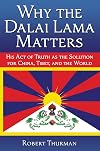
Thurman (yes, Uma's father) has been an understudy of the Dalai for over 5 decades and taught the ever-curious Dalai as much about the Western zeitgeist as the Dalai taught him about Tibet and Buddhism. This recent work is a great primer on the history of Tibet and the Sino-Tibetan social and political situation which has recently flared-up and promises to be at the forefront of the foment frothing beneath the Beijing Olympics. It is obvious that Thurman knows and loves the man deeply and show more there is a personal tone to this work that is not to be found elsewhere, unless it is in Heinrich Harrer's "7 Years in Tibet" (yes, the basis for the Brad Pitt movie). The Dalai matters even more to me after reading this book and I was surprised that that could happen. Why is it that we meddle in other countries' social and political affairs only if they are economically useful to us? And we look the other way when the big bullies (like us) run roughshod over ancient cultures? Tibet is a jewel of a nation and China's loss is our gain. I personally feel blessed to have not one, not two, but three Tibetan Buddhist monastaries within an hour's drive of my home in Southern Indiana. As the Dalai says, "Don't study Buddhism to become a better Buddhist; study Buddhism to become a better whatever-you-already-are." show less

This book took a long time to get through. Several times I had to stop and take a brief hiatus from reading it because the text was a bit dense and required some time to consider before moving on. One reason for this is the author's call to leave his explanations of the selected writings for the Notes section at the very end. While I understand wanting the selected writings to speak for themselves, for someone who is looking to understand Tibetan Buddhism (like the majority of readers who show more find this book, because it is clearly not for scholars who will immediately know what is going on) it made reading very tedious and a little confusing at times.
Had it been me, I would have organized the book in which the notes would appear either before or after each selected writing, giving a full explanation as to its purpose and origins as the reader was introduced to it. In this way, the reader would have a much richer understanding of each selected writing and the structure the author was going for.
Not sure if this is one I'd really recommend, as I'm sure there are other books that do a much better job of introducing the concepts of Tibetan Buddhism, but overall I did find it enjoyable if structurally lacking. show less
Had it been me, I would have organized the book in which the notes would appear either before or after each selected writing, giving a full explanation as to its purpose and origins as the reader was introduced to it. In this way, the reader would have a much richer understanding of each selected writing and the structure the author was going for.
Not sure if this is one I'd really recommend, as I'm sure there are other books that do a much better job of introducing the concepts of Tibetan Buddhism, but overall I did find it enjoyable if structurally lacking. show less
The Tibetan Book of the Dead (The Great Book of Natural Liberation Through Understanding in the Between) by Robert A. F. Thurman
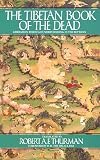
The so-called Tibetan Book of the Dead is my true Penelope. Thurman's translation is my least favorite of the translations of the Bardo Thodol (except for the W. Y. Evans-Wentz/Lama Kazi Dawa-Samdup version, which I don't even count as a translation) because of his experimental coinages which, to my mind, make it difficult to follow the terminology outward from this text to other works, including but not limited to Shi Tro practice.
All that means is that I don't think the coinages work. show more Otherwise, as usual, Khenpo Thurman is fantastic and deliriously wonderful. (He doesn't actually have the Khenpo degree, but I'll explain why I call him that if you're curious). And the pictures are lovely.
If you're interested in the Tibetan Book of the Dead, I suggest reading multiple translations. Include this among them. Oh oh, mixed messages!
This review applies to the Robert Thurman translation of the Bardo Thodol. show less
All that means is that I don't think the coinages work. show more Otherwise, as usual, Khenpo Thurman is fantastic and deliriously wonderful. (He doesn't actually have the Khenpo degree, but I'll explain why I call him that if you're curious). And the pictures are lovely.
If you're interested in the Tibetan Book of the Dead, I suggest reading multiple translations. Include this among them. Oh oh, mixed messages!
This review applies to the Robert Thurman translation of the Bardo Thodol. show less
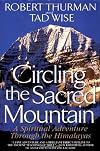
If you are interested in the self-obsessed musings of American Buddhist males as they lecture one another on Tibetan religion, then you're welcome to this book. If you're interested in learning about Kailash and walking the kora, then you'd be better served by another book.
Lists
Awards

You May Also Like


Associated Authors
Statistics
- Works
- 43
- Also by
- 22
- Members
- 3,999
- Popularity
- #6,310
- Rating
- 3.8
- Reviews
- 28
- ISBNs
- 125
- Languages
- 9
- Favorited
- 4