
Lama Surya Das
Author of Awakening the Buddha Within: Tibetan Wisdom for the Western World
About the Author
Lama Surya Das, born Jeffrey Miller in New York in 1950, graduated from the State University of New York at Buffalo in 1971. Surya Das traveled through India, Nepal and Japan, and later established a monastery in Woodstock, New York. He teaches meditation retreats and workshops, and is the founder show more of the Dzogchen Foundation. Das has published, edited and translated many Buddhist books and scriptures. He has also written poetry, essays and articles. (Bowker Author Biography) Lama Surya Das is the most highly trained American lama in the Tibetan tradition. A Poet, Translator, and a full-time spiritual teacher, he lectures and leads meditation retreats all over the world. He lives in Concord Massachusetts. (Publisher Provided) show less
Image credit: Lama Surya Das
Works by Lama Surya Das
Letting Go of the Person You Used to Be: Lessons on Change, Loss, and Spiritual Transformation (2003) 371 copies, 4 reviews
Awakening the Buddhist Heart: Integrating Love, Meaning, and Connection into Every Part of Your Life (2000) 298 copies, 1 review
Buddha Is as Buddha Does: The Ten Original Practices for Enlightened Living (2007) 289 copies, 1 review
The Big Questions: How to Find Your Own Answers to Life's Essential Mysteries (2007) 115 copies, 3 reviews
The Mind Is Mightier Than the Sword: Enlightening the Mind, Opening the Heart (2009) 42 copies, 1 review
Make Me One with Everything: Buddhist Meditations to Awaken from the Illusion of Separation (2015) 19 copies
Natural Perfection: Teachings, Meditations and Chants in the Dzogchen Tradition of Tibet (1999) 6 copies
Natural Meditation : A Tibetan Buddhist Practice for Clearing the Mind and Opening to Effortless Awarness [video recording] (2005) 4 copies
By Lama Surya Das - Awakening the Buddha Within : Tibetan Wisdom for the Western Worl (1997-07-01) [Hardcover] (1997) 3 copies
Chants to Awaken the Buddhist Heart 3 copies
O Despertar Do Coração Budista. Intregrando Amor, Significado E Conexão A Cada Parte De Sua Vida (Em Portuguese do Brasil) (2002) 2 copies
Associated Works
The Buddha's Way of Happiness: Healing Sorrow, Transforming Negative Emotion, and Finding Well-Being in the Present Moment (2011) — Vorwort, some editions — 34 copies
Tagged
Common Knowledge
- Legal name
- Miller, Jeffrey
- Birthdate
- 1950
- Gender
- male
- Education
- University of New York, Buffalo (Creative Education)
- Occupations
- poet
chantmaster
spiritual activist
author - Organizations
- Dzogchen Foundation
Rime Movement (Tibetan Buddhist) - Nationality
- USA
- Places of residence
- Massachusetts, USA
- Associated Place (for map)
- Massachusetts, USA
Members
Reviews
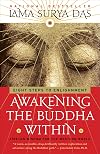
This is a kind of book to be read on and off, spread out over time and giving time to absorb what's in it. And that's what I did. It is a thoughtful blend of inspiring stories from the history of Buddhism (Dzogchen lineage in particular) along with the author's own experience on the path towards enlightenment, as well as basic concepts of Buddhism, and very detailed practical meditation advice (quite doable!). Meditation is a way of life, the author says: "... think of daily meditation as a show more mental hygiene, a form of mental floss that retards truth decay". He warns against "instant-coffee mind" that most of us tend to have; he stresses the concept of "allowing": "The universe is beyond our control anyway. Trying to control things creates more stress, struggle, and irritating friction in the greater system". Practically all aspects of everyday life are touched upon in this book (no renunciation required), with the central idea being - "Living a mindful life is a sacred way of being in this world". I found it most appealing. I know I would be returning to this book over and over again: to re-enforce some of the things that I am already doing and to learn new notions. show less
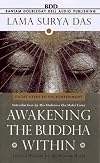
I listened to the abridged version of this book read by the author. He had quite and interesting journey as a Jewish boy from Long Island, to the Tibet during the wild sixties.
Although Tibetan Buddhism sounds to me like a fundamentalist type of religion, the overall principles resonated with me completely. The awareness that we are only a small part of a great divine whole is a beautiful idea, and explains the diversity of human journeys some of which are extreme in their difficulty while show more others are cut short and seem to lack any value for the person living them.
I always thought that life is precious, more precious than eternity, simply because of its transient and fleeting nature, so the principle of living in the moment is paramount for a peaceful existence.
This book is a landmark for me in my spiritual journey and I think I will read it again in its printed and unabridged form. show less
Although Tibetan Buddhism sounds to me like a fundamentalist type of religion, the overall principles resonated with me completely. The awareness that we are only a small part of a great divine whole is a beautiful idea, and explains the diversity of human journeys some of which are extreme in their difficulty while show more others are cut short and seem to lack any value for the person living them.
I always thought that life is precious, more precious than eternity, simply because of its transient and fleeting nature, so the principle of living in the moment is paramount for a peaceful existence.
This book is a landmark for me in my spiritual journey and I think I will read it again in its printed and unabridged form. show less
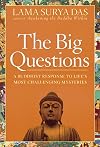
The big questions : how to find your own answers to life's essential mysteries / by Lama Surya Da by Lama Surya Das
Review from LibraryThing
The best-selling author of Awakening the Buddha Within addresses life’s most provocative and tantalizing questions simply, directly, and powerfully.
Every life is a journey through the unknown. Along the way, however, we tend to encounter the same perplexing questions again and again. Some are cosmic enigmas that have always tested the human mind: What is my purpose in life? What happens after I die? Others are puzzles presented by daily life in modern society: What, show more if anything, justifies assisted suicide? What is my personal responsibility to the homeless? According to Lama Surya Das, one of the foremost Western Buddhist scholars and teachers, the more we seek to resolve these mysteries, the more fully we live.
Along with his own personal beliefs, the author presents a variety of thoughtful points of view representing different schools of Buddhism, other religions, spirituality in general, and pragmatism. The Big Questions challenges readers in the most stimulating and thoughtful way to formulate individual, authentic responses to life’s big questions. show less
The best-selling author of Awakening the Buddha Within addresses life’s most provocative and tantalizing questions simply, directly, and powerfully.
Every life is a journey through the unknown. Along the way, however, we tend to encounter the same perplexing questions again and again. Some are cosmic enigmas that have always tested the human mind: What is my purpose in life? What happens after I die? Others are puzzles presented by daily life in modern society: What, show more if anything, justifies assisted suicide? What is my personal responsibility to the homeless? According to Lama Surya Das, one of the foremost Western Buddhist scholars and teachers, the more we seek to resolve these mysteries, the more fully we live.
Along with his own personal beliefs, the author presents a variety of thoughtful points of view representing different schools of Buddhism, other religions, spirituality in general, and pragmatism. The Big Questions challenges readers in the most stimulating and thoughtful way to formulate individual, authentic responses to life’s big questions. show less
I bought this book a few years ago whilst browsing the shelves for something interesting in the religion section. I was not familiar with the title or author, but the synopsis on the back seemed like something that I would like. I often feel like I never have enough time, and, before I know it, the week is over and I feel as though I've not done many of the things I should have done. I have a decent amount of knowledge about Buddhist concepts so I assumed that I would feel comfortable with show more the ideas introduced in this book.
The basic idea behind this book is that by using things such as meditation we can allow ourselves to not get so caught up with worrying about time. It also introduces an idea that I am starting to try and use, the idea that we should look at our 'to-do' lists and ask ourselves "Do I really need to do this?" This is a difficult thing to adapt to, especially if you rely on lists to get things done, as I do. The author also introduces some science behind certain aspects on mind training. This is used as an additional piece of information rather than a justification for doing certain things but is welcome none the less.
As whole, I really liked this book, it is well presented and introduces the Buddhist concepts without dogma. The author also talks about how other religions have practices that also apply to the subject. Although the Buddhist approach is the main one presented, it isn't the only one presented. There are anecdotes throughout about how he has helped people to live a less stressful life. As always, these are to be taken with a pinch of salt as authors always talk about their successes and not their failures. There are small highlighted exercises throughout so if you want to jump straight into the nitty gritty you can.
The only thing that I didn't really take on board was some of the more esoteric stuff like chakras and chi. While I appreciate the concepts, they are just not something I subscribe to. This is something that always sits easily with Buddhism as you don't have to believe in anything. As an individual, you choose what you want to use, and discard everything else.
I really liked this book. I sent a particular passage from it to my girlfriend and now she wants to read it. show less
The basic idea behind this book is that by using things such as meditation we can allow ourselves to not get so caught up with worrying about time. It also introduces an idea that I am starting to try and use, the idea that we should look at our 'to-do' lists and ask ourselves "Do I really need to do this?" This is a difficult thing to adapt to, especially if you rely on lists to get things done, as I do. The author also introduces some science behind certain aspects on mind training. This is used as an additional piece of information rather than a justification for doing certain things but is welcome none the less.
As whole, I really liked this book, it is well presented and introduces the Buddhist concepts without dogma. The author also talks about how other religions have practices that also apply to the subject. Although the Buddhist approach is the main one presented, it isn't the only one presented. There are anecdotes throughout about how he has helped people to live a less stressful life. As always, these are to be taken with a pinch of salt as authors always talk about their successes and not their failures. There are small highlighted exercises throughout so if you want to jump straight into the nitty gritty you can.
The only thing that I didn't really take on board was some of the more esoteric stuff like chakras and chi. While I appreciate the concepts, they are just not something I subscribe to. This is something that always sits easily with Buddhism as you don't have to believe in anything. As an individual, you choose what you want to use, and discard everything else.
I really liked this book. I sent a particular passage from it to my girlfriend and now she wants to read it. show less
Lists
Awards

You May Also Like


Associated Authors
Statistics
- Works
- 29
- Also by
- 2
- Members
- 3,745
- Popularity
- #6,768
- Rating
- 3.9
- Reviews
- 27
- ISBNs
- 102
- Languages
- 8
- Favorited
- 5