
W. Y. Evans-Wentz (1878–1965)
Author of Tibetan Book of the Dead: Or, The After-Death Experiences on the Bardo Plane, according to Lama Kazi Dawa-Samdup's English Rendering
About the Author
W.Y. Evans-Wentz (1878-1965) was best known as the translator of The Tibetan Book of the Dead and the author of several other books on eastern mysticism
Image credit: From web-site https://www.tititudorancea.com/z/walter_yeeling_evans_wentz_biography.htm
Works by W. Y. Evans-Wentz
Tibetan Book of the Dead: Or, The After-Death Experiences on the Bardo Plane, according to Lama Kazi Dawa-Samdup's English Rendering (1927) 1,325 copies, 9 reviews
The Tibetan Book of the Great Liberation: Or the Method of Realizing Nirvana Through Knowing the Mind (Galaxy Books) (1968) 330 copies, 6 reviews
Tibet's Great Yogi Milarepa: A Biography from the Tibetan being the Jetsun-Kahbum or Biographical History of Jetsun-Milarepa, According to the Late Lama Kazi Dawa-Samdup's English… (1969) 282 copies, 7 reviews
Tibetan Book of the Dead: an Illustrated Edition of the Sacred Text on Death and Rebirth (2008) 45 copies
lo yoga tibetano 1 copy
Associated Works
Fairies, Pookas, and Changelings: A Complete Guide to the Wild and Wicked Enchanted Realm (2017) — Contributor — 34 copies
Buddhist Meditation in the Southern School: Theory and Practice for Westerners (1973) — Foreword — 30 copies
Tagged
Common Knowledge
- Legal name
- Evans-Wentz, Walter Yeeling
- Birthdate
- 1878-02-02
- Date of death
- 1965-07-17
- Gender
- male
- Education
- Stanford University (BA | English)
Stanford University (MA|English|1907)
University of Rennes (Docteur-es-Lettres|Celtic folklore|1909)
University of Oxford (BS| Anthropology) - Occupations
- anthropologist
novice monk (Buddhist|1920-1922|Sikkim) - Organizations
- Theosophical Society
- Awards and honors
- Oxford University (honorary degree of Doctor of Science in Comparative Religion|1931)
- Relationships
- Dawa-Samdup, Lama Kazi (teacher)
- Nationality
- USA
- Birthplace
- Trenton, New Jersey, USA
- Places of residence
- Trenton, New Jersey, USA (birth)
San Diego, California, USA
Egypt
India
Sikkim
China (show all 7)
Japan - Place of death
- Encinitas, California, USA
- Associated Place (for map)
- Trenton, New Jersey, USA
Members
Reviews
Tibet's Great Yogi Milarepa: A Biography from the Tibetan being the Jetsun-Kahbum or Biographical History of Jetsun-Milarepa, According to the Late Lama Kazi Dawa-Samdup's English Rendering by W. Y. Evans-Wentz
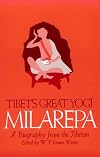
This book made Buddhism real and personal to me as a teen, hooking me into the practice & eventually to spend 9 months in Nepal. Maybe I never really left or even arrived, but I'm slogging along, singing his songs.
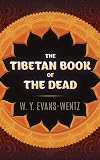
The Tibetan Book of the Dead as translated by W.Y. Evans-Wentz is a less than complete and less than faithful translation but is the only version known in the West for a long time. As such, it is, at the least, an important historical document even when it might not be a particularly useful one for those interested in Buddhism.
My case is one example. I became familiar with the book when I first picked up a copy of The Psychedelic Experience back in the late 60s. It is the version that not show more only influenced those experiments but served as an introduction to Eastern thought for me. It is also the version that Jung referenced in his work. So having this copy for these purposes make perfect sense.
If you want to sidestep Evans-Wentz' theosophy influence and get a better, more comprehensive translation as part of studying Buddhism, I would recommend a different translation. This Ixia Press edition is a wonderful copy of Evans-Wentz version and I would highly recommend it for those who want or need this version.
Reviewed from a copy made available by the publisher via NetGalley. show less
My case is one example. I became familiar with the book when I first picked up a copy of The Psychedelic Experience back in the late 60s. It is the version that not show more only influenced those experiments but served as an introduction to Eastern thought for me. It is also the version that Jung referenced in his work. So having this copy for these purposes make perfect sense.
If you want to sidestep Evans-Wentz' theosophy influence and get a better, more comprehensive translation as part of studying Buddhism, I would recommend a different translation. This Ixia Press edition is a wonderful copy of Evans-Wentz version and I would highly recommend it for those who want or need this version.
Reviewed from a copy made available by the publisher via NetGalley. show less
A voluminous cataloging of oral Celtic folklore at the turn of the century. Contains information on the fairy/deva evolution to some extent but is mainly about beings that would belong to the Elana/Faery race, and in some cases, darker beings from lower planes. Folklore, superstition and spiritual truths are often blended together in mysterious ways and the reader of books such as this one should not take the accounts literally. It can be like detective work. Looking at the clues to find the show more spiritual truths. What are the allusions and metaphysical meanings? In a sense, it is similar to ferreting out the spiritual truths in fairy tales and religions. show less
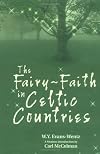
Fascinating subject, delightfully earnest and academic, but man, is the prose tortured in places. Still, probably the most detailed collection of eyewitness testimony and likely the most serious academic study ever done on fairies.
Lists
You May Also Like


Associated Authors
Statistics
- Works
- 13
- Also by
- 3
- Members
- 3,151
- Popularity
- #8,108
- Rating
- 4.0
- Reviews
- 34
- ISBNs
- 131
- Languages
- 12
- Favorited
- 1

