
Alexandra David-Néel (1868–1969)
Author of Magic and Mystery in Tibet
About the Author
Image credit: from web site: quod.lib.umich.edu
Works by Alexandra David-Néel
Journal de voyage, tome 2 : Lettres à son mari (14 janvier 1918 - 31 décembre 1940) (1975) 29 copies, 1 review
JOURNAL DE VOYAGE Tome II. Lettres à son mari 14 janvier 1918 - 3 décembre 1940. De la Chine à l'Inde en passant par le Tibet. (1986) 1 copy
Tibetin Unutulan Sirlari 1 copy
mortalità e reincarnazione 1 copy
Si je n'étais pas partie ... 1 copy
Viagem ao Tibete Livro 1 1 copy
Buddhism: Its Doctrines and Its Methods | Revised, newly composed text edition | Alexandra David-Néel | Paperback (2025) 1 copy
Mistycy i magowie Tybetu 1 copy
Zwischen Göttern und Politik : Indien - gestern, heute, morgen — Author — 1 copy
Associated Works
Tagged
Common Knowledge
- Canonical name
- David-Néel, Alexandra
- Other names
- David, Louise Eugénie Alexandrine Marie (birth)
Madame David-Néel - Birthdate
- 1868-10-24
- Date of death
- 1969-09-08
- Gender
- female
- Education
- boarding school
Conservatoire royal de Bruxelles
Collège de France
École Pratique des Hautes Études - Occupations
- explorer
spiritualist
travel writer
writer
opera singer
journalist (show all 10)
scholar
translator
librettist
novelist - Awards and honors
- Award Monique Berlioux (1925)
- Relationships
- Lama Yongden (adoptive son)
Néel de Saint-Sauveur, Philippe (husband) - Short biography
- Alexandra David-Néel was born Louise Eugénie Alexandrine Marie David in Saint-Mandé, a suburb of Paris. Her father Louis David, a French Huguenot and freemason, was a teacher who had been active during the Revolution of 1848, and her mother Alexandrine Borgmans was a Roman Catholic from Belgium.
The couple had met in Belgium, where Louis, then the editor of a republican journal, had to go into exile when the Emperor Napoleon III seized power in 1852. She had an early encounter with the face of death as a toddler in 1871, when her father took her to Père-Lachaise Cemetery to see where the last Parisian Communards had been executed. Two years later, the family went to live in Ixelles, Belgium. She received a good education at a boarding school and was fascinated by the works of Jules Verne, imaging herself on his voyages. She began traveling on her own at age 15. In 1889, at age 21, she converted to Buddhism, and studied English in London in preparation for a career as an orientaliste (specialist in Eastern culture).
She also studied piano and singing at the Royal Conservatory of Brussels and to help support her parents, worked as a singer at the Hanoi Opera House in French Indochina (Vietnam) during the seasons 1895-1896 and 1896-1897. From 1897 to 1900, she lived with pianist Jean Haustont in Paris, writing the libretto for his one-act opera Lidia.
She left to sing at opera houses in Athens and Tunis. There in 1904, she married Philippe Néel de Saint-Sauveur, a wealthy railroad engineer and distant cousin. She continued to travel on her own and eventually left her husband in 1911 when making her third trip to India. After this, she devoted her life to her traveling and Asian studies. Madame David-Néel is best known today for her stay in Lhasa, Tibet, disguised as a pilgrim, in 1924, when it was forbidden to foreigners. The following year, she returned to France and began work on her first major book, Voyage d'une Parisienne à Lhassa (My Journey to Lhasa), published in 1927. She bought a small house in Digne-les-Bains, Provence in 1928, to which she returned in 1946 from further travels in the East. She wrote more than 30 books on her journeys that took her 30,000 around the world on foot and by horse, yak, donkey, sedan chair, boat, plane, and other means of conveyance. She inspired and influenced other travelers and writers worldwide, most notably those of the Beat Generation. - Nationality
- Belgium
France - Birthplace
- Saint-Mandé, Val-de-Marne, Île-de-France, France
Paris, France - Places of residence
- Paris, France
Ixelles, Belgium
Lhasa, Tibet
Digne-les-Bains, France - Place of death
- Digne-les-Bains, Alpes-de-Haute-Provence, France
- Burial location
- Ganges River (ashes)
- Associated Place (for map)
- France
Members
Reviews
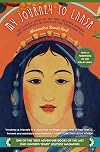
I bought this book at a small book store on the main street in Leh, Ladakh, India after completing a wintertime camping trip in the foothills of the Himalayas. I couldn't resist reading about a white woman's efforts to walk to the forbidden city of Lhasa in the 1920's. I read it on the flight home, and it really felt true to my experiences. The mountains, frozen rivers, passes, and desert conditions were harsh but gorgeous. Her running river crossings on what were basically zip lines were show more terrifying to read about, as were her encounters with bandits. She was always sturggling to avoid her disguise being penetrated, as well as to just survive in harsh conditions. She'd studied Tibetan, was a Buddist, and had a semi local travelling companion, but she had to think on her feet and do some personally distasteful things in order to throw off suspicion. I'm hoping to dig up some of her other books about her time as a hermit in the mountains, her writing is evocative and spirited and very readable. show less

So first DON'T read the Foreword, it spoils one of the more interesting elements.
This is a supposedly true story told to the author by one of the protagonists. I've marked it as gothic as it has all the elements of a classic star-crossed lovers gothic romance but with an eastern twist. Mysteries of Udolpho meets Lost Horizon... that is an awful analogy even by my standards but you get the drift :lol.
Its relatively short and for a so called true tale it has a nice writing style. It show more certainly never goes where you might expect and left a pretty good impression. Even though the author might be slightly more fascinating than the story. show less
This is a supposedly true story told to the author by one of the protagonists. I've marked it as gothic as it has all the elements of a classic star-crossed lovers gothic romance but with an eastern twist. Mysteries of Udolpho meets Lost Horizon... that is an awful analogy even by my standards but you get the drift :lol.
Its relatively short and for a so called true tale it has a nice writing style. It show more certainly never goes where you might expect and left a pretty good impression. Even though the author might be slightly more fascinating than the story. show less
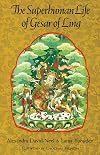
King Gesar, renowned throughout Tibet and Central Asia, represents the ideal warrior--the principle of all-victorious confidence. As the central force of sanity, he conquers all his enemies, the evil forces of the four directions, who turn people's minds away from the true teachings of Buddhism. These enemies graphically represent the different manifestations of cowardly mind.
As Chögyam Trungpa explains in the Foreword:
"When we talk here about conquering our enemy, it is important to show more understand that we are not talking about aggression. The genuine warrior does not become resentful or arrogant . . . It is absolutely necessary for the warrior to subjugate his own ambition to conquer at the same time that he is subjugating his other more obvious enemies. Thus the idea of warriorship altogether is that by facing all our enemies fearlessly, with gentleness and intelligence, we can develop ourselves thereby attaining self-realization."
The legends of Gesar usually take weeks for a bard to recount. Filled with magic, adventure, and the triumphs of this great warrior-king, the stories will delight all--young and old alike. show less
As Chögyam Trungpa explains in the Foreword:
"When we talk here about conquering our enemy, it is important to show more understand that we are not talking about aggression. The genuine warrior does not become resentful or arrogant . . . It is absolutely necessary for the warrior to subjugate his own ambition to conquer at the same time that he is subjugating his other more obvious enemies. Thus the idea of warriorship altogether is that by facing all our enemies fearlessly, with gentleness and intelligence, we can develop ourselves thereby attaining self-realization."
The legends of Gesar usually take weeks for a bard to recount. Filled with magic, adventure, and the triumphs of this great warrior-king, the stories will delight all--young and old alike. show less

An oft-times very difficult book to get through, as the author is very thorough in her examination of mystical and magical practices in Tibet. In some ways, it's a bit more of a textbook than it is a travelogue. But the book comes alive with some of her incredible descriptions of the scenery she saw in both Sikkim and Tibet, scenery that is gone forever. That's one of the real values in this book, and makes it well worth reading.
Lists
Awards


You May Also Like


Associated Authors
Statistics
- Works
- 62
- Also by
- 4
- Members
- 2,907
- Popularity
- #8,810
- Rating
- 4.0
- Reviews
- 63
- ISBNs
- 286
- Languages
- 14
- Favorited
- 4
